
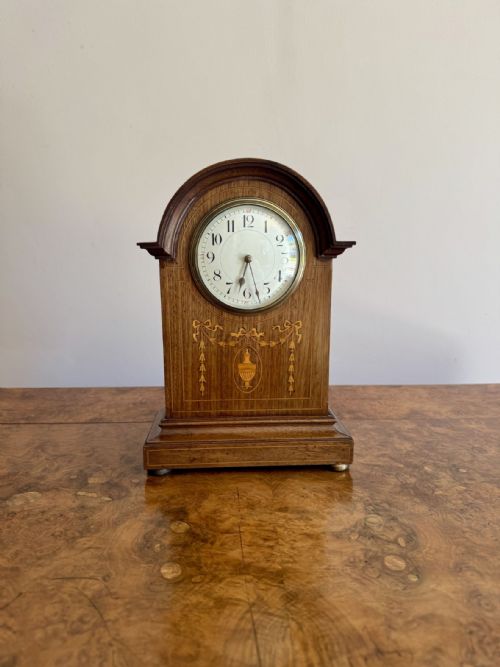
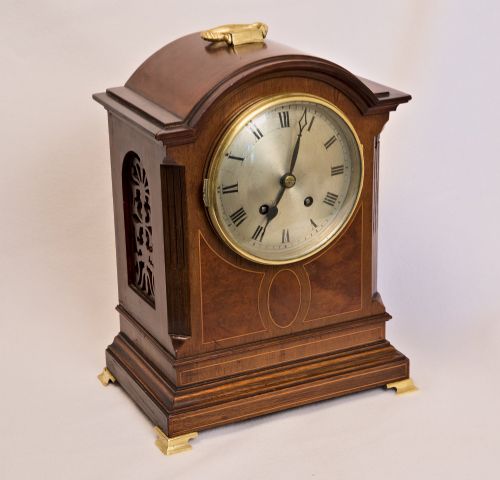


Edwardian Inlaid Bracket Clock
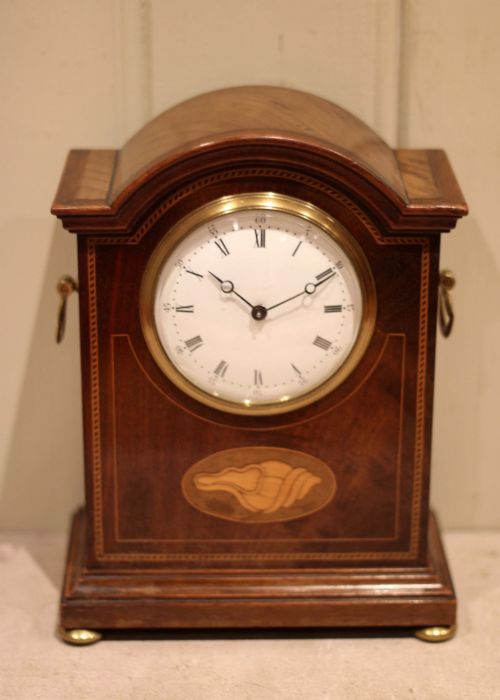
An edwardian inlaid bracket clock brings timeless presence to a mantelpiece, combining rich mahogany cases with delicate boxwood and satinwood details.
Edwardian Inlaid Bracket Clock
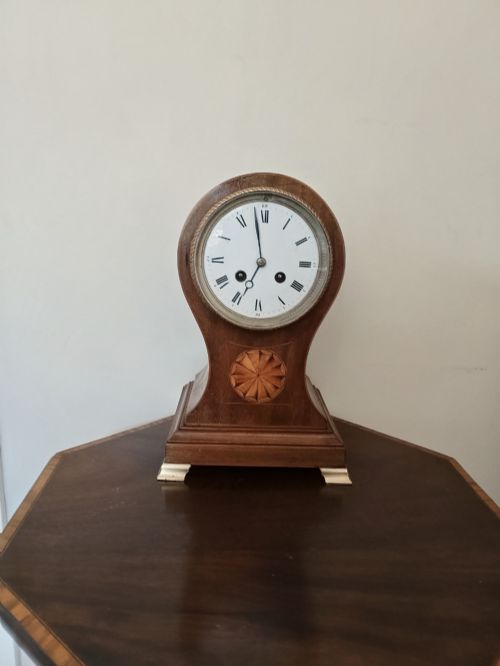
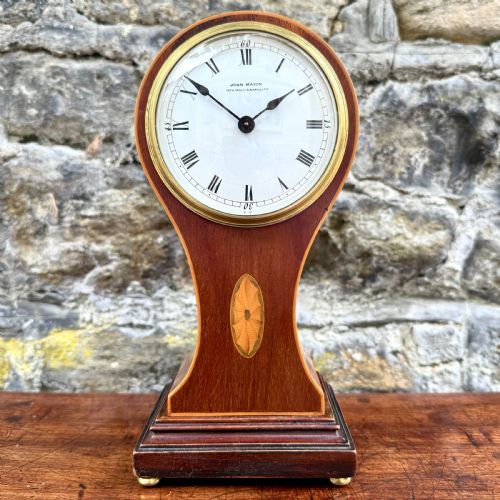
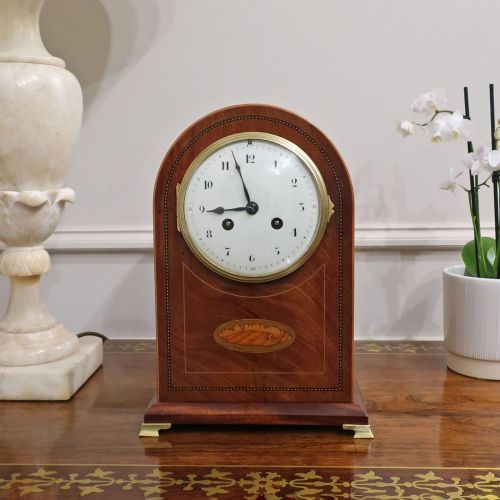
When searching for an edwardian inlaid bracket clock, buyers encounter timepieces primarily dating from around nineteen hundred, alongside pieces from the late nineteenth century and the early twentieth century. These objects function as mantel clocks and table clocks, appearing in balloon shapes, lancet tops, dome tops, and break arch forms.
The dominant material combination involves mahogany cases enriched with satinwood, boxwood, and marquetry inlay, sometimes accompanied by brass mounts and enamel or silvered dials. Makers such as W. Burton, Dent of London, and Winterhalder and Hofmeier produced these works alongside English, French, German, and Japanese workshops.
Beyond the standard Edwardian Sheraton Revival aesthetic, variants span Victorian, Regency, Art Nouveau, and Belle Epoque styles. While many examples function as simple timepieces, others incorporate eight-day movements, striking mechanisms, or chiming capabilities.
Construction and Materials
Cabinetmakers constructed the primary cases from solid or veneered mahogany, incorporating contrasting woods like satinwood and boxwood for decorative banding and marquetry motifs. Dial surrounds often integrated cast brass bezels protecting white enamel or engraved silvered chapter rings beneath glass.
Movement assembly relied upon brass plates and steel gear trains, with mechanical variants utilising single, twin, or triple fusee systems as well as spring-driven German mechanisms. Inlay work required precise hand-cutting of contrasting veneers to fit recessed channels within the primary mahogany carcase.
Clock forms range from traditional balloon shapes and lancet tops to architectural black marble and Art Nouveau designs.
Factors of Quality
The refinement of the cabinetwork dictates much of the distinction between ordinary and superior pieces, particularly the crispness of the marquetry inlay and the depth of the mahogany grain. Hand-selected satinwood banding and intricate floral or pictorial marquetry denote careful workshop execution.
Internal mechanical complexity and the reputation of the horological maker elevate certain pieces above standard timepieces. Fully integrated chiming mechanisms, fusee movements, and signed dials by established makers represent the upper tier of production.
W. Burton·W and H·Dent of London·Junghans·Seikosha Seiko·Arundel Clocks
The Edwardian Inlaid Bracket Clock Glossary
- Fusee
- A conical pulley used in spring-driven clocks to maintain even tension on the gear train as the mainspring unwinds. This mechanism ensures more accurate timekeeping throughout the running cycle.
- Marquetry
- Decorative patterns formed by fitting contrasting veneer pieces into a prepared wooden surface. Craftsmen utilise this technique to create floral, geometric, or pictorial designs on the clock case.
- Balloon Clock
- A mantel clock featuring a rounded, upward-tapering case silhouette resembling a hot air balloon. This popular form frequently incorporates mahogany veneers and satinwood inlay.
- Ting Tang
- A striking mechanism that sounds two different notes on the quarters and hours using two hammers and gongs. German workshops frequently employed this system in period mantel clocks.
- Silvered Dial
- A metal clock face treated with a silver solution to produce a matte metallic finish with engraved numerals. These dials provide a legible and refined alternative to white enamel.
Edwardian Inlaid Bracket Clock: Frequently Asked Questions
What is a bracket clock?
A bracket clock is a portable table or mantel timepiece, historically designed to sit upon a matching wall bracket. Over time, the term expanded to describe various refined wooden table clocks.
Today, these pieces function primarily as standalone mantel ornaments while retaining their traditional designation.
How do fusee movements work?
A fusee movement uses a conical pulley connected to the mainspring via a cord or chain. This compensates for the diminishing power of the spring as it uncoils.
Such systems ensure consistent driving force reaches the escapement, improving overall timekeeping accuracy.
How should I clean the wood?
Maintenance requires only a soft, dry cloth to remove dust from the mahogany surfaces and glass panels. Avoid modern aerosol polishes or liquid cleaners, which can damage aged finishes.
Periodic application of a quality microcrystalline wax helps protect the wood and inlay without causing buildup.
Are these clocks suitable for daily use?
Mechanical clocks from this era require regular winding and occasional professional servicing to run reliably. Many examples function well for daily timekeeping when properly set up.
Gentle handling during winding and correct placement away from direct heat sources ensure the longevity of the movement.