


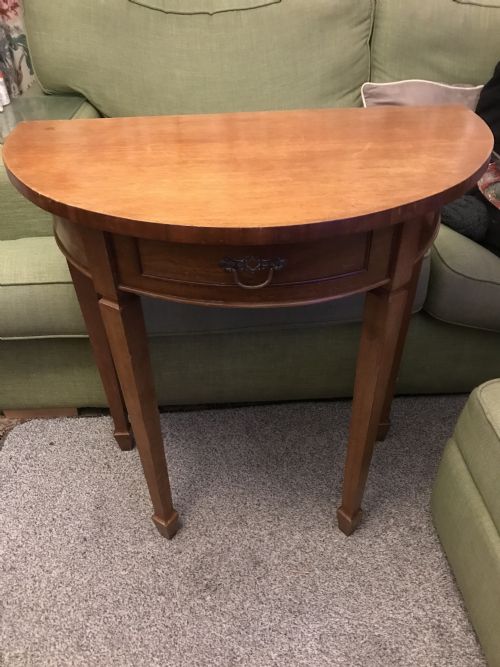
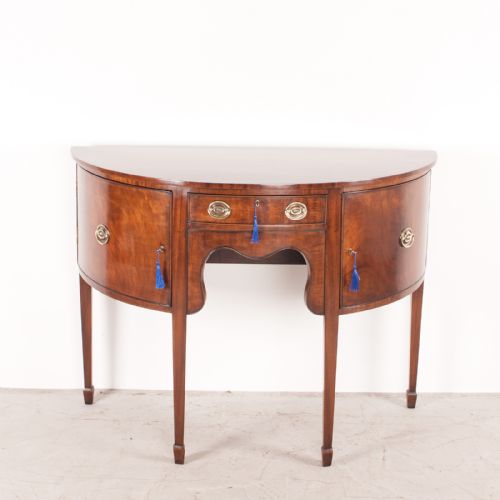


Edwardian Half Moon Table
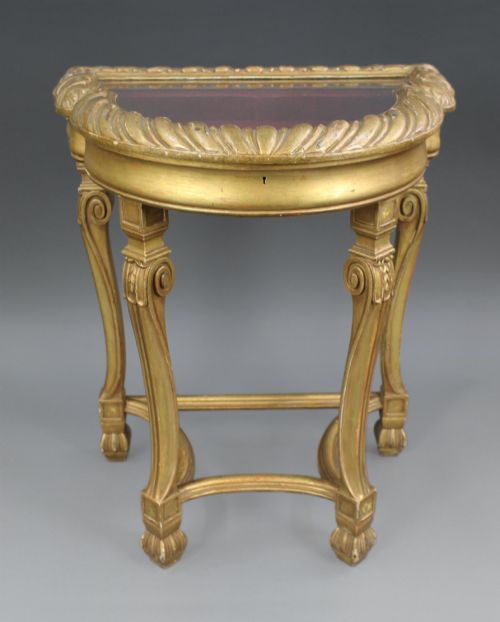
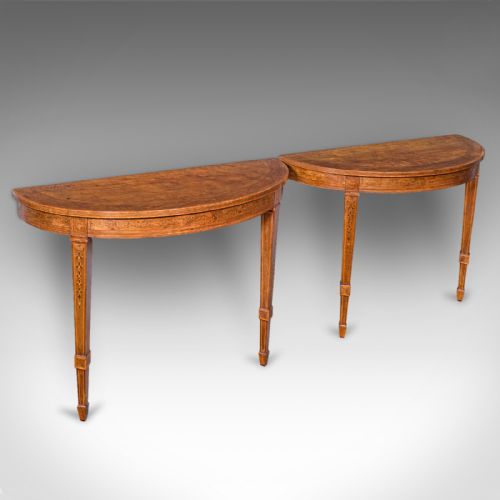
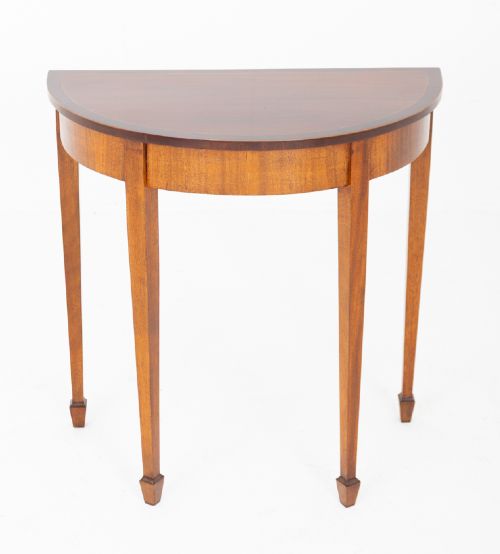
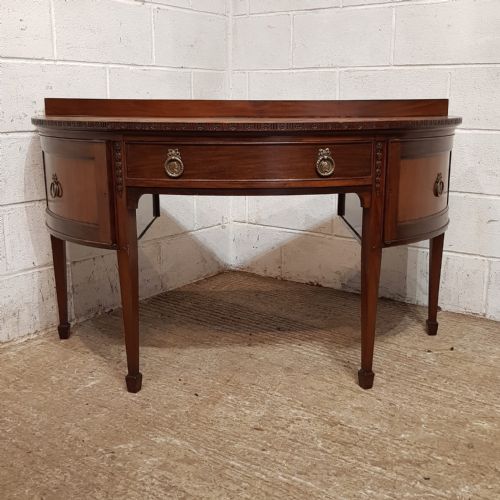
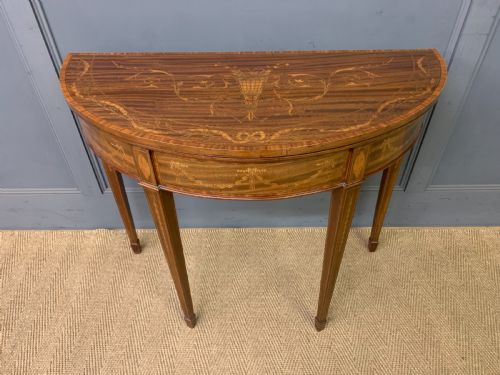
An edwardian half moon table offers a semicircular silhouette designed to hug a wall neatly while bringing refined inlay and warm timber into a hall or drawing room.
Edwardian Half Moon Table
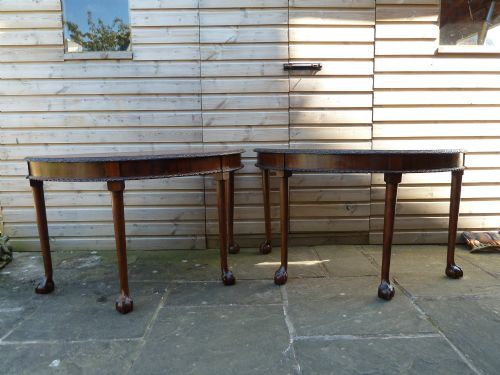
An edwardian half moon table is primarily encountered as a card table, console table, or games table dating from the early twentieth century or the late nineteenth century. These pieces follow earlier eighteenth century and nineteenth century forms, drawing heavily on Sheraton Revival and neoclassical design principles.
The inventory on this page shows a strong presence of Edwardian period pieces alongside nineteenth century and 1920s examples. Buyers frequently find card tables with fold-over tops alongside simpler console tables and side tables.
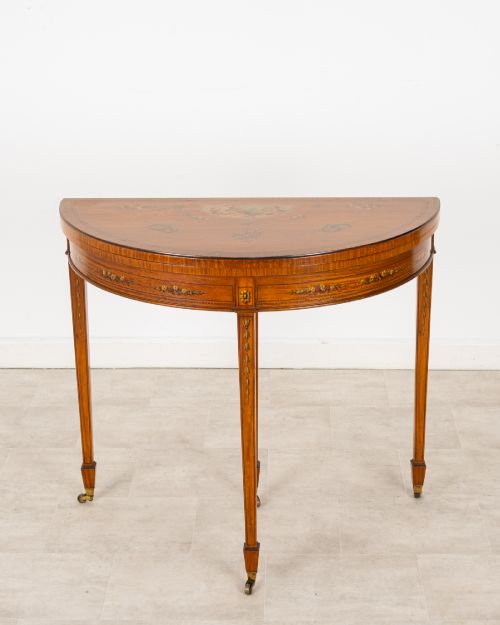
Makers and workshops of the Edwardian era produced these semi-circular tables to serve practical functions in domestic interiors, often incorporating drawers or folding mechanisms for versatility. Satinwood and mahogany form the visual backbone of the selection available here.
Assessing quality
Quality in these tables rests on the crispness of the inlay work and the choice of timber figure, particularly in satinwood and mahogany veneers. Superior examples display precise marquetry and well-figured grain that wrap harmoniously around the curved apron.
The integrity of the folding mechanism and the weight of the timber used for the top and legs distinguish standard production from finer cabinet work. Balance and proportion in the leg placement determine how successfully the semi-circular form rests against a wall.
Edwardian Half Moon Table Retail Price Guide 2026
Typical asking prices for edwardian half moon table among the pieces listed under this phrase on Sellingantiques today, from the lower quarter to the upper quarter. They describe what is for sale here now, not the wider market.
Some card tables hide their extra swing legs so cleverly that guests wonder how the top stays up.
Edward and Roberts
The Edwardian Half Moon Table Glossary
- Demi-lune
- A French term meaning half-moon, used to describe furniture with a semicircular shape and a flat back edge.
- Marquetry
- Decorative patterns formed by the insertion of pieces of wood, shell, or ivory into a veneer-coated surface.
- Console table
- A table designed to be fixed against a wall, frequently supported by wall brackets or front legs.
- Spade foot
- A narrow, rectangular foot that tapers slightly toward the base, commonly seen on Sheraton and Edwardian furniture.
- Crossbanding
- A strip of veneer applied around the border of a tabletop with the grain running perpendicular to the centre.
Edwardian Half Moon Table: Frequently Asked Questions
How were half moon tables used?
These tables served primarily as console tables against hallway walls or as functional card and tea tables in drawing rooms. The folding tops allowed them to convert from narrow wall pieces into gaming surfaces when required.
Their shallow depth made them suitable for narrow spaces where rectangular furniture blocked walkways, while still providing a surface for lamps or decorative objects.
What is the difference between Edwardian and Sheraton Revival?
Sheraton Revival is a style category inspired by the late eighteenth-century designs of Thomas Sheraton, characterised by satinwood, painted details, and classical symmetry. Edwardian pieces are those actually manufactured during the Edwardian period, which often adopted this Sheraton Revival aesthetic.
An Edwardian table built in the Sheraton style combines early twentieth-century construction methods with eighteenth-century decorative motifs.
How do I identify satinwood on a table?
Satinwood is a dense, hard wood featuring a characteristic golden-yellow sheen and a mottled or flecked grain that reflects light differently as the viewing angle changes. It was frequently used as a fine veneer on Edwardian and eighteenth-century neoclassical furniture.
Inlaid borders of darker woods like mahogany or boxwood often frame the satinwood panels to create high-contrast decorative effects.
Can these tables be used for card games today?
Yes, many folding card and games tables retain their original hinged tops and baize-lined interiors, making them functional for contemporary use. Care should be taken with antique hinges and folding legs when opening the top.
Placing them against a wall when closed preserves their primary function as decorative console tables in a modern interior.