


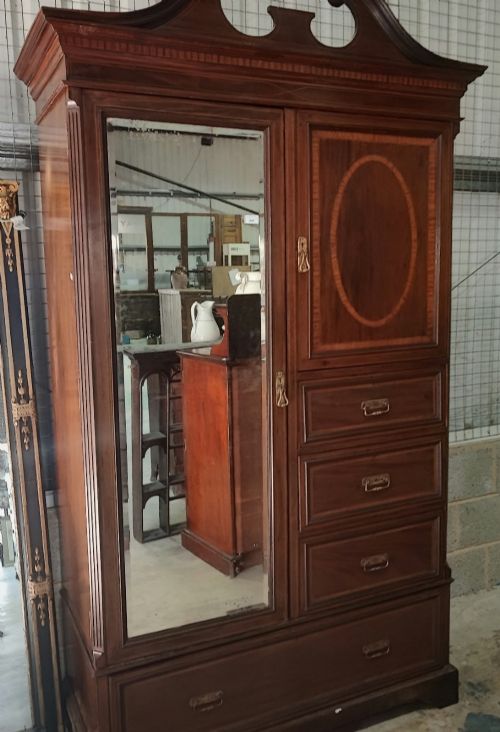
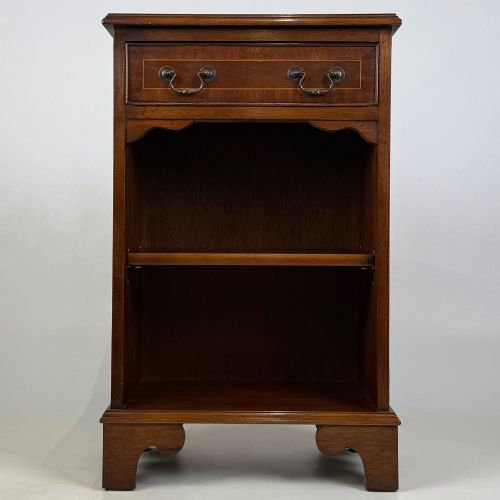
Edwardian Inlaid Mahogany Cabinets
Edwardian inlaid mahogany cabinets combine slender proportions with delicate contrasting timber details, offering practical storage and refined display space.
Edwardian Inlaid Mahogany Cabinets
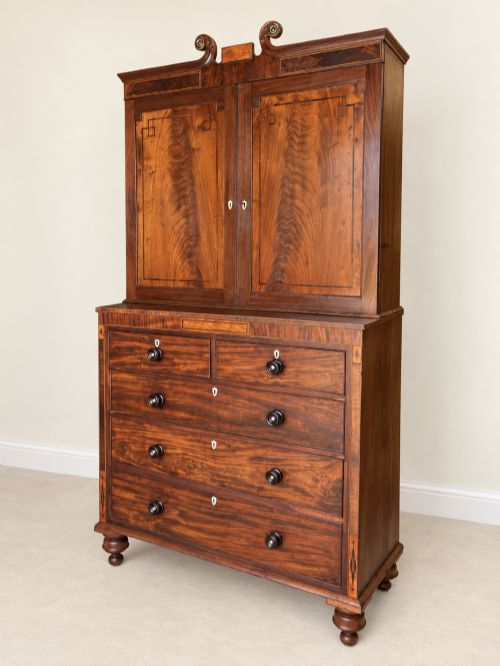
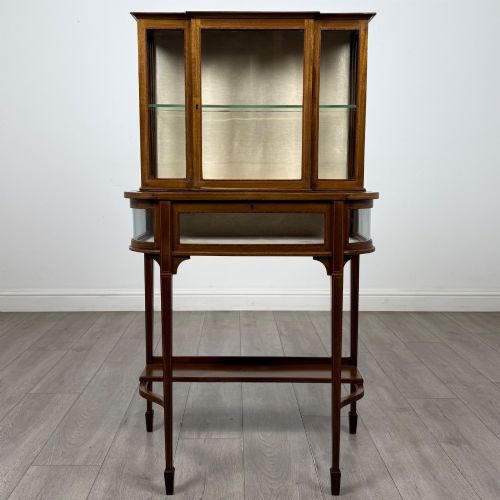
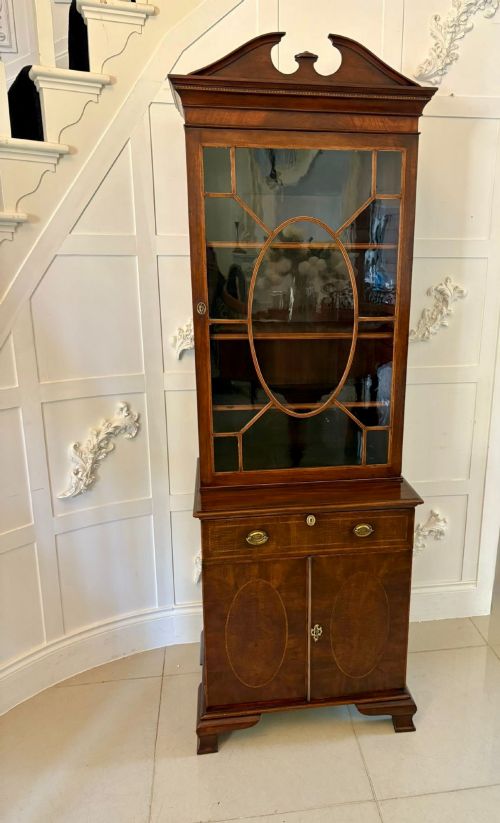
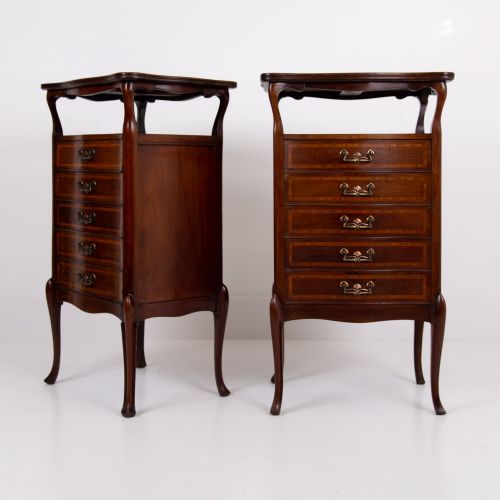
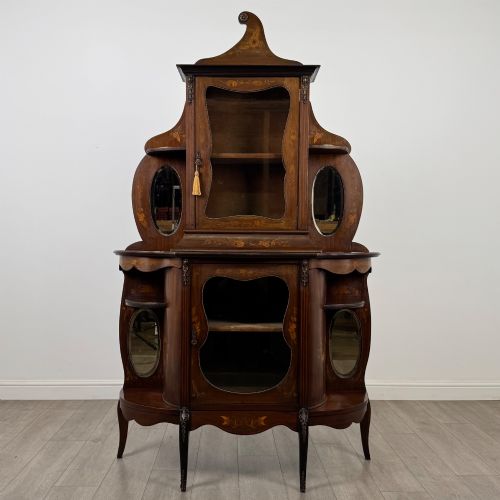
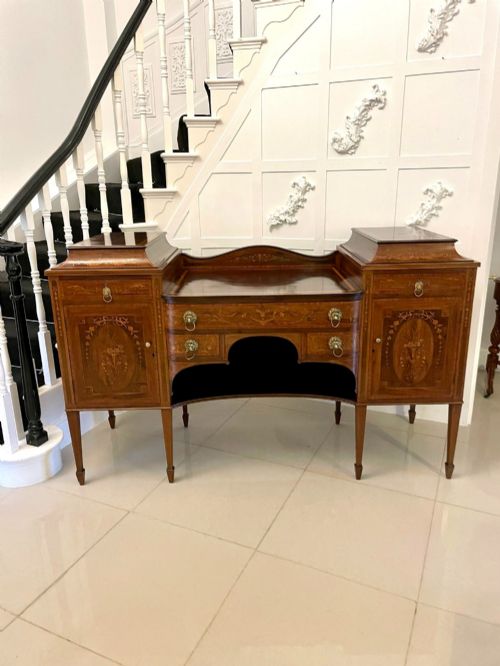
Edwardian inlaid mahogany cabinets encompass a diverse selection of domestic furniture, ranging from compact bedside cupboards and music cabinets to tall display pieces and sideboards. These items originate predominantly from the Edwardian era, alongside late Victorian and early twentieth-century periods.
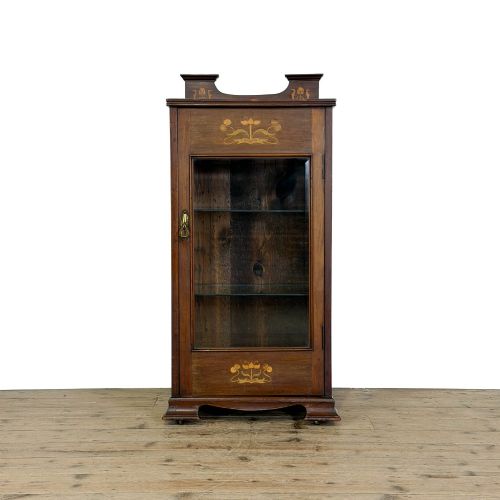
The versions most frequently encountered on this page are bedside cabinets and display cabinets, often constructed with contrasting satinwood or boxwood inlay. Pieces span several distinct styles, including Sheraton Revival, Arts and Crafts, and Edwardian Neo-Classical.
Makers and workshops of the period utilised mahogany as the primary structural timber, shaping corner cupboards, wardrobes, and bookcases to suit the refined aesthetic of town houses and country residences.
Materials and Technique
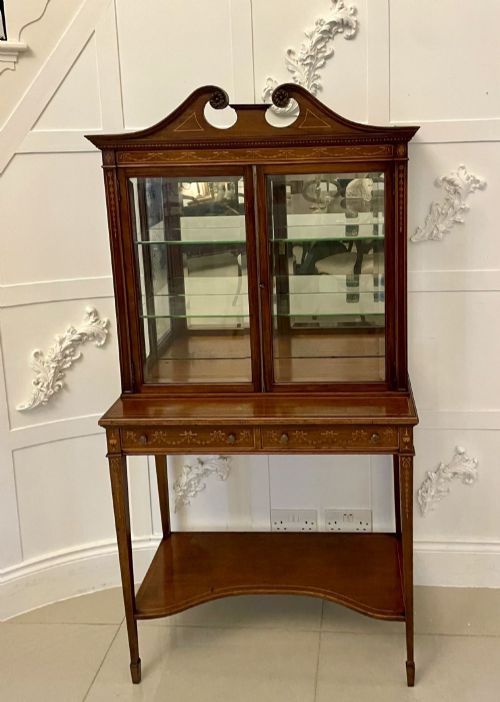
Makers constructed these cabinets using solid mahogany and mahogany veneers over secondary timbers, frequently mounting display variations on brass castors or slender legs. Glass panels were incorporated into doors for bookcases and display units, while internal shelving provided functional storage.
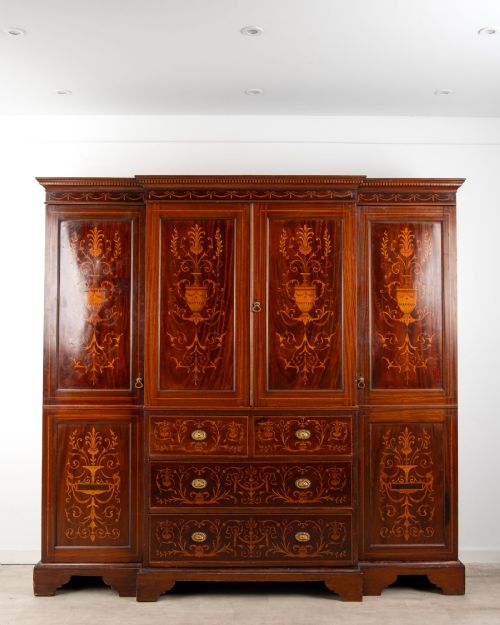
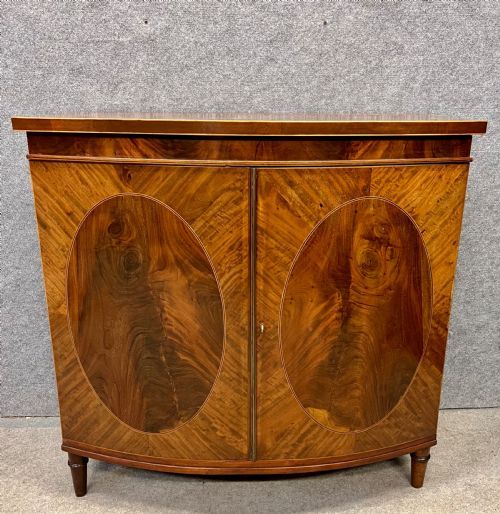
Surface decoration relied heavily on wood inlay and marquetry, utilising lighter timbers such as satinwood and boxwood to create geometric borders, urn motifs, and floral patterns against the dark mahogany grain.
Smokers' cupboards kept the pipe collection locked away from inquisitive guests.
Assessing Craftsmanship
The standard of a piece depends largely on the precision of the marquetry and the crispness of the satinwood or boxwood inlay against the mahogany ground. Sharper detail in floral or classical motifs distinguishes finer examples from simpler commercial production.
Proportion and timber selection also divide the range, with well-figured mahogany grains and balanced architectural lines indicating superior cabinet-making traditions.
Hewetsons London·GM Elwood·JS Henry·maples and co·Edwards and Roberts
The Edwardian Inlaid Mahogany Cabinets Glossary
- Inlay
- A technique where contrasting pieces of timber are inserted into a recessed surface to form a decorative pattern. This method defines the surface decoration of many Edwardian pieces.
- Sheraton Revival
- A late nineteenth and early twentieth-century design movement inspired by the furniture of George Sheraton. It is characterised by neoclassical motifs, satinwood banding, and light mahogany frames.
- Compactum
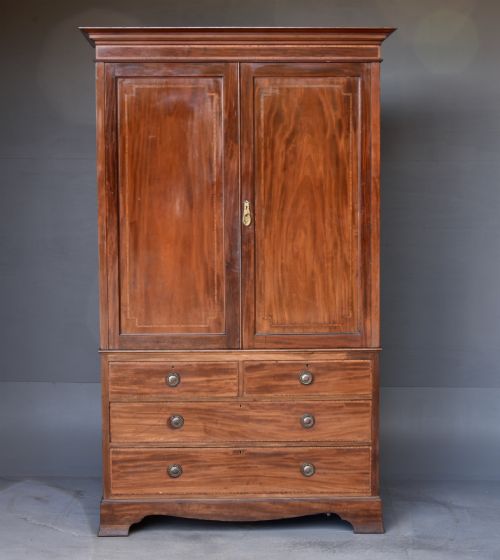
- A large fitted wardrobe designed to provide multiple internal configurations for hanging garments and drawers. These items often feature detailed mahogany and satinwood marquetry.
- Marquetry
- Elaborate veneer work arranged in pictorial or decorative patterns using various tinted woods. This technique requires considerable skill to fit individual timber pieces together.
- Bijouterie table
- A glass-topped display table intended for housing small valuable objects or ornaments. These pieces typically rest on slender legs with delicate timber framing.
Edwardian Inlaid Mahogany Cabinets: Frequently Asked Questions
What is a compactum wardrobe?
A compactum wardrobe is a large multi-functional storage piece designed to incorporate hanging space, drawers, and shelving within a single cabinet. These items often showcase prominent mahogany and satinwood marquetry.
They reflect the demand for efficient interior organisation in homes from the late nineteenth and early twentieth centuries.
How do I identify Sheraton Revival pieces?
Sheraton Revival furniture draws inspiration from eighteenth-century neoclassical designs, featuring lighter timber frames, satinwood inlay, and symmetrical geometric patterns. The style gained popularity during the Edwardian period.
Cabinet makers of the era applied these classic motifs to display cases, sideboards, and occasional tables.
Where were bedside cabinets placed?
Bedside cabinets served as functional bedside storage for personal items, night lamps, and books. Their compact proportions made them suitable for smaller bedroom spaces.
Pairs of these cupboards frequently appear in the record, matching the layout of period bedrooms.
What distinguishes music cabinets?
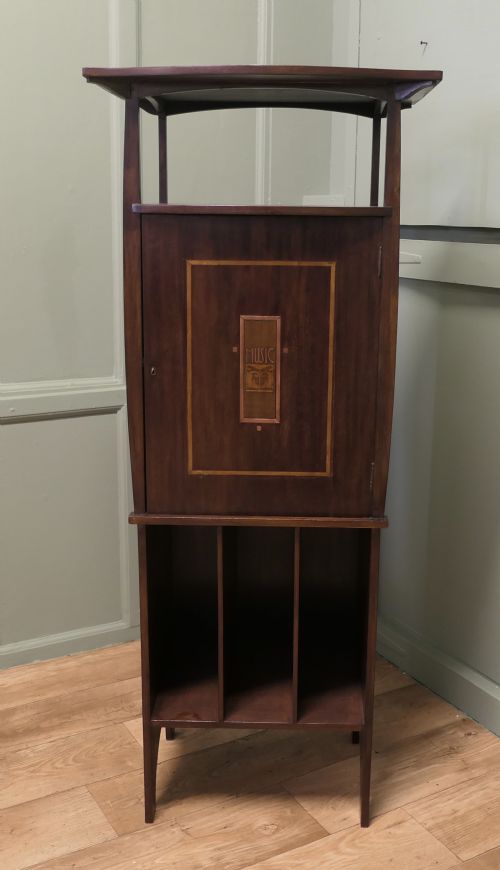
Music cabinets were built specifically to store sheet music and scores, usually featuring multiple shallow internal drawers or designated vertical slots behind a panelled door. Their design prioritized tidy organisation for the home parlour.
Craftsmen often embellished the exterior with subtle wood inlay to match other drawing room furniture.