






Satinwood Inlaid Bedside Tables
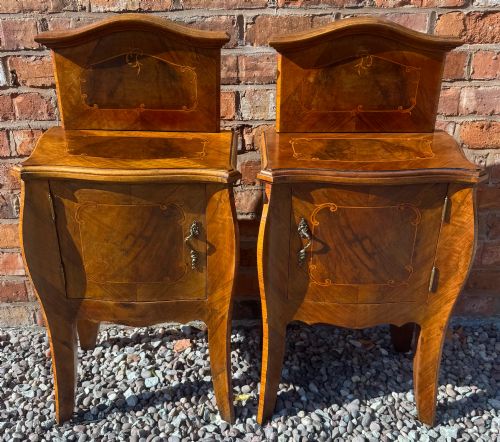
These satinwood inlaid bedside tables bring light wood tones and delicate stringing to the bedroom, offering practical surface space alongside period character.
Satinwood Inlaid Bedside Tables
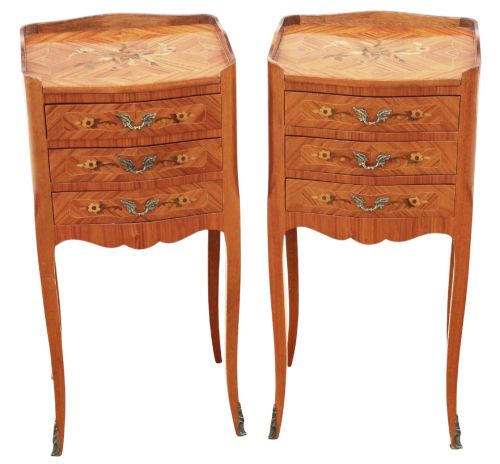
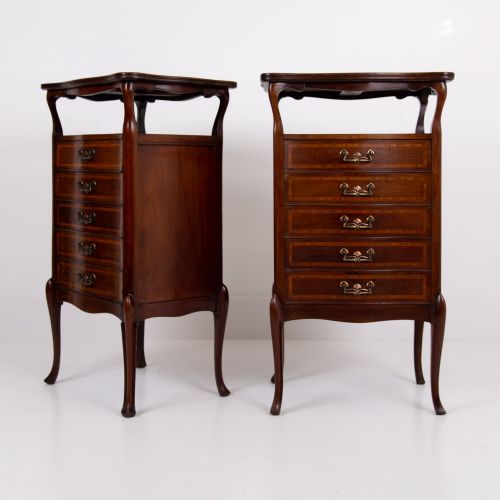
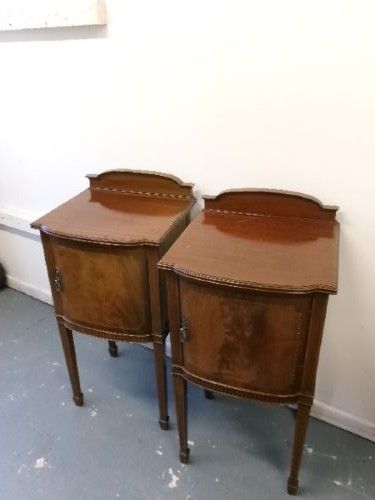
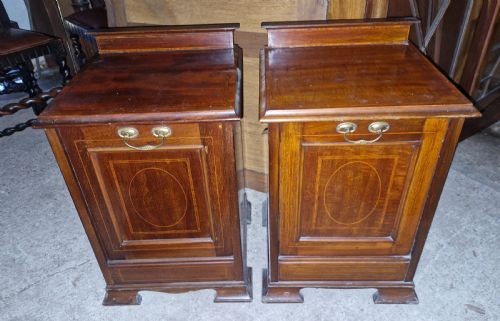
Satinwood inlaid bedside tables are compact storage items and surface pieces designed for the bedroom, often appearing in pairs or single formats. When you search for satinwood inlaid bedside tables, you encounter examples predominantly from the Edwardian era and the late nineteenth century. These forms vary from simple cupboards and cabinets with drawers to chests and occasional tables.
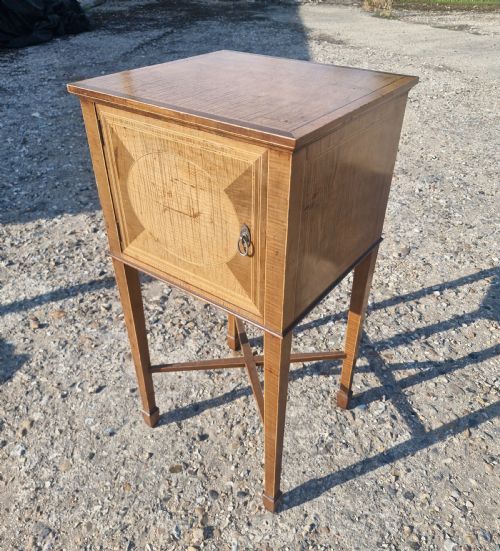
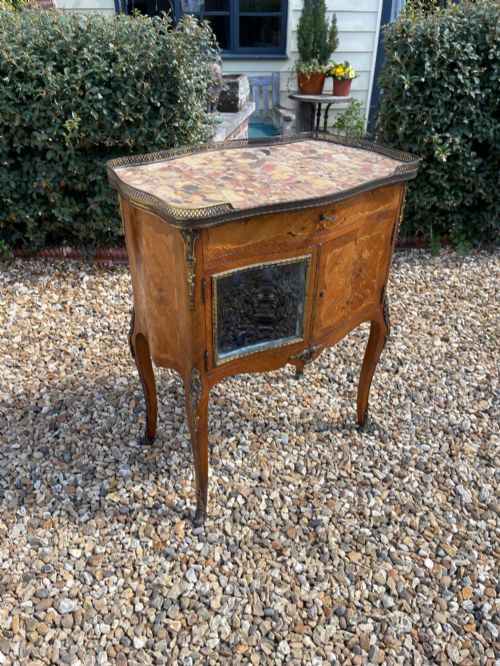
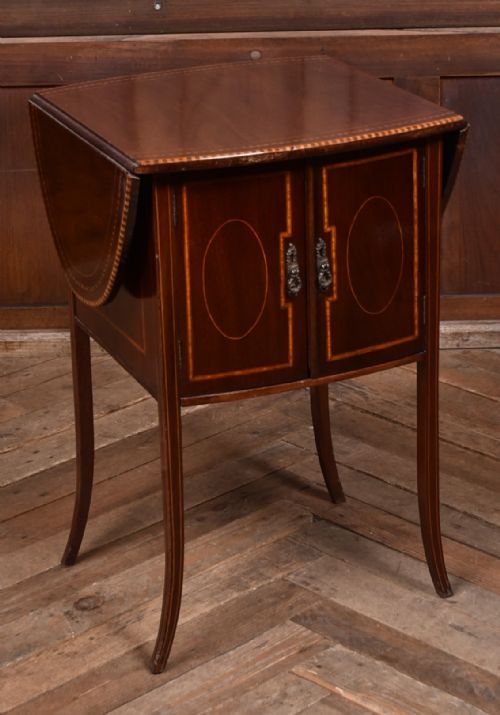
The construction typically utilises a primary timber body, such as mahogany or maple, decorated with satinwood veneers and contrasting stringing. Cabinets frequently feature a single door enclosing a shelf or small compartment, while other variations take the form of small chests of drawers or drop-leaf occasional tables. Many pieces reflect revival aesthetics, including Sheraton Revival, Neo-Classical Revival, and French influences.
Originating largely from British workshops and cabinet makers around nineteen hundred, these pieces serve as practical bedside companions. The combination of light satinwood panels and darker framing timbers provides the visual contrast typical of late Victorian and Edwardian bedroom furniture.
How they were made
Cabinet makers utilised dense primary timbers like mahogany and walnut for the structural carcase, applying fine veneers of satinwood to the exterior surfaces. This method allowed workshops to create striking grain patterns and contrasting panels without sacrificing structural stability.
Decorative detailing relies on timber inlay, boxwood stringing, and marquetry, often set into the door panels and top surfaces. Brass hardware, including handles and hinges, completes the construction, whilst marble inserts occasionally top the cabinet surfaces.
Several cabinets double as discreet shoe storage, proving that Victorian bedroom neatness required ingenious joinery.
What varies in quality
The standard of execution in the timber inlay and marquetry dictates the visual refinement of each piece. Finer examples display precise cutting and tight joints in the boxwood and satinwood elements, whereas simpler items rely on more straightforward banding.
The choice of secondary woods and the integrity of the cabinet carcase distinguish high-grade workshop production from standard commercial output. Well-preserved surfaces retain the natural chatoyancy of the satinwood veneer without excessive disruption from past repairs.
Morant And Co London·Maple And Co·Gillows·Charles Topino
The Satinwood Inlaid Bedside Tables Glossary
- Satinwood
- A durable, light-coloured tropical timber known for its lustrous sheen and smooth grain. It was frequently used as a veneer on late nineteenth-century and Edwardian cabinet furniture.
- Inlay
- A decorative technique where pieces of contrasting wood, such as boxwood or mahogany, are inserted into recessed sections of a timber base. This creates flat, patterned surface designs.
- Marquetry
- The art of forming decorative patterns using assembled veneer pieces applied to a carcase structure. It often depicts floral or symmetrical motifs.
- Stringing
- Thin, narrow lines of contrasting wood inlay used to outline drawers, tabletops, and cabinet doors. It defines the geometric panels of Edwardian furniture.
- Sheraton Revival
- A late nineteenth-century design movement inspired by the neoclassical furniture of George Thomas Sheraton. It favours light proportions, satinwood veneers, and tapered legs.
Satinwood Inlaid Bedside Tables: Frequently Asked Questions
What periods do these cabinets represent?
The majority of these pieces date from the Edwardian period and the late nineteenth century, spanning from eighteen eighty to nineteen thirty. Revival styles drawing on earlier eighteenth-century aesthetics are also prominent.
Craftsmen during this era frequently revisited Sheraton and Neo-Classical forms, adapting them to suit contemporary bedroom requirements.
How do I care for satinwood surfaces?
Satinwood veneer benefits from minimal moisture and protection from direct sunlight, which can alter the natural golden tone of the timber. Regular dusting with a soft, dry cloth preserves the polished finish.
Avoid placing damp items directly onto the wood surface, as moisture can penetrate older varnishes and lift delicate veneers.
What is the difference between a cabinet and a chest?
Bedside cabinets typically feature an enclosed cupboard space behind a single door, often housing an interior shelf. Chests of drawers incorporate multiple horizontal stacking drawers for storage.
Both forms utilise similar satinwood veneers and inlay techniques, serving parallel functions beside a bed.