


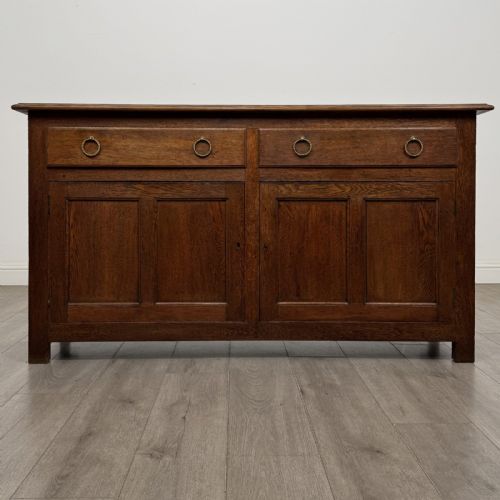
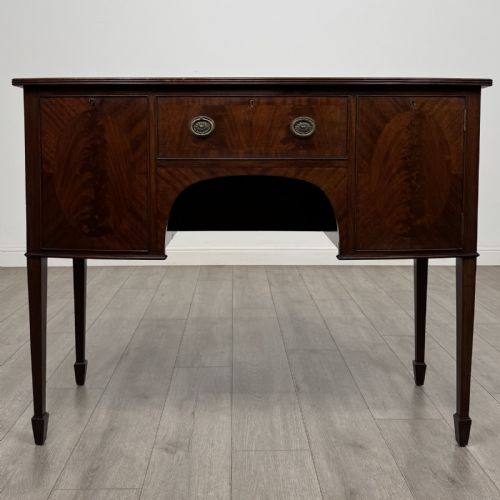
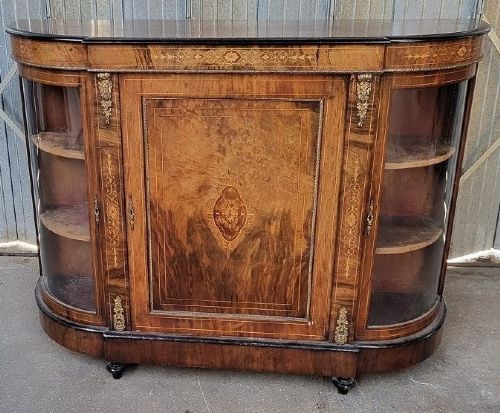
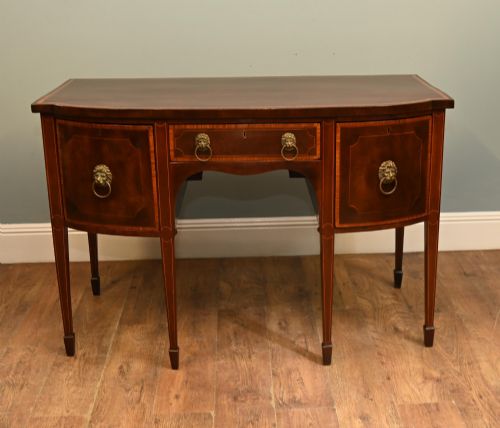
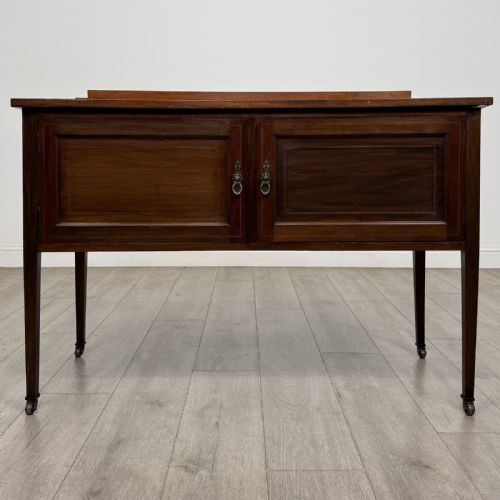
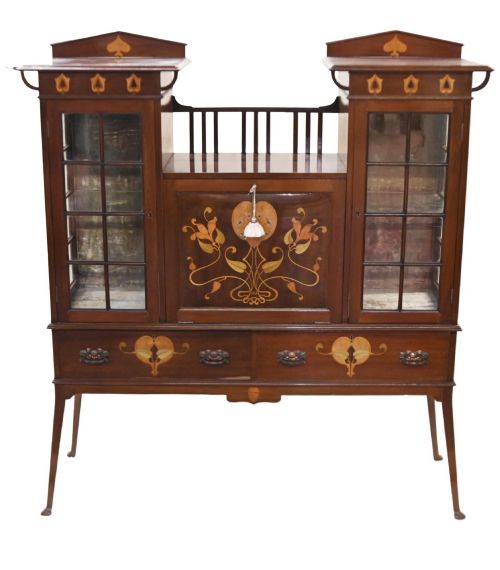
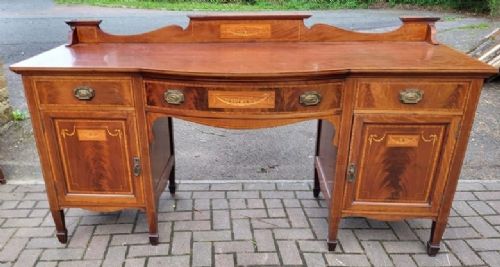
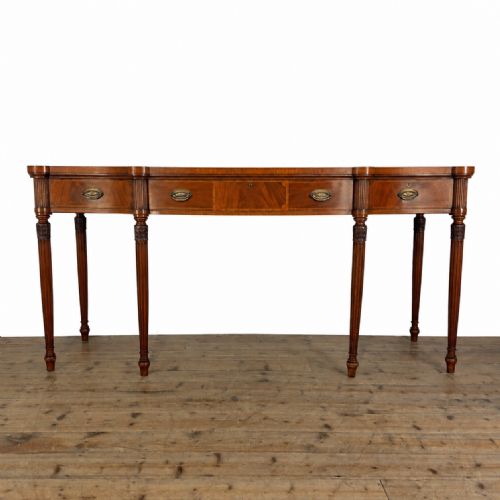
Edwardian Credenza
An Edwardian credenza offers generous storage and refined timber work, standing as a practical centrepiece for a dining room or hall.
Edwardian Credenza
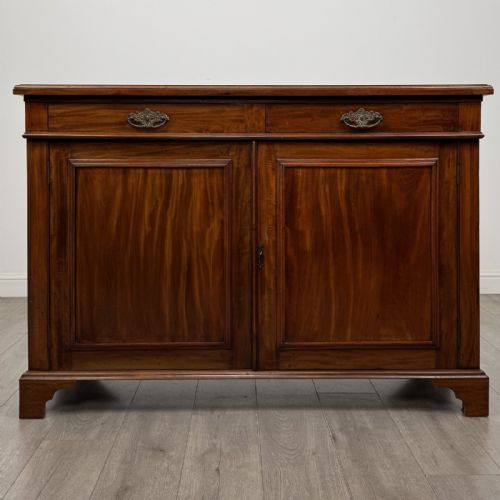
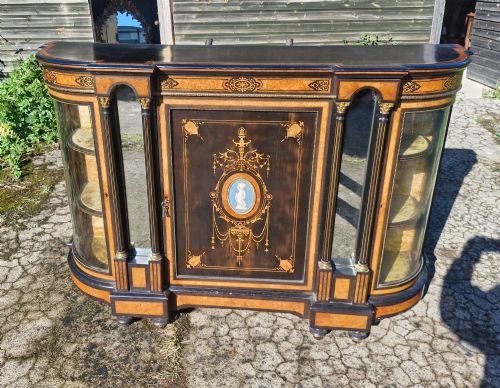
When you search for an edwardian credenza, you encounter a selection of heavy timber storage furniture originating primarily from the Edwardian period alongside related Victorian, nineteenth century, and early twentieth century pieces. These items serve as sideboards, side cabinets, cupboards, and dresser bases designed for domestic storage and display.
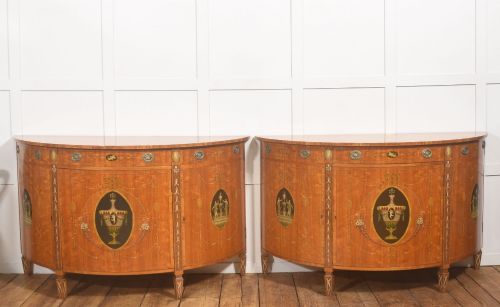
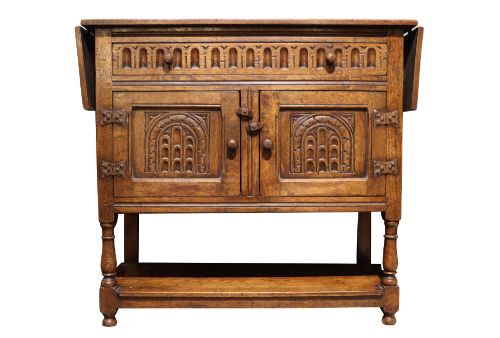
Makers and designers of the era also drew on earlier aesthetics, resulting in variations like Jacobean Revival carved oak pieces, Arts and Crafts designs, and Sheraton Revival satinwood crossbanded sideboards. These forms reflect both traditional craftsmanship and the stylistic shifts occurring at the turn of the twentieth century.
How they were made
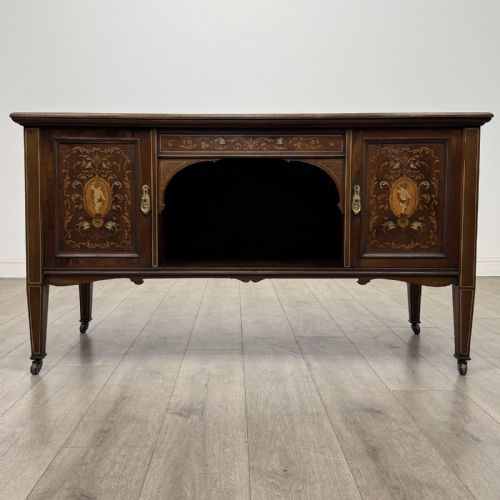
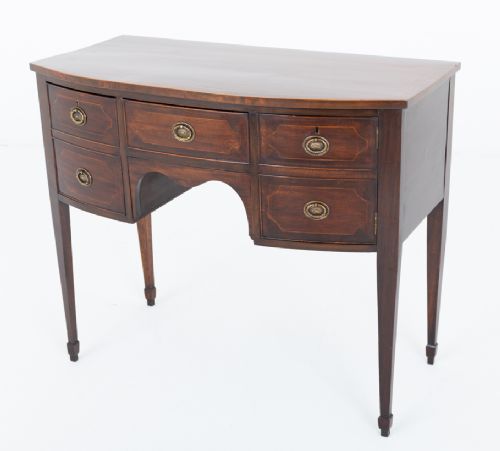
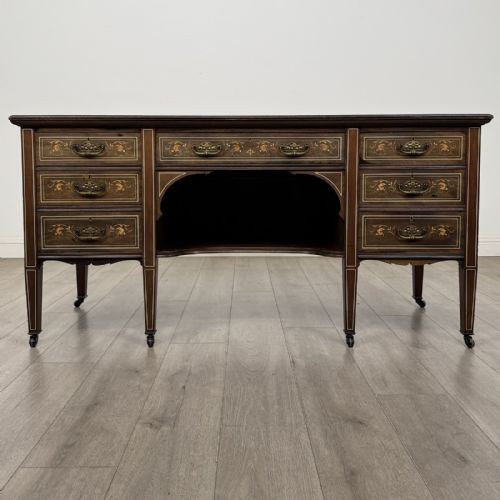
Makers constructed these cabinets using solid timbers and decorative veneers, principally mahogany, oak, walnut, burr walnut, and satinwood. Cabinet makers applied techniques such as crossbanding and marquetry inlay to introduce contrasting colour and geometric or floral patterns across drawer fronts and doors.
Structural embellishments relied on manual woodworking methods, including hand-carved panels, turned or barley twist legs, cabriole legs, and claw and ball feet. Metal elements in brass and ormolu provided hardware and mounts, whilst glass panes fitted into doors created enclosed display spaces.
Edwardian Credenza Retail Price Guide 2026
Typical asking prices for edwardian credenza among the pieces listed under this phrase on Sellingantiques today, from the lower quarter to the upper quarter. They describe what is for sale here now, not the wider market.
Materials documented across the inventory include brass, mahogany, oak, glass, satinwood, walnut, burr walnut, and iron.
What varies in quality
The calibre of a piece rests largely on the selection of timber and the execution of its decorative details. Pieces featuring burr walnut veneers, intricate marquetry inlay, or finely carved woodwork demonstrate a higher standard of workshop production than plain, utilitarian counterparts.
Construction methods further define the tier of an item, distinguishing standard regional items from bespoke commissions produced by prominent makers. The integration of balanced proportions, such as serpentine or demi-lune shaping, elevates the architectural sophistication of the cabinet.
Leonard Wyburd for Liberty & Co.·Shapland and Petter·Whytock & Reid·Hewetsons London·Edward Barnsley·Shoolbred & Co.
The Edwardian Credenza Glossary
- Crossbanding
- A border technique where thin strips of veneer are laid across the grain of the primary wood. This method frames drawer fronts and tabletops to create a decorative contrast.
- Marquetry
- The art of applying pieces of veneer to a structure to form decorative patterns and pictures. Craftsmen utilise diverse woods to achieve tonal variation without paint.
- Demi-lune
- A half-moon shape used for the footprint and top of cabinets and sideboards. This curved form allows the furniture to sit flush against a wall whilst softening room angles.
- Gallery
- A raised ornamental railing or shelf running along the top edge of a cabinet or sideboard. It prevents displayed items from sliding off the rear surface.
- Serpentine
- A wave-like shaped front featuring a convex centre flanked by concave curves. This contour requires precise joinery and advanced shaping techniques from the cabinet maker.
Edwardian Credenza: Frequently Asked Questions
What is an edwardian credenza used for?
These pieces function primarily as storage units for dining rooms and hallways, holding cutlery, linen, and tableware. The top surface and any integrated shelving also provide space for displaying decorative objects.
Cabinets featuring glass doors or mirror backs additionally serve to showcase ceramics, glassware, and books while protecting them from dust.
How do I tell Edwardian pieces from Victorian ones?
Edwardian furniture generally exhibits lighter proportions, simpler lines, and brighter satinwood or mahogany veneers compared to earlier Victorian production. Makers in the Edwardian era often drew inspiration from Sheraton and Georgian revivals.
Victorian items tend to use darker timbers such as pollard oak, rosewood, and heavy walnut with more elaborate carving, deep mouldings, and robust structural forms.
Are these cabinets suitable for modern homes?
Their deep timber tones and traditional craftsmanship allow them to anchor modern living spaces as striking standalone storage items. They provide functional surface area and enclosed cupboards that accommodate contemporary items.
Placing one in a dining room, hallway, or living room introduces natural wood textures and historic character without overwhelming the room.
What styles are common in this category?
The selection encompasses Arts and Crafts designs alongside Jacobean Revival pieces with geometric panels and heavy carving. Sheraton Revival influences also appear through delicate satinwood crossbanding and serpentine shaping.
Secessionist and late nineteenth-century styles further broaden the design vocabulary found across these sideboards and display cabinets.