
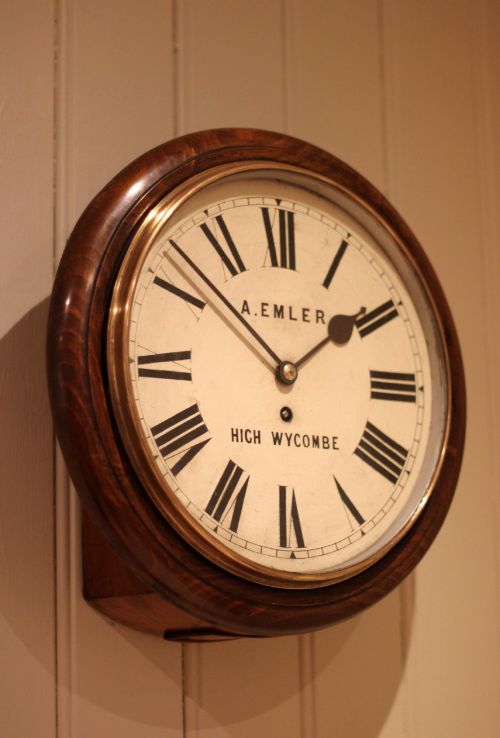
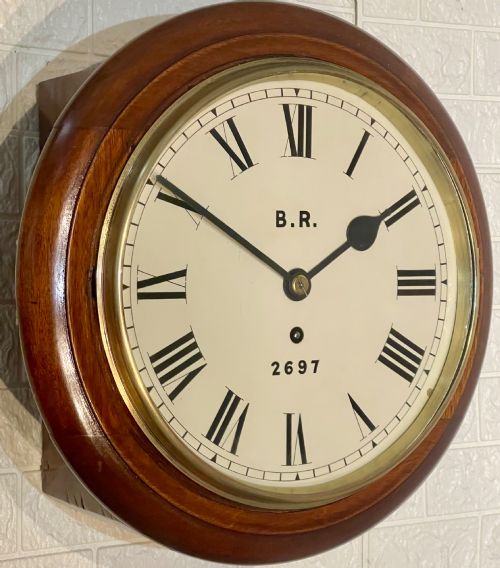
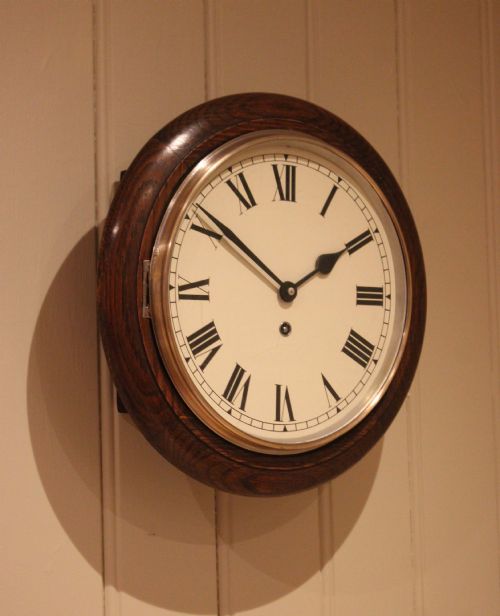
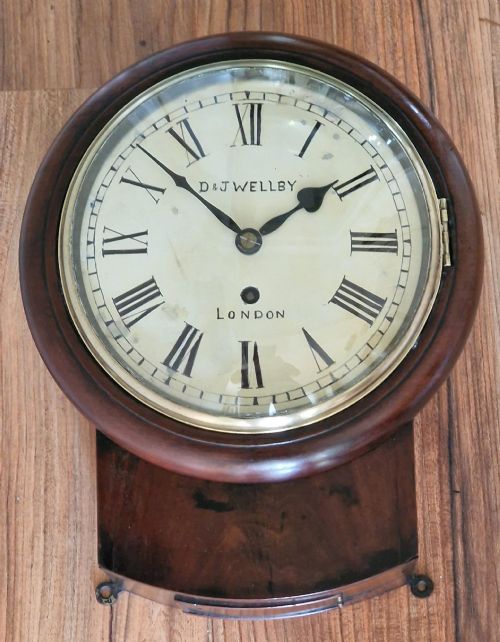
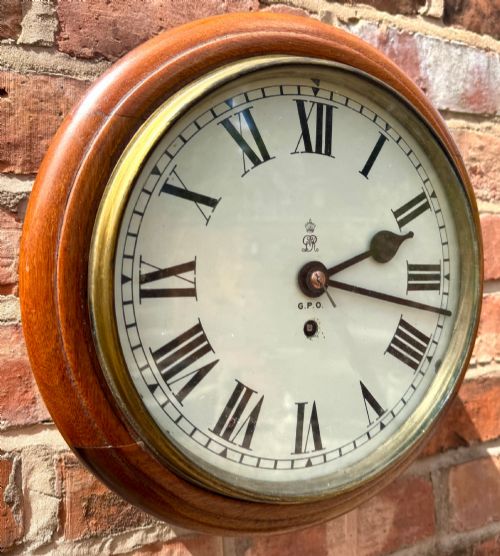
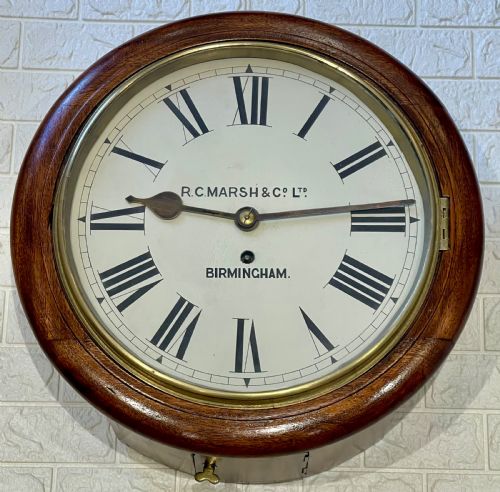
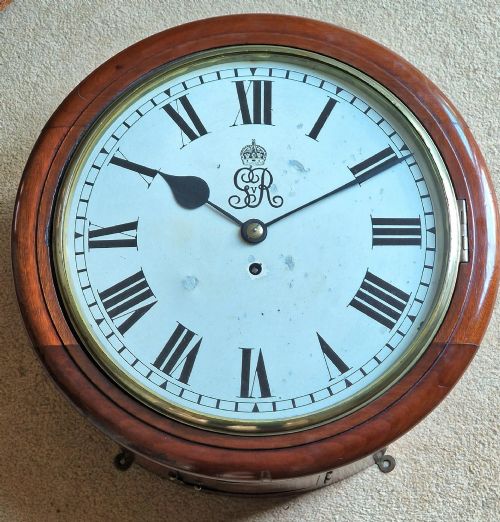


Edwardian Fusee Wall Clock
An edwardian fusee wall clock brings precise timekeeping and robust British craftsmanship into a room.
Edwardian Fusee Wall Clock
An edwardian fusee wall clock represents a traditional timekeeper designed for public offices, railways, and domestic halls. You will frequently encounter railway and municipal examples alongside polished domestic cases when searching this phrase.
The pieces on this page span the Victorian, Edwardian, and interwar periods, reflecting decades of utilitarian and refined clockmaking. Formats range from standard circular dials to drop-dial and bulkhead designs originating from makers across London and the regions.
Materials and Mechanism
Timbers such as mahogany, oak, and beech form the robust wooden housings required to protect the internal brass and steel movements. Glass bezels shield the painted metal or convex dials, while iron and brass components drive the single chain fusee mechanism.
The fusee cone ensures even power delivery from the mainspring to the escapement, maintaining consistent accuracy as the clock runs down. Cabinetmakers constructed these heavy surrounds to withstand daily use in busy stations, offices, and boardrooms.
The listings feature oak, mahogany, and beech timber housings paired with brass and steel fusee movements.
Distinctions in Quality
Quality rests upon the crispness of the timber case carving, the legibility of the dial lettering, and the original integrity of the brass fusee movement. Superior examples retain their matching numbered cases, original bezels, and clean dial paint.
Makers who supplied the railway networks and government departments utilised high-grade materials built for rigorous service, resulting in enduring mechanical reliability that distinguishes finer surviving pieces.
D and J Wellby·Harrods·Kelvin White and Hutton·Gledhill Brook·Camerer Cuss and Co
The Edwardian Fusee Wall Clock Glossary
- Fusee
- A conical pulley used with a cord or chain to equalise the torque of the mainspring as it unwinds. This clever device ensures steady timekeeping right up until the clock requires winding.
- Drop-dial
- A clock case featuring a circular dial section at the top above a lower wooden trunk that accommodates a longer pendulum swing. This drop portion often includes a side or bottom access door.
- Bulkhead
- A heavy-duty clock designed specifically for mounting on the interior walls of ships. These watertight or robust housings protected delicate movements from marine moisture and vibration.
- Dial
- The visible face of the clock where the hours and minutes are displayed. On these British wall pieces, dials are typically painted metal protected by a brass or wooden bezel and glass.
Edwardian Fusee Wall Clock: Frequently Asked Questions
What is a fusee movement?
A fusee movement uses a conical pulley connected to a chain to regulate power from the mainspring.
This mechanism maintains uniform tension on the gear train, ensuring the clock records time accurately as the spring relaxes.
Where were these clocks used?
These timepieces served in railway stations, post offices, military installations, and municipal offices across Britain.
Their clear dials and durable construction made them ideal for public spaces that required dependable timekeeping.
How do I wind the clock?
Winding is performed by inserting a matching key into the dial winding hole and turning it carefully.
Most single-fusee timepieces require weekly attention to keep the movement running without interruption.
How do I identify a railway clock?
Railway examples often feature company initials such as N.E.R, LMS, or GVR painted on the dial face or stamped onto the timber case.
Station masters and telegraph offices relied on these marked clocks to coordinate strict scheduling.