



Edwardian French Mantel Clock
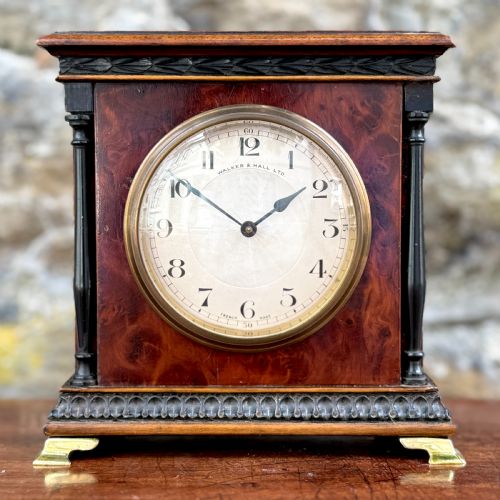
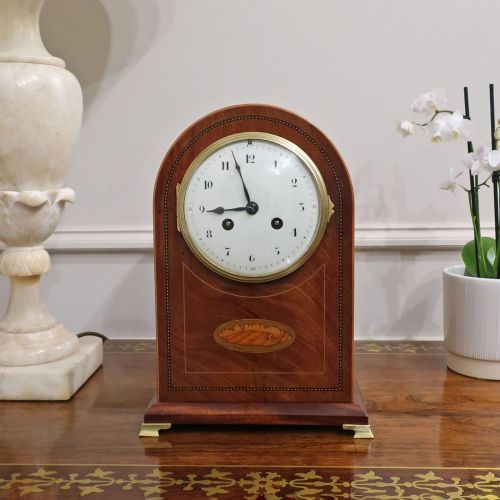
These Edwardian French mantel clocks bring together polished brass, rich mahogany and intricate enamel dials to sit with presence upon any shelf.
Edwardian French Mantel Clock
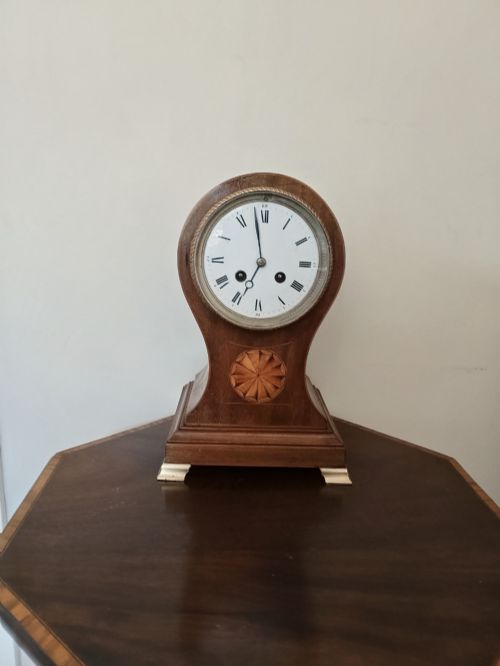
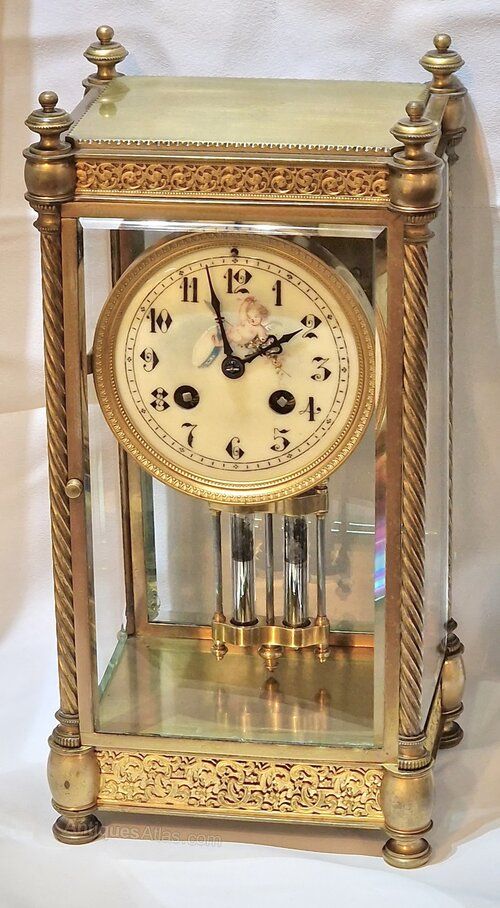
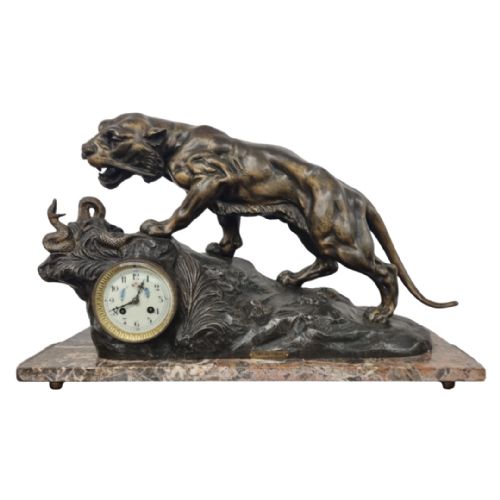
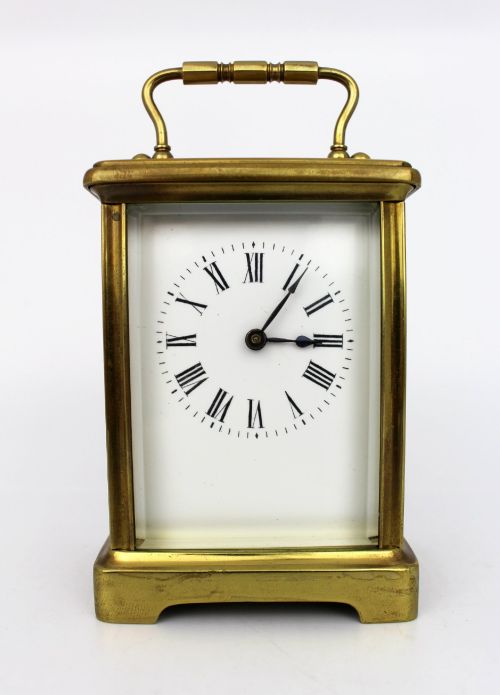
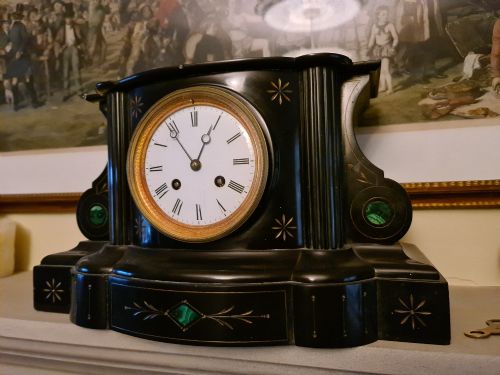
An edwardian french mantel clock sits firmly within a tradition of continental horology, though many examples appearing here bear the hallmarks of the Edwardian period alongside earlier Victorian influences. Buyers encounter various forms ranging from substantial rouge marble and bronze pieces to delicate four glass clocks and tall architectural carriage cases.
The objects themselves span desk clocks, striking balloon clocks, and crystal regulators, reflecting both Belle Epoque and neoclassical design preferences. Pieces frequently combine French movements with mahogany cases, brass mountings, or onyx structures designed to command attention in a room.
Origins stretch across the late nineteenth and early twentieth centuries, capturing a period when French clockmakers supplied refined timepieces to British retailers. Surviving examples demonstrate how makers blended traditional French styling with the domestic requirements of Edwardian homes.
How They Were Made
Casework relies heavily on solid mahogany, polished brass, and cast gilt bronze, often complemented by white enamel dials and bevelled glass panels. Wood is frequently inlaid or shaped into architectural forms, while metal components undergo intricate casting and gilding.
Dials display fine hand-painted numerals and delicate subsidiary hands, protected behind curved or flat glassbezels. Movements depend on brass gear trains and escapements, frequently engineered to run for eight days and strike hours or half-hours on gongs or bells.
The selection includes carriage clocks, crystal regulators, and striking mantel pieces with French movements.
What Varies in Quality
The crispness of the cast bronze mounts and the depth of the mahogany polish separate standard production from finer workshop output. Better examples exhibit hand-chased detail on the metalwork and robust, fully jewelled movements signed by reputable makers.
Dial condition and the preservation of original enamel work heavily influence the overall standard of a piece. Superior clocks retain their matching key, original mercury or pendulum balance, and crisp dial lettering without hairline cracks or restoration.
R Varnier·Walker and Hall·Samuel Marti et Cie·Mappin and Webb·J C Vickery·Maple and Co·James Grohé
The Edwardian French Mantel Clock Glossary
- Crystal Regulator
- A mantel clock housed within glass panels on all four sides, allowing a clear view of the mercury or pendulum movement inside. These pieces often feature ornate enamel dials and brass or gilt bronze framing.
- Carriage Clock
- A portable spring-driven timepiece originally designed for travel, featuring a rectangular brass case with a carrying handle on top. Many include bevelled glass windows and sophisticated striking or alarm mechanisms.
- Gorge Case
- A specific rectangular carriage clock case style characterised by stepped, tiered mouldings on the top and base. This design is typically associated with better quality nineteenth and early twentieth-century examples.
- Enamel Dial
- A clock face formed by fusing powdered glass onto a copper or brass base at high temperatures. These dials provide a bright, durable white surface for painted numerals.
- Grande Sonnerie
- A complex striking mechanism that chimes the hours and the quarters automatically on every quarter hour. It represents a high level of horological skill in antique timepieces.
Edwardian French Mantel Clock: Frequently Asked Questions
How do I wind my edwardian french mantel clock?
Use the appropriate matching key to turn the winding arbours clockwise until you feel firm resistance, taking care not to over-wind the mainspring.
Most eight-day movements require a single weekly turn to maintain accurate timekeeping across the brass gear train.
Are these clocks suitable for daily use?
These timepieces function reliably in a domestic setting provided they are placed on a level surface away from direct sunlight and drafts.
Regular servicing by a professional horologist helps preserve the delicate balance and escapement over years of use.
How do I tell an Edwardian clock from a Victorian one?
Edwardian examples tend to lean towards lighter mahogany cases, refined inlay, and softer Belle Epoque or neoclassical styling compared to earlier Victorian heaviness.
Construction details and retailer marks often help anchor the exact manufacturing decade within the broader timeline.
What is a carriage clock travel case used for?
Original leather outer cases protected brass carriage clocks from dust and impact during transit across Europe and beyond.
Today, surviving cases add significant context and completeness to collectible travel timepieces.