


Gold Mounted Mantel Clock
These gold mounted mantel clock examples combine architectural cases with precious mounts, offering heavy decorative presence and reliable timekeeping for a traditional mantelpiece.
Gold Mounted Mantel Clock
When you search for a gold mounted mantel clock, you enter a field dominated by nineteenth century French production alongside earlier English bracket pieces. These objects combine timekeeping mechanisms with decorative enclosures designed to sit squarely on a shelf or fireplace surround.
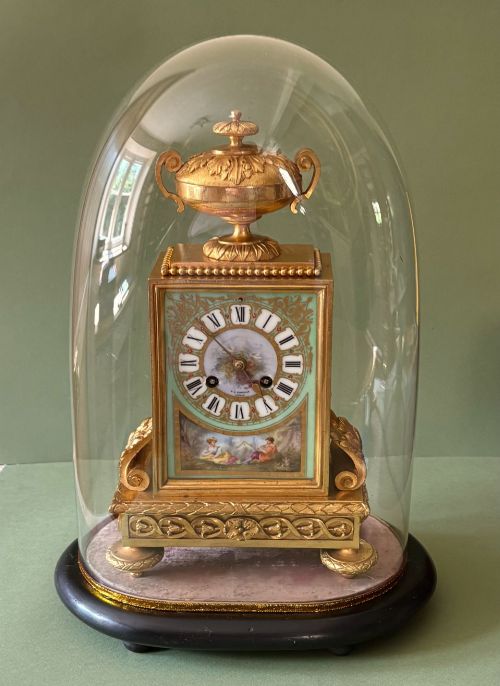
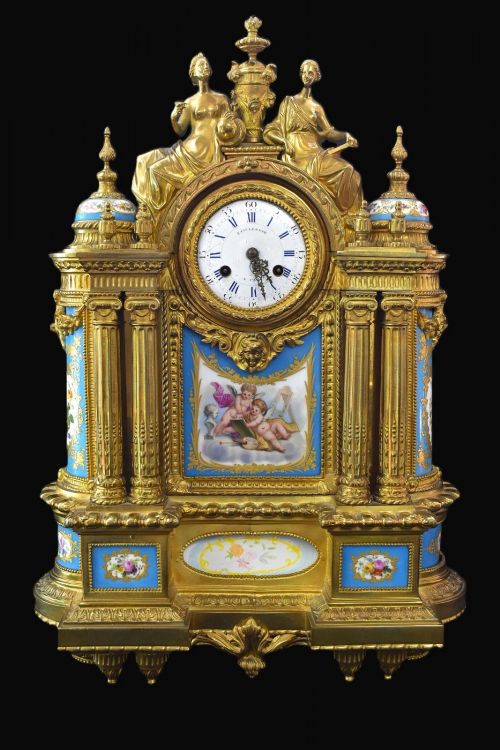
The version you are most likely to meet on this page is the nineteenth century French ormolu and porcelain mounted mantel clock. These examples often incorporate decorative mounts, enamel dials, and styling derived from Louis XV and Louis XVI revivals.
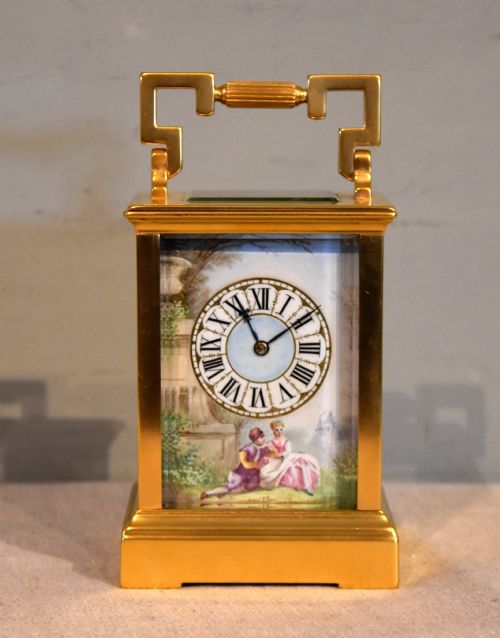
Cases range from large Napoleon III porcelain mounted structures down to more modest carriage timepieces and brass mounted bracket clocks. The unifying element is the integration of metallic or gilt mountings upon wood, porcelain, onyx, or lacquer bodies.
How they were made
Maker workshops utilised fire gilt bronze, known as ormolu, alongside standard brass for the decorative mounts and bezels that frame the dial and accent the corners. These metal components were cast, chased, and gilded before being fastened to the main body of the clock.
Cases combined diverse materials including wood, tortoiseshell in Boulle work, glass, and red and gold lacquer. Painted porcelain panels, often associated with Sevres styles, were frequently fitted directly into the front or sides of the case.
Movements were engineered to accommodate striking mechanisms, calendars, or alarms, driven by spring or weight power. Enamel was used for the white dials, featuring black painted Roman or Arabic numerals.
Listings feature periods spanning the eighteenth and nineteenth centuries, including Victorian, Napoleon III, and Louis styles.
What varies in quality
The integration of the painted porcelain panels affects the overall standard. Superior clocks feature finely detailed hand-painted ceramic plaques that match the period of the case, securely fitted without gaps in the surrounding mounts.
The complexity and completeness of the movement also define the grade of the piece. Clocks featuring named maker signatures, calendar functions, or striking trains require greater precision and indicate higher workshop origins.
Etienne Lenoir·Louis Goret·James Smith·JP Delettrez
The Gold Mounted Mantel Clock Glossary
- Ormolu
- Gilt bronze produced by applying a mercury and gold amalgam to a bronze base and heating it. This technique creates a durable golden finish characteristic of French mantel clocks.
- Boulle work
- Marquetry technique involving tortoiseshell and brass inlay developed by Andre Charles Boulle. It provides a dark, patterned surface popular on nineteenth century French cases.
- Bracket clock
- A portable spring driven clock originally designed to sit on a wall bracket. They often feature wooden cases with carrying handles and elaborate brass mounts.
- Sevres porcelain
- Soft paste or hard paste porcelain produced at the Sevres factory in France. These painted plaques are frequently mounted onto the front of nineteenth century clock cases.
- Putto
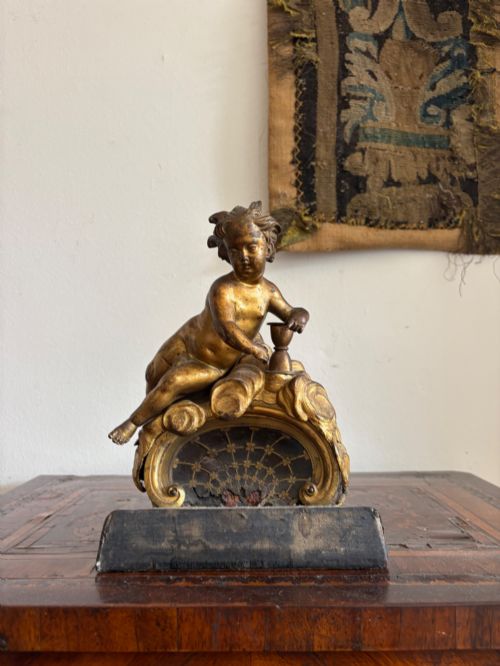
- A figure of a small chubby male child, often winged, used as a decorative finial or mount. They appear frequently on French rococo revival clock cases.
Gold Mounted Mantel Clock: Frequently Asked Questions
How do I wind a gold mounted mantel clock?
Use the appropriate key provided with the movement to turn the winding squares on the dial face gently. Do not over wind the mainspring, as this can damage the internal gearing.
Ensure the clock is positioned level on the mantelpiece so the pendulum swings evenly. Listen to the beat to confirm the rhythm is steady after winding.
What periods do these clocks cover?
The available pieces span primarily from the eighteenth century through the nineteenth century. Victorian and Napoleon III examples represent the later Victorian eras.
Earlier eighteenth century items include English bracket clocks with lacquer and brass work. French rococo and Louis styles dominate the nineteenth century selections.
How should I clean the ormolu mounts?
Dust the gilt bronze mounts regularly with a soft, dry brush to prevent dirt accumulation. Avoid liquid cleaners, polishes, or abrasive cloths that can strip the delicate gold layer.
Professional conservation is recommended for tarnished or heavily soiled metalwork. Keep the clocks away from direct sunlight and damp environments to protect the wood and lacquer.
Were these clocks made in pairs?
Mantel clocks were generally produced as single decorative items for the centre of a fireplace or shelf. Some formed part of garniture sets accompanied by matching candelabra.
Individual clocks function as standalone timepieces and decorative focal points. The mounts and materials were chosen to match contemporary interior design schemes.