



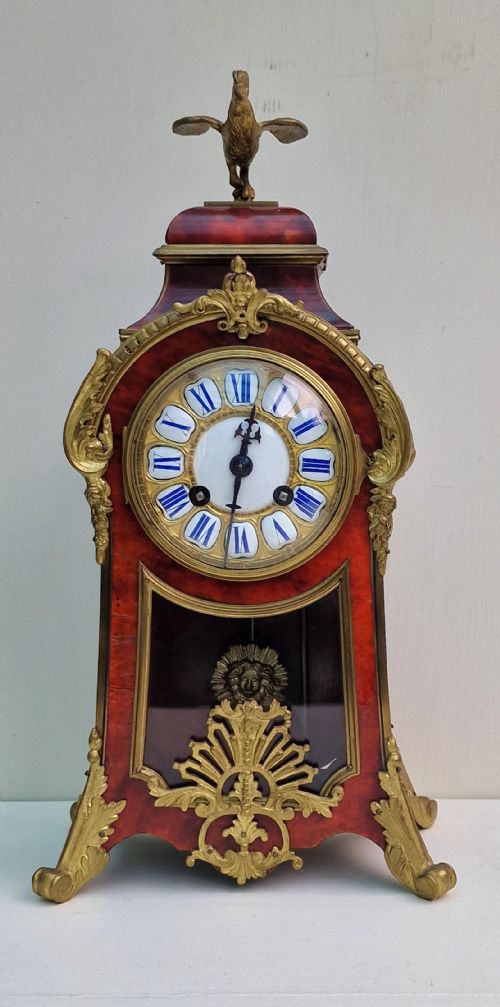


Antique Red Table Clock
An antique red table clock brings warmth and character to a room, offering rich tortoiseshell, rouge marble, and lacquer tones that catch the eye.
Antique Red Table Clock
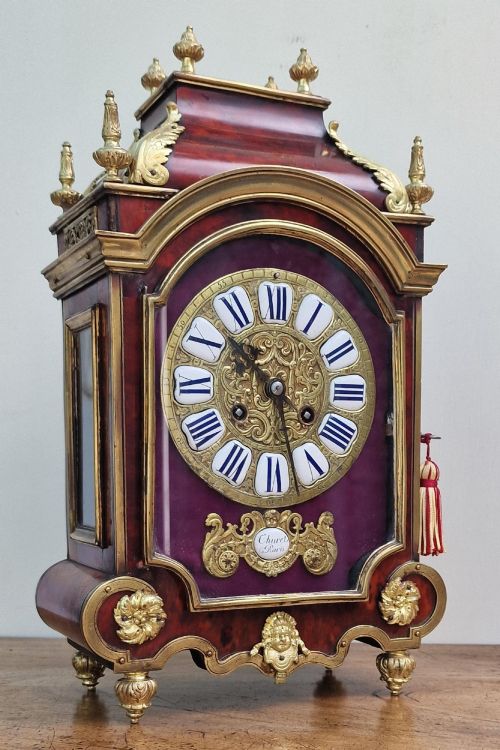
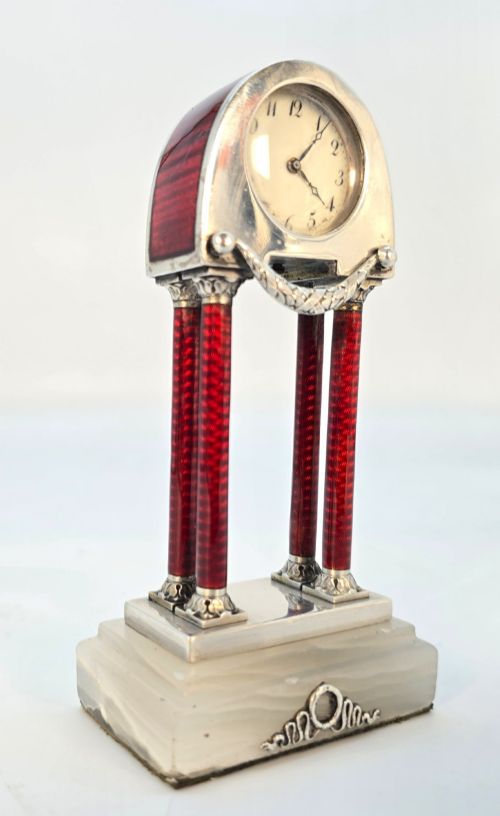
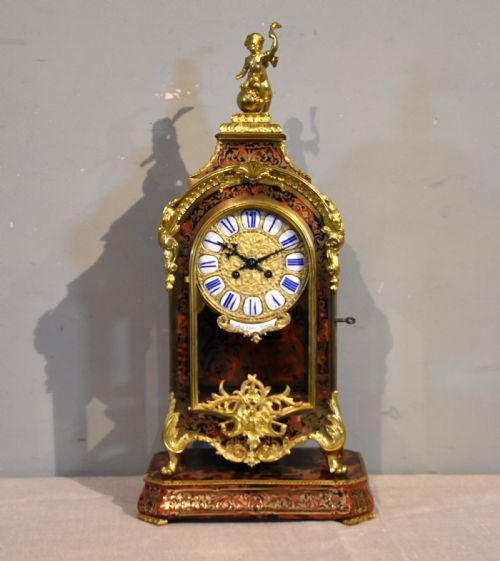
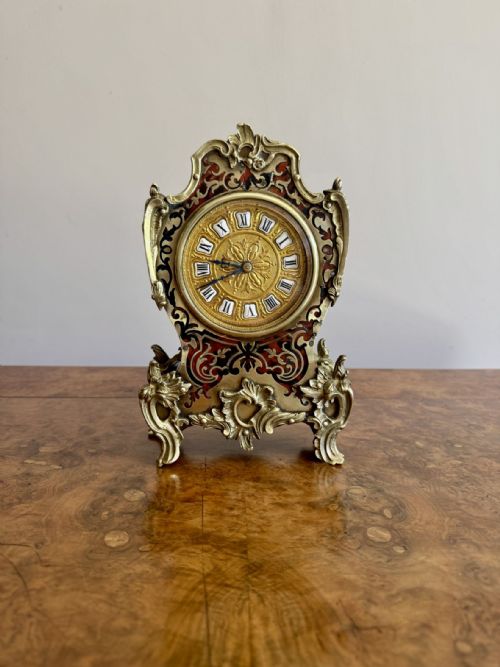
An antique red table clock encompasses striking mantel pieces, desk clocks, and bracket clocks spanning the eighteenth, nineteenth, and early twentieth centuries. These timepieces display deep red hues derived from tortoiseshell veneer, rouge marble, red lacquer, and occasionally bakelite, often housed in architectural or rococo revival forms.
The pieces seen most frequently on this page originate from French workshops adhering to Louis XIV, Louis XV, or Empire styles. Buyers also encounter English bracket clocks and compact Viennese portico designs, providing variety in both scale and decorative detail.
Mantel clocks dominate the selection, frequently accompanied by matching garnitures or wall brackets to create a complete decorative scheme. Their presence on a mantelpiece or desk anchors the room with traditional craftsmanship and warm coloration.
Materials and Construction
The construction of these clocks relies on skillful combinations of timber carcasses, metal mounts, and stone. Makers applied delicate tortoiseshell or red lacquer veneers over wooden foundations, enriching the exterior with cast or chased ormolu and gilt bronze mounts.
Heavy rouge marble and specimen marbles provide structural weight and a polished red stone surface, often contrasted against dark bronze or bright brass dial elements. Movement mechanisms employ traditional brass gear trains, sometimes driven by silk suspension threads in earlier examples.
Listings include materials such as rouge marble, tortoiseshell, ormolu, and brass, spanning the eighteenth to the twentieth centuries.
Assessing Craftsmanship and Detail
Quality reveals itself in the crispness of the gilt bronze or ormolu chasing and the depth of the red tortoiseshell or lacquer. Superior examples show meticulous hand-carving in the mounts and seamless veneer work around complex curved cases.
The sophistication of the clock movement and the reputation of the maker also divide standard pieces from exceptional ones. Finer items feature signed dials, quarter-striking mechanisms, or complex astronomical complications housed within balanced, well-proportioned architectural frames.
Thuret·Georg Adam Scheid·James Smith·Robert Higgs·JAZ·Vincenti
The Antique Red Table Clock Glossary
- Ormolu
- Gilded bronze used extensively for decorative mounts on French clock cases. The technique involves applying a mercury and gold amalgam to bronze before firing.
- Boulle
- A style of marquetry using brass and tortoiseshell inlaid in intricate arabesque or floral patterns, named after the cabinetmaker André-Charles Boulle.
- Garniture
- A set of matching decorative ornaments, usually comprising a central clock flanked by matching vases or candelabra designed for a mantelpiece.
- Bracket Clock
- A portable clock designed to sit on a bracket fastened to the wall or placed upon a table, often featuring a handle for carrying.
- Silk Suspension
- A mechanism where the pendulum hangs from a fine silk thread rather than a metal spring, common in nineteenth-century French clocks.
Antique Red Table Clock: Frequently Asked Questions
How do I care for tortoiseshell clock cases?
Tortoiseshell requires gentle dusting with a soft, dry cloth and protection from direct sunlight and excessive heat. Maintaining stable indoor humidity prevents the delicate organic veneer from warping or cracking over time.
Avoid using modern chemical polishes, household cleaners, or excessive moisture on the surface. A light application of microcrystalline wax can help preserve the sheen of the shell and its underlying metal mounts.
What is a clock garniture set?
A clock garniture is a matched decorative grouping consisting of a central mantel clock accompanied by two side pieces, such as vases, urns, or candelabra. These sets were designed to create a balanced, harmonious display across a fireplace mantel.
Originating largely in nineteenth-century France, they utilise identical materials like rouge marble, ormolu, and bronze to tie the arrangement together. Finding a complete set preserved with its original side pieces remains a notable bonus for collectors.
Are these clocks suitable for daily use?
These timepieces function well for daily timekeeping provided they receive periodic professional servicing and cleaning. Many feature reliable eight-day movements that keep accurate time when properly set up on a level surface.
Because they are antique mechanical objects, they benefit from gentle handling and careful placement away from vibrations or heavy traffic areas. Occasional oiling by a horologist ensures the brass wheels and pivots continue to operate without excessive wear.