




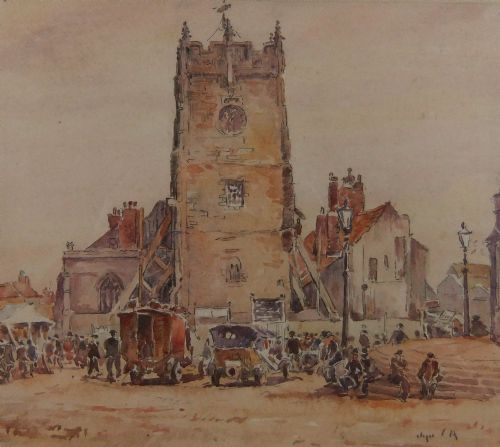
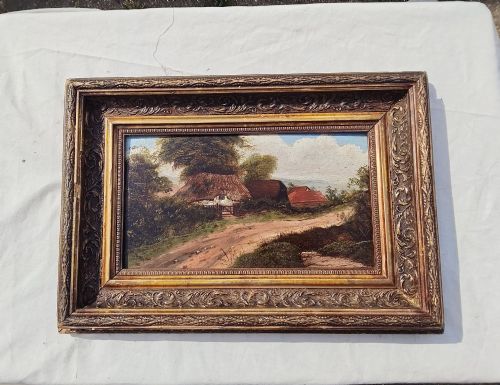
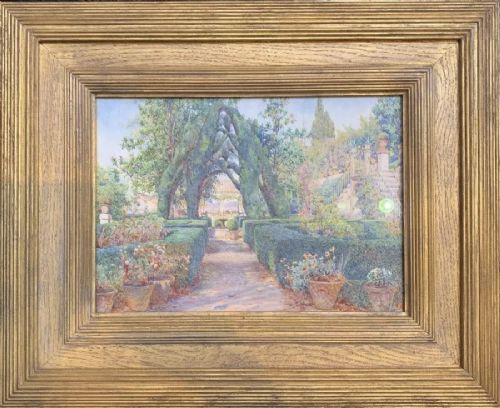
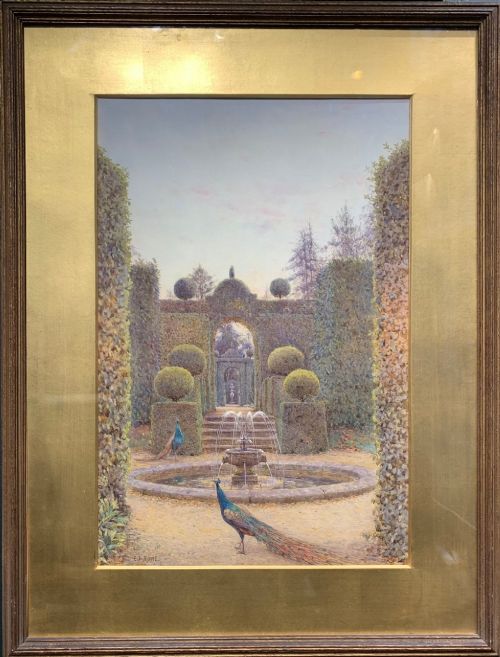
Edwardian Framed Landscape
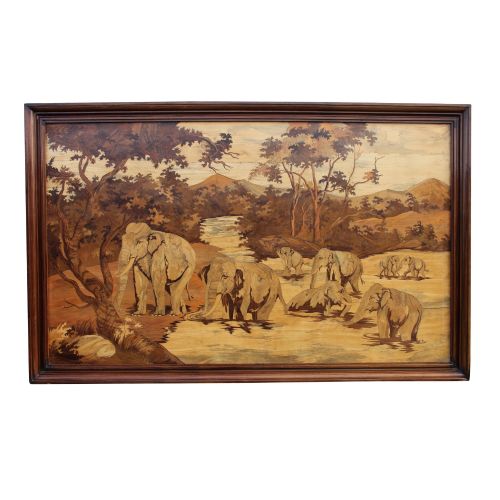
An Edwardian framed landscape brings quiet country lanes, rivers and coastal views into a room through watercolours and oils.
Edwardian Framed Landscape
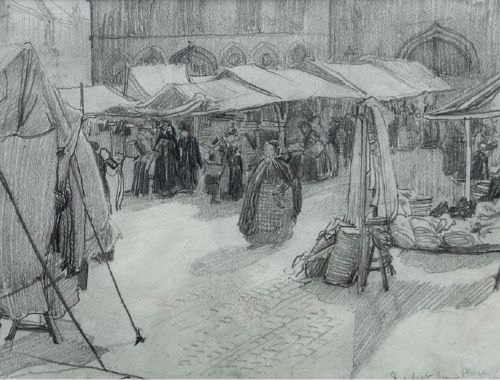
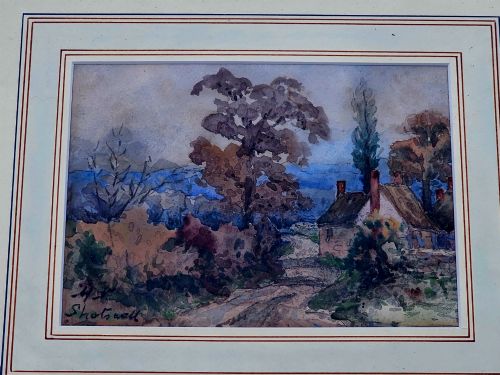
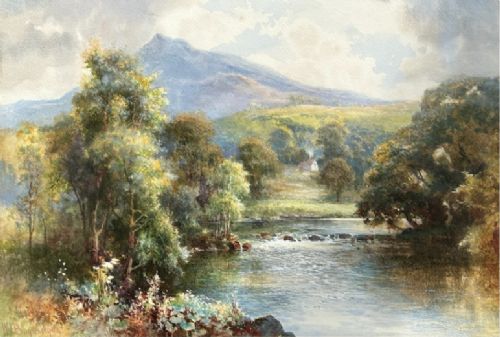
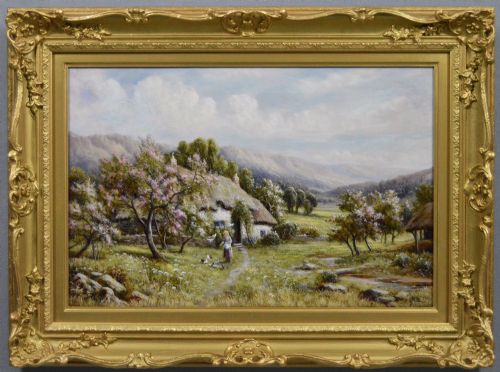
An Edwardian framed landscape captures rural views, coastal scenes and woodland paths through the lens of early twentieth-century British art. These works range from watercolours on paper to oils on canvas and card, each preserved in its original housing.
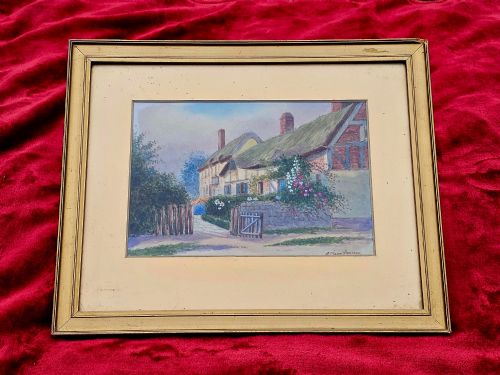
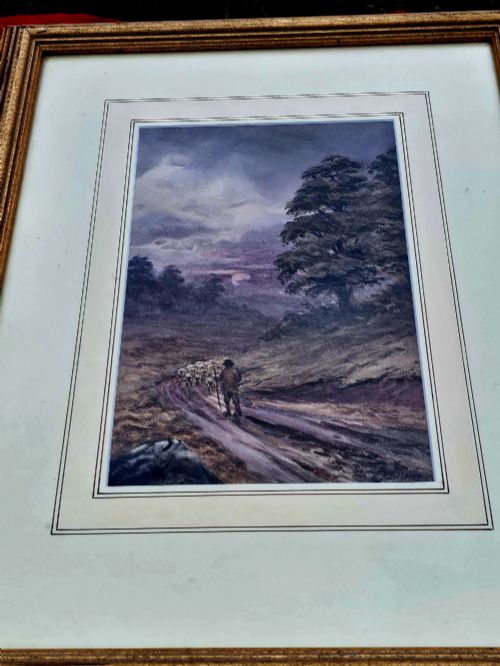
The pieces appearing here lean heavily into watercolours and oil paintings created around the turn of the twentieth century. Buyers encounter depictions of Welsh rivers, Yorkshire harbours and pastoral farmyards set within period frames.
Makers and artists of the period worked within styles spanning British Impressionism, Tonalism and traditional landscape painting. The subjects focus on natural scenery, often featuring cottages, cattle or figures along riverbanks.
Materials and Techniques
Painters of this era applied oil paint or watercolour onto paper, canvas, card or wood panel to build up depth and atmosphere. Works on paper typically require glass protection, while oil paintings on canvas or panel remain exposed within their surrounds.
Frames are constructed from wood, frequently finished with giltwood layers to complement the warm tones of the artwork. Many pieces retain their original mounting materials from the opening decades of the twentieth century.
Listings feature works spanning the Victorian era, the 1890s, the 1900s, the Edwardian period, the 1910s, the 1920s, and the 1930s.
Judging Quality
Quality rests in the brushwork's confidence and the harmony between the painted scene and its frame. Stronger works display accomplished handling of light, particularly in capturing sunrise, evening shadows or open water.
The integrity of the mounting matters significantly, as original frames that complement the painting without overpowering the composition elevate the entire piece. Condition of the underlying paper or canvas also distinguishes finer examples from heavier restorations.
Henry Percy Huggill·William H Myers·Thomas Ellison·A Marie Parsons·EJ Letheren·B Nash·William Joseph Boyes·Robert John Hammond·John Smith Atherton·Ernest Arthur Rowe·John Hodgson Lobley·George Oyston·Sir Alfred East·Frederick James Kerr·Robert Watson·George Wright·Maud Raphael Jones·Bonomi Edward Warren·William Matthison·Thomas Hodgson Liddell·Percy Lancaster·Philip Rideout·Robert George Talbot Kelly·Henry H Parker·Everett Watson Mellor
The Edwardian Framed Landscape Glossary
- Watercolour
- A paint consisting of pigment suspended in a water-based solution, frequently applied to paper to achieve translucent washes of colour.
- Giltwood
- Wood that has been treated with a thin layer of gold leaf or metallic gilding, commonly found on decorative picture frames.
- Impressionism
- An art style focused on accurate depiction of light and its shifting qualities, often utilising visible brushstrokes and open compositions.
- Oil on Canvas
- A technique where slow-drying oil paints are applied to a stretched fabric surface, allowing for rich texture and blending.
Edwardian Framed Landscape: Frequently Asked Questions
What subjects appear in these landscapes?
The works depict a range of British and European scenery, including woodland paths, Welsh rivers, Yorkshire harbours and coastal views. Cottages, farmland and cattle frequently populate the foregrounds.
Artists also captured specific locations such as Venice, Lake Como and Bruges alongside domestic rural retreats.
How should these framed pieces be hung?
These artworks require stable wall space away from direct sunlight and excessive moisture to protect paper, canvas and giltwood frames. Proper picture hooks suited to the weight of the frame ensure secure placement.
Grouping complementary watercolours or oils together can create a balanced display without overcrowding a single wall.
How do I distinguish watercolours from oil paintings?
Watercolours are executed on paper and sit beneath protective glass to prevent environmental damage. They rely on translucent washes and lighter paper grounds for their luminosity.
Oil paintings utilise heavier pigments on canvas, card or panel, presenting a textured surface without the need for glass glazing.