

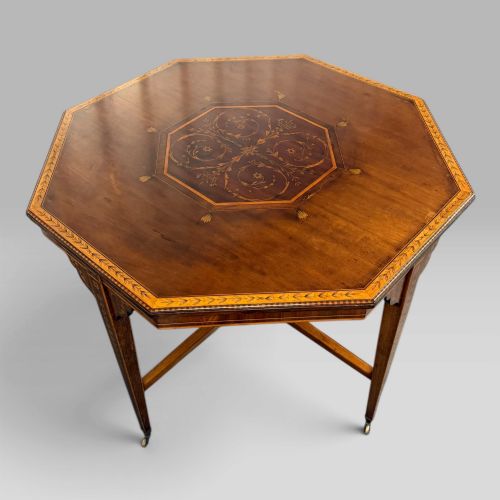
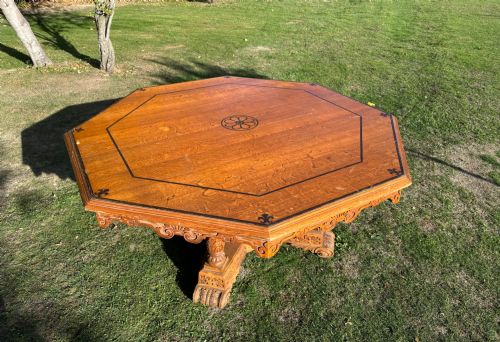
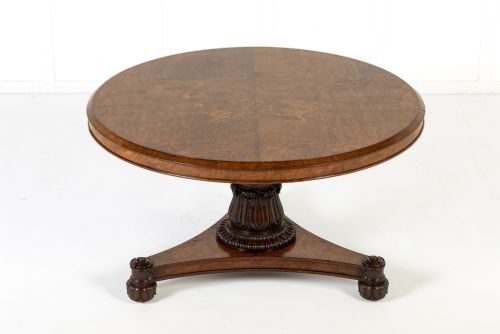
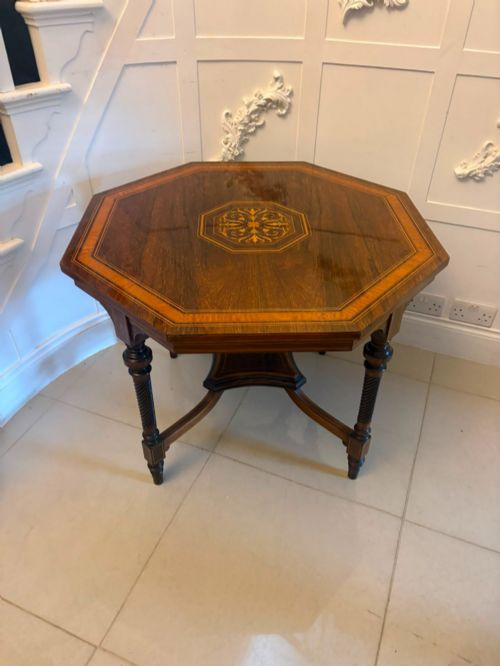
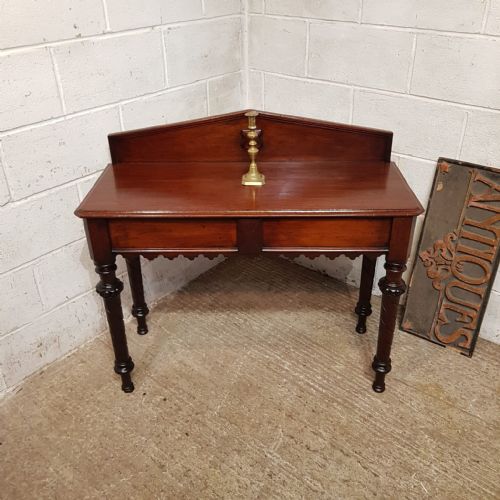


Edwardian Foyer Table
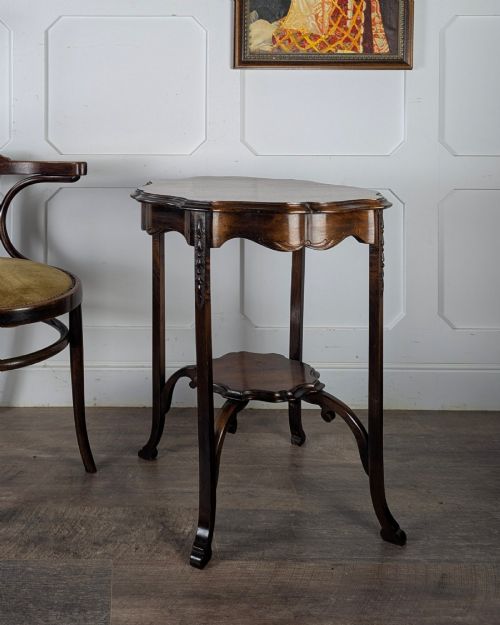
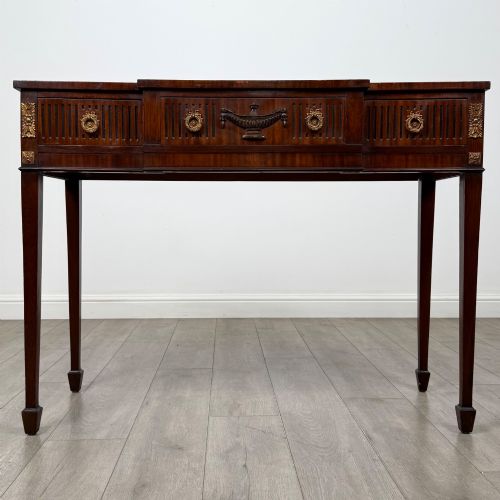
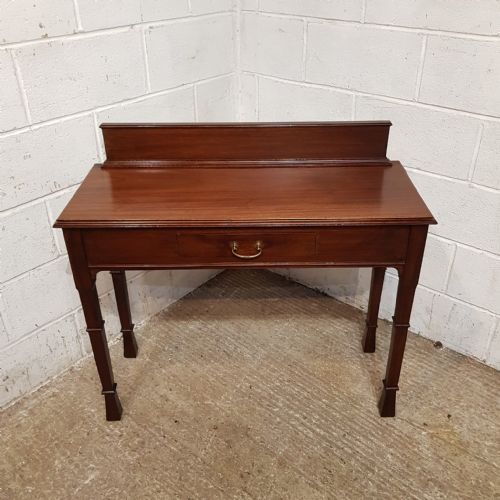
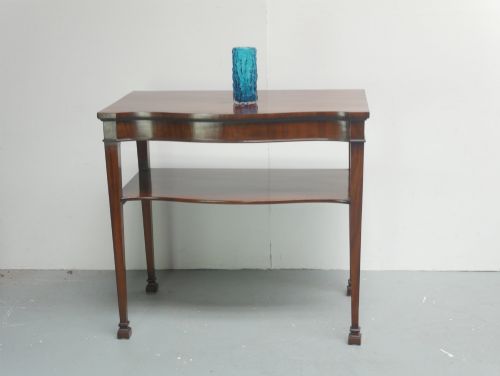
An edwardian foyer table offers a formal surface for a hall or entrance, typically built in mahogany or satinwood during the early twentieth century.
Edwardian Foyer Table
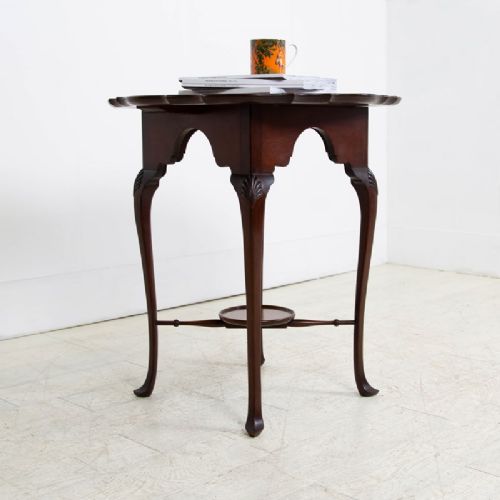
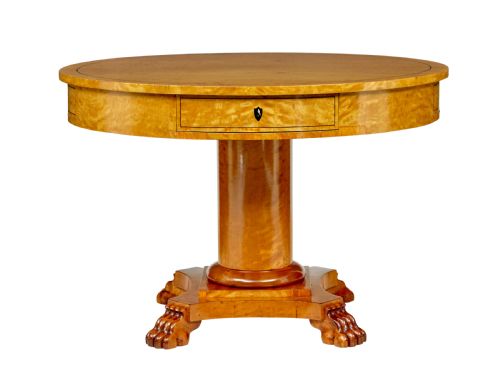
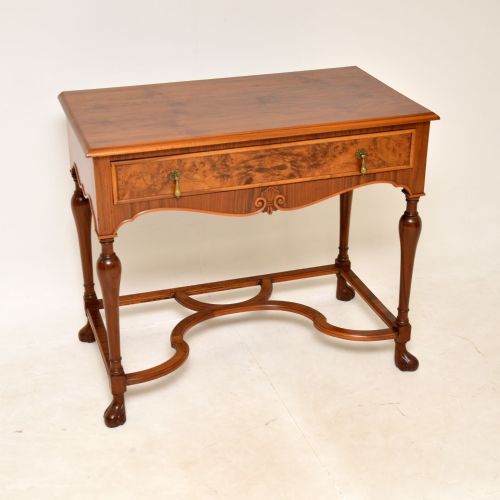
An edwardian foyer table appears across several functional forms in the listings, including console tables, hall tables, centre tables, and occasional tables. These pieces serve entranceways and reception rooms, providing a practical surface upon entering a home.
The selection on this page spans the Edwardian period alongside late Victorian, 19th-century, and 1930s revivals. Styles draw heavily on earlier vocabularies, featuring Sheraton Revival, Adam style, and Georgian Revival designs alongside simpler oak and walnut constructions.
Materials and Construction
Cabinet makers utilised a range of dense timbers, principally mahogany, walnut, burr walnut, and satinwood, often enhanced with boxwood stringing or marquetry inlay. Oak and rosewood also appear, supplying robust frames and striking grain patterns for hall and centre tables.
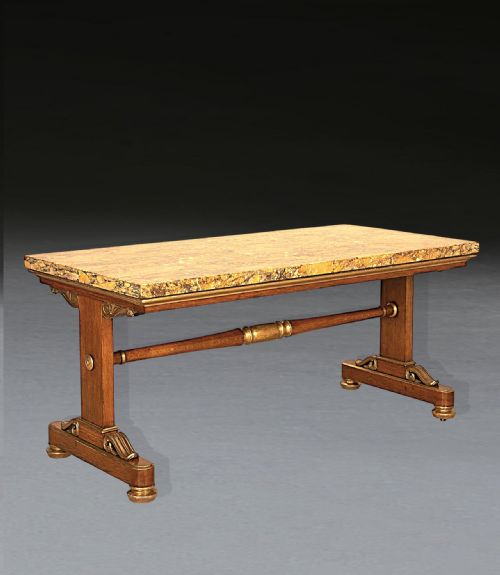
Decorative hardware and mounts incorporate brass and ormolu, while specific pieces employ marble inserts such as Siena marble. Joinery relies on traditional framing techniques suited to freestanding centre tables and wall-abutting console tables.
Edwardian Foyer Table Retail Price Guide 2026
Typical asking prices for edwardian foyer table among the pieces listed under this phrase on Sellingantiques today, from the lower quarter to the upper quarter. They describe what is for sale here now, not the wider market.
Listings feature mahogany, satinwood, walnut, and oak across console, hall, and centre table forms dating from the nineteenth century through to the 1930s.
Judging Quality
Distinctions in quality rest on the selection of timber veneers and the crispness of inlaid details like marquetry and boxwood stringing. Finer pieces demonstrate careful book-matching in burr walnut or satinwood, whereas standard examples utilise plain mahogany or oak.
The refinement of carved elements, such as those found on freestanding centre tables or cabinet-maker productions, separates standard utility furniture from more ambitious revival pieces.
Shapland and Petter·Maple and Co·Edward and Roberts
The Edwardian Foyer Table Glossary
- Demilune
- A half-moon shape used for console and hall tables designed to sit flush against a wall. This profile saves floor space in narrow entranceways.
- Console table
- A table supported by wall brackets or legs, historically placed against a wall in a foyer or reception room. Many variants are designed to stand independently.
- Marquetry
- Decorative patterns formed by fitting together contrasting veneer slices into a wooden surface. This technique frequently defines Edwardian satinwood and mahogany tops.
- Centre table
- A freestanding table intended to stand in the middle of a room rather than against a wall. These pieces typically feature finished detail on all sides.
Edwardian Foyer Table: Frequently Asked Questions
Where should I place an Edwardian foyer table?
These tables suit hallways, entrance lobbies, and reception rooms where a surface is needed near an entryway. Console and hall variants sit flush against walls, while centre tables occupy the middle of larger spaces.
Ensure the depth of the table matches the clearance required for doors and movement in your hallway. Freestanding centre tables require unobstructed floor space on all sides.
How do I distinguish an Edwardian table from a Victorian one?
Edwardian pieces often feature lighter satinwood finishes, delicate marquetry, and revival styles like Sheraton Revival. Victorian tables tend to employ heavier proportions in solid mahogany, walnut, or rosewood with darker finishes.
Construction methods and timber selection generally offer the clearest clues to dating a hall or console table accurately.
What timbers were commonly used?
Mahogany, walnut, burr walnut, and satinwood dominate the better tables, providing rich grain and smooth surfaces for inlay. Oak appears in arts and crafts or country pieces, while rosewood and coromandel feature in select nineteenth-century examples.
Inlays frequently incorporate lighter woods like boxwood to create contrasting borders and decorative motifs.