





Edwardian Footstool Bench
An edwardian footstool bench is a low, practical seat designed for comfort, and these pieces span various woods and upholstered finishes.
Edwardian Footstool Bench
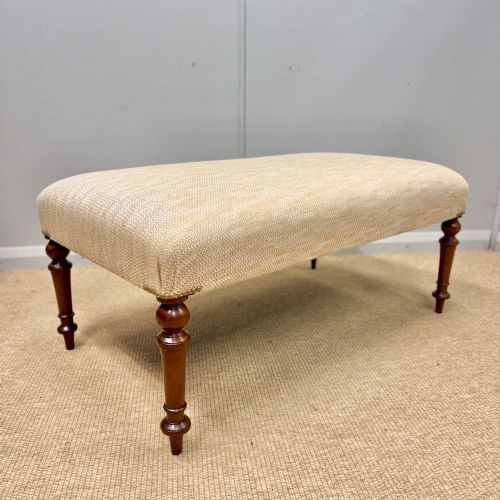
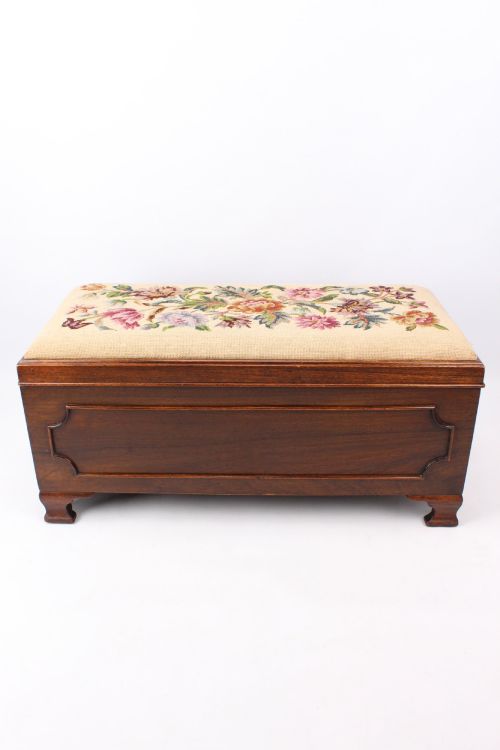
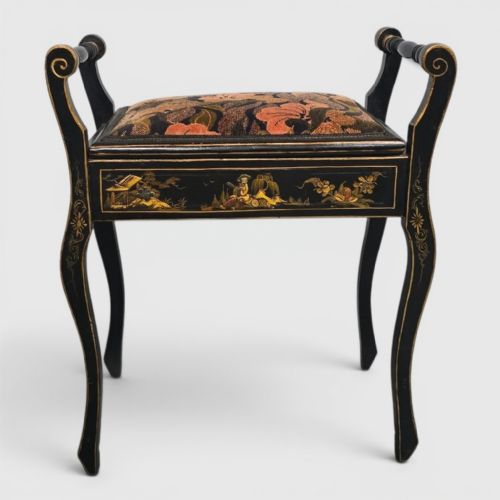
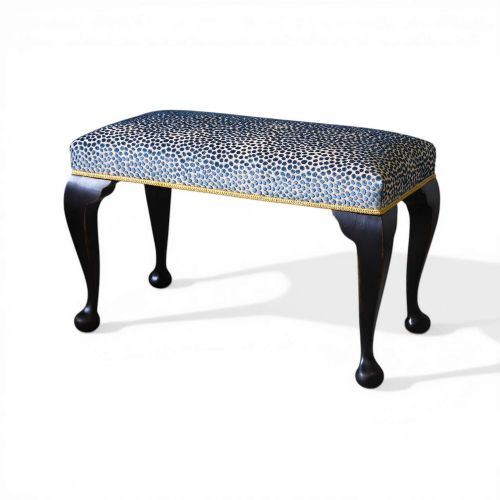
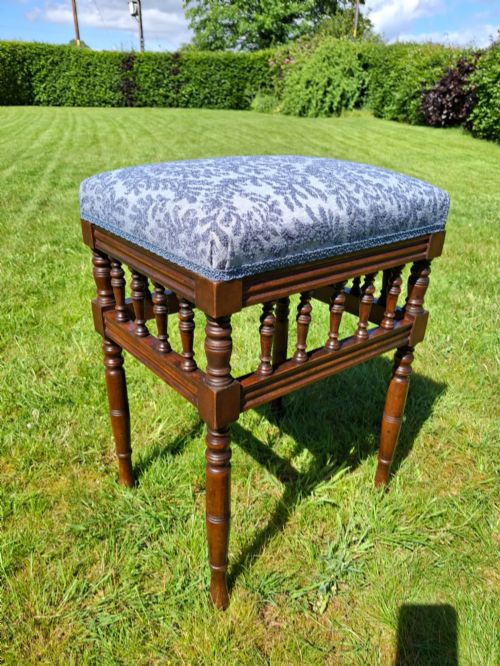
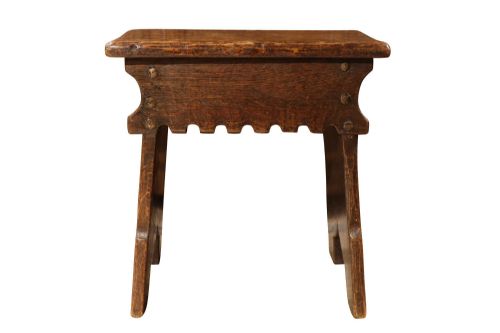
An edwardian footstool bench encompasses low seating forms including piano stools, dressing table stools, window seats, and larger ottomans designed for domestic use. The pieces appearing here range from compact piano stools to long upholstered benches and heavy oak seating.
While the label points to the Edwardian period, the selection extends across Victorian and early twentieth-century dates, alongside various stylistic revivals. Buyers will encounter standard rectangular footstools alongside specialist seating featuring turned legs, brass castors, and carved details.
Materials and construction
These stools and benches rely primarily on timber frames constructed from mahogany, walnut, and oak, often shaped with turned legs, cabriole supports, or pegged joints. Joinery methods vary from traditional pinned construction to ebonised and inlaid finishes.
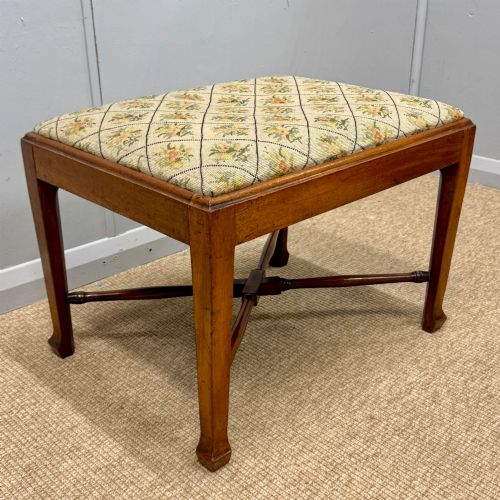
Upholstery forms a central element, utilising leather, wool, textile, needlework, and damask fabrics. Many examples incorporate deep buttoning, new fabric covers, or cane work to finish the seat.
Listings feature woods including mahogany, walnut, and oak, paired with leather, needlework, and wool textiles.
Variations in quality
Quality rests in the choice of timber and the execution of carved or inlaid details upon the frame. Solid mahogany and walnut structures with refined turnings or brass castors sit above simpler utility pieces.
The standard of upholstery and the preservation of original fabric or leather surfaces also distinguish the pieces. Frames showing integrated carving, such as lion heads or neoclassical X-frames, demonstrate higher craftsmanship.
Jas Shoolbred·Whytock and Reid
The Edwardian Footstool Bench Glossary
- Cabriole leg
- A furniture leg that curves outward and then tapers inward, typically ending in a pad or foot. This design appears frequently on Victorian mahogany dressing table stools.
- Ebonised
- Wood finished with a dark stain or paint to imitate ebony. This treatment creates a formal black surface seen on specific Edwardian stools.
- Cross stretcher
- Horizontal wooden bracing connected between the legs of a stool to provide stability. These members often feature central turnings.
- Needlework
- Hand-stitched textile work applied as a seat cover. Needlework seats add decorative pattern to walnut and mahogany ottomans.
- Pegged construction
- A method of joining wooden components using tight wooden pins rather than modern fasteners. This technique secures early oak framing.
Edwardian Footstool Bench: Frequently Asked Questions
What is an edwardian footstool bench used for?
These low seats served multiple domestic functions, from supporting feet beside a fireplace to providing seating at a piano or dressing table. Longer variants also functioned as window seats or hallway benches.
Their compact size allowed them to move easily between rooms as extra seating when guests visited.
How do I identify an Edwardian piece?
Edwardian seating often exhibits lighter timbers like mahogany and walnut, alongside inlaid decoration, subtle stringing, and polite proportions. Stylistic revivals and simpler Arts and Crafts oak designs also appear from this era.
Comparing the turned leg profiles and upholstery styles helps separate Edwardian work from earlier Victorian production.
Can I use these stools daily?
Most of these pieces are structurally robust enough for regular sitting or resting feet, provided the frame joints remain tight. Many surviving examples have received new upholstery or reupholstered covers to suit modern interiors.
Checking whether the timber frame is firmly pegged or glued ensures the piece handles everyday use.
What woods were used for these benches?
The primary hardwoods found in these listings are mahogany, walnut, and oak, supplemented by ebonised finishes and fruitwood accents. Mahogany and walnut appear frequently in refined dressing table and piano stools.
Oak dominates the Arts and Crafts and rustic farmhouse examples, often paired with leather or saddle-seated designs.