



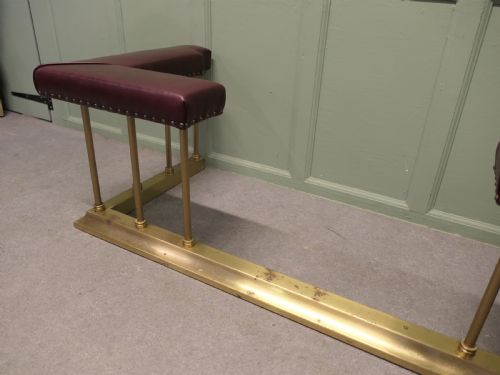


Padded Fireplace Bench
A padded fireplace bench provides fireside seating through low-slung frames built to surround a hearth.
Padded Fireplace Bench
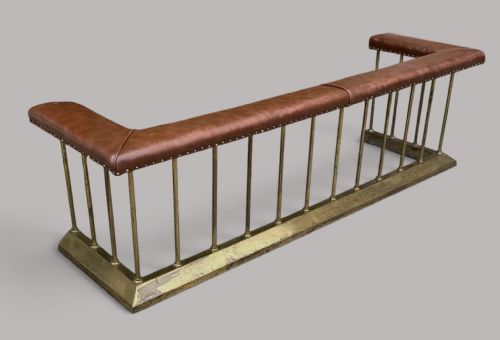
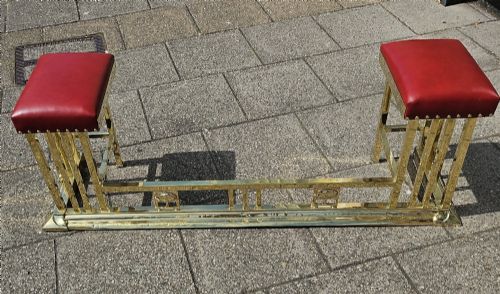
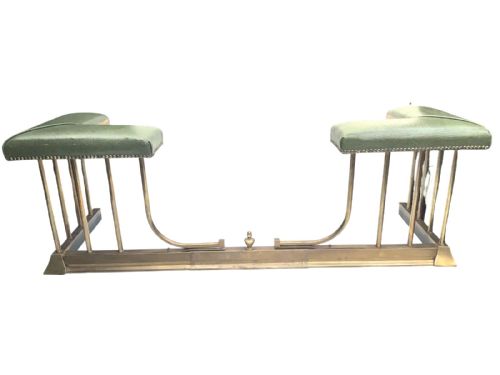
A padded fireplace bench most commonly takes the form of a club fender, placing cushioned top rails around the open hearth for warmth and comfort. These pieces span the nineteenth century, the Victorian and Edwardian eras, through to the 1920s and Art Deco periods, drawing on English country house traditions.
The primary structural framework utilises metals such as brass, steel, wrought iron, copper, and chrome, paired with timber elements like walnut and mahogany. Cushioning arrives upholstered in materials including mature tan leather and original fabric.
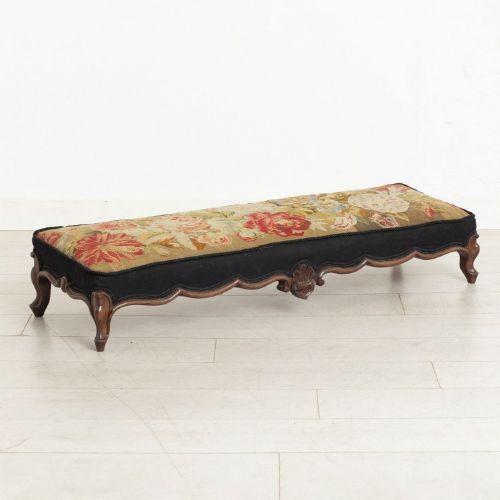
Beyond standard club fenders, listings encompass related hearth furniture and seating such as footstools and fender stools. Proportions range from dainty builds and small formats to substantial and very long configurations.
How they were made
Makers constructed the metal frameworks using brass, steel, wrought iron, copper, and chrome, sometimes combining metals or adding silvered finishes. Frames were engineered to withstand hearth heat while supporting corner or bench seating.
Timbers like walnut and mahogany formed the bases of low footstools and fender stools, featuring carved details such as cabriole legs. Upholstery work applied leather and textiles directly to the top rails and seat frames.
Materials recorded across the inventory include leather, brass, textile, walnut, steel, wrought iron, copper, and mahogany.
What varies in quality
Substantial builds and heavy iron or brass framing distinguish sturdier examples from lighter or dainty alternatives. The choice of materials, from simple steel to combined brass and copper or chrome, alters the character of the piece.
The grade and maturity of the leather upholstery, along with the retention of original fabric, separates standard production from finer decorative pieces.
The Padded Fireplace Bench Glossary
- Club fender
- A padded bench structure designed to fit around an open fireplace, providing low seating close to the fire. These typically feature metal uprights and a leather-upholstered top rail.
- Fender stool
- A low stool designed to sit near the hearth, sharing the domestic function of a fireplace bench. They frequently utilise walnut or mahogany frames with upholstered tops.
- Cabriole leg
- A furniture leg that curves outward and then tapers inward, commonly found on Victorian walnut footstools in this selection.
- Wrought iron
- Iron beaten into shape by tools, providing structural strength and decorative detail for heavy hearth benches.
Padded Fireplace Bench: Frequently Asked Questions
Where does a club fender go?
A club fender surrounds the hearth of an open fireplace, sitting directly on the floor around the grate. It creates an enclosed boundary while bringing seating right up to the warmth of the fire.
In practice, it functions as both a physical guard and a bench for sitting during cold winter evenings.
How do I identify a Victorian piece?
Victorian pieces often display characteristic nineteenth-century material combinations, such as heavy brass frames paired with tan leather seating. Walnut footstools from this era frequently showcase cabriole legs and original fabric upholstery.
Looking closely at the metalwork and timber framing helps distinguish these nineteenth-century examples from later Edwardian or Art Deco variants.
Are these benches comfortable for seating?
These benches feature padded top rails upholstered in leather or textile materials designed for sitting. The low-slung nature places occupants close to the hearth level.
They serve as traditional fireside seats within English country house settings.