




Edwardian Folk Art
These edwardian folk art pieces are hand-crafted domestic and fairground objects that bring genuine tactile character to a modern interior.
Edwardian Folk Art
Originating predominantly from British and European workshops, these items reflect the practical utility and decorative whimsy of the period. A buyer will find that individual pieces bridge the gap between social history and primitive sculpture, offering distinct focal points for a room.
How They Were Made
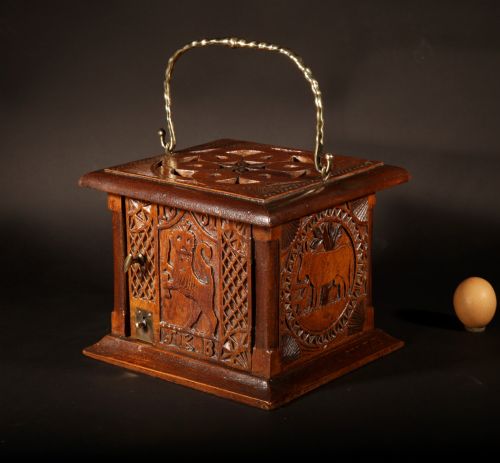
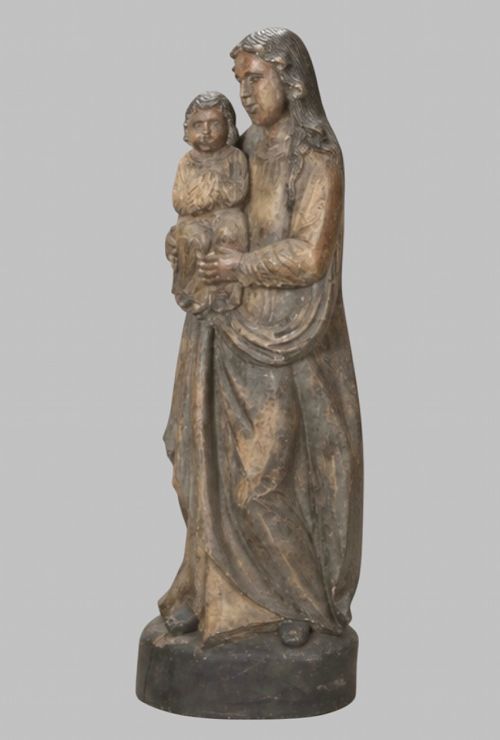
Makers utilised available timber, selecting linden wood, pine, and mixed metals to construct these utilitarian and decorative objects. Carving, chip-carving, and hand-painting dominate the methodology, yielding textured surfaces with visible tool marks.
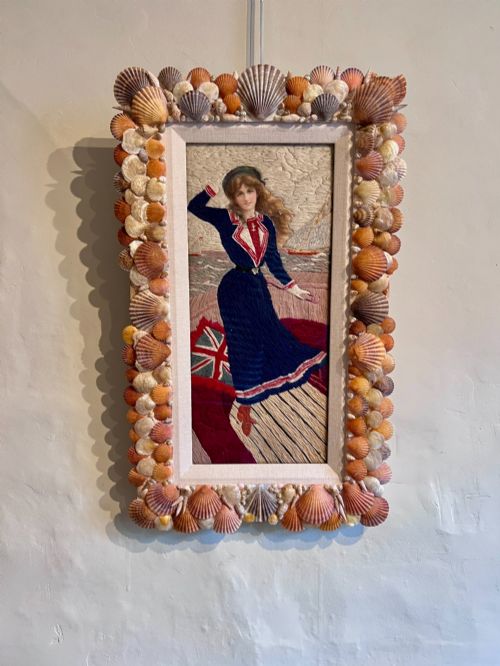
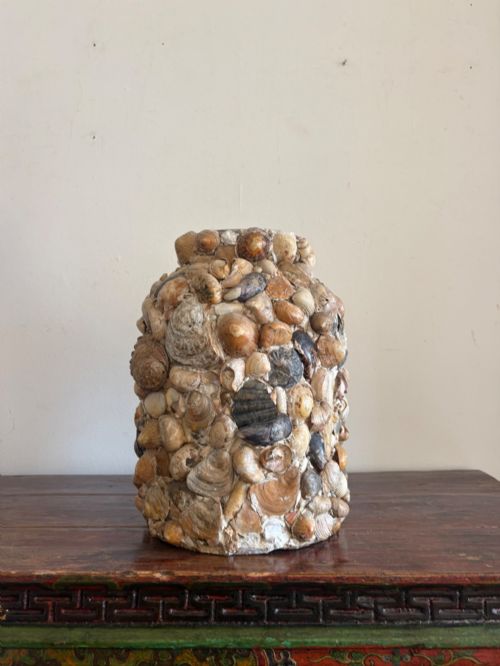
Canvas, wool, glass, and shell ornamentation appear in maritime dioramas, oil paintings, and woolwork pictures, demonstrating a resourceful approach to mixed media. Weather vanes and trade signs incorporate beaten metal and applied pigments designed to withstand exterior elements.
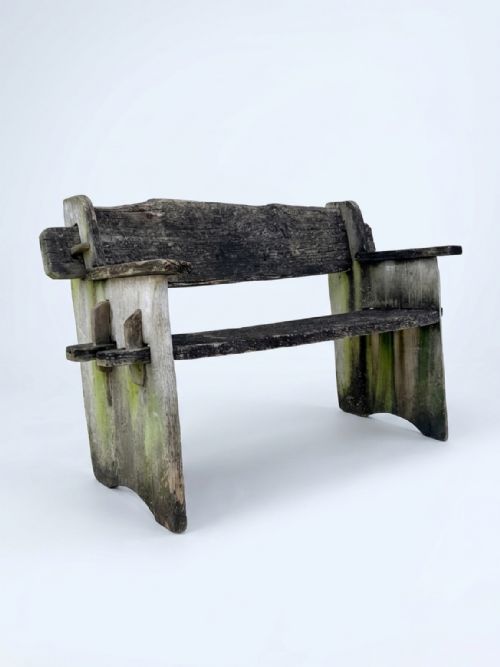
Structural assembly relies on traditional joinery, handmade nails, and simple pegging rather than mass-produced fasteners. The application of oil paint and surface patination builds up over decades of use, sealing the wood and preserving the underlying material.
Periods represented span the nineteenth century, Victorian era, Edwardian period, and the 1900s through to the 1930s.
What Varies in Quality
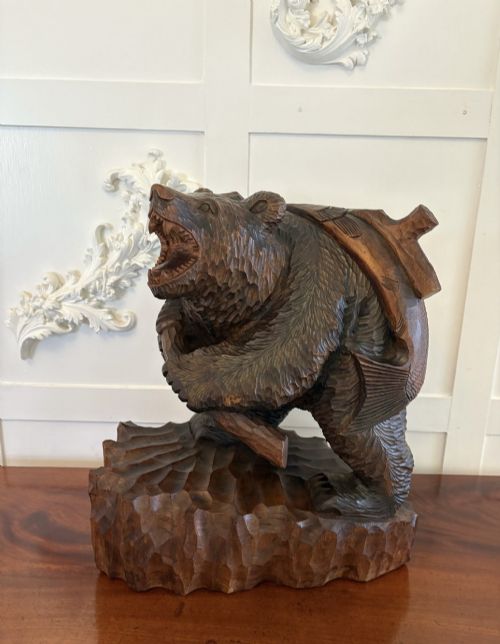
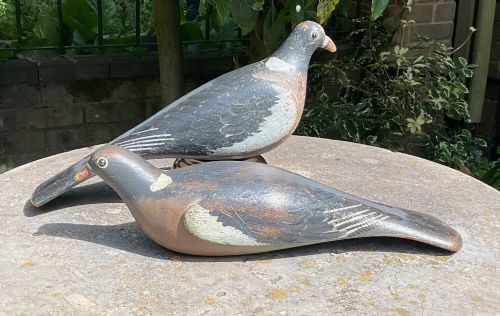
The expression and anatomical proportion in carved figures, such as bears or decoy birds, separate skilled vernacular work from more rigid iterations. Stronger pieces display confident knife work and expressive detailing that convey movement and character.
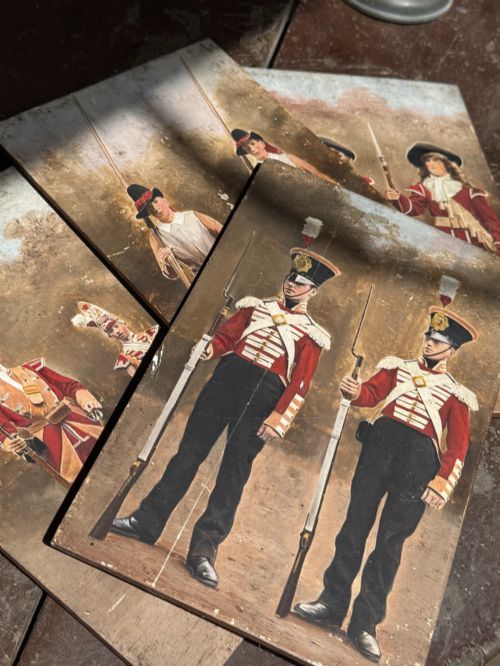
Surface integrity and originality of paint significantly influence the standing of painted panels, fairground boards, and canvas works. Pieces retaining their uncleaned, original pigment demonstrate greater historical authenticity than those subjected to modern overpainting.
Complexity of construction, whether in detailed matchstick models, clockwork dioramas, or intricate shell work, marks the distinction between standard domestic handiwork and master-level folk production.
R.D. Roberts·J Brown·E H Windred·THOMAS JAMES LLOYD
The Edwardian Folk Art Glossary
- Decoy
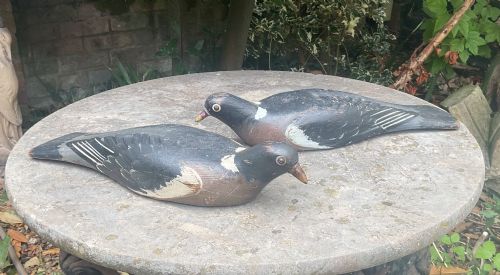
- A carved and painted wooden representation of a bird or animal originally utilised by hunters. These objects now appeal to collectors for their sculptural form and weathered surfaces.
- Diorama
- A three-dimensional scene enclosed within a case, often depicting maritime vessels or historical settings constructed from mixed materials. They capture intricate narrative detail in miniature scale.
- Tramp Art
- A decorative style of woodworking where items are formed from discarded cigar boxes and packing crates using chip-carving and notch-cutting techniques. Picture frames and small boxes are typical formats.
- Fairground Art
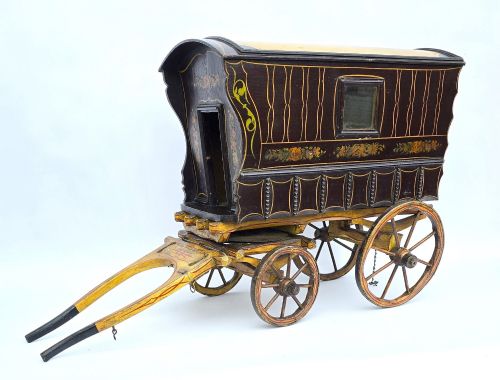
- Large painted panels, carved figures, and ride fragments produced for amusement park attractions. These items exhibit bold colours and robust scaling intended to attract public attention.
- Jigger Doll
- A mechanical toy figure featuring jointed limbs designed to dance or move when placed on a vibrating surface. They represent the playful ingenuity of early twentieth-century domestic craftsmanship.
Edwardian Folk Art: Frequently Asked Questions
What defines edwardian folk art?
Edwardian folk art encompasses unpretentious, hand-made objects created for everyday use, trade advertising, or personal amusement around the start of the twentieth century. These items are distinguished by their non-academic style and direct reliance on traditional materials.
They reflect the domestic and rural culture of the period, ranging from utilitarian decoys to whimsical carvings and fairground remnants.
How were decoy ducks used?
Decoy ducks and pigeons were placed on water or open ground by hunters to attract wildfowl within range. Carved from timber and painted with naturalistic pigments, they relied on silhouette and colour to deceive birds.
Today, these working objects are appreciated purely as sculptural wooden sculptures that showcase regional carving styles.
Where should I display these pieces?
These pieces suit spaces where their tactile textures and historical presence can be appreciated up close, such as living room shelves, hallways, or study walls. Pairing carved wooden animals or trade signs with neutral backgrounds allows the patination of the wood and paint to stand out.
Keeping them away from direct heat sources and strong sunlight preserves the original pigments and organic materials.
How do I spot original paint?
Original paint on folk art surfaces typically exhibits fine craquelure, subtle fading, and uniform wear consistent with age and handling. Under close inspection, older layers show natural integration with the timber substrate rather than flat, modern synthetic coverage.
Untouched surfaces often reveal minor bumps and historical grime that document the working life of the object.