

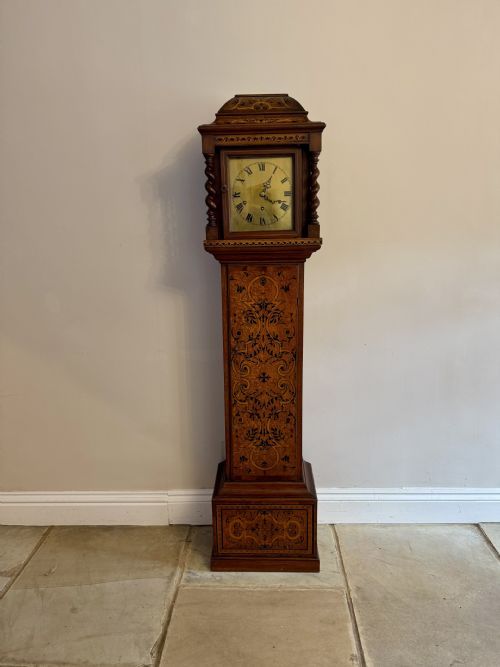


Edwardian Floor Clock
An edwardian floor clock brings mechanical precision and stately height into a room, offering both reliable timekeeping and chiming melodies.

Edwardian Floor Clock
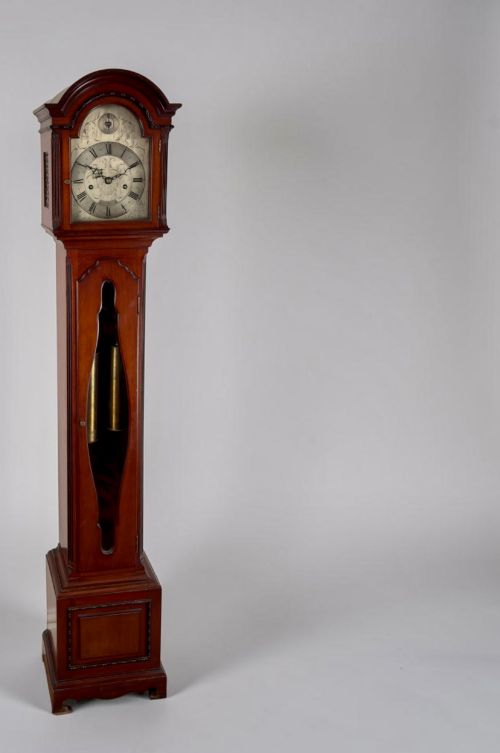
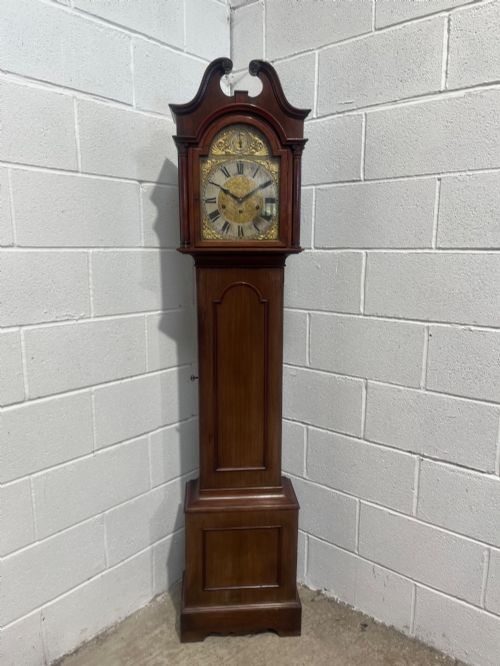
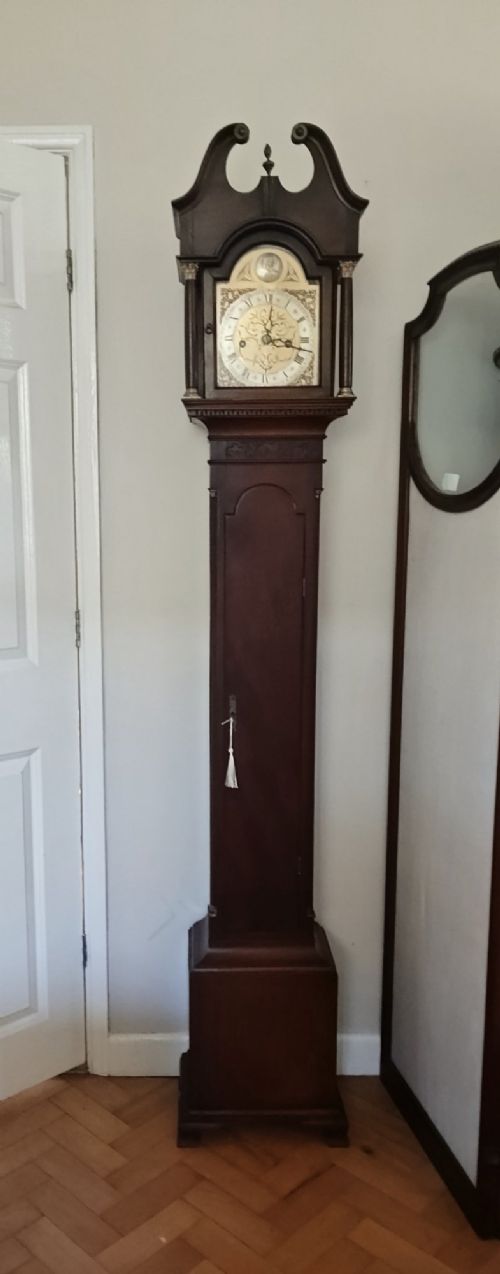
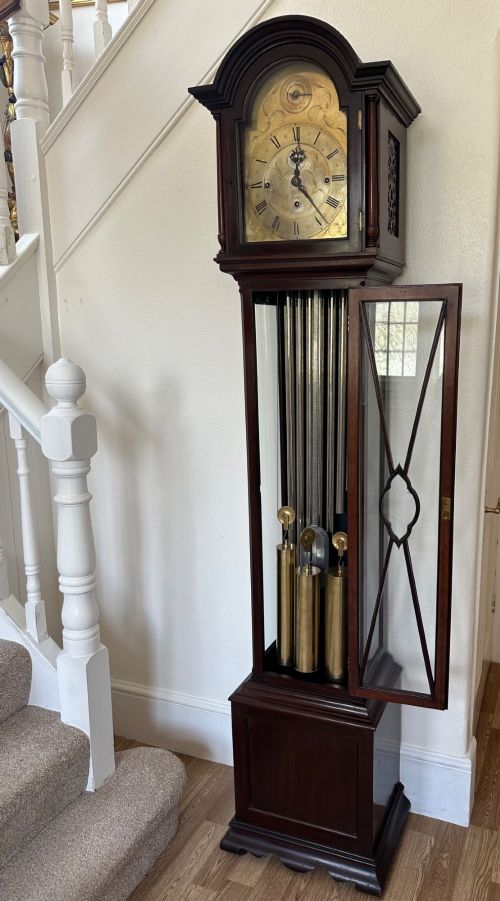
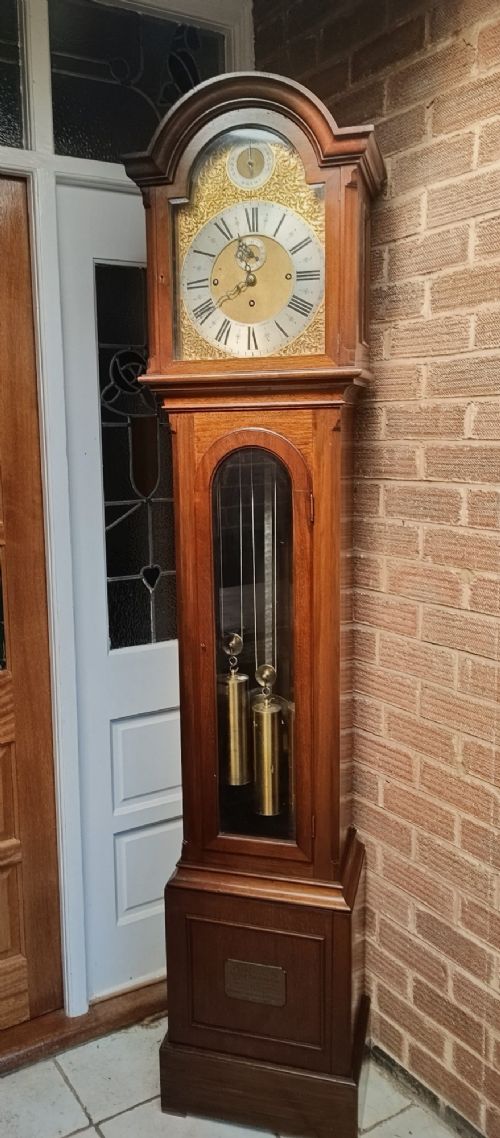
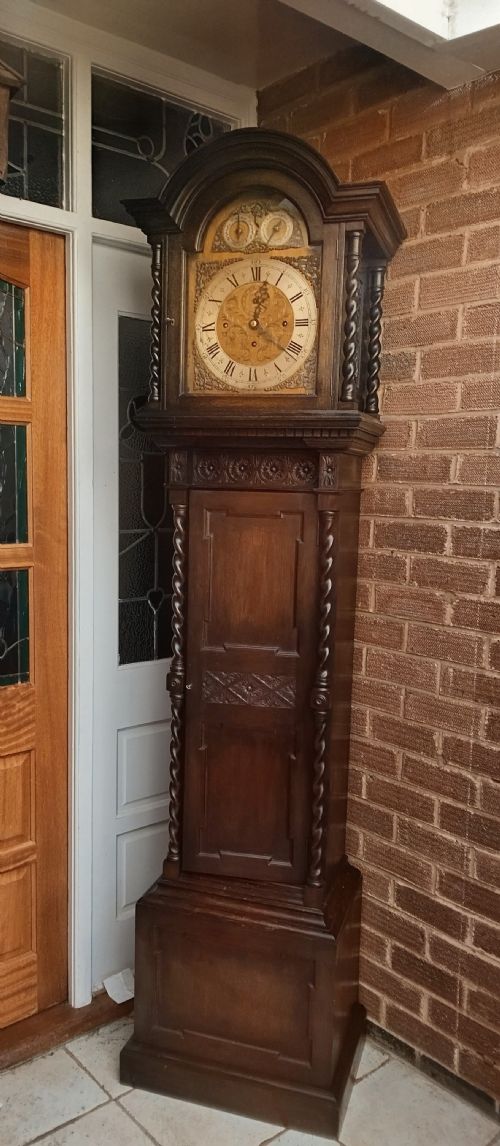
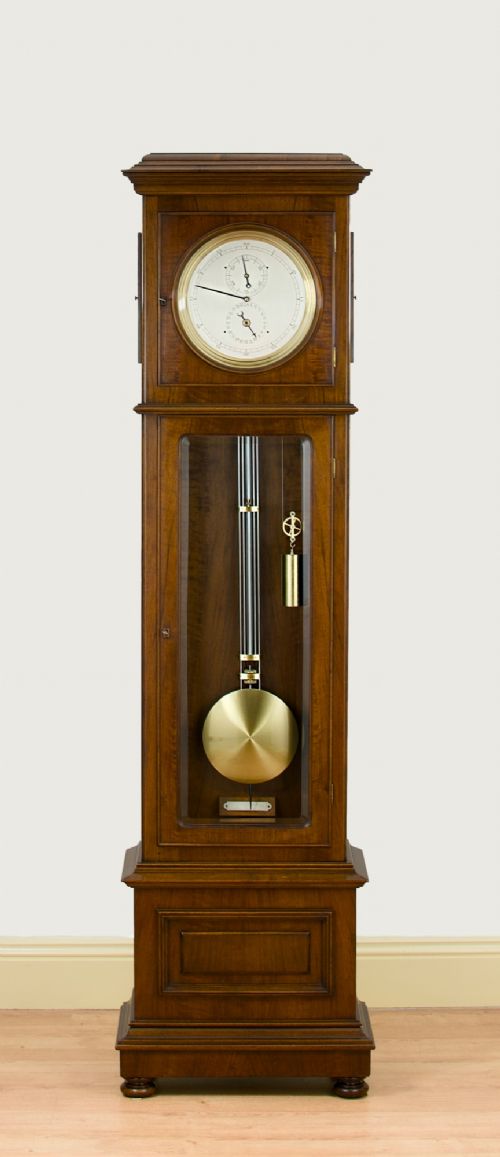
When buyers search for an edwardian floor clock, they encounter upright timepieces spanning grand proportions and smaller scale variants. The listings show forms ranging from tall grandfather clocks to more compact grandmother clocks and precision regulators.
Mahogany and oak dominate the construction, often complemented by satinwood inlay, brass dials and visible glass panels. Originating largely from the Edwardian period and adjacent decades, these items bring traditional casework into domestic spaces.
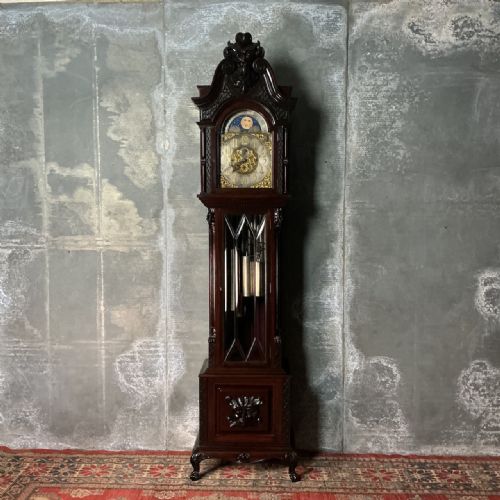
The selection includes standard timekeepers alongside complex musical versions equipped with tubular bells or multi-tune movements. Buyers will find variations from standard eight-day striking mechanisms to elaborate triple weight chiming setups.
Materials and construction
Cabinetmakers utilised solid timbers such as mahogany and oak, frequently adding satinwood inlay or marquetry decoration to enrich the wooden surfaces. Brass components form the visible dials, bezels and movement plates, while glass protects the pendulum and dial faces.
The internal mechanics rely on intricate brass gear trains, steel pivots and weights, with some examples incorporating complex tubular bell carillons or musical pins. Precision regulators and chiming longcase clocks required careful calibration of pendulums and strike trains to maintain accurate time.
Listings feature floor clocks spanning the Victorian era through the Edwardian period up to the 1930s, constructed primarily in mahogany and oak.
Factors of quality
Quality rests upon the sophistication of the movement and the integrity of the cabinetwork. Pieces featuring multiple tubular bells, complex quarter chiming or precision regulator movements represent higher mechanical ambition than simple time-and-strike versions.
The crispness of wood carving, precision of marquetry inlay, and the retention of original brass dials and hardware distinguish finer examples. The proportional balance of the case, from slender grandmother clocks to monumental longcase forms, dictates visual presence.
Gillett and Johnston of Croydon·Elliott·Lenzkirch·Edward Shepley of Manchester·Mappin and Webb London·Harrods·Lister and Sons·Camerer Cuss and Co·Dent of London
The Edwardian Floor Clock Glossary
- Grandmother clock
- A smaller, more slender version of the traditional grandfather clock, typically standing at a reduced height while retaining full weight-driven or spring-driven movements.
- Longcase clock
- An alternative term for a grandfather or floor clock, housing the pendulum and weights within a tall wooden case.
- Regulator
- A high-precision pendulum clock designed for extreme accuracy, often utilised for setting other timepieces.
- Tubular bells
- Metal tubes suspended inside the clock case that are struck by hammers to produce chime melodies, replacing traditional gongs.
- Marquetry
- Decorative woodwork where pieces of veneer are fitted into a ground material to form intricate patterns or pictorial designs.
Edwardian Floor Clock: Frequently Asked Questions
What is a grandmother clock?
A grandmother clock is a smaller, more compact version of the traditional grandfather clock. It suits rooms with lower ceilings while still housing a weight-driven or spring-driven mechanism.
These pieces offer the mechanical presence of a full-sized floor clock in a reduced footprint.
How do chiming movements work?
Chiming movements utilise a separate gear train driven by weights or springs to strike bells or tubular rods at set intervals. Quarter chiming versions play a sequence every fifteen minutes before striking the hour.
More complex movements can switch between multiple musical tunes or operate on a triple weight system.
Where should I place a floor clock?
Floor clocks require a stable, level surface against a solid wall to ensure the pendulum swings evenly and the movement keeps accurate time. Placing them away from direct sunlight and damp areas protects the timber case and internal brass components.
Allow sufficient clearance around the case for weight winding and door access.
How do I identify an Edwardian clock?
Edwardian clocks date from the early twentieth century and often combine traditional Georgian or Victorian revival forms with refined marquetry or satinwood inlay. The dial design, casework proportions and movement signatures help establish the production era.
Makers' names inscribed on the brass dials or movement plates provide definitive origin details.