

Edwardian Filing Cabinet
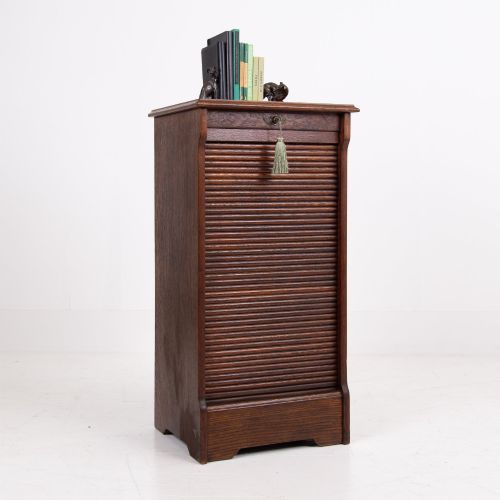
When you search for an edwardian filing cabinet, you are looking at practical office furniture built to organise papers with sliding tambour doors or banks of shallow drawers.
Edwardian Filing Cabinet
An edwardian filing cabinet is a piece of workspace furniture designed for systematic document storage, appearing most frequently in oak or mahogany. These pieces range from tall multi-drawer banks to compact tambour-fronted cupboards intended for domestic studies or professional offices.
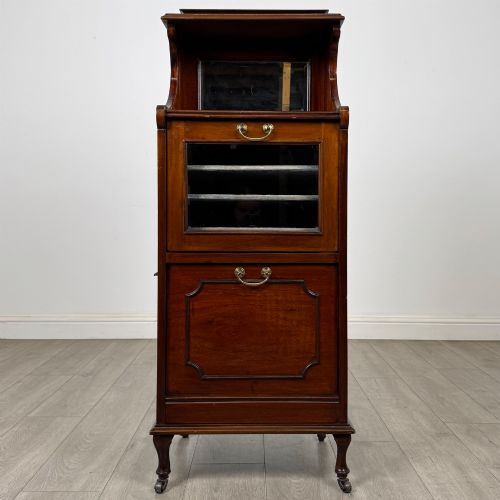
The versions most commonly met on this page date from the Edwardian era and the early twentieth century, though related examples stretch from the late Victorian period into the nineteen-thirties. Formats vary from drop-drawer chests to specialised music cabinets adapted for paper storage.
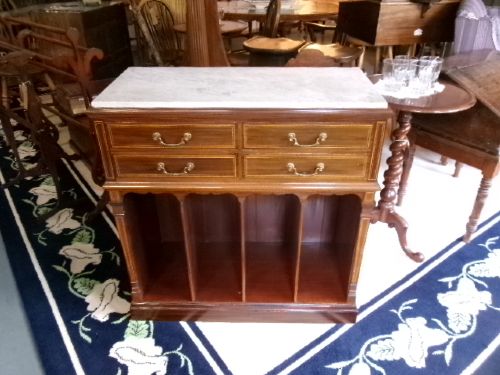
Many of these cabinets incorporate patented filing systems from period makers, utilising internal mechanisms designed to keep business correspondence upright and accessible. Buyers encounter both utilitarian office pieces and more decorative variants finished with inlay or polished brass hardware.
How they were made
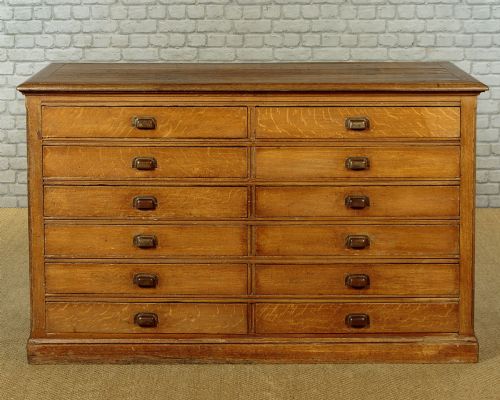
Cabinetmakers constructed these pieces primarily using solid oak or mahogany, frequently applying quarter-sawn oak to display prominent medullary rays across the drawer fronts and side panels. Walnut and rosewood also appear on select examples, sometimes enhanced with subtle string inlay or contrasting timber banding.
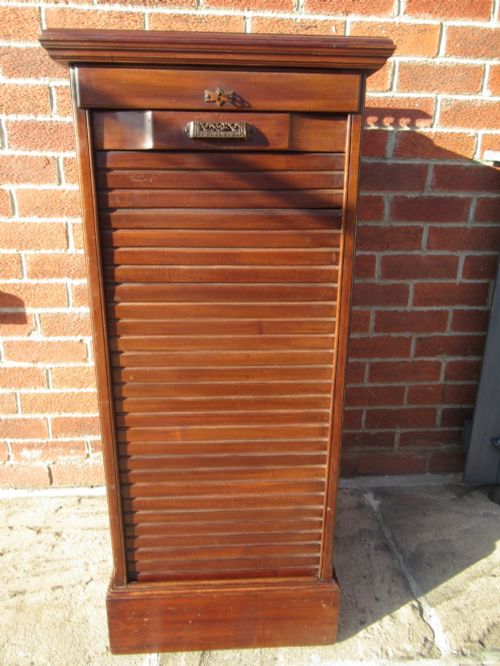
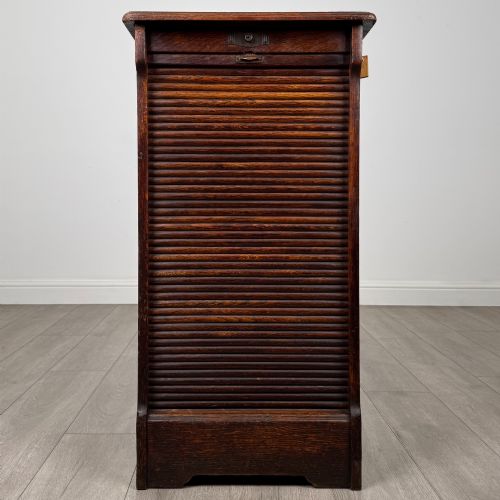
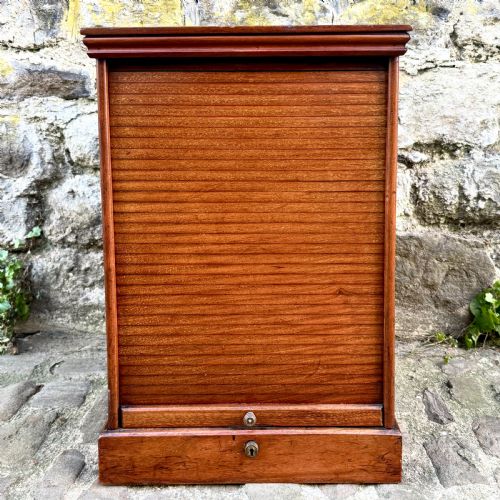
Tambour doors, a defining feature of many office cabinets, were built from individual narrow slats of wood glued to a flexible canvas backing, allowing the door to slide smoothly around a curved track into the body of the cabinet. Drawers relied on traditional dovetailed joints to withstand heavy daily use in busy environments.
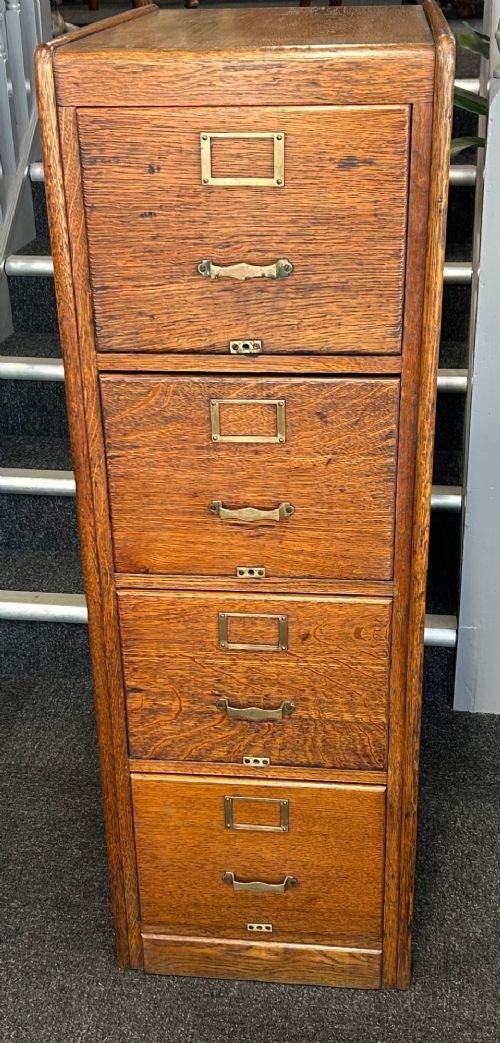
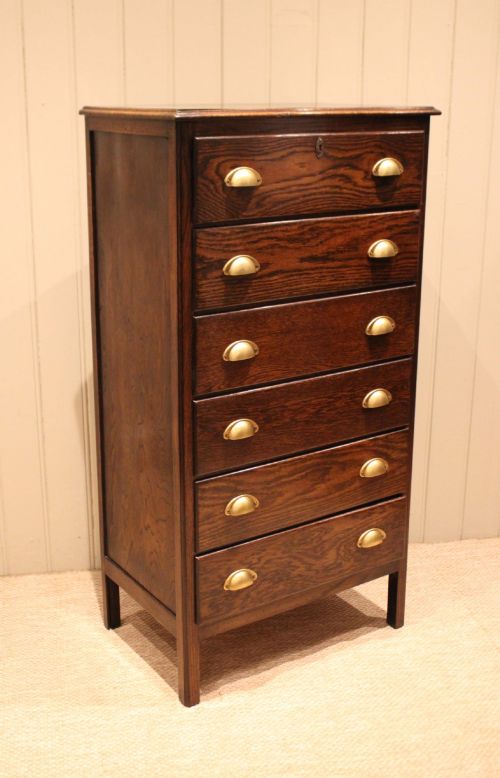
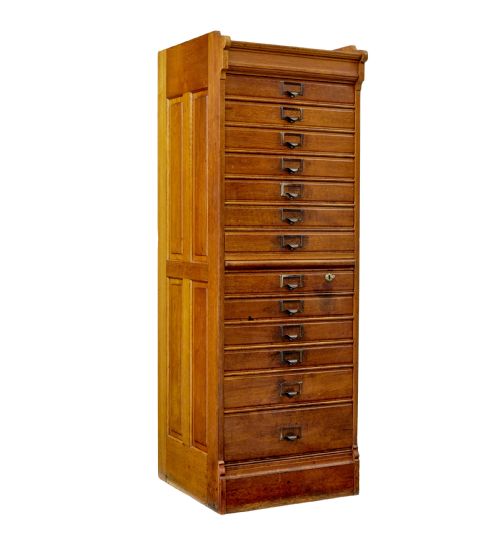
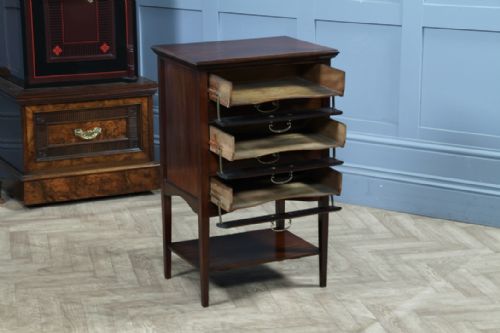
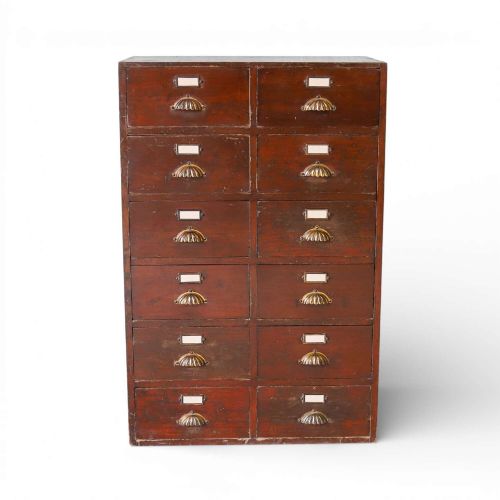
Hardware played both a functional and decorative role, featuring cast brass label holders and shell pulls that allowed clerks to identify contents at a glance. Interior mechanisms often included dedicated wooden letter dividers and locking drop-front panel systems.
Edwardian Filing Cabinet Retail Price Guide 2026
Typical asking prices for edwardian filing cabinet among the pieces listed under this phrase on Sellingantiques today, from the lower quarter to the upper quarter. They describe what is for sale here now, not the wider market.
Several cabinets retain their original paper index labels, offering a charming glimpse into the lost filing systems of Edwardian clerks.
What varies in quality
Quality in an office cabinet often rests upon the smoothness of the mechanism, particularly whether a tambour door glides freely around its track without binding or sagging. Superior examples retain their original internal filing frameworks, locking bars, and working keys.
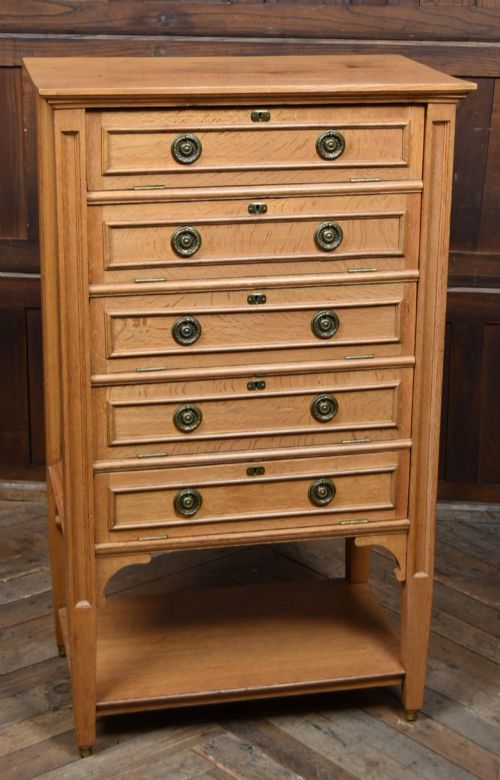
Timber selection dictates the overall visual impact, with quarter-sawn golden oak displaying a tight, decorative grain that separates utilitarian workshop furniture from finer commercial grades. Cabinet construction details, such as hand-cut dovetails on every drawer rather than machine-made joints, mark out better workshops.
Hardware originality and retention of period brass label holders contribute significantly to the integrity of a piece. Cabinets that preserve their original surface polish and manufacturer signatures reflect a higher standard of original production.
SU-TALL·Shannon File Co.·Amberg's Patent
The Edwardian Filing Cabinet Glossary
- Tambour
- A flexible sliding door formed of narrow wooden slats attached to a fabric backing. This construction allowed the door to slide around a curved track and disappear into the cabinet carcass, saving valuable floor space in cramped offices.
- Quarter-sawn
- A method of timber cutting where logs are quartered before being sliced radially through the growth rings. This technique produces durable boards with a decorative figuring known as medullary rays, highly prized in quality oak furniture.
- Wellington chest
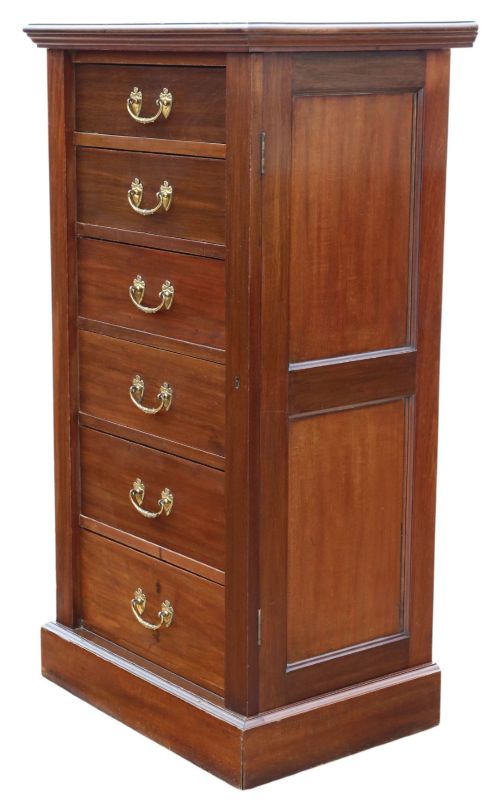
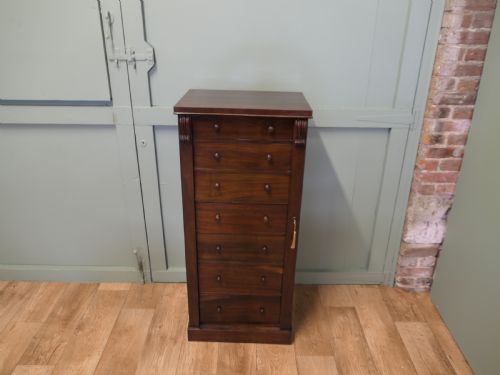
- A tall, narrow set of drawers secured by a sturdy locking stile hinged on one side and fastened with a padlock or key. Originally designed for filing documents securely, it borrows its name from the Duke of Wellington.
- Drop drawer
- A drawer featuring hinged or descending sides that fold downward when opened, allowing easier access to correspondence files stored inside. They were commonly used in early filing furniture to let users thumb through papers without removing the folders.
- Label holder
- A small brass frame attached to a drawer front to hold a paper card indicating the contents within. These functional fixtures form an integral part of the aesthetic appeal of vintage office storage.
Edwardian Filing Cabinet: Frequently Asked Questions
How do tambour doors work?
Tambour doors consist of thin wooden laths glued side-by-side onto a sturdy canvas backing. This flexible construction lets the entire door slide effortlessly around a curved interior track.
When opened, the door retreats completely into the sides of the cabinet, keeping the workspace clear and providing unobstructed access to the contents within.
Were these cabinets meant for homes or offices?
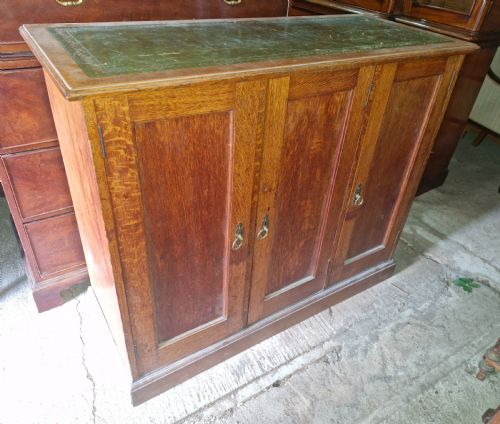
These pieces served both commercial offices and domestic studies, reflecting the growing paperwork demands of the late nineteenth and early twentieth centuries. Businesses utilised multi-drawer banks for systematic record keeping.
Meanwhile, smaller tambour cabinets and music chests found a place in middle-class homes for storing household accounts, correspondence, and sheet music.
How can I tell an Edwardian cabinet from a Victorian one?
Victorian office furniture often leans towards heavier proportions, darker polished finishes, and more elaborate carved decoration. These pieces frequently date from periods when dark mahogany and walnut dominated executive rooms.
Edwardian examples tend to embrace lighter golden oak finishes and cleaner lines, reflecting a shift towards practical efficiency in administrative spaces.
Do original filing systems still work today?
Many surviving cabinets retain their internal wooden dividers, drop-front mechanisms, and patent filing hardware. While standard modern paper sizes differ slightly from historical formats, standard documents often fit comfortably inside.
Collectors frequently use these compartments for organising modern paperwork while preserving the original historical mechanism.