




Edwardian Equestrian Scene
An edwardian equestrian scene captures the motion and tradition of rural sporting life, drawn from periods spanning the late nineteenth and early twentieth centuries.
Edwardian Equestrian Scene
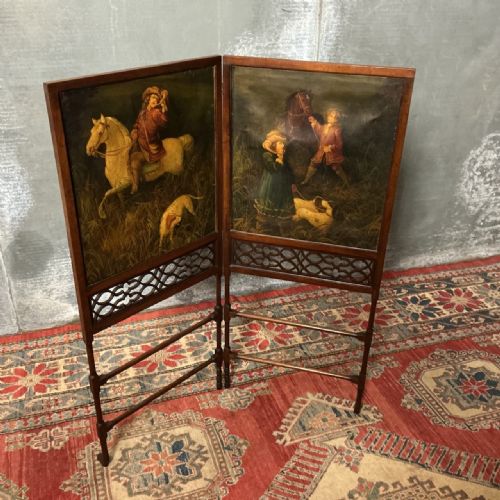
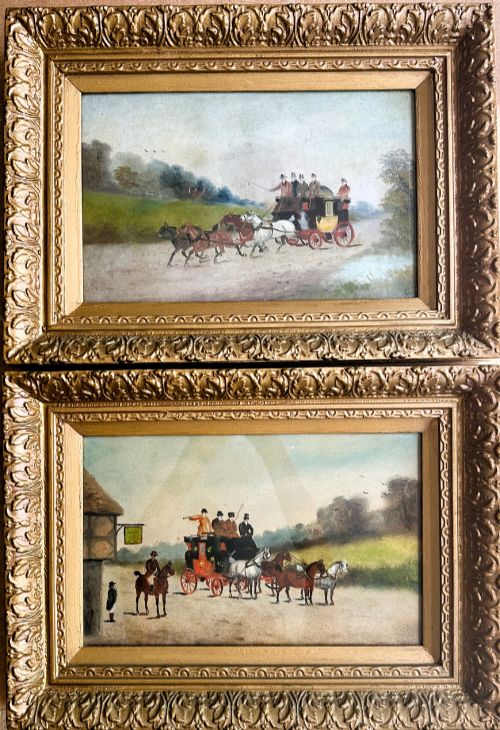
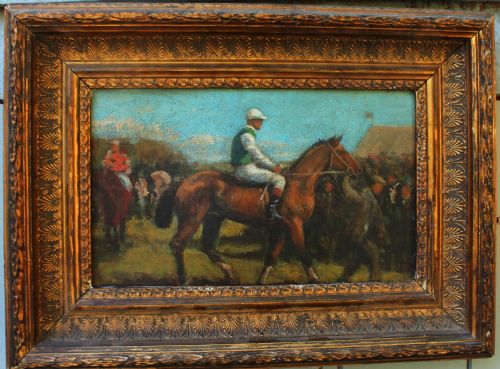
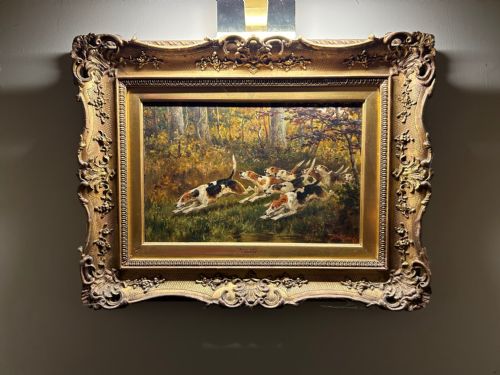
An edwardian equestrian scene brings together traditional British sporting art, featuring subjects like fox hunting, coaching, race paddocks, and country life. Buyers encounter works that range from Victorian compositions to early twentieth-century interpretations.
The selections on this page appear primarily as oil paintings, watercolours, and crystoleums housed in gilt wood frames, alongside occasional decorative pieces such as screens and card cases. These objects capture horses, hounds, and riders across moorland, countryside landscapes, and coaching inns.
Originating largely from the Edwardian era and the nineteenth century, these pieces reflect the enduring popularity of British sporting art. The forms vary from intimate watercolours to large oil paintings on canvas and board.
Materials and Techniques
Artists of these works employed oil paint on canvas or board, and watercolours on paper, capturing the energy of horses and hounds through layered brushwork and fluid washes. Giltwood and gilt frames often complement the visual depth of the paintings.
Techniques range from detailed oil studies to expressive watercolours, sometimes executed by notable hands working within British impressionism and traditional sporting traditions.
A mail coach powers through the snow while hounds chase closely behind, preserving a brisk winter journey.
Assessing Quality
Quality rests in the artist's command of anatomy, movement, and atmosphere, where spirited depictions of horses and hounds convey genuine momentum rather than static poses. Hand-signed works and pieces attributed to established painters command greater attention from collectors.
The preservation of the paint surface and the paper, alongside the integrity of the original gilt wood framing, contributes significantly to the standing of any given piece.
Philip Rideout·George Wright·John Sanderson Wells·John Charles Maggs·Thomas Blinks·Frank Dadd·John Atkinson
The Edwardian Equestrian Scene Glossary
- Crystoleum
- A delicate Victorian method of applying a hand-coloured print to glass, convexed and backed with oil paint. This technique creates a luminous, dimensional image popular in early twentieth-century interiors.
- Giltwood
- Timber carved and surfaced with a thin layer of gold leaf or gilt. It provides a reflective, ornate border that enhances traditional sporting paintings.
- Watercolour
- A painting method where fine pigments are suspended in a water-based solution on paper. It allows for transparent washes and swift, expressive studies of countryside scenes.
- Sporting Art
- A genre dedicated to depicting horses, hunting, shooting, and rural pastimes. It records the traditions of the British countryside across the nineteenth and early twentieth centuries.
Edwardian Equestrian Scene: Frequently Asked Questions
What subjects do these equestrian scenes show?
These works depict fox hunting, coaching inns, race paddocks, plough teams, and rural horse fairs.
Many compositions also include hounds, moorland landscapes, and figures engaged in traditional country pursuits.
Are these works original paintings?
The selection includes original oil paintings on canvas and board, original watercolours, and antique crystoleums.
Artists worked in varied mediums to capture the movement of horses and the atmosphere of the British countryside.
How do I date an equestrian painting?
Dating relies on stylistic markers of British sporting art from the nineteenth century through the Edwardian period.
Signatures, framing styles, and the specific attire of riders also help place works within the 1880 to 1920 window.
How should I display a framed watercolour?
Watercolours require placement away from direct sunlight to protect the paper and pigments from fading over time.
Pairing them with period gilt frames preserves their traditional aesthetic within a room.