


Vintage Horse Carriage Art
Vintage horse carriage art captures the motion and tradition of horse-drawn transport through paintings, drawings, and models.
Vintage Horse Carriage Art
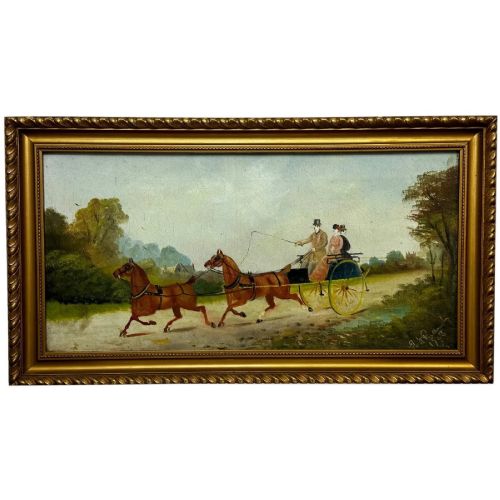
Vintage horse carriage art comprises paintings, watercolours, chalk drawings, lithographs, and models depicting coaches, traps, cabs, and carriages. These works capture the movement and traditional scenes of nineteenth-century and early twentieth-century transport across Britain and Europe.
Buyers will find watercolour paintings, oil paintings on canvas, framed prints, and wooden folk art models among the current selection. The pieces span periods from the mid nineteenth century through the Edwardian era up to the nineteen-twenties.
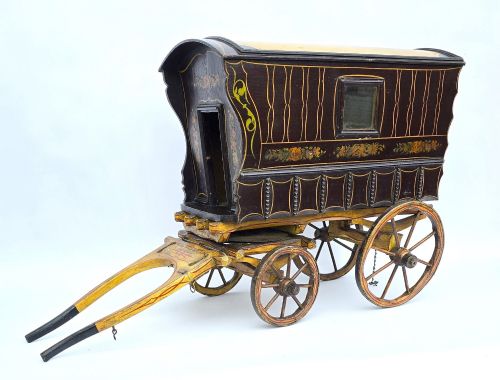
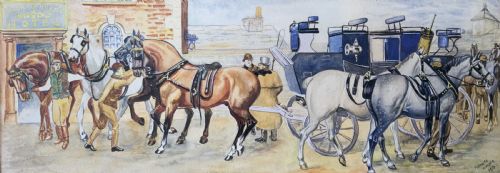
The subjects range from coaching scenes with hounds and stagecoaches to street scenes in Paris and London featuring hansom cabs and light carts. Traditional British sporting scenes and folk art models of caravans and carriages represent the core of what is available.
What varies in quality
Quality in these works rests upon the fidelity of anatomical and mechanical detail, particularly in the rendering of horses, harnesses, and carriage construction. Works by documented artists demonstrate superior command of perspective, light, and movement compared to anonymous decorative pieces.
The preservation of the medium, whether oil, watercolour, or chalk, together with the originality of the period framing, distinguishes finer examples from heavily restored or later-assembled items.
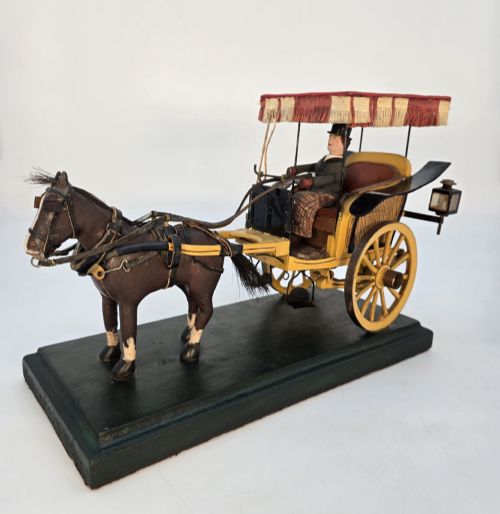
One signed model comes complete with a tiny wooden driver and horse, frozen mid-trot by a maker in nineteen-twenty-eight.
R.D. Roberts·Albert Ludovici Jnr·Cecil Charles Windsor Aldin·George Wright·Charles James Lauder·Philip Henry Rideout·Samuel Henry Alken·Eduard Leon Cortes·John Richard Worsdale·John Vine of Colchester
The Vintage Horse Carriage Art Glossary
- Watercolour painting
- A work executed with water-soluble pigments on paper, valued for its translucency and immediacy. Many period examples capture outdoor light and atmospheric street conditions.
- Folk art model
- A hand-carved and assembled wooden representation of a vehicle, often created by self-taught makers. These objects combine utilitarian materials with observational detail.
- Oil painting
- Pigments bound in drying oil applied to canvas or wood panels, allowing rich colour depth and fine detail. This medium was standard for formal coaching and sporting scenes.
- Lithograph
- A print made from a flat stone or metal plate treated to retain ink where required. Colour lithographs reproduced popular sporting and coaching subjects for domestic display.
- Trap
- A lightweight two-wheeled carriage pulled by a single horse. The term appears frequently in nineteenth-century sporting and rural art.
Vintage Horse Carriage Art: Frequently Asked Questions
What is vintage horse carriage art?
Vintage horse carriage art encompasses paintings, drawings, prints, and wooden models depicting horse-drawn vehicles and coaching scenes from the nineteenth and early twentieth centuries. The category includes oil paintings, watercolours, and folk art.
These pieces document an era when horse-drawn transport dominated daily life, street travel, and sporting pursuits across Britain and Europe.
How were carriage models made?
Carriage models from this period were typically scratch-built by hand using carved wood and various metal elements. Makers constructed detailed miniature replicas of vehicles such as caravans, chaises, and traps.
Makers often included carved figures of horses and drivers to complete the scene, reflecting traditional folk art practices.
How do I date a piece?
Dating relies on stylistic clues, artist signatures, framing materials, and the specific type of vehicle depicted. Nineteenth-century pieces often show heavy coaching and stagecoach operations, while Edwardian works frequently feature urban cabs and motor-transition scenes.
Signatures and dated inscriptions on folk art models or canvas backs provide direct confirmation of the period of creation.