


Edwardian Equestrian Art Prints
Edwardian equestrian art prints capture the speed, mud, and character of the hunting field and the racecourse.
Edwardian Equestrian Art Prints
When you search for edwardian equestrian art prints, you find framed prints, watercolours, oils, and etchings depicting horses, huntsmen, and sporting scenes. The selection spans the Edwardian period alongside Victorian, early twentieth century, and later dates.
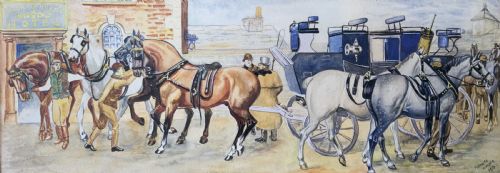
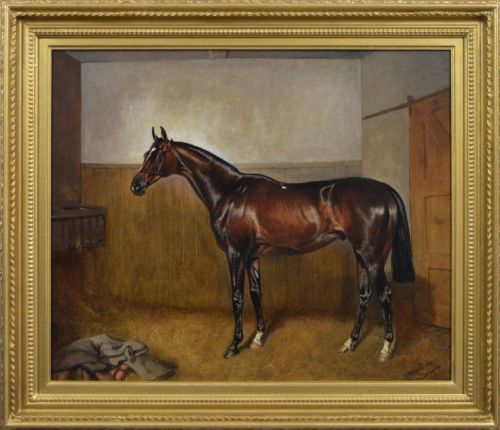
Framed prints and original watercolours dominate the selection, often preserved in oak frames or glass fronts. Subjects range from racehorse portraits and hunting sequences to humorous military and garrison life scenes.
The objects derive from British sporting art traditions, reflecting a culture deeply invested in the turf, the chase, and equine companionship. Each piece serves as a window into the sporting life of the early twentieth century.
How they were made
Artists and printmakers utilised paper, canvas, and watercolour pigments, often applying oil paint or ink to achieve depth and texture. Etchings and chromolithographs provided reproducible formats that brought sporting imagery into domestic interiors.
Framing materials such as oak and gilt wood protected these works under glass, preserving delicate watercolours and paper prints from moisture and light. Many pieces retain their original period frames, which complete the composition.
The listings combine paper prints and watercolours with canvas oil paintings, spanning the Victorian era into the 1940s.
What varies in quality
The strength of the draughtsmanship and the clarity of the printed line separate standard decorative plates from works by established sporting artists. Hand-coloured details and signed impressions carry greater artistic weight than mass-produced reproductions.
The condition of the paper, the vibrancy of the pigments, and the preservation of the original mount and oak frame influence the overall appeal of a piece. Works that retain their original context without excessive fading or damp damage stand higher in the range.
John Alfred Wheeler·Herbert Dicksee·Alfred Wheeler·Charles Johnson Payne Snaffles·Isaac Cullin·Frank Algernon Stewart·John Atkinson
The Edwardian Equestrian Art Prints Glossary
- Crystoleum
- A Victorian and Edwardian method of applying a hand-coloured print to the inside of concave glass and dissolving the paper base so the image can be painted from behind. This technique produces a luminous, enamel-like finish.
- Chromolithograph
- A multi-coloured print produced using lithographic stones, one for each colour applied in register. It allows for rich, oil-painting-like colour saturation on paper.
- Etching
- An intaglio printmaking process where lines are bitten into a metal plate with acid before being inked and pressed onto paper. The resulting impression shows a distinct plate mark at the edges.
- Sporting Art
- A genre of painting and printing dedicated to equestrian subjects, hunting, racing, and shooting. It relies on accurate anatomical depiction and familiarity with field sports.
Edwardian Equestrian Art Prints: Frequently Asked Questions
Are these prints original?
Many listings feature original watercolours, oils, and period etchings alongside vintage prints from the early twentieth century.
Descriptions specify whether a work is an original hand-painted piece or a period print edition.
How should I hang them?
Keep these framed works out of direct sunlight to prevent the watercolours and paper from fading over time.
Ensure they hang on interior walls away from damp zones to protect the original oak and gilt frames.
What subjects are common?
The most frequent subjects include racehorses with jockeys, hunting sequences, and military garrison scenes.
Artists also depicted coaching inns and field sports across Britain during the Edwardian era.
Do they come framed?
A large portion of the selection comes mounted in period oak frames, sometimes behind glass.
Framing details are noted in individual descriptions to help buyers assess the condition of the mount.