

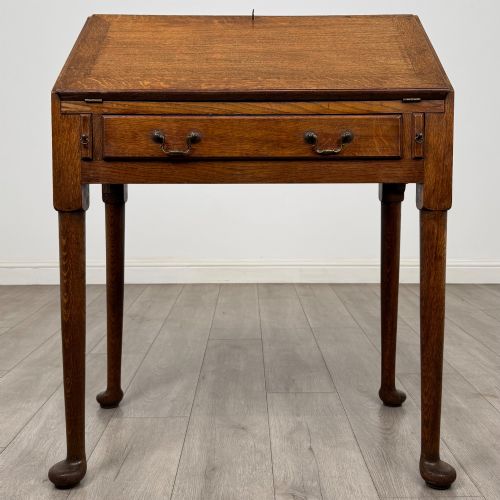

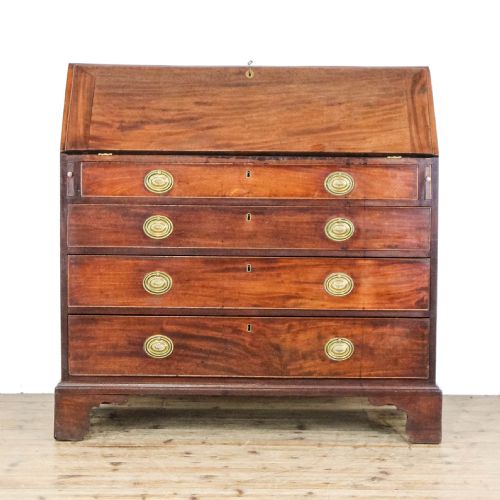
Edwardian Drop Front Desk
An Edwardian drop front desk combines a convenient writing surface with compact storage, offering a practical workspace shaped by early twentieth-century cabinetmaking traditions.
Edwardian Drop Front Desk
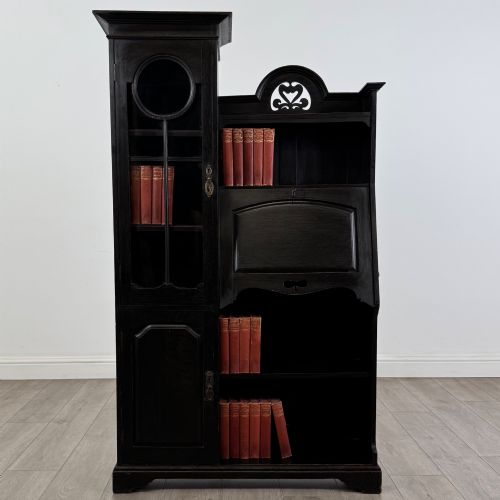
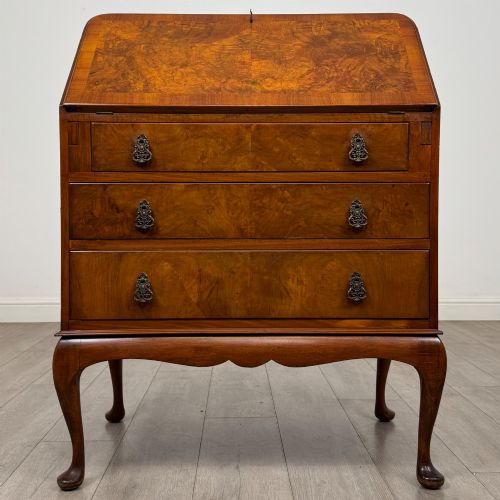
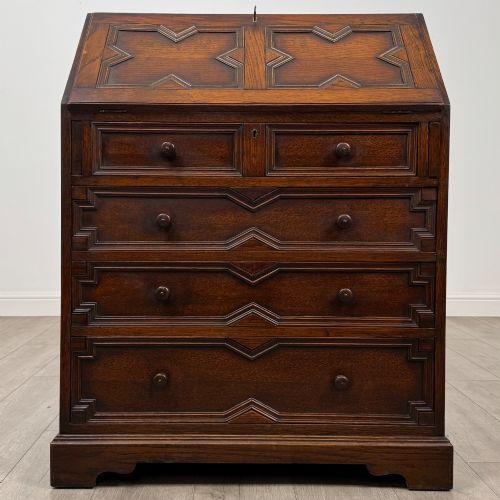
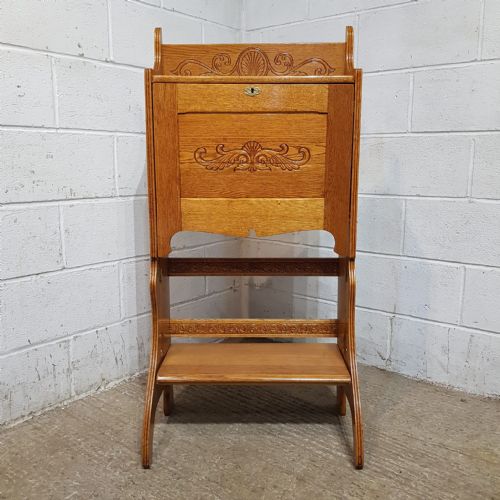
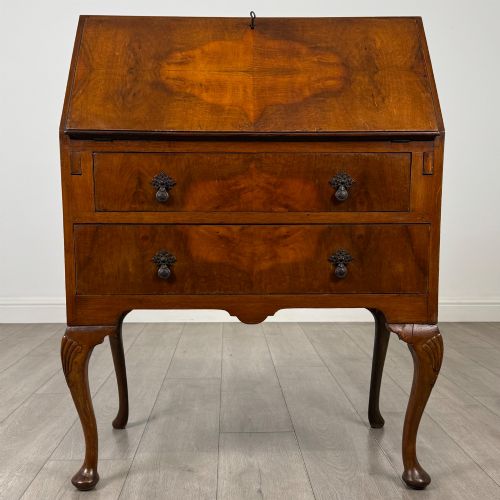
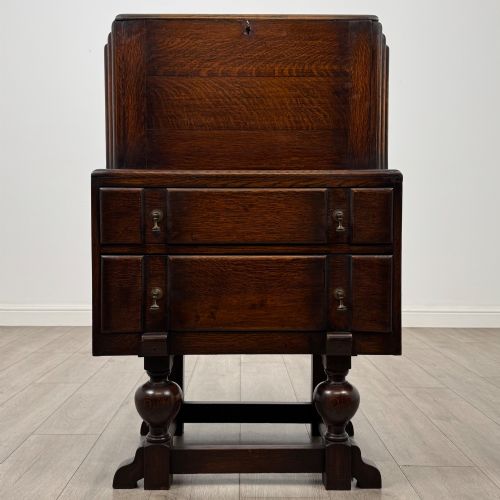
The edwardian drop front desk centres on forms designed for domestic correspondence and household management, frequently appearing as compact writing bureaux or fitted cabinet combinations. Buyers exploring this category encounter pieces rooted primarily in the Edwardian period alongside examples drawing inspiration from earlier Georgian, Victorian, and Regency design idioms.
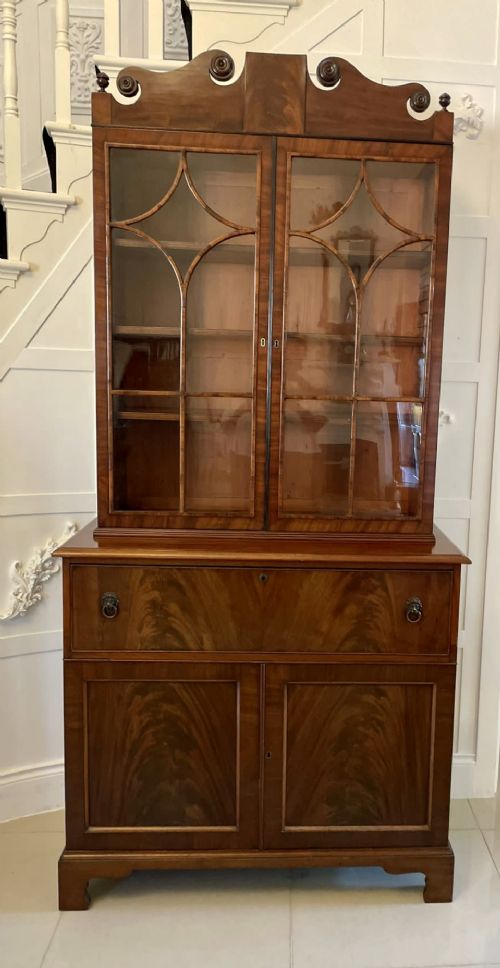
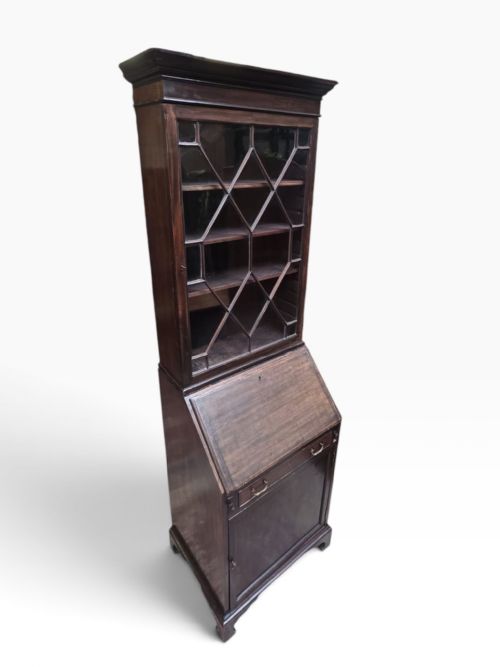
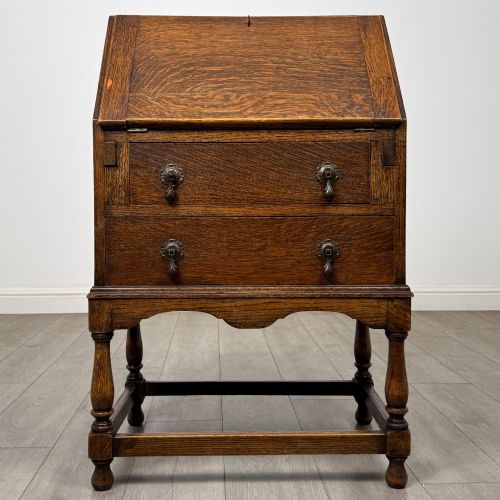
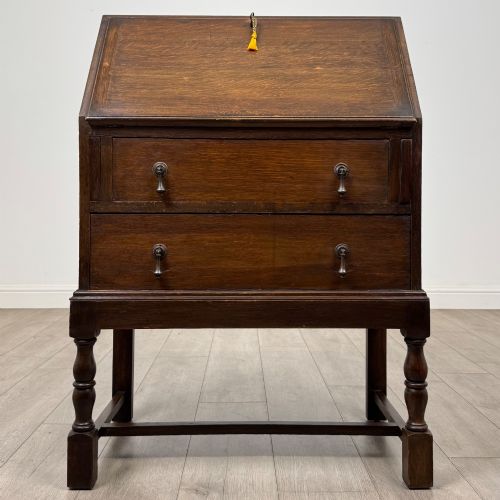
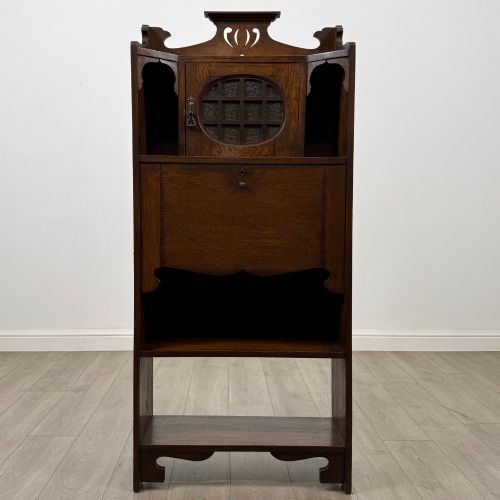
The selection ranges from simple oak writing desks to elaborate bureau bookcases featuring glazed upper shelving and fitted internal compartments. Many items reflect stylistic revivals, incorporating Jacobean, Queen Anne, or Arts and Crafts details into traditional drop front frameworks.
Materials and construction methods
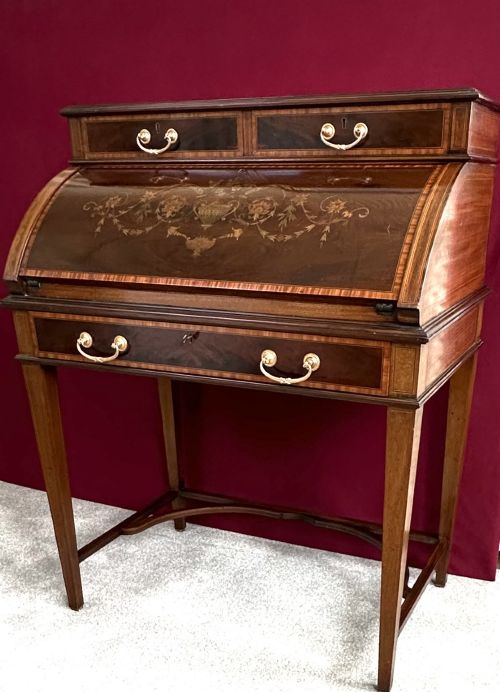
Cabinetmakers utilised a variety of timbers, relying heavily on oak, mahogany, and walnut for the primary structure of these desks. More decorative examples incorporate figured veneers, satinwood, or subtle inlay work to enhance the exterior surfaces.
Functional elements such as hinges, handles, and escutcheons are typically formed from brass or other metals, while writing surfaces occasionally feature inset panels of leather. Internal compartments and pigeonholes demonstrate meticulous carpentry designed to organise stationery and documents securely.
Listings feature oak, mahogany, walnut, and satinwood alongside brass hardware and leather writing surfaces.
Distinctions in craftsmanship
Quality reveals itself in the selection of timber figures, the precision of dovetail joints within the drawers, and the integration of decorative elements like hand painting or carving. Superior examples demonstrate careful grain matching across the fall front and drawer fronts.
The complexity of the interior fitments, including secret compartments, small drawers, and arched pigeonholes, separates standard production items from finer workshop commissions. The stability of the drop front mechanism and the integrity of internal dividers further distinguish master cabinetwork from simpler utility pieces.
Harris Lebus·Larkin
The Edwardian Drop Front Desk Glossary
- Fall front
- The hinged writing flap that drops down to form a horizontal desk surface. When closed, it conceals the interior pigeonholes and drawers.
- Bureau bookcase
- A dual-purpose piece combining a lower writing desk with an upper shelving or cabinet section enclosed by glass or timber doors.
- Secretaire
- A piece of furniture containing a writing drawer or drop front compartment disguised to resemble a standard chest of drawers or sideboard.
- Pigeonhole
- A small, open compartment within the desk interior designed for sorting letters, papers, and envelopes.
- Inlay
- A decorative technique where contrasting woods, brass, or other materials are set into recesses flush with the surrounding surface.
Edwardian Drop Front Desk: Frequently Asked Questions
What is an edwardian drop front desk?
An edwardian drop front desk is a compact writing cabinet featuring a hinged flap that opens forward to create a writing surface. These pieces typically contain internal compartments for organising stationery and documents.
They emerged during a period of refined domestic craftsmanship, utilising timbers such as oak, mahogany, and walnut. Many examples incorporate styles from earlier eras while maintaining the practical dimensions suited to smaller rooms.
How were these desks used originally?
These desks served as private spaces for writing letters, managing household accounts, and storing personal papers. The enclosed fall front kept correspondence secure and out of sight when not in use.
Upper bookcase additions provided functional storage for family libraries and reference volumes. The combination of writing surface and compartmentalised interior made them essential fixtures in studies and drawing rooms.
How do I care for wooden surfaces?
Protect the timber by keeping the desk away from direct sunlight and sudden temperature shifts, which can cause wood to warp or veneers to lift. Regular dusting with a soft, dry cloth preserves the finish.
Apply high-quality beeswax periodically to nourish hardwoods like mahogany, oak, and walnut. Avoid placing hot or wet items directly on the leather writing inserts and polished wood surfaces.