





Edwardian Dressing Stool
Edwardian dressing stool examples combine practical seat forms with period timber frames to sit neatly beneath bedroom tables.
Edwardian Dressing Stool
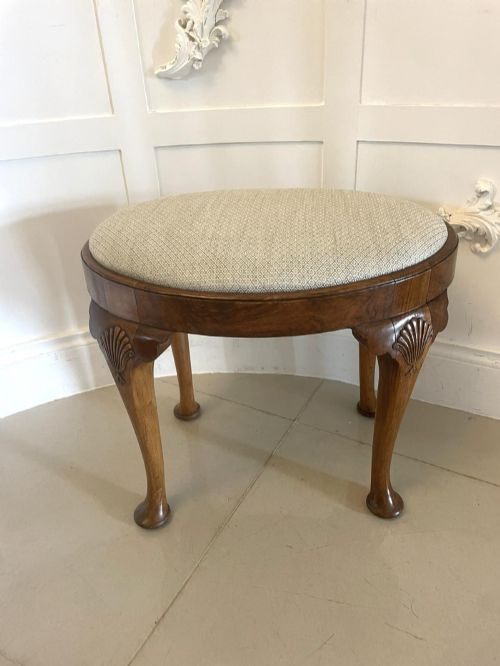
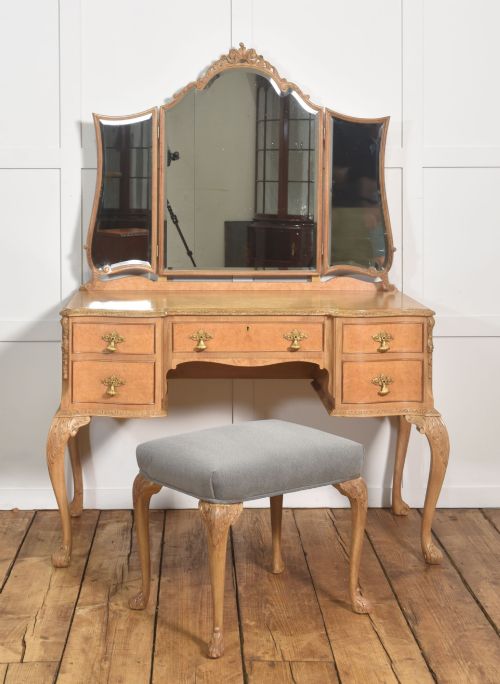
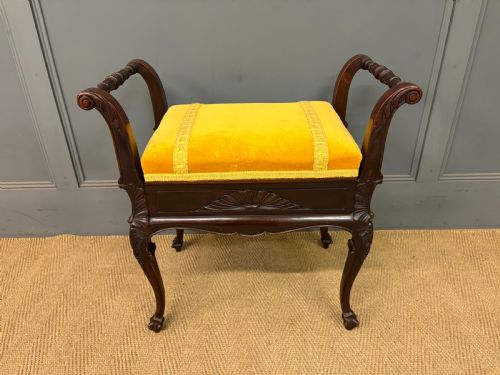
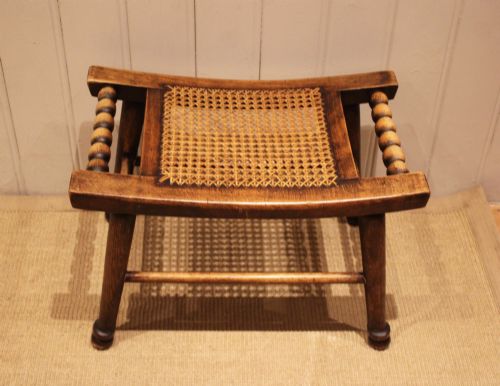
An edwardian dressing stool is a compact bedroom seat designed to accompany matching dressing tables during the early twentieth century. You will frequently encounter mahogany and satinwood frames, often detailed with delicate string inlay or caned panels.
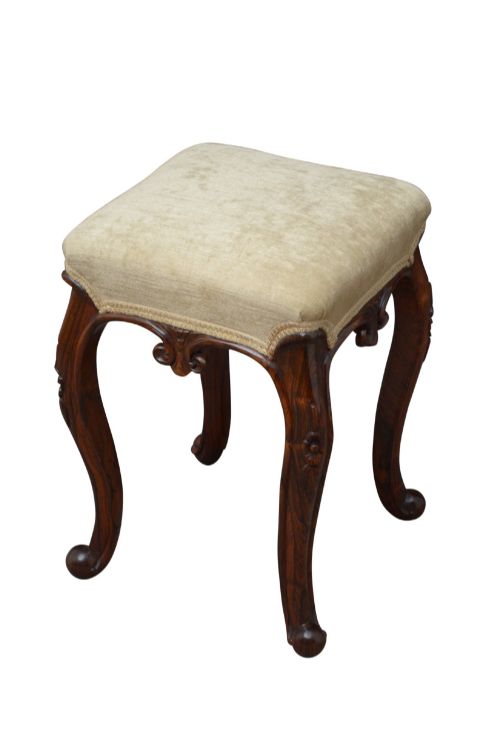
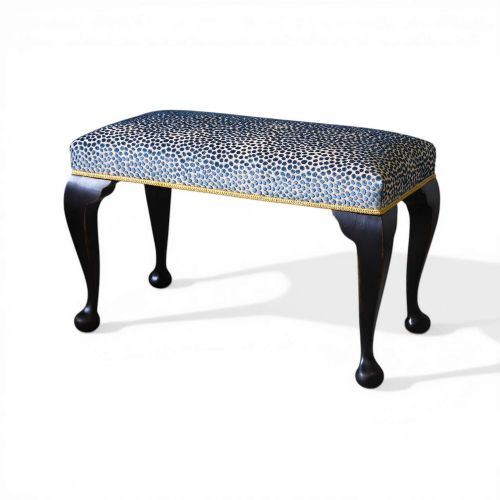
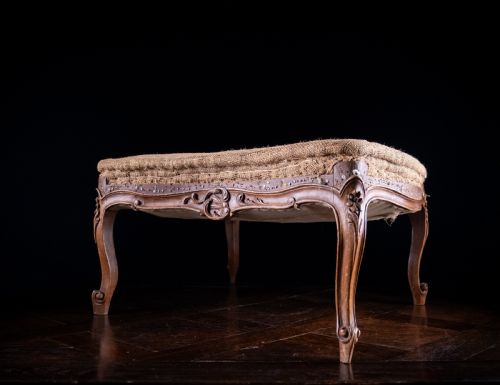
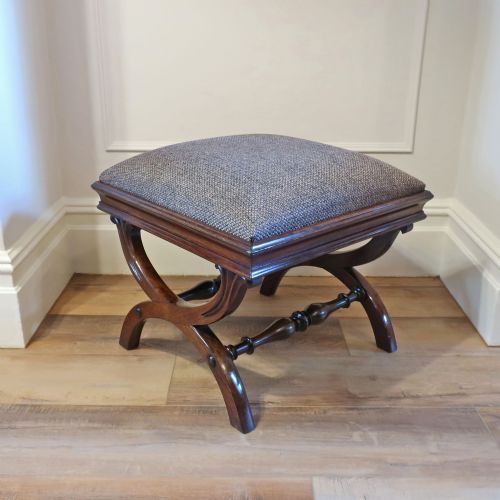
The selection here encompasses straightforward rectangular designs alongside more decorative variations with cabriole legs or cross stretchers. These pieces frequently share forms with piano seats and low window benches from the same decades.
Originating predominantly from the late nineteenth and early twentieth centuries, these stools reflect the domestic requirements of period bedrooms. They offer a functional height and scale that suits contemporary spaces just as readily.
Materials and construction
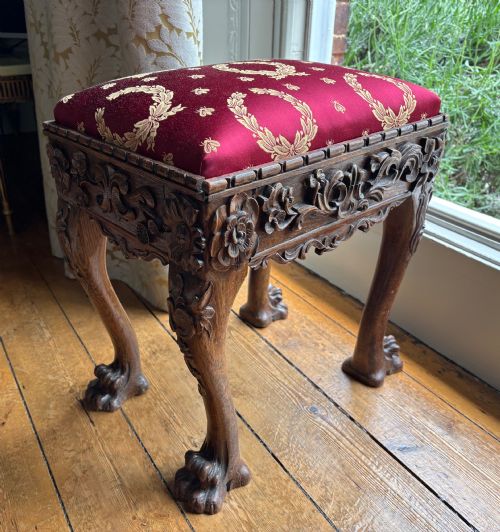
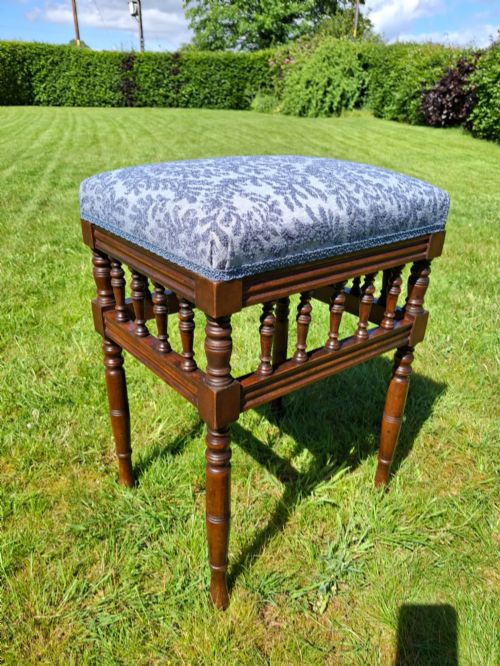
Cabinet makers utilised dense hardwoods such as mahogany, walnut, and satinwood to build sturdy frames that could withstand daily use. Turned legs, carved details, and inlaid woodwork demonstrate the common joinery techniques of the period.
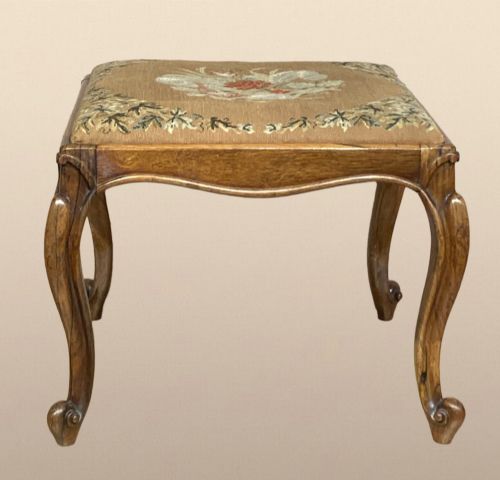
Upholstery materials range from traditional tapestry and wool to modern tweed linen and leather covers. Caned seating panels also appear frequently, woven directly into the timber frame for a lighter visual weight.
Listings feature oak, walnut, and mahogany frames alongside varied textile coverings including tapestry, wool, and modern tweed.
Factors affecting quality
The distinction between standard domestic pieces and finer items rests in the selection of timber and the precision of the carving. Finely figured veneers, parcel gilt highlights, and intricate inlay set superior examples apart from plain production work.
Structural integrity and the retention of original finish dictate the standing of a piece. Original upholstery supports and sound joinery contribute significantly to the overall integrity of the furniture.
Arthur W Simpson·J Shoolbred
The Edwardian Dressing Stool Glossary
- Inlay
- A technique where pieces of contrasting timber or shell are inserted into depressions within the primary wood to form decorative patterns. This ornamentation is typical of refined Edwardian cabinet work.
- Cabriole leg
- A furniture leg that curves outward and then tapers inward, inspired by animal limbs. This form appears frequently on walnut and mahogany stools from the period.
- Cross stretcher
- A pair of diagonal wooden braces connecting the legs beneath a seat to provide additional stability. They are often turned or carved.
- Caning
- A woven mesh made from rattan or stripped reed used to create lightweight seat panels. It provides a flexible and breathable surface.
- X-frame
- A structural design utilising intersecting diagonal supports shaped like the letter X. This configuration is common on folding or adjustable piano and dressing seats.
Edwardian Dressing Stool: Frequently Asked Questions
Where were edwardian dressing stools used?
These low seats were positioned primarily in bedrooms or dressing rooms in front of matching wooden tables with mirrors. Their compact dimensions allowed them to slide completely out of the way when not in use.
Today, they function equally well as standalone occasional seats in hallways, living rooms, or beneath small desks throughout the home.
How do I identify an edwardian piece?
Authentication relies on examining the timber species, joinery methods, and decorative motifs typical of the early twentieth century. Edwardian items often feature lighter woods like satinwood, delicate string inlay, and restrained carving styles.
Comparing the proportions and upholstery specifications to documented examples from the same era helps confirm the period of manufacture.
Are these stools comfortable for daily seating?
Most examples were designed for short periods of sitting while grooming or playing the piano. Many surviving pieces feature padded upholstery that provides adequate support for everyday use.
If the internal padding has degraded over the decades, a professional reupholstery can restore the original comfort without altering the antique frame.
Can I mix these stools with modern furniture?
The understated timber tones and classic silhouettes of these pieces allow them to complement contemporary interior schemes. A vintage walnut or mahogany stool adds textural contrast and historical character to minimalist rooms.
Their modest footprint makes them adaptable additions that fit comfortably beside modern armchairs or contemporary dressing tables.