
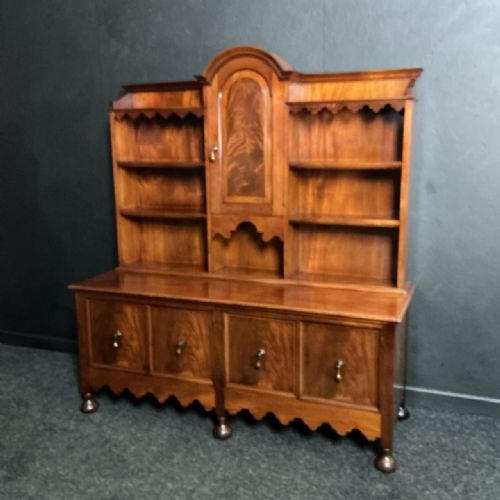
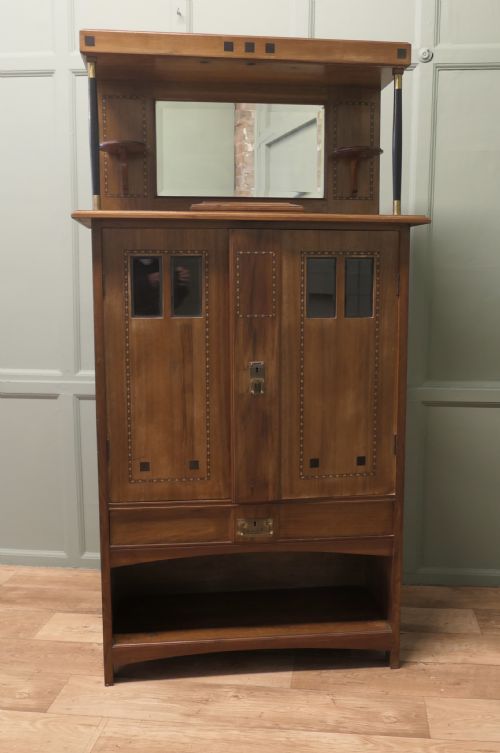
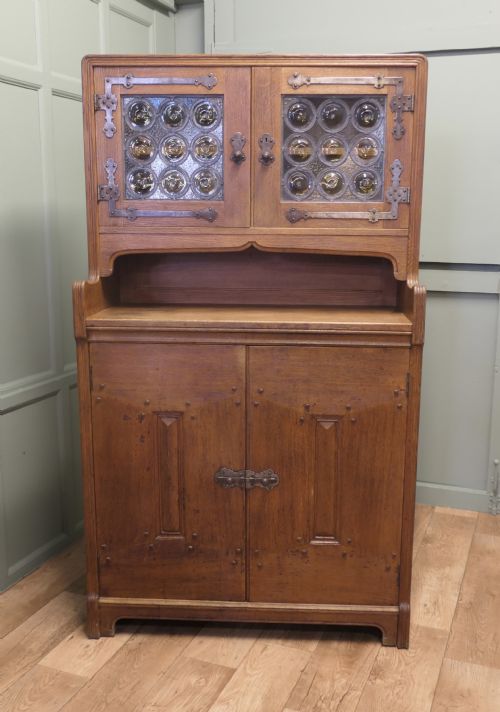
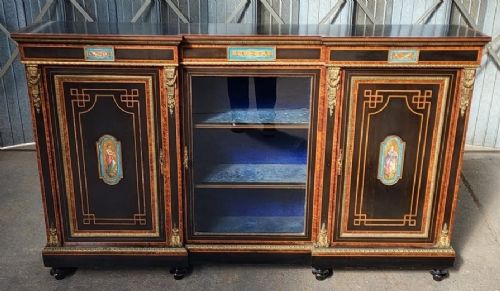
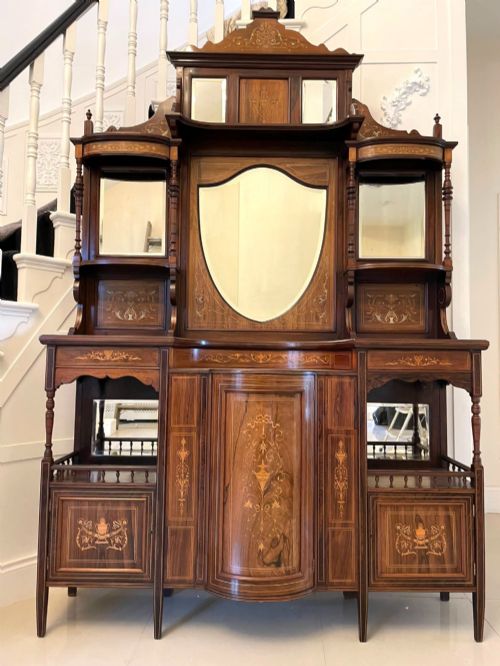
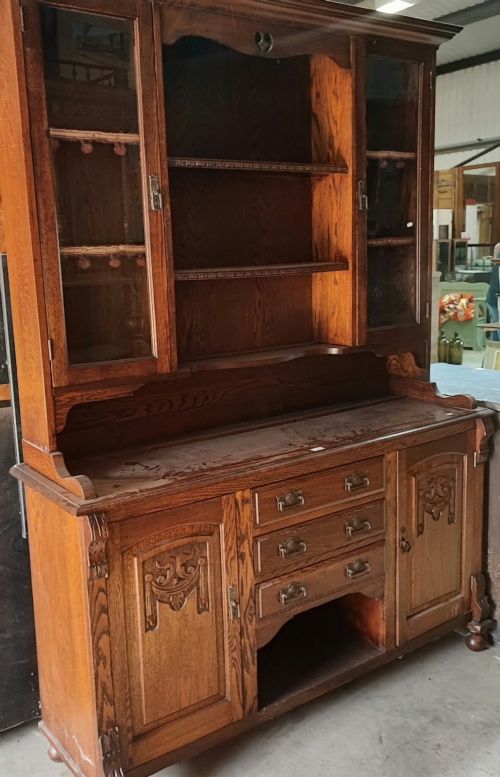
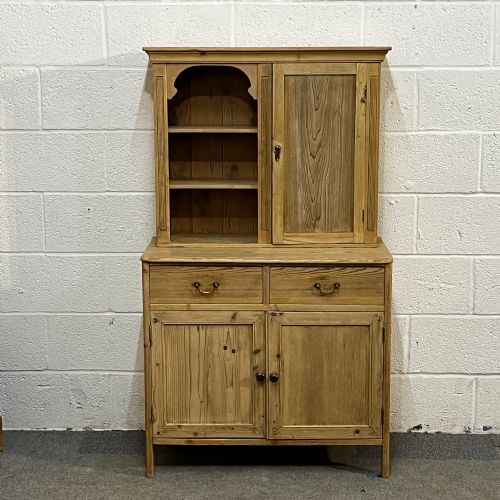
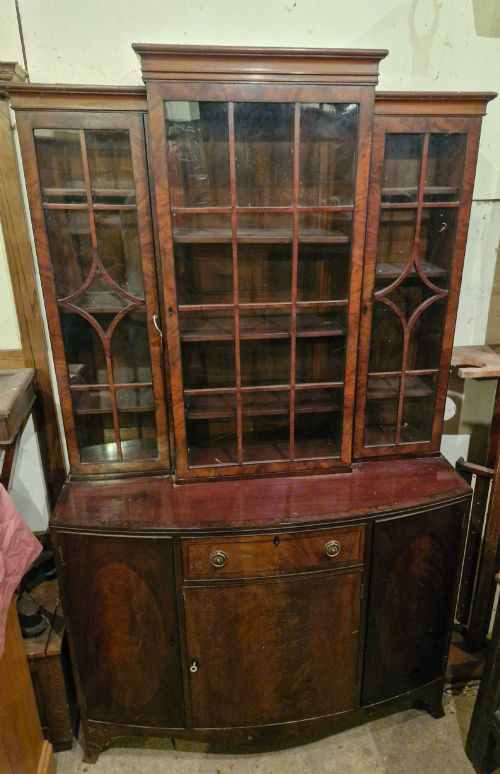
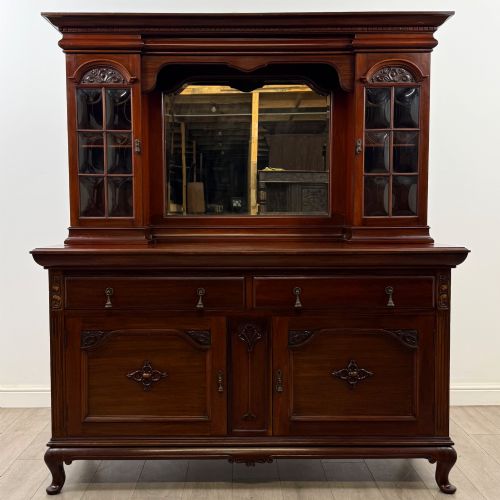
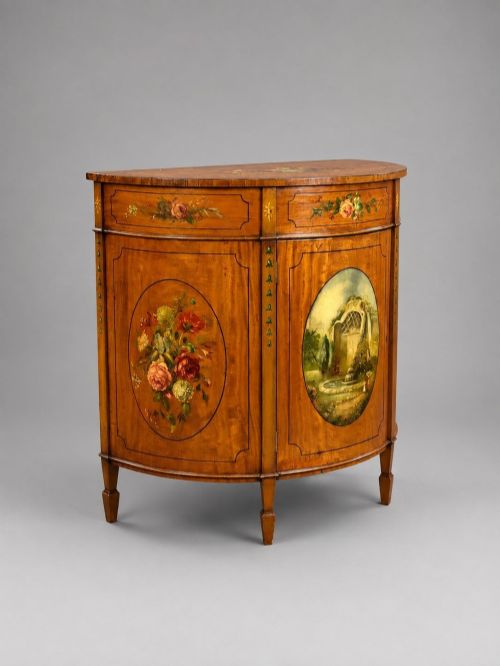
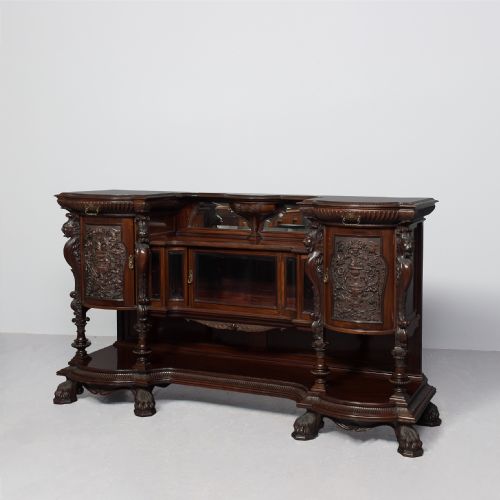
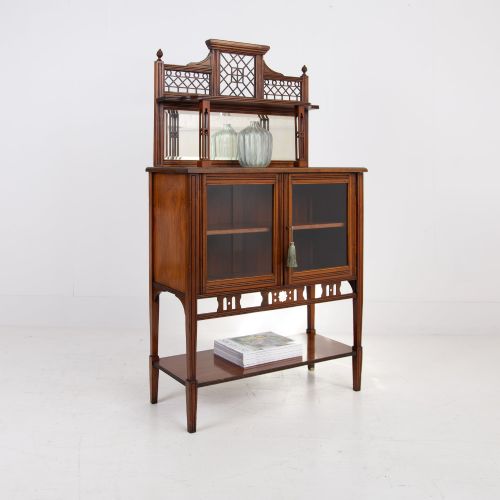
Edwardian Display Sideboard
An edwardian display sideboard combines generous storage with glass-fronted display space, making it a practical focal point for a dining room.
Edwardian Display Sideboard
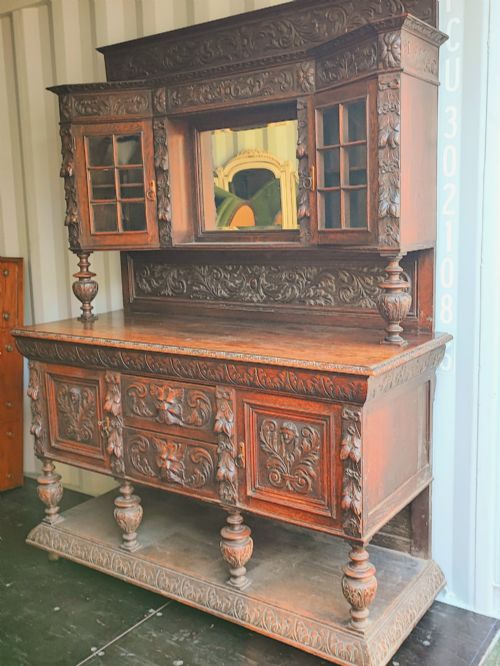
When you search for an edwardian display sideboard, you are looking at substantial timber furniture designed to hold and exhibit domestic objects. These pieces unite the enclosed storage of a traditional base cabinet with upper or central shelving enclosed by glass.
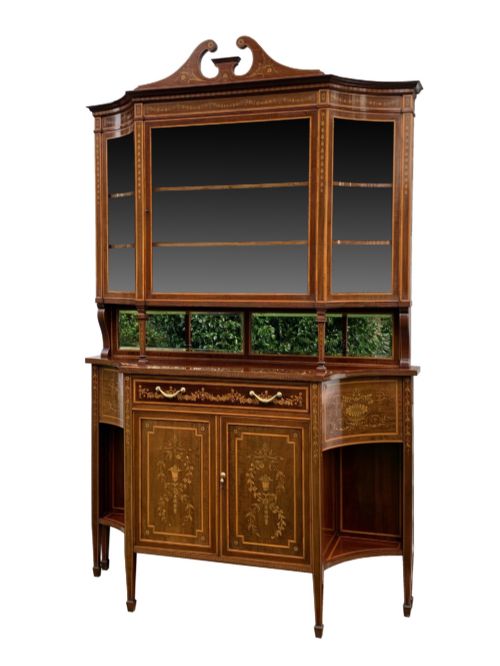
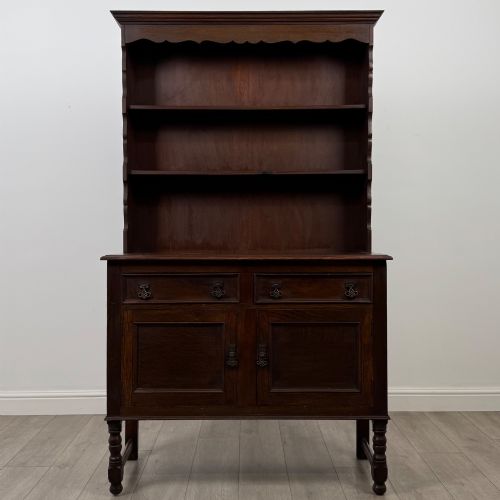
On this page, you will most frequently meet mahogany and oak examples originating from the Edwardian period and the surrounding decades. They range from formal Sheraton revival designs with delicate inlay to sturdier Arts and Crafts forms.
How they were made
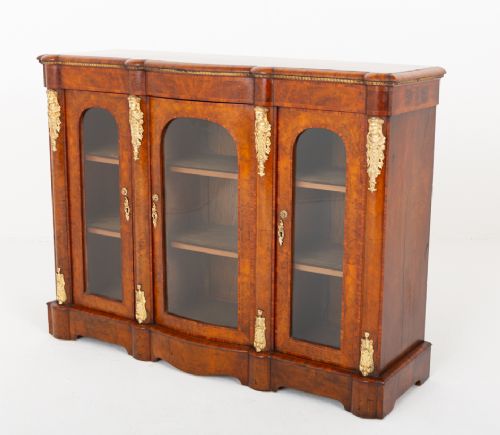
Cabinet makers utilised a foundation of solid timbers such as mahogany, oak, and walnut, frequently applying fine veneers like burr walnut or satinwood to visible surfaces. Marquetry inlay, brass hardware, and ormolu mounts added decorative contrast to the timber carcasses.
Glass panels were fitted into glazed doors to protect the contents while maintaining visibility, sometimes accompanied by mirrored backs to reflect light. Structural joints relied on traditional woodworking techniques to ensure durability across large sideboards and dressers.
The furniture styles span the Victorian, Edwardian, and Arts and Crafts periods, alongside specific revivals like Sheraton and Jacobean.
What varies in quality
The standard of a piece depends heavily on the selection of timber and the precision of decorative details like marquetry and carving. Master workshops employed carefully matched veneers and hand-cut inlays that remain crisp and secure after a century of use.
Construction methods also separate standard production from exceptional studio work, evident in the smooth movement of drawers and the careful fitting of glazed doors. Pieces bearing signatures or attributed to noted makers generally demonstrate superior joinery and material choice.
Edwards and Roberts·Liberty and Co.·Shapland and Petter·James Hicks·John Moyr Smith·Heals of London
The Edwardian Display Sideboard Glossary
- Credenza
- A low cabinet or sideboard, frequently featuring glass doors or curved ends, used for storage and display. These pieces often incorporate elaborate marquetry or ormolu mounts.
- Marquetry
- A decorative technique of applying thin veneers of different woods to form geometric or floral patterns. It requires considerable skill to cut and fit each piece precisely.
- Sheraton Revival
- A late nineteenth and early twentieth century design style inspired by the neoclassical furniture of Thomas Sheraton. It is characterised by slender proportions, satinwood, and delicate floral inlay.
- Ormolu
- Gilt bronze mounts applied to furniture for decorative effect. The technique involves treating brass or bronze with a gold amalgam.
- Demi-lune
- A half-moon shape used for the top and base of specific cabinets and commodes. This curved form allows the furniture to sit flush against a wall.
Edwardian Display Sideboard: Frequently Asked Questions
What is an edwardian display sideboard?
An edwardian display sideboard is a hybrid piece of furniture that combines the enclosed cupboard storage of a base sideboard with glazed shelving for exhibiting ceramics or glassware.
These pieces typically date from the early twentieth century and reflect the transitional design tastes of the Edwardian era, incorporating styles from Sheraton revival to Arts and Crafts.
How were these sideboards used?
They served a dual purpose in Edwardian dining rooms, functioning both as a serving surface and as a showcase for valuable tableware.
The lower cupboards and drawers held cutlery, linens, and serving dishes, while the upper glass sections protected prized porcelain and crystal from dust.
How do I identify Edwardian furniture?
Edwardian furniture is generally characterised by lighter construction and brighter timber tones than heavy Victorian pieces. Look for characteristic details such as satinwood inlay, mahogany veneers, and influences from earlier historical revivals.
While Victorian pieces often relied on dark ebonised woods or heavy walnut, Edwardian design favoured a more delicate aesthetic with refined proportions.
How do I clean and maintain the wood?
Maintenance requires regular dusting with a soft, dry cloth to prevent particulate buildup on the timber and glass surfaces. Avoid modern silicone polishes, as they can penetrate the finish and damage antique veneers over time.
Applying a traditional beeswax periodically will nourish the wood and help preserve the natural lustre of mahogany and oak.