
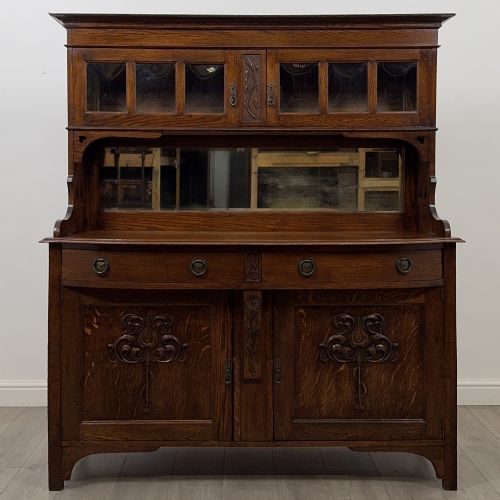
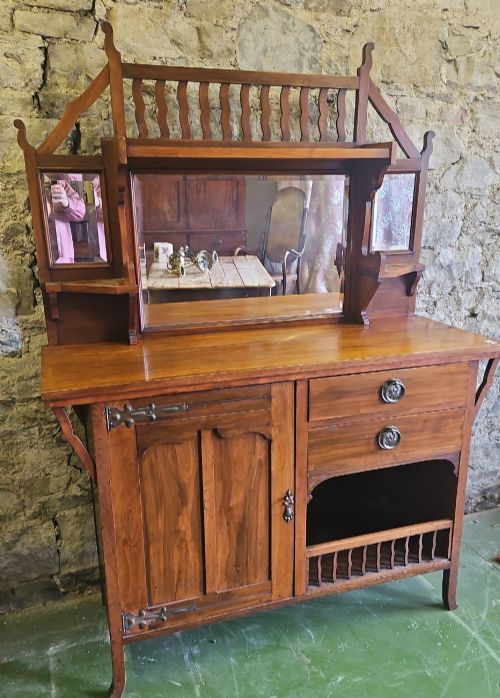


Edwardian Mirror Back Buffet
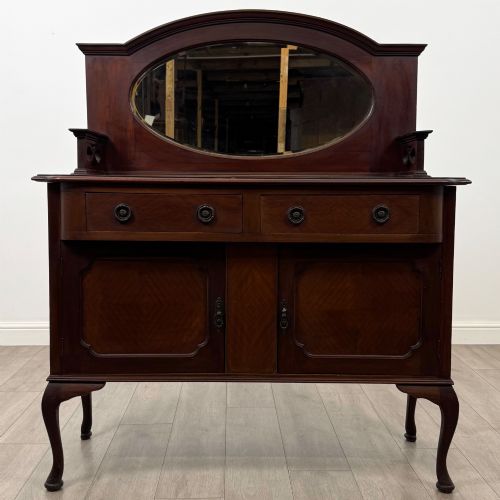
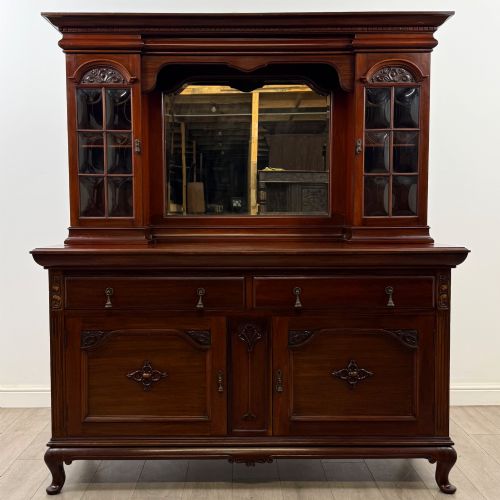
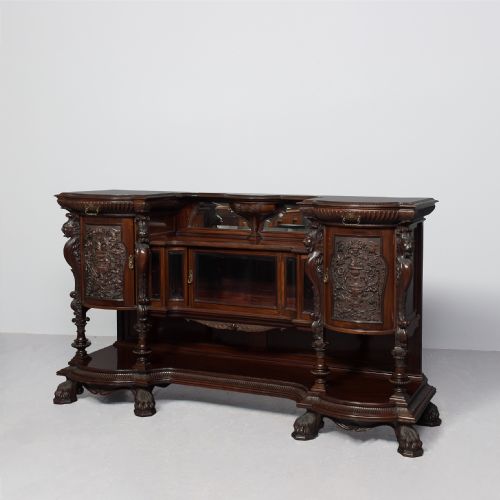
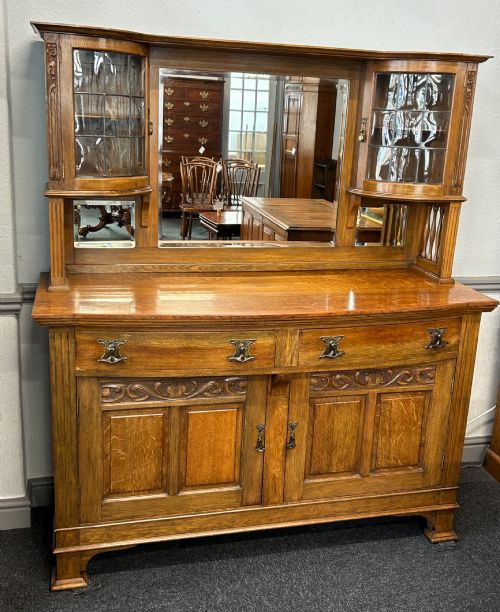
An edwardian mirror back buffet combines functional dining storage with integrated glass, and buyers choose them for their generous proportions and striking decorative presence.
Edwardian Mirror Back Buffet
An edwardian mirror back buffet typically combines a heavy timber base containing cupboards and drawers with an upright superstructure fitted with glass. These large dining pieces originate primarily from the Edwardian period and the late nineteenth century, reflecting a domestic culture focused on formal hospitality and display.
The versions most commonly found here are constructed from mahogany or oak, often displaying influences from the Arts and Crafts movement or Art Nouveau. They stand as substantial anchor items for a dining room, designed to hold silverware and linen while reflecting light back into the space through the integrated mirror.
Materials and Construction
Cabinetmakers utilised solid timbers such as oak and mahogany alongside burl walnut and pollard oak veneers for the primary carcass and doors. Carved ornamentation, brass handles, and boxwood inlay frequently decorate the facades, while copper and iron accents appear on pieces leaning towards an Arts and Crafts aesthetic.
The mirror glass is set securely into wooden frames atop the sideboard base, often supported by turned columns or carved brackets. Joinery relied on traditional methods to bear the considerable weight of the timber superstructure and the integrated glass panels.
Listings feature oak, mahogany, burr walnut, and pollard oak timbers alongside brass, copper, iron, and glass elements.
Markers of Quality
The distinction between standard examples and superior pieces rests on the depth of the timber carving and the selection of figured wood, such as pollard oak or burr walnut. Hand-carved details and inventive decorative motifs originating from the Arts and Crafts or Art Nouveau styles elevate the status of a buffet.
Construction integrity also defines the tier of a piece, observable in the thickness of the mirror glass, the weight of the brass or copper hardware, and the precision of any boxwood inlay. Fully original surface patination separates untouched examples from those altered over time.
Maple and Co·T Simpson and Son·Shapland and Petter
The Edwardian Mirror Back Buffet Glossary
- Mirror back
- A wooden superstructure incorporating a glass mirror attached to the rear of a sideboard or buffet. This feature was designed to amplify light in dining rooms and display decorative objects placed on the ledge below.
- Arts and Crafts
- A design movement favouring honest construction, simple forms, and visible hand-craftsmanship over machine-made ornamentation. Pieces often utilise plain oak with stylised metal hardware.
- Art Nouveau
- A decorative style characterised by flowing, organic lines and plant-inspired motifs. It appears on cabinets through curved panels and stylised copper or brass fittings.
- Credenza
- A dining room storage unit or sideboard originally used for serving food and displaying plate. Many nineteenth-century variants incorporate glass doors and central mirrors.
- Pollard oak
- Timber taken from trees that were pollarded, resulting in a dense, highly figured grain pattern with clustered knots. Cabinetmakers prized this wood for its decorative surface movement.
Edwardian Mirror Back Buffet: Frequently Asked Questions
What is an edwardian mirror back buffet used for?
These large pieces served as practical storage for dining room silver, linen, and glassware during formal meals.
The top surface and mirror back provided a dedicated space to display decorative ceramics and family silver for guests to admire.
How do I tell an Arts and Crafts buffet apart?
Arts and Crafts buffets lean away from heavy Victorian carving in favour of unadorned oak surfaces and simple geometric lines.
They frequently feature exposed joinery and hand-beaten copper or brass hardware rather than polished cast brass handles.
Are these buffets difficult to move?
Due to their solid timber construction and the presence of heavy glass mirrors, these pieces are exceptionally heavy and usually require two people to handle.
Many period examples were built with a detachable mirror superstructure to make transport through doorways somewhat easier.
How do I maintain the wood and glass?
The timber surfaces benefit from occasional applications of natural beeswax to nourish the grain and preserve the original surface sheen.
Glass cleaner applied directly to a cloth prevents moisture from seeping behind the mirror plate and damaging the silvered backing.