
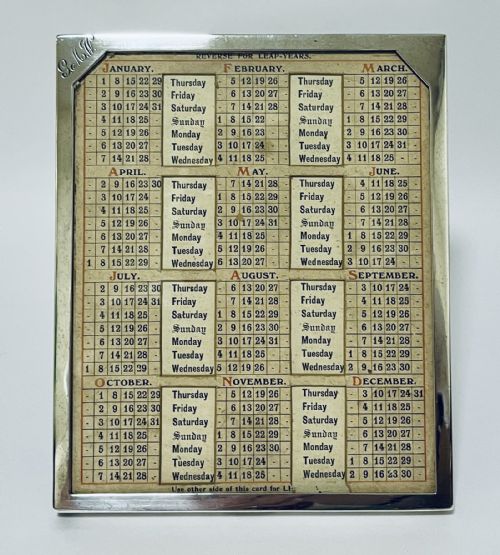


Edwardian Desktop Organiser
An edwardian desktop organiser brings order to correspondence, keeping ink, paper and letters tidy upon the writing surface.
Edwardian Desktop Organiser
When you search for an edwardian desktop organiser, you encounter a variety of desk accessories designed to manage correspondence and paperwork in the home or office. These pieces range from stationery boxes and letter boxes to book slides, filing cabinets and desk tidies.
The selection on this page spans the Edwardian period alongside late Victorian and early twentieth-century examples. Oak and mahogany form the backbone of these pieces, often paired with brass mounts, glass ink bottles or silver detailing.
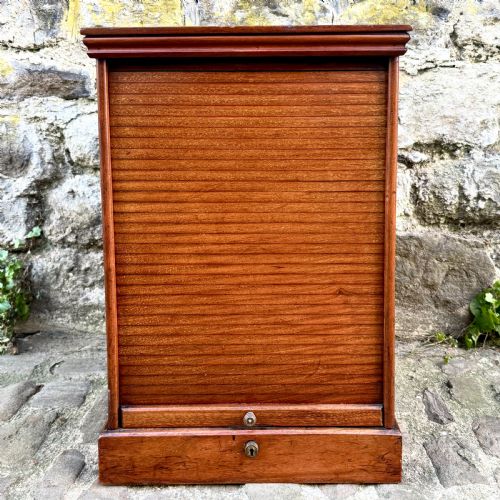
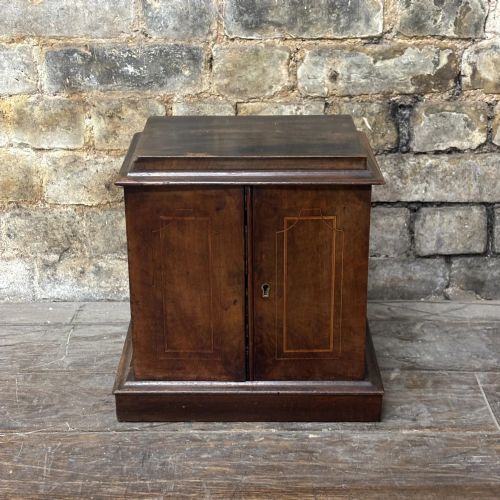
Stationery cabinets with drop fronts and compartments share space with simpler letter racks and extending book slides. Each object reflects the administrative needs of a period when written correspondence governed daily affairs.
How they were made
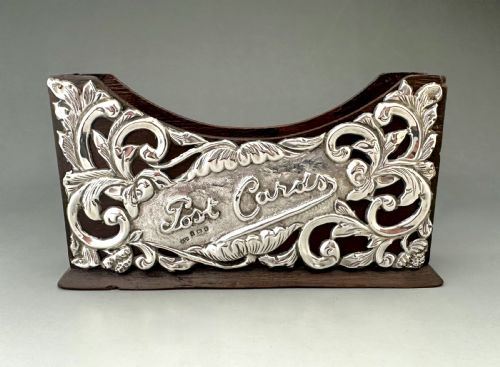
Cabinet makers utilised solid timbers such as oak, mahogany and walnut to construct the main bodies of these organisers. Wood is frequently enhanced with brass hinges, mounts and locks, while marquetry inlay or silver mounts appear on finer examples.
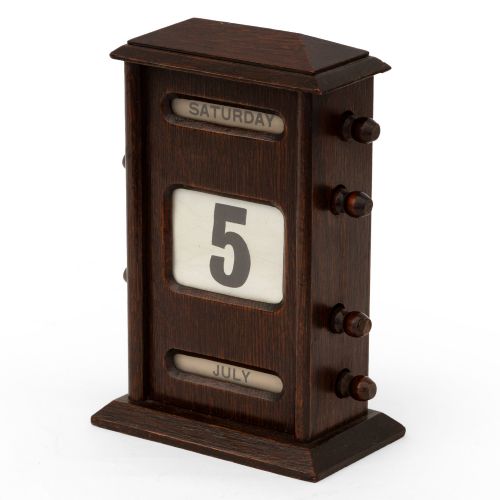
Fitted interiors often include glass ink bottles, perpetual calendars and dedicated slots for answered and unanswered mail. Joinery methods of the era ensure sturdy construction, with dovetailed drawers and drop fronts operating smoothly.
Some Victorian letter boxes feature pivoted markers labelled answered and unanswered to help manage daily correspondence.
What varies in quality
Quality rests upon the selection of timber and the precision of the interior fittings. Better pieces exhibit well-figured oak or mahogany, crisp brass hardware and functional locking mechanisms with matching keys.
Simpler letter racks and desk tidies rely on practical utility, whereas cabinet-form organisers demonstrate superior craftsmanship through integrated compartments, drop fronts and decorative inlay.
The Edwardian Desktop Organiser Glossary
- Stationery cabinet
- A desktop box featuring compartments, pigeonholes and often a drop front designed to store paper, envelopes and writing implements. These units keep the writing surface clear of clutter.
- Book slide
- An extending wooden stand placed on a desk or table to hold a row of books upright. Many examples incorporate brass mounts and concertina actions.
- Perpetual calendar
- A desk accessory with adjustable cards, dials or drums to show the date year after year. These are frequently mounted in oak, mahogany or silver.
- Letter box
- A secure box with a slotted lid or door for receiving incoming post. Country house examples often feature brass mountings and designated slots for correspondence.
Edwardian Desktop Organiser: Frequently Asked Questions
What fits inside an edwardian desktop organiser?
These organisers hold writing paper, envelopes, correspondence and stamps within dedicated slots and pigeonholes. Many include specific compartments for ink bottles and perpetual calendars.
Larger stationery cabinets and drop-front boxes provide enclosed storage for documents and small office supplies, keeping the desktop orderly.
How do I use a book slide?
A book slide rests on a desk, table or shelf to support a selection of volumes between two upright ends. Extending models adjust in length to accommodate varying numbers of books.
The brass-mounted wooden actions allow the ends to slide smoothly while keeping the volumes securely upright.
Are ink bottles usually original?
Original glass ink bottles sometimes accompany letter racks and desk tidies, particularly when housed in fitted wooden stands. Replacements do occur due to breakage over decades of use.
Matching glass inserts with correct collars fit snugly into the designated cutouts of the wooden base.
How do I maintain wood desktop accessories?
Wood surfaces benefit from occasional application of suitable wax to nourish the grain and protect the finish. Brass mounts and handles can be polished gently if required.
Keeping these pieces away from direct heat sources prevents the timber from drying out or splitting.