

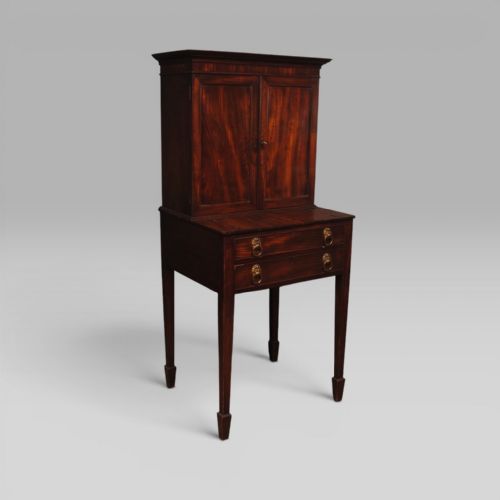


Antique Bureau Stationery Cabinet
An antique bureau stationery cabinet brings refined timber and dedicated writing compartments together into a practical domestic desk.
Antique Bureau Stationery Cabinet
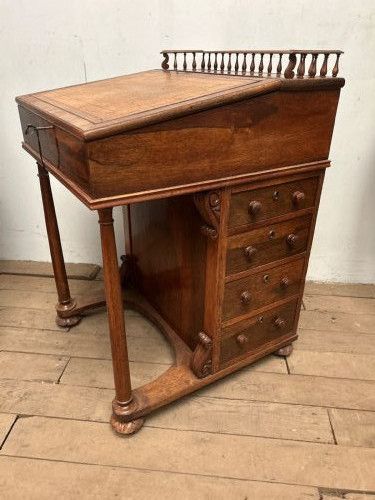
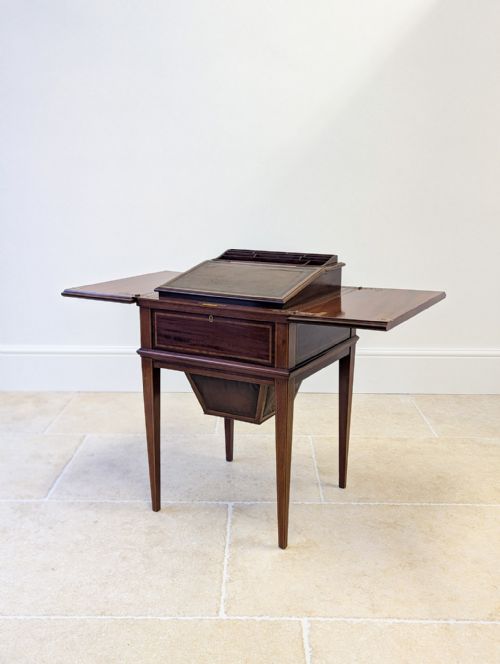
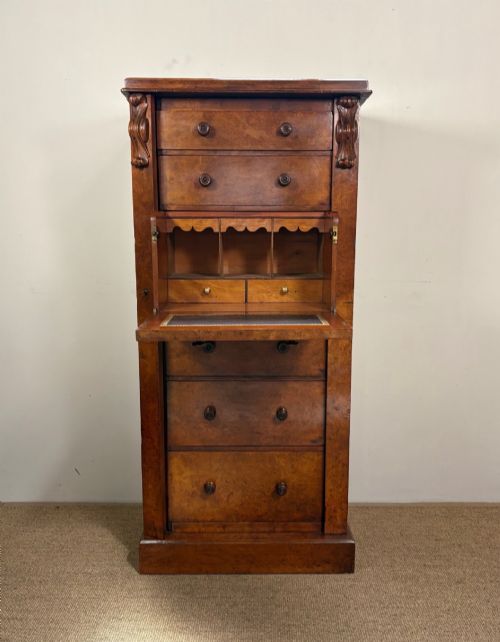
When you search for an antique bureau stationery cabinet, you encounter compact writing furniture designed for private correspondence and the storage of writing materials. The selections available encompass various writing tables, desks, Davenport desks, and dedicated writing cabinets originating from the Georgian, Victorian, and Edwardian eras.
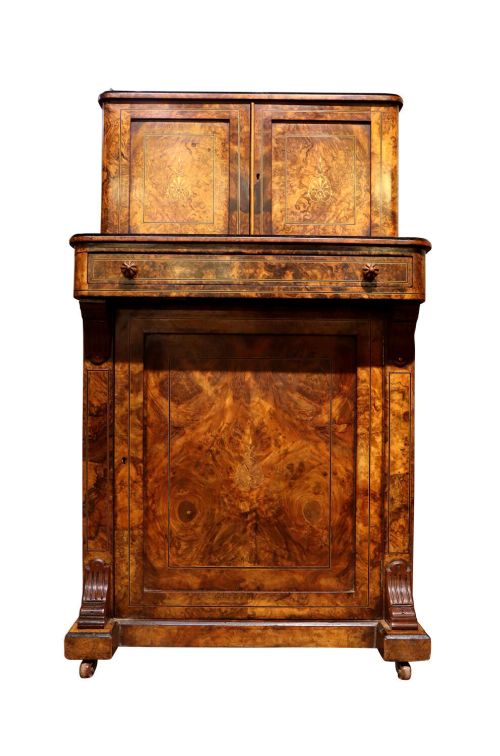
The most common forms on this page include compact Davenport desks in burr walnut or rosewood alongside upright stationery boxes and writing cabinets in oak or mahogany. These pieces range from simple nineteenth-century examples to refined Sheraton Revival and Anglo-Indian variants with specialised internal compartments.
Materials and Construction Methods
Cabinetmakers constructed these pieces using dense hardwoods such as mahogany, oak, rosewood, and walnut, frequently selecting highly figured burr walnut or satinwood veneers for decorative impact. Surfaces often incorporate contrasting inlay work, brass mounts, and leather writing inserts.
Joinery methods reflect the period of origin, utilising solid timber framing alongside finely turned or carved details, such as the green man motifs found on certain oak examples. Pop-up mechanisms and sliding stationery compartments demonstrate complex nineteenth-century carpentry.
Green man carvings peer out from certain Victorian oak desks, watching over your correspondence with ancient woodland vigilance.
Distinctions in Quality and Craftsmanship
Quality in these writing pieces depends on the selection of timber veneers and the precision of the internal stationery fittings. Superior examples display carefully matched burr walnut or rosewood grains across all surfaces, whereas simpler items rely on plain oak or standard mahogany.
The sophistication of the mechanism also separates standard items from finer works. Smoothly operating pop-up stationery compartments, well-fitted secret drawers, and crisp carving distinguish the superior examples from utilitarian desks.
The Antique Bureau Stationery Cabinet Glossary
- Davenport
- A compact desk featuring a sloping writing surface above a pedestal of drawers. This form became popular during the nineteenth century for domestic correspondence.
- Bureau de Dame
- A ladies writing desk typically fitted with small drawers and internal compartments. These delicate pieces often feature decorative veneer work and fine brass details.
- Secretaire
- A desk or cabinet containing a pull-down writing flap that conceals small pigeonholes and drawers. This configuration keeps writing materials organised out of sight.
- Stationery Cabinet
- A small desktop or freestanding box designed to hold writing paper, envelopes, and inkwells. They frequently incorporate sloping tiers or glazed doors.
- Sheraton Revival
- A late nineteenth and early twentieth-century style inspired by eighteenth-century neoclassical designs. Pieces in this style often display delicate satinwood inlay and light proportions.
Antique Bureau Stationery Cabinet: Frequently Asked Questions
What is a Davenport desk?
A Davenport desk is a compact writing form featuring a sloping lid with a leather insert, mounted over a pedestal of side drawers. It provides a dedicated writing surface without occupying excessive floor space in a room.
Originating in the early nineteenth century, these desks frequently incorporate internal stationery compartments and small side drawers, making them suitable for parlor or study use.
How do I use a stationery cabinet?
A stationery cabinet organises writing paper, envelopes, and correspondence accessories within upright pigeonholes or dedicated slots. They sit on desks or tabletops for easy access.
Many of these cabinets feature sloping lids or hinged doors that secure the writing supplies when not in use.
How do I tell Victorian from Edwardian pieces?
Victorian pieces, dating from the mid to late nineteenth century, often feature heavier proportions, dense burr walnut or rosewood veneers, and rich dark finishes. Carving can be elaborate, including motifs like green man masks.
Edwardian pieces, made around the turn of the twentieth century, tend to exhibit lighter construction, satinwood inlay, and revival styles such as Sheraton Revival influences.