


Edwardian Cut Glass Barrel
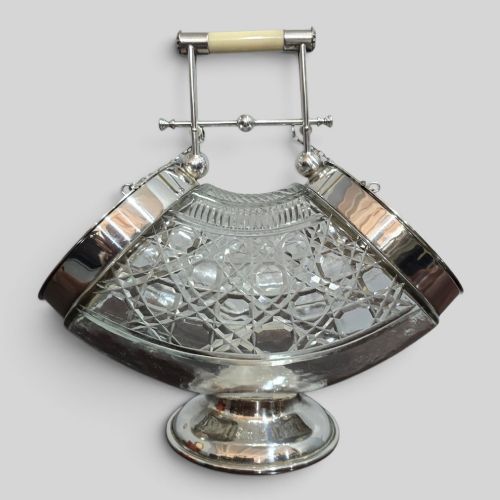
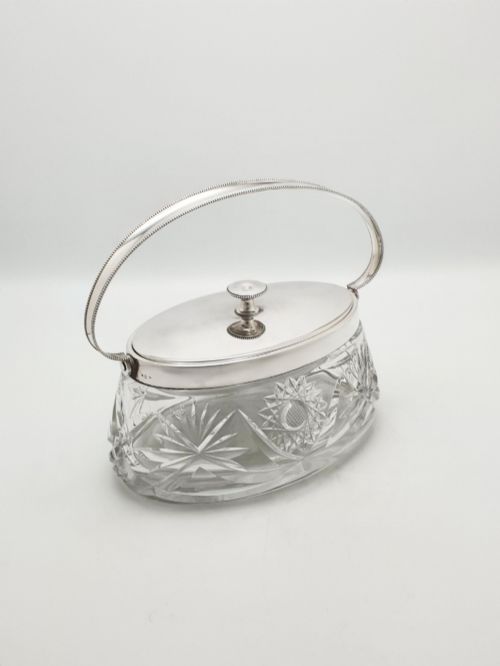
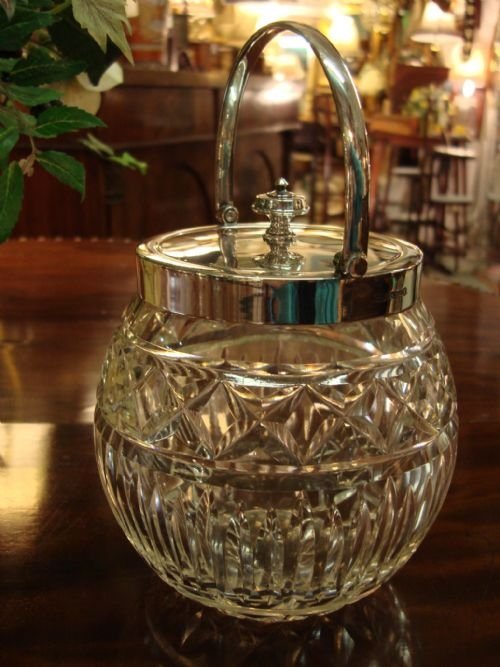
These edwardian cut glass barrel pieces combine weighty crystal and bright metal mounts to serve crisp biscuits on a well-dressed table.
Edwardian Cut Glass Barrel
When you search for an edwardian cut glass barrel, you find sturdy table vessels designed to keep dry biscuits fresh beneath a fitted lid. These containers typically take a rounded body shape formed from heavy crystal or cut glass, paired with gleaming metal fixtures.
The versions you meet most often on this page date from the Edwardian era, alongside related examples spanning the late Victorian period through to the Art Deco years. Many of these pieces integrate mounts in silver plate, sterling silver, or brass, often finished with a sturdy swing handle for carrying.
How they were made
Makers fashioned the main body of each vessel from thick lead crystal or cut glass, applying deep geometric facets such as hobnail patterns by hand to catch the light. This heavy glass vessel was then annealed and polished to achieve a brilliant clarity.
Silversmiths and metalworkers fitted the glass barrels with collars, lids, and swing handles cast in sterling silver or silver plate, sometimes adding automated or hinged mechanisms to secure the top.
Listings for this phrase frequently span from late Victorian production through to the Art Deco period, uniting cut glass, lead crystal, and silver plate.
What varies in quality
Quality rests primarily in the crispness of the glass cutting and the weight of the crystal body. Deeper, sharper facets demand greater skill from the glasscutter and create a more substantial piece.
The metal mounts also separate standard examples from finer works, particularly where solid sterling silver or substantial silver plate bears clear hallmarks and secure, well-balanced handles.
James Dixon and Sons·Grinsell and Sons
The Edwardian Cut Glass Barrel Glossary
- Hobnail cut
- A sharp diamond pattern cut into the surface of glassware that creates a textured, prickly feel. This technique adds considerable weight and sparkle to the finished vessel.
- Silver plate
- A layer of silver fused to a base metal core such as copper or brass. It allowed manufacturers to produce bright, durable mounts at a lower cost than solid silver.
- Sterling silver
- An alloy consisting of ninety-two point five percent silver and seven point five percent other metals, usually copper. Hallmarks stamped into the metal verify this specific standard of purity.
- Lead crystal
- Glass containing a significant percentage of lead oxide, which increases the weight, refractive index, and ringing sound of the material. It remains the preferred medium for deep brilliant cutting.
- Swing handle
- An arched metal handle hinged to the collar of a vessel that drops to either side for easy access. These handles appear frequently on biscuit barrels and jars.
Edwardian Cut Glass Barrel: Frequently Asked Questions
What were cut glass barrels used for?
These vessels served primarily as biscuit boxes on formal dining tables and drawing rooms during the late nineteenth and early twentieth centuries. The heavy glass body and fitted metal lid kept dry biscuits crisp and protected from moisture.
They also functioned as general dry storage containers or decorative centerpieces when not in active use during afternoon tea.
How do I clean an antique glass barrel?
Wash the glass body gently in warm soapy water using a soft cloth, avoiding harsh abrasives that might scratch the surface. Remove any metal mounts if possible to prevent prolonged contact with water.
Dry the crystal immediately with a lint-free cloth to maintain its bright clarity and polish the silver or plate separately with a dedicated cloth.
Are Edwardian biscuit barrels marked with dates?
Most pieces do not bear an explicit manufacturing date, but sterling silver mounts carry official assay office hallmarks that decode to specific years. Stylistic clues such as the depth of the glass cutting and the shape of the handle also help narrow the period.
Comparative study of catalogue records from firms like James Dixon and Sons provides further chronological context.