


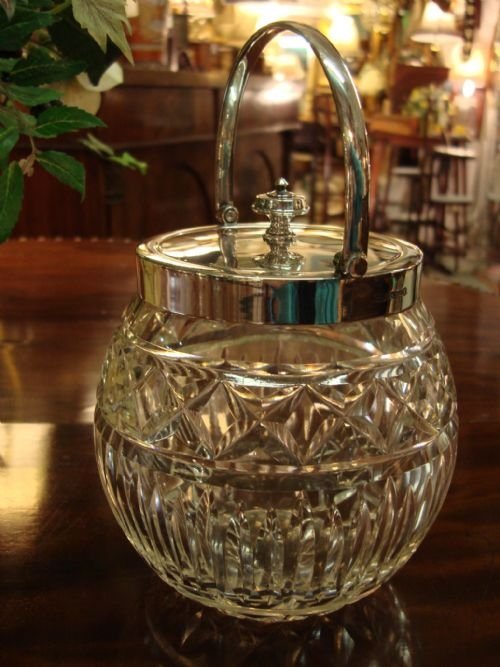
Antique Glass Cookie Container
An antique glass cookie container combines clear or coloured vessel work with metal mounts for table service.
Antique Glass Cookie Container
An antique glass cookie container, also referred to in listings as a biscuit barrel or biscuit box, serves as a covered vessel designed for holding dry baked goods on the dining table. These pieces emerge across several periods including the Georgian, Victorian, Edwardian, George V, and Art Deco eras, spanning the nineteenth and early twentieth centuries.
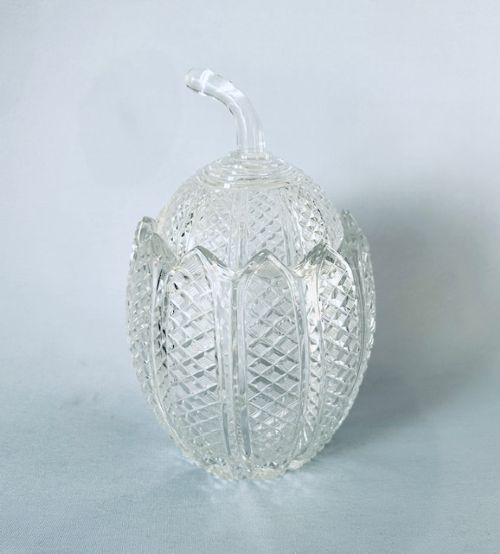
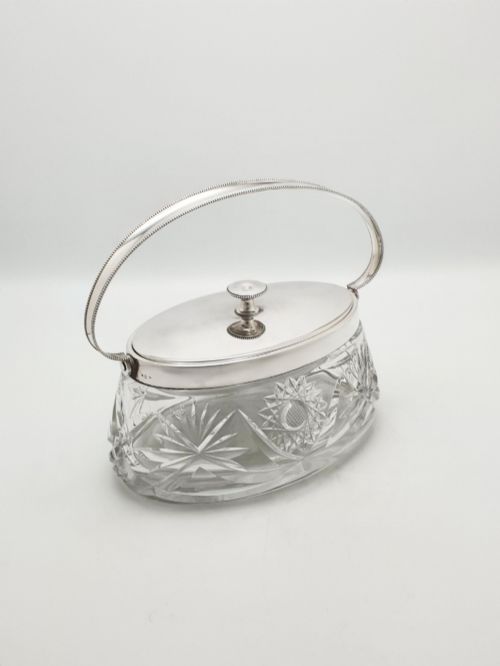
Makers and manufacturers of the period utilised various decorative techniques, ranging from hobnail cutting and faceting to enamel decoration and heraldic finials. Examples span from novelty melon shapes to vessels fitted with stands and swing handles.
Materials and construction
The primary bodies of these containers consist of lead crystal, cut glass, clear glass, or cranberry glass, shaped by blowing or moulding before receiving deep wheel-cut patterns like hobnails and facets.
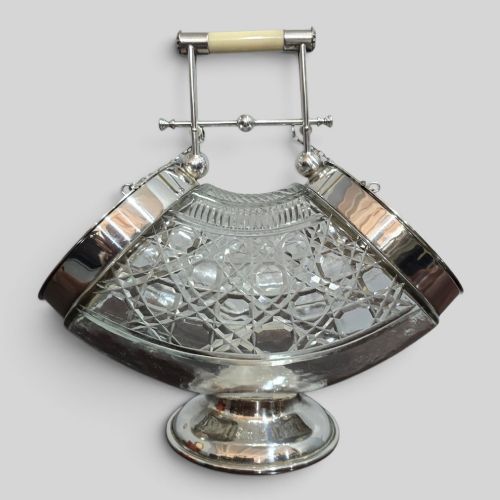
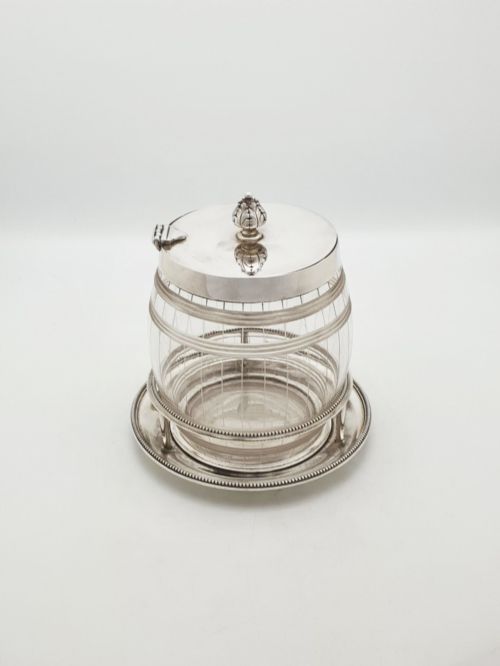
Metal components such as silver plate and hallmarked sterling silver form the mounts, rims, covers, and swing handles, frequently secured to the glass vessels by collars.
Materials recorded on this page include lead crystal, cranberry glass, silver plate, and sterling silver.
Assessing quality and manufacture
Quality reveals itself in the crispness of the glass cutting, the weight of the lead crystal, and the depth of the cranberry colouration. Superior examples feature complex hobnail or faceted surfaces that catch the light evenly.
The metal mounts and hardware also differentiate the pieces, where substantial silver plating or hallmarked sterling silver mounts with detailed cast finials indicate higher production standards.
Elkington·WMF·James Dixon and Sons
The Antique Glass Cookie Container Glossary
- Biscuit barrel
- A covered container designed for storing and serving dry biscuits or cookies at the table. These vessels became particularly popular during the Victorian and Edwardian periods.
- Cranberry glass
- A rich red-pink transparent glass coloured with gold chloride during the manufacturing process. It appears frequently in Victorian and Edwardian tablewares.
- Hobnail cut
- A decorative glass-cutting pattern featuring rows of small, pointed projections resembling hobnails on boot soles. This technique creates a heavily textured and refractive surface.
- Silver plate
- A base metal, such as Britannia metal or copper, coated with a thin layer of silver through electroplating. This method allowed makers to produce ornate mounts at a lower cost than solid silver.
Antique Glass Cookie Container: Frequently Asked Questions
What is a biscuit barrel used for?
These containers were originally manufactured to hold biscuits, cookies, or small baked goods on the dining or drawing-room table during tea service.
The fitted lid and glass body helped keep the contents fresh while offering an ornamental display piece for formal entertaining.
How do I date an antique glass container?
Dating relies on stylistic clues, the type of glass used, and any metal marks or hallmarks present on the mounts.
Victorian and Edwardian pieces often feature cranberry glass or heavy hobnail cutting, while later 1920s examples align with Art Deco or George V aesthetics.
Are the metal mounts solid silver?
The metal components vary between silver-plated base metals and hallmarked sterling silver, depending on the maker and the grade of the piece.
Maker marks and hallmarks stamped onto the rims or handles typically indicate the specific metal composition and origin.
Can I use these containers daily?
While structurally sound, antique glass and silver plate require careful handling due to their age and delicate decorative elements.
Hand washing in lukewarm water with mild soap protects the glass surfaces and silver-plated mounts from damage.