

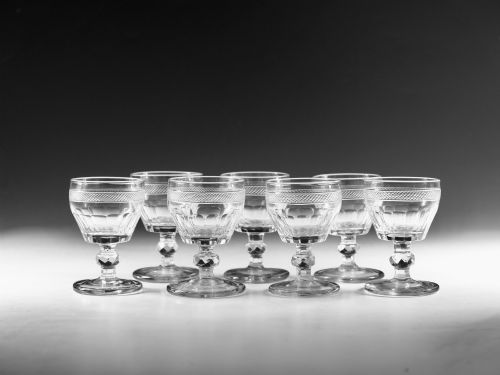
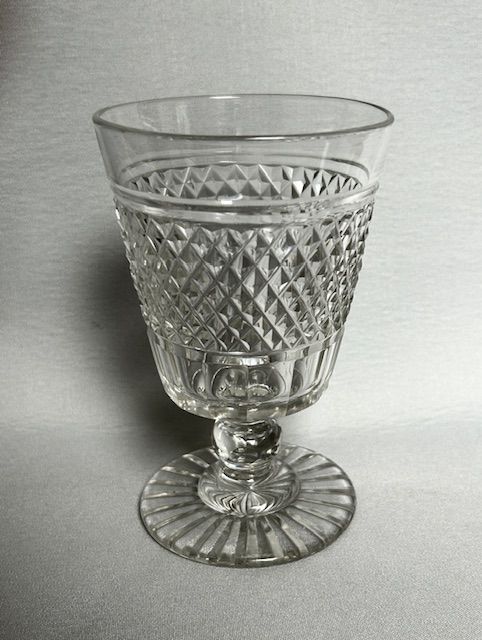


Georgian Period Cut Glass
Georgian period cut glass pieces are heavy lead crystal items formed in glittering Regency and 18th Century styles that catch the candle flame.
Georgian Period Cut Glass
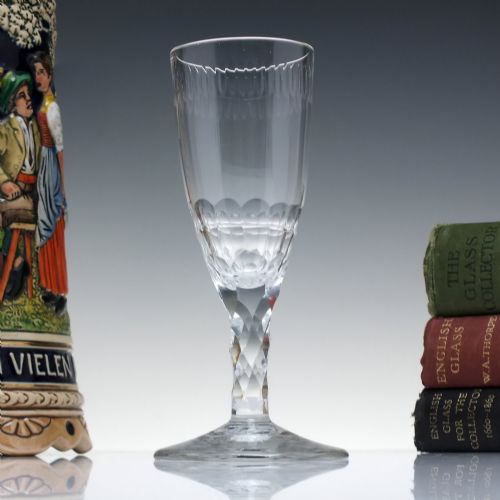
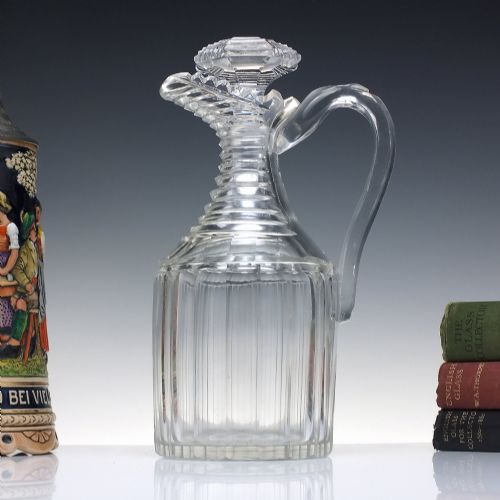
When you search for georgian period cut glass, you find domestic tableware and serving vessels designed for the dining table and sideboard. The inventory ranges from substantial decanters and rummers to delicate port glasses, ale flutes, and finger bowls.
The objects span the late 18th Century through the Regency period, encompassing George III items and pieces dated around 1800 to 1820. English and Irish origins predominate among these lead crystal items.
Forms include novelty biscuit barrels, ship's decanters, celery vases, wine coolers, and table lustres alongside cruet stands fitted with silver mounted glass bottles. Amber glass variants also appear alongside the clearer lead crystal pieces.
Materials and construction
These items rely on heavy lead crystal and lead glass, which provides the necessary density and refractive index for deep cutting. The metal is blown into shape before workers apply wheel-cut decoration.
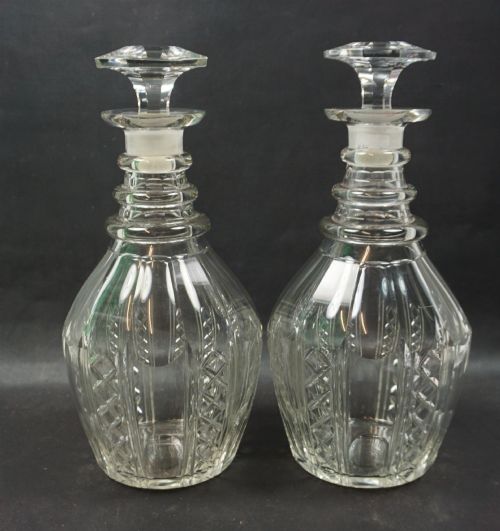
Surface patterns utilise characteristic motifs such as hobnail cutting, blaze cuts, facet stems, and three neck rings on decanters. Some vessels also feature delicate hop and barley wheel engraving alongside the heavy geometric cutting.
Georgian Period Cut Glass Retail Price Guide 2026
Typical asking prices for georgian period cut glass among the pieces listed under this phrase on Sellingantiques today, from the lower quarter to the upper quarter. They describe what is for sale here now, not the wider market.
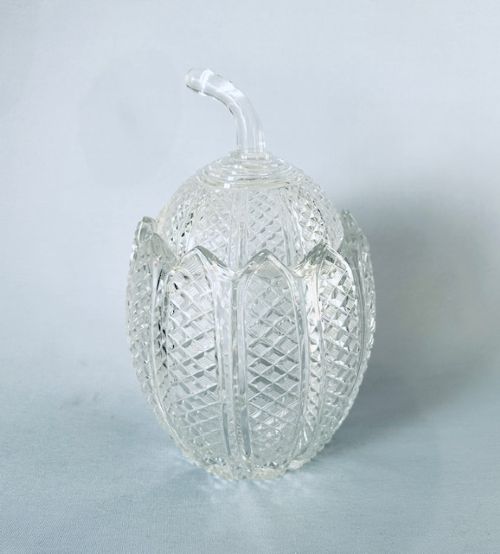
A melon-shaped biscuit barrel proves that Georgian diners took their sweet treats with a generous slice of sculptural whimsy.
Evaluating the glassware
Quality rests upon the clarity of the lead crystal and the crispness of the wheel-cut facets. Superior pieces show sharp, defined edges to the hobnails and diamonds rather than softened or polished-down profiles.
The weight and balance of the vessel dictate its standing, with thicker bases on rummers and tumblers providing stability. Furthermore, the absence of excessive scratching and the retention of matching stoppers on decanters alter the standing of a piece.
The Georgian Period Cut Glass Glossary
- Lead crystal
- Glass containing lead oxide that increases weight, brilliance, and workability for cutting. This high-density material defines the heavy feel of Georgian tableware.
- Hobnail cut
- A raised, multi-faceted pattern resembling the hobnails used in boot soles. It creates a tactile, light-catching texture across the body of rummers and biscuit barrels.
- Rummer
- A large, sturdy drinking glass popular in the Georgian and Regency periods. These glasses typically sat on short stems or heavy feet for ale, wine, or punch.
- Ship's decanter
- A decanter with a broad, stable base and a sloping body designed to prevent tipping at sea. The shape keeps the vessel secure on a rolling dining table.
- Table lustre
- An ornamental glass or bronze stand hung with glass prisms designed to reflect candlelight. Pairs of these items adorned formal dining surfaces during the Regency era.
Georgian Period Cut Glass: Frequently Asked Questions
Are these decanters safe for wine?
Most Georgian decanters can hold wine today, provided the interior is clean and free from old staining or residue. Check the vessel carefully to ensure no persistent cloudiness affects the glass.
Use bottle brushes designed for crystal or specialised cleaning beads with warm water to gently clear any interior sediment without scratching the historic lead metal.
How do I tell Regency from earlier pieces?
Regency and 19th Century items often display heavier geometric cutting, such as wide neck rings and bold hobnail patterns, alongside amber or clear lead crystal. Eighteenth-century examples more frequently feature facet-cut stems and lighter, more delicate wheel-engraved floral motifs.
Comparing the thickness of the metal and the specific cut patterns helps differentiate the Georgian decades represented in the inventory.
Can I use finger bowls at dinner?
Finger bowls serve water for rinsing fingers between courses, mirroring formal dining customs of the Georgian period. Their wide, open bowls make them equally suitable for serving small desserts or floating small floral arrangements.
Handling them carefully preserves the historical lead glass, allowing you to use 19th Century tableware for special dining occasions.