


Edwardian Counter Cabinet
When you search for an edwardian counter cabinet, you are looking for utilitarian shop fittings designed to display merchandise directly to customers across the retail floor.
Edwardian Counter Cabinet
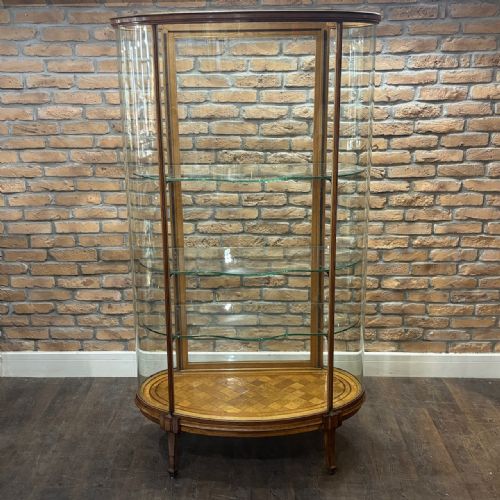
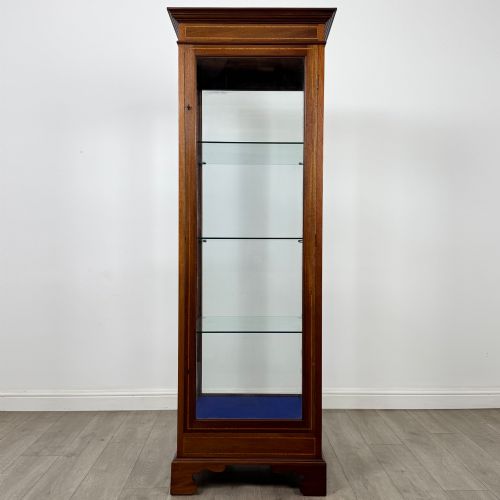
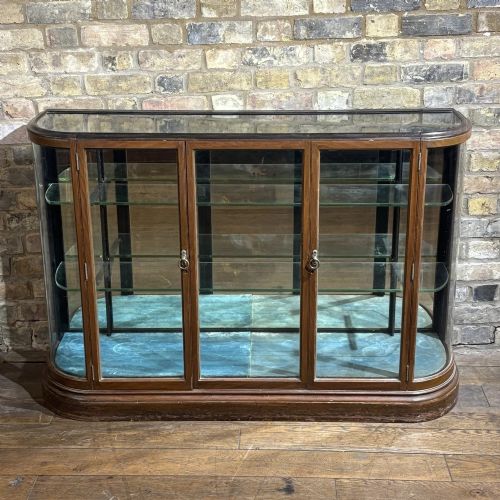
An edwardian counter cabinet is typically found as a tabletop showcase, a bow-ended display case, or a larger freestanding commercial counter designed for retail use. These pieces originated in shops, pharmacies, and tobacconists during the late nineteenth and early twentieth centuries to merchandise small goods securely.
The versions most common in trade include oak and mahogany frames fitted with clear glass panels and mirrored interiors. Many examples bear original or later sign-written branding for confectionery, chocolate, and cotton reels, reflecting their historical commercial purpose.
How they were made
Makers utilised dense timbers such as mahogany and oak to construct sturdy frames capable of supporting heavy glass shelves and sliding or hinged doors. Brass hardware, including hinges, handles, and lock escutcheons, provides structural reinforcement and mechanical operation.
Glazing forms the primary enclosure, allowing maximum light transmission to the interior display space. Mirrored backs are frequently integrated to multiply reflections and illuminate goods from behind.
Listings feature oak and mahogany construction paired with glass, brass, and mirrored interiors across Victorian and Edwardian periods.
What varies in quality
The distinction between standard commercial units and superior examples rests on the refinement of the timber framing and the complexity of the cabinetry, such as curved bow ends. Finishes range from simple wax polish on utilitarian oak to gold leaf accents and finely figured mahogany veneers.
Original commercial branding significantly impacts character, with factory-applied manufacturer lettering holding distinct historical interest compared to plain or later sign-written surfaces.
F. Sage & Co.·Manoah Rhodes & Sons Ltd
The Edwardian Counter Cabinet Glossary
- Bow end
- A curved glass or timber termination at the end of a cabinet. This feature allowed improved visibility of merchandise from multiple angles on the shop floor.
- Countertop display
- A smaller scale showcase designed to sit directly on top of a retail sales counter. These units placed small goods at eye level for seated or standing customers.
- Mirrored interior
- A silvered glass backing fitted inside the display chamber. It served the practical purpose of brightening the display and making small items appear more numerous.
- Haberdashery case
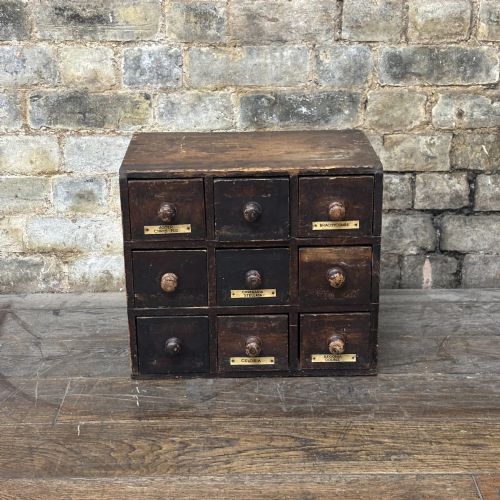
- A specialised retail cabinet configured with shallow drawers or compartments. They were utilised for organising small sewing goods, threads, and garment accessories.
Edwardian Counter Cabinet: Frequently Asked Questions
What were edwardian counter cabinets used for?
These cabinets served as secure retail display units in late nineteenth and early twentieth-century shops. Merchants used them to present confectionery, tobacco, cotton, and pharmaceuticals directly to the purchasing public while protecting delicate stock from dust and handling.
The glass enclosures allowed customers to inspect goods clearly across the sales counter. Internal shelves and mirrored backs maximised visibility for small items.
How do I date an edwardian counter cabinet?
Dating relies on timber selection, construction methods, and retail style indicators. Oak and mahogany frames from the period often feature simple brass hardware, linear joinery, and occasionally manufacturer plates or advertising graphics.
Comparing the framing style to known commercial catalogues helps narrow the decade of production. Surviving trade labels inside the cabinetry provide the most precise chronological marker.
Are these cabinets suitable for modern homes?
Their compact tabletop proportions make them well-suited for domestic interiors as display spaces for collections, ceramics, or glassware. The glazed panels protect cherished objects while keeping them visible in living rooms or kitchens.
Freestanding variations function effectively as standalone display furniture or side units. Their commercial origins bring practical storage and historical character to residential spaces.
What is the difference between oak and mahogany models?
Oak frames generally denote utilitarian commercial applications, featuring prominent grain and robust construction suited for everyday trade. Mahogany versions often exhibit finer grain, richer reddish-brown tones, and more decorative joinery intended for upscale retail environments.
Both timbers provide the structural integrity required for heavy glass panels. The choice of wood typically reflects the tier of the original shop rather than the date of manufacture.