
Edwardian Column Lamp Base
An edwardian column lamp base brings classical architectural dignity to a room, standing on a sturdy foot with a fluted or smooth shaft.
Edwardian Column Lamp Base
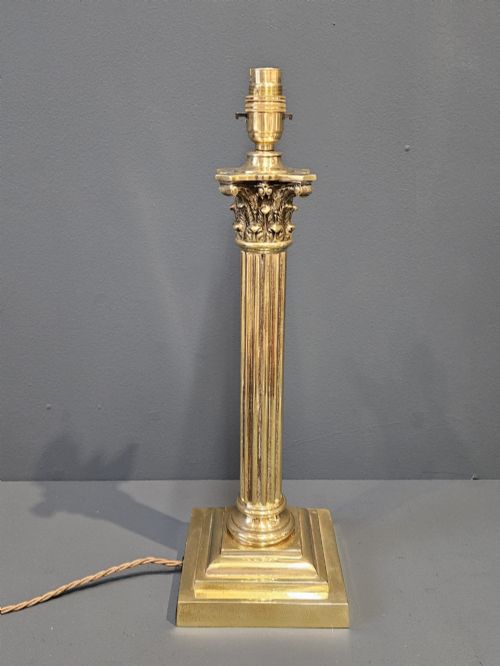
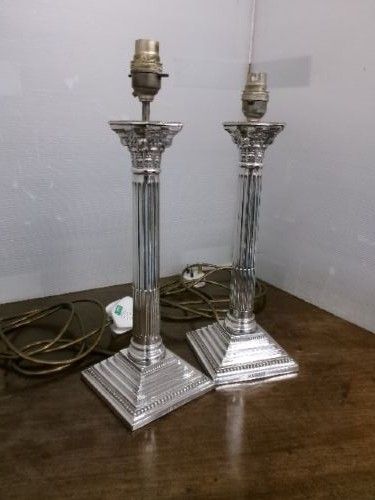
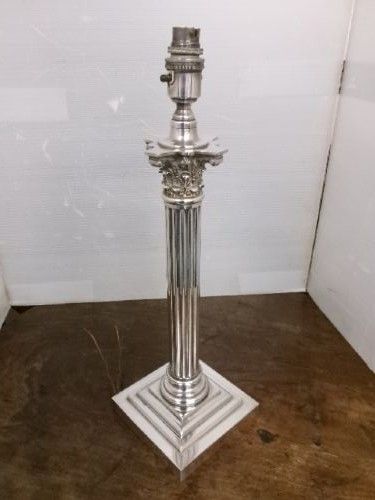
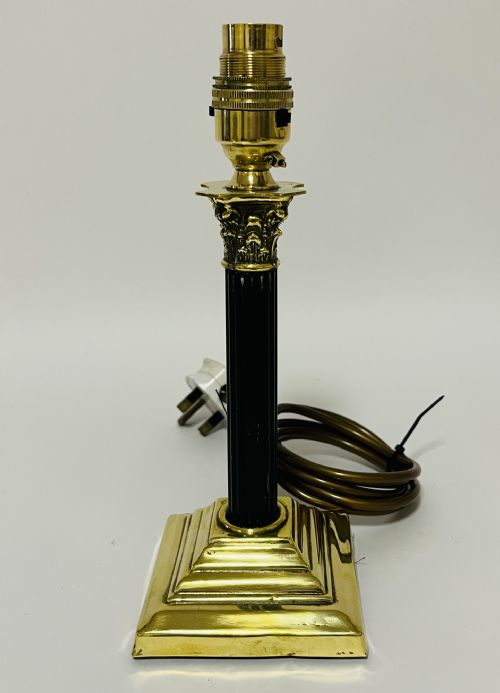
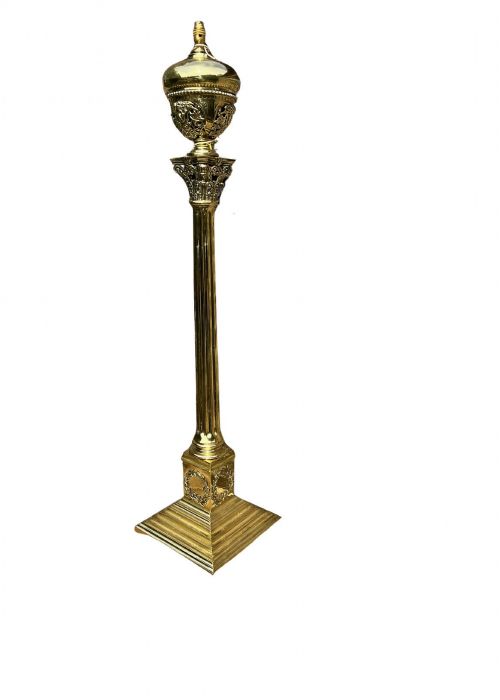
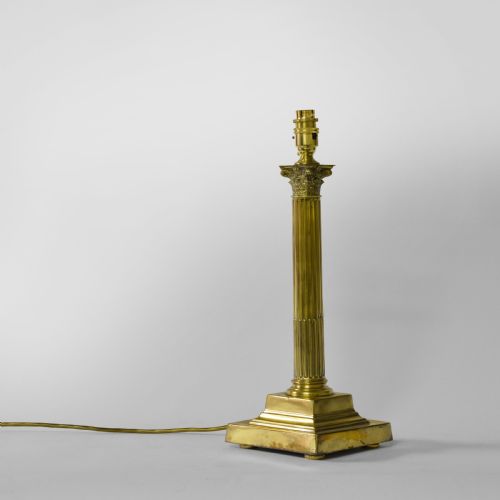
When you search for an edwardian column lamp base, you are looking at upright lighting supports shaped like architectural pillars. These pieces draw heavily on classical orders, frequently echoing the ornate capitals of ancient temples.
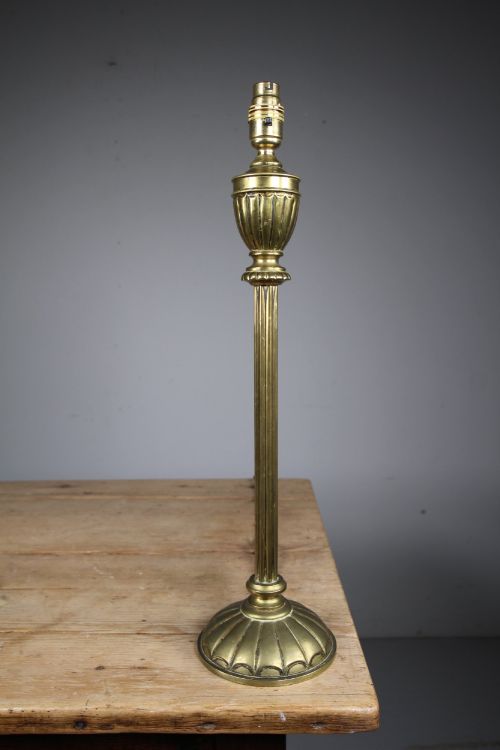
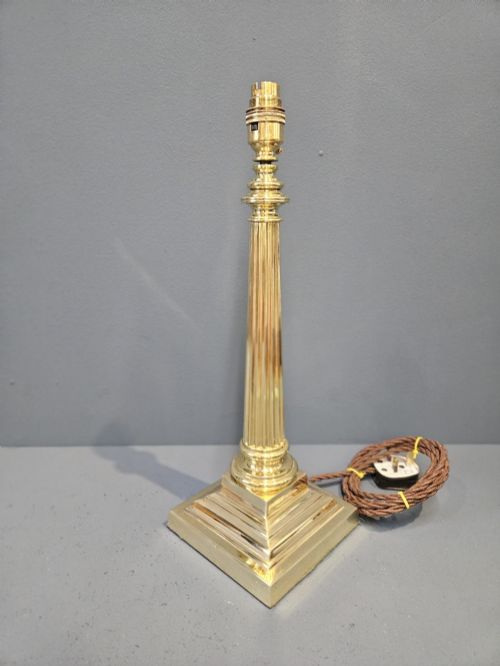
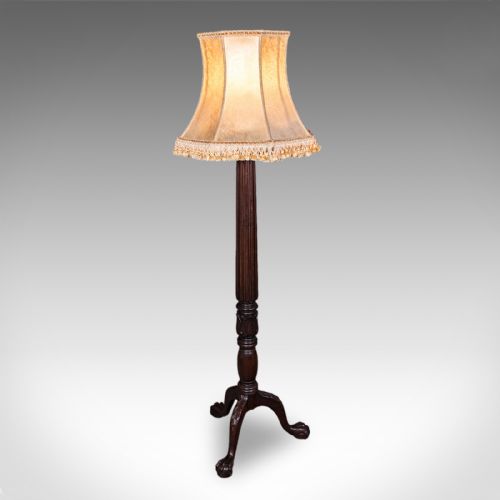
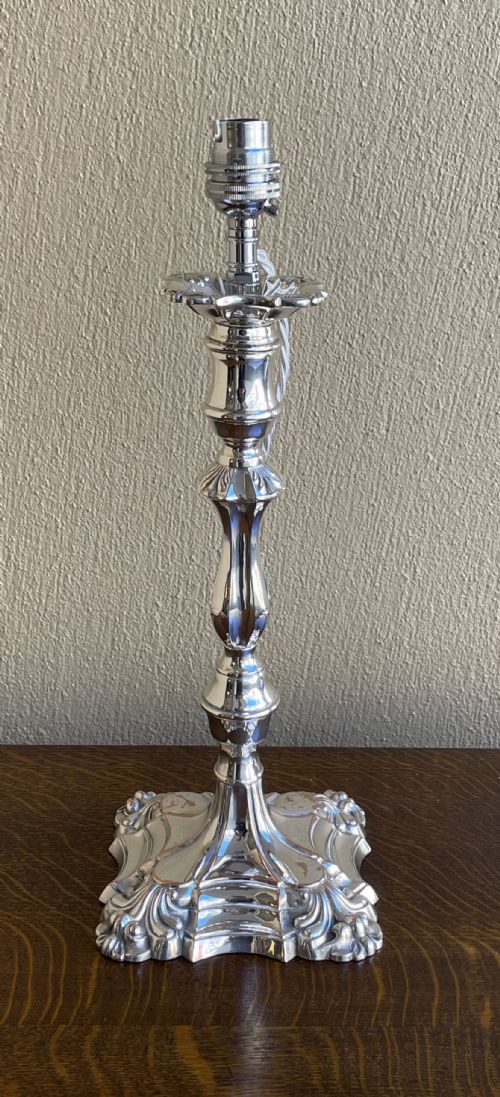
You will most commonly meet brass and silver plated versions on this page, alongside occasional examples in oak. The forms range from compact table models to taller standard and floor lamps designed to stand directly on the floor.
The periods represented span from the late nineteenth century through the Edwardian era and into the early twentieth century, encompassing styles such as Neoclassical Revival, Arts and Crafts, and French Empire.
Materials and construction methods
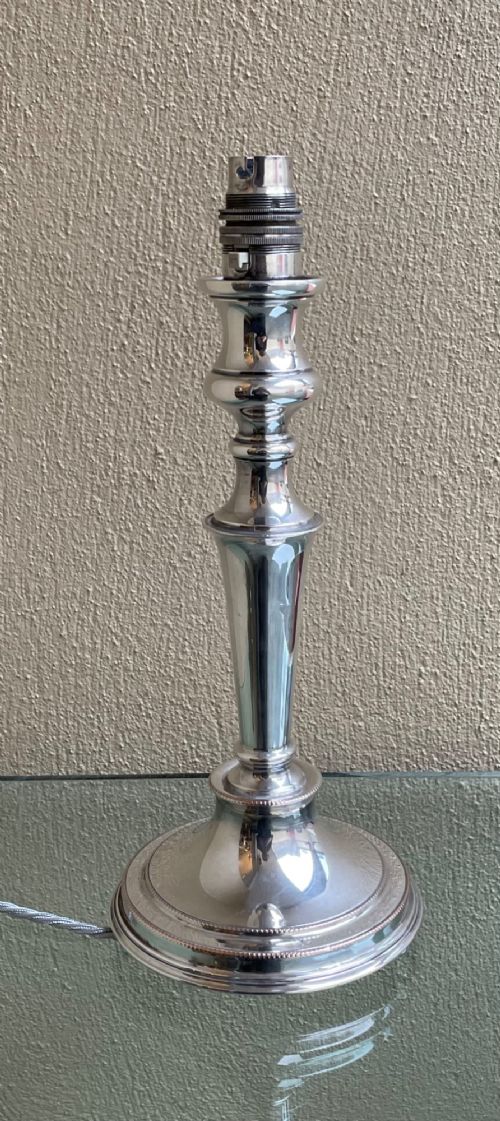
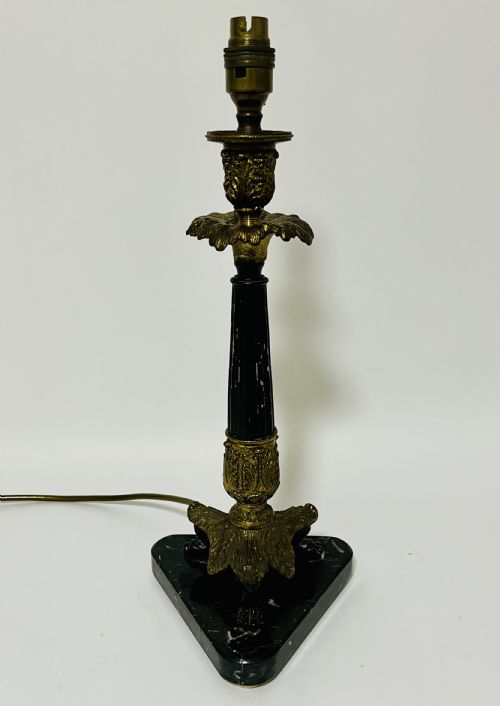
Metal columns are typically cast in sections, utilising brass or bronze, and frequently finished with a silver plate layer to achieve a bright reflective surface. Some heavy bases incorporate marble or feature lion's paw feet for stability and decorative weight.
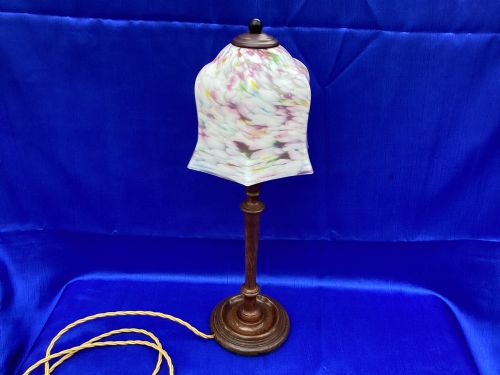
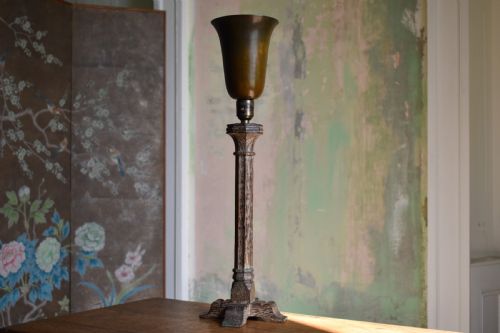
Wooden examples rely on turned oak, sometimes featuring barley twist or carved details that demonstrate traditional carpentry skills. Components are securely fitted together to support the weight of the central column and the electrical fittings or original burner mechanisms.
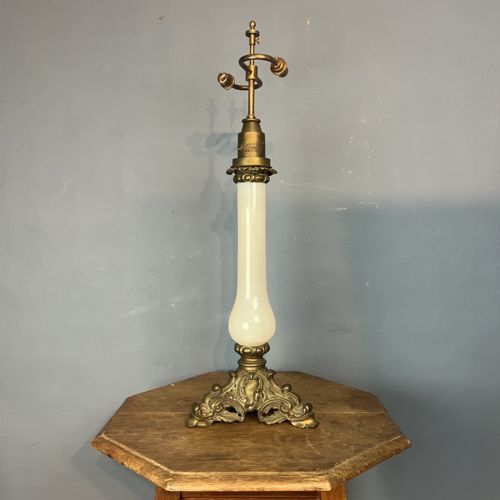
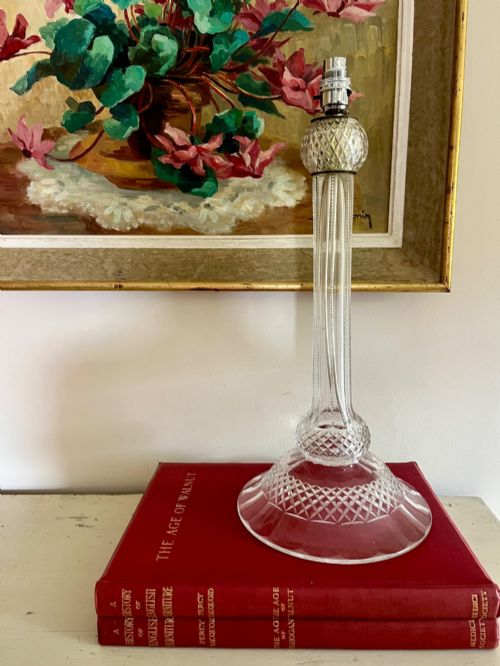
The listings here feature brass, silver plate, oak, and opaline glass across Neoclassical, Arts and Crafts, and French Empire styles.
Qualities that set examples apart
The refinement of the casting work dictates the sharpness of the acanthus leaves on a Corinthian capital or the crispness of the reeding along the shaft. Finer pieces display precise detailing and substantial weight rather than thin metal walls.
Proportion and scale play a major role in the visual impact of a column lamp, with taller and more balanced shafts commanding a stronger presence in a room. The integrity of the plating or the rich grain of the oak adds depth to the finished appearance.
Walter Latham And Son·Mc Garys Patent
The Edwardian Column Lamp Base Glossary
- Corinthian column
- A pillar style topped with an ornate capital decorated with carved acanthus leaves. This motif is frequently seen on formal brass and silver plated lamp bases.
- Standard lamp
- A tall floor-standing lighting support designed to illuminate a wider area of a room. These pieces share the same architectural column structure as smaller table versions.
- Silver plate
- A thin layer of silver applied over a base metal such as brass or copper to give the appearance of solid silver. It provides a bright finish that requires occasional polishing.
- Opaline glass
- A milky, semi-translucent glass often paired with brass elements on period lamps. It diffuses light softly and adds a distinct tactile contrast to metal shafts.
- Reeded column
- A shaft decorated with parallel convex mouldings running vertically along its length. This classical detail adds texture and visual elongation to the pillar.
Edwardian Column Lamp Base: Frequently Asked Questions
How were these lamp bases used?
They functioned as primary light sources in parlours, studies, and drawing rooms, placed either on tabletops or directly on the floor as standard lamps.
Their substantial weight and formal design made them suited for positioning beside desks, reading chairs, or in room corners to provide ambient illumination.
How do I live with one?
Living with these pieces involves pairing them with an appropriate fabric lampshade that complements the height and metal finish of the column.
Because many period examples have been rewired over time, they integrate easily into modern living spaces while retaining their original historical character.
How can I tell the periods apart?
Distinguishing between periods relies on observing stylistic markers, such as the heavier, highly ornate Victorian castings versus the slightly more restrained Edwardian and early twentieth century designs.
Materials also offer clues, with solid oak twist columns and specific patent stamps pointing toward distinct decades within the broader timeline.