
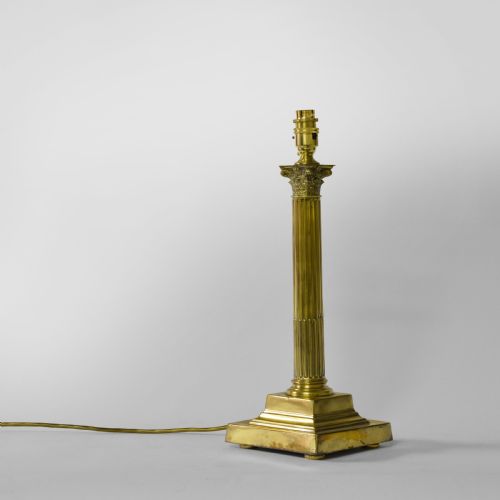


Brass Pillar Lamp
A brass pillar lamp brings architectural weight and steady light to a room, drawing on classical forms made for Victorian interiors.
Brass Pillar Lamp
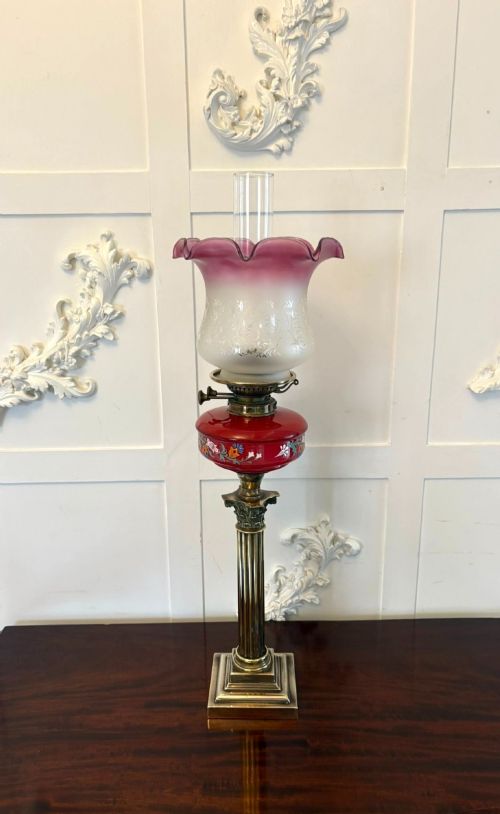
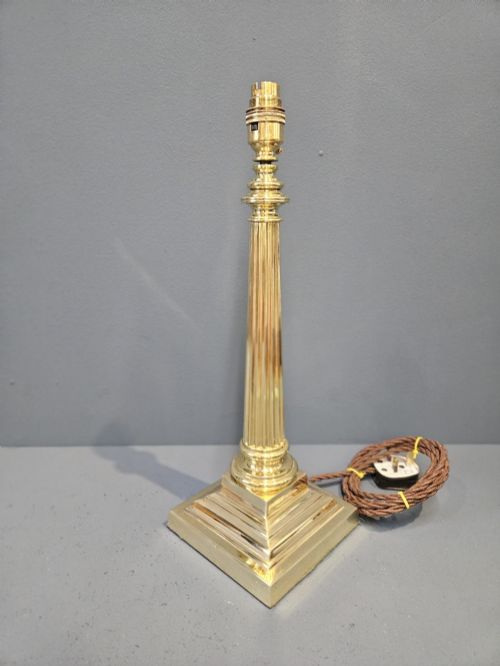
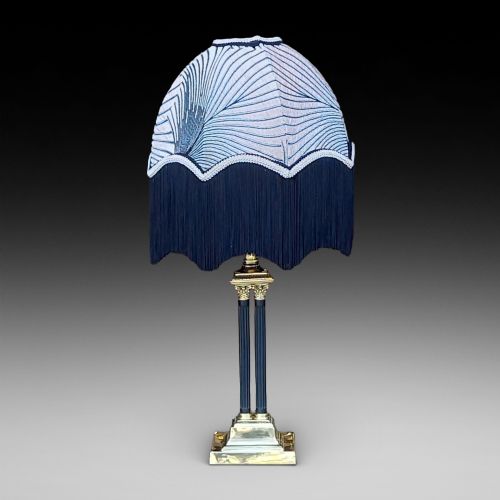
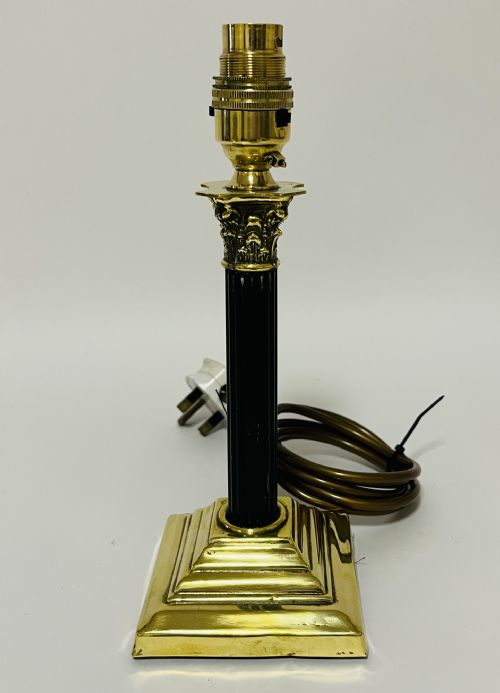
A brass pillar lamp takes the form of a classical column, translating stone architecture into polished metal for domestic illumination. These table lamps draw directly on antique design traditions, appearing most often in variations of the Corinthian order with detailed capitals and fluted shafts.
The pieces seen on this page span the Victorian era into the early twentieth century, showing periods from the nineteenth century up to nineteen thirty. The predominant forms utilise columnar standards, often paired as matching pairs or presented as single table lamps.
Makers of the period adapted classical orders for domestic spaces, producing works that range from reeded columns to heavy cast brass structures. Ormolu, bronze and onyx occasionally join solid brass, anchoring the standard to heavy metal or glass bases.
How they were made
Construction relies upon heavy cast brass and bronze components, shaped to mimic classical columns and fitted together with threaded rods. Metal sections are turned, chased and polished, creating the crisp acanthus leaf details found on Corinthian capitals.
Wiring is integrated through the central hollow core, with modern examples frequently utilising braided fabric flex and thread for safety and historical sympathy. Additional materials such as glass, onyx and fabric shades complete the assembly of these heavy table pieces.
The listings for this phrase span the Victorian era up to nineteen thirty, with materials ranging from solid brass to onyx and bronze.
What varies in quality
Quality rests in the crispness of the casting and the weight of the metal used in the column and base. Finer examples display deeply undercut acanthus leaves on the capital and precise fluting along the shaft, whereas simpler versions show softer definition.
The choice of secondary materials marks another distinction, separating standard brass castings from those incorporating ormolu, bronze or onyx. Heavier gauge metalwork and well-proportioned classical capitals distinguish the more ambitious pieces from ordinary production.
The Brass Pillar Lamp Glossary
- Corinthian column
- A classical architectural order featuring an ornate capital decorated with rows of acanthus leaves. This motif appears frequently on the upper portion of these lamps.
- Ormolu
- Gilded bronze, where finely ground high-carat gold is applied to a bronze base. It provides a rich, warm metallic surface on nineteenth-century examples.
- Reeded column
- A shaft decorated with parallel, convex semicircular mouldings running vertically. This technique adds texture and visual weight to the lamp standard.
- Braided fabric flex
- A modern or period-appropriate electrical cord covered in woven cloth thread. It replaces plastic wiring to maintain the aesthetic integrity of an antique lamp.
- Patinated brass
- Metal that has developed a dark, natural surface oxidation through age and handling. This coloration shows the genuine age of the brass.
Brass Pillar Lamp: Frequently Asked Questions
How do I date a brass pillar lamp?
Dating relies on examining the casting techniques, the style of the capital, and the wiring components used on the standard. Victorian examples often feature heavy cast brass construction with classical reeding.
Later pieces from the early twentieth century may incorporate different base materials and modern flex types. Comparing the proportion and weight helps confirm the period of manufacture.
Are these lamps sold in pairs?
Many table lamps appear as single items, but matched pairs are also recorded within the selection. Pairs are typically placed on sideboards or mantelpieces for symmetrical lighting.
Single examples function well as desk or reading lights on smaller tables. Checking the dimensions ensures two pieces share identical heights and column details.
What styles of column are available?
The listings feature strong neoclassical influences, translating ancient architectural orders into domestic lighting. Corinthian capitals with detailed leaf work are the most common style found on these columns.
Plain reeded shafts and classical fluted columns also appear across the nineteenth and twentieth-century pieces. Each style reflects the Victorian appetite for historicism in interior decoration.
How do I safely wire an antique lamp?
Antique metal lamps require inspection by a qualified electrician to ensure modern safety standards are met. Rewiring typically involves feeding insulated cable through the hollow central channel of the brass column.
Using braided fabric flex preserves the traditional appearance while providing modern electrical safety. The heavy brass base must be properly earthed to prevent electrical hazards.