






Edwardian Chippendale Mirror
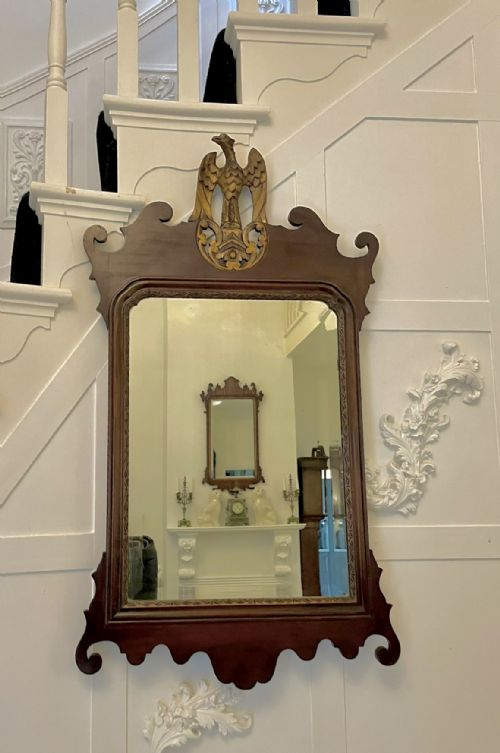
When you search for an Edwardian Chippendale mirror, you are looking at mahogany fretwork wall pieces that bring eighteenth-century revival elegance into any room.
Edwardian Chippendale Mirror
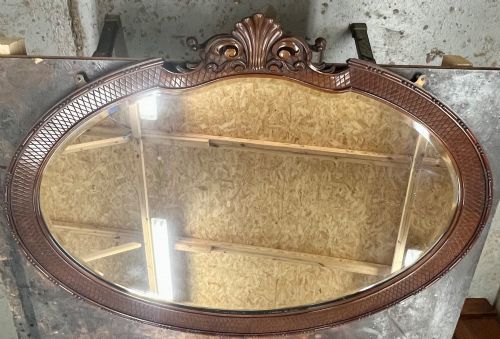
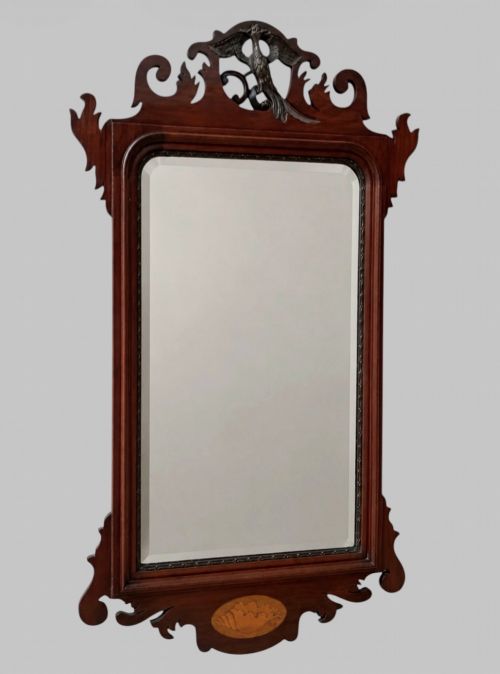
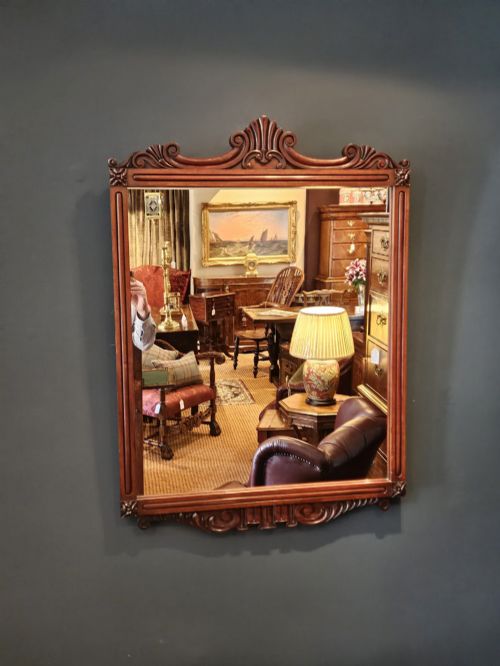
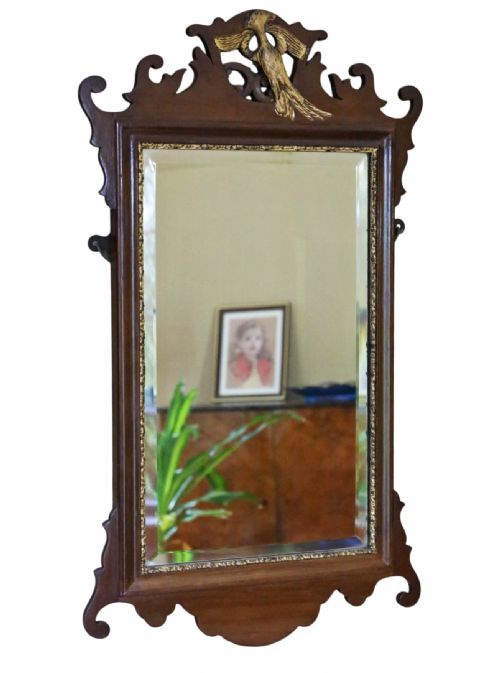
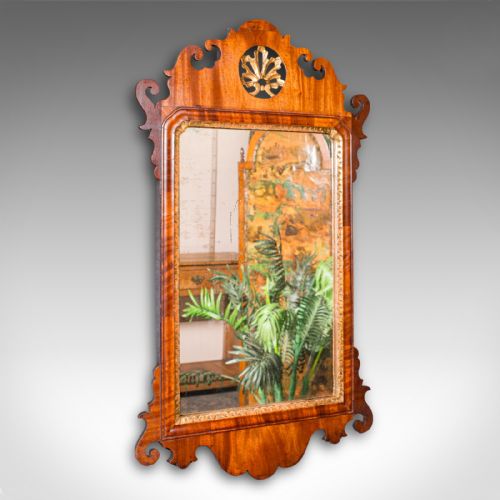
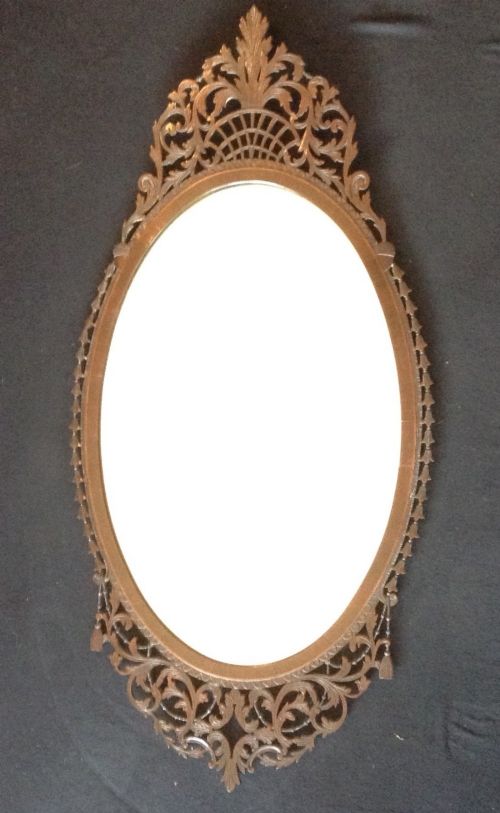
An edwardian chippendale mirror revives the intricate fret-cut silhouettes and scrolling outlines popularised during the Georgian era. Most examples seen here date from the Edwardian period, often incorporating mahogany timbers and bevel-edged glass.
The form spans straightforward wall mirrors with fretwork borders to larger overmantels and dressing pieces. Makers frequently employed satinwood inlay or parcel gilt highlights to accentuate the pierced wooden frames.
Assessing Quality
Quality rests upon the crispness of the fretwork and the depth of the carving. Superior pieces display sharp, clean pierced edges rather than soft or rounded contours.
The choice of timber and the preservation of original gilding or mirror glass distinguish finer examples. Heavier mahogany frames with well-executed inlay command closer attention.
Current listings feature Edwardian pieces alongside Victorian and Georgian revival examples, predominantly fashioned from mahogany and giltwood.
The Edwardian Chippendale Mirror Glossary
- Fretwork
- Ornamental perforated woodwork created by cutting patterns through thin boards. This technique defines the silhouette of many revival wall mirrors.
- Bevel-edged glass
- Mirror glass with an angled perimeter edge that catches and refracts light. This feature appears frequently on better quality Edwardian pieces.
- Parcel gilt
- Partial application of gold leaf or gilt paint to highlight specific carved details. It is often used on wooden frames to accentuate scrollwork.
- Satinwood inlay
- Contrasting light wood veneer inserted into recesses within the darker mahogany surface. This decorative technique adds subtle geometric detail.
Edwardian Chippendale Mirror: Frequently Asked Questions
Where should I hang this mirror?
These mirrors suit entrance halls, reception rooms, and bedrooms where their decorative fretwork can catch the light.
Ensure the wall fixings can support the weight of a solid mahogany frame.
How do I identify the period?
Look for Edwardian construction methods combined with Georgian revival styling cues like fret-cut outlines.
The presence of bevel-edged glass and mahogany timbers typically points to the early twentieth century.
Are these pieces fragile?
The pierced fretwork requires careful handling during cleaning and repositioning to prevent accidental damage.
Solid mahogany provides a sturdy core, but the delicate outer edges remain vulnerable to sharp knocks.
What styles are included here?
The selection encompasses Chippendale revival, Chinese Chippendale, and occasional Rococo revival influences.
These varied interpretations draw on eighteenth-century design books translated into Edwardian production.