





Edwardian Chinoiserie Cabinet
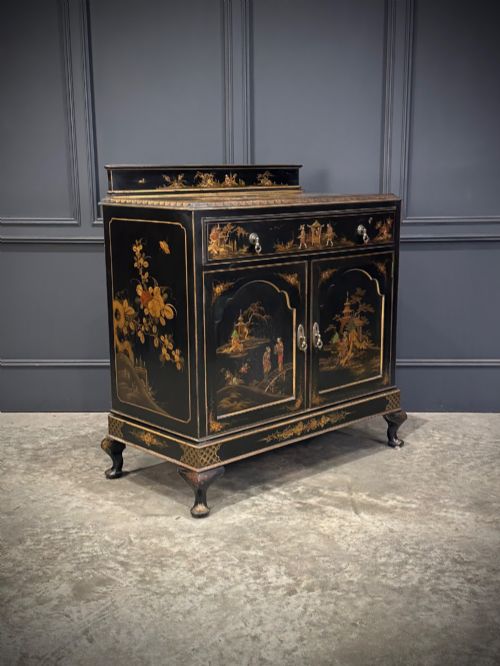
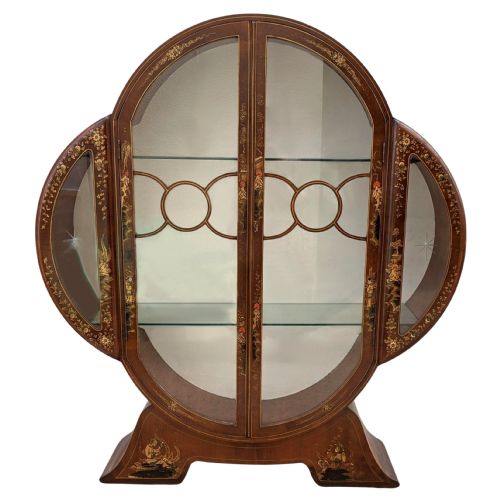
An Edwardian chinoiserie cabinet brings painted oriental scenes and rich lacquer surfaces into a room, offering both display space and distinctive decoration.
Edwardian Chinoiserie Cabinet
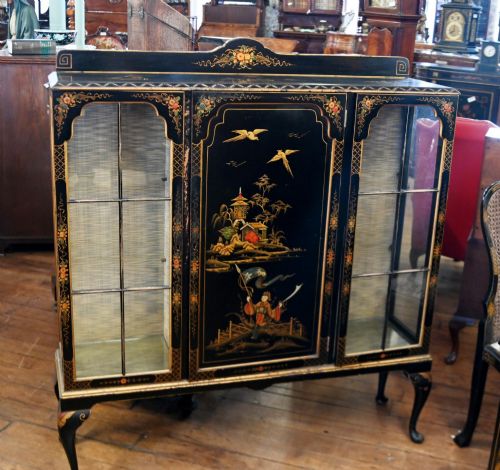
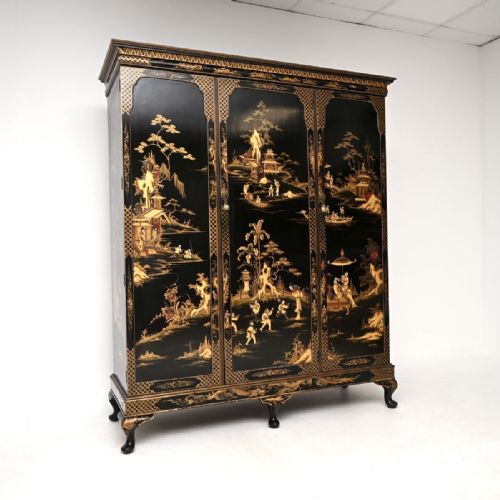
An Edwardian chinoiserie cabinet combines early twentieth century furniture forms with painted oriental motifs, lacquer finishes and gilt detailing. The search phrase covers display cabinets, bureau bookcases, side cabinets and pieces raised on stands.
Most examples date from the Edwardian period or the surrounding decades, heavily drawing on Chinoiserie and Chinoiserie Revival styles. Buyers frequently encounter black or pale cream lacquered finishes applied to wood carcasses.
Forms vary from tall display cabinets with glass doors to bureau bookcases and side cabinets. Stands often feature carved details, matching the decorative ambition of the main cabinet body.
Materials and Technique
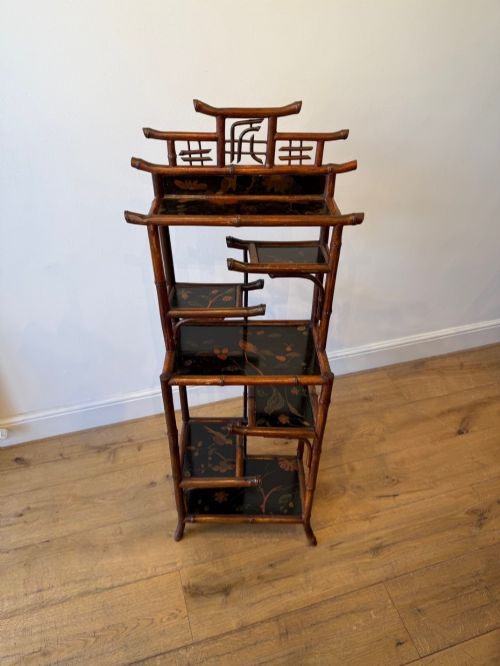
Wood carcasses of mahogany, timber and bamboo form the structural base for these pieces, providing stable support for complex decorative schemes. Glass appears in the doors of display cabinets and bureau bookcases.
Lacquer and gold leaf build the characteristic surface finish, creating glossy black or pale cream grounds decorated with raised motifs. Japanning techniques impart the imitation oriental scenes that define the aesthetic.
Edwardian Chinoiserie Cabinet Retail Price Guide 2026
Typical asking prices for edwardian chinoiserie cabinet among the pieces listed under this phrase on Sellingantiques today, from the lower quarter to the upper quarter. They describe what is for sale here now, not the wider market.
Listings for this phrase include display cabinets, bureau bookcases and side cabinets finished in black lacquer, pale cream and gold leaf.
Judging Quality
Depth and clarity of the lacquer work separate standard production from superior pieces, particularly in the application of gold leaf and the precision of painted figures. Hand-painted details display subtle shading and varied line work that mechanical reproduction lacks.
Integrity of the timber and the stability of the stand determine structural merit, as cabinets mounted on legs or stands require robust joinery to bear the weight. Original brass hardware and clean glass panels contribute to overall preservation.
Maples and Co
The Edwardian Chinoiserie Cabinet Glossary
- Chinoiserie
- European artistic style reflecting Chinese and East Asian motifs, popular in furniture decoration. Artists rendered landscapes, figures and pavilions in gold and colour upon dark or pale grounds.
- Japanning
- European imitation of East Asian lacquer work, developed in the seventeenth and eighteenth centuries and revived later. Layers of varnish receive heat treatment and polishing to produce a hard, glossy finish.
- Bureau bookcase
- Combination furniture piece featuring a sloping writing flap above drawers and shelving enclosed by doors above. These pieces often incorporate glazed upper sections for book display.
- Commode
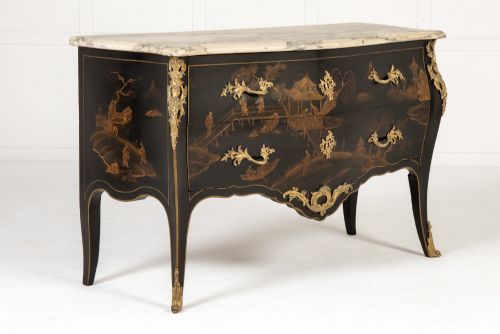
- Low freestanding chest of drawers, sometimes built with a bombe profile or mounted on a carved stand. The form provides surface display space alongside enclosed storage.
Edwardian Chinoiserie Cabinet: Frequently Asked Questions
What is an Edwardian chinoiserie cabinet?
An Edwardian chinoiserie cabinet is a piece of furniture produced around the early twentieth century featuring decorative lacquer work inspired by East Asian art. These items combine practical storage or display functions with striking painted surfaces.
Craftsmen applied black or pale cream lacquer to wood frames, decorating the exterior with figures, pavilions and landscapes in gold leaf and colour. They appear as standing cabinets, display units with glass doors and bureau bookcases.
How do I style a chinoiserie cabinet?
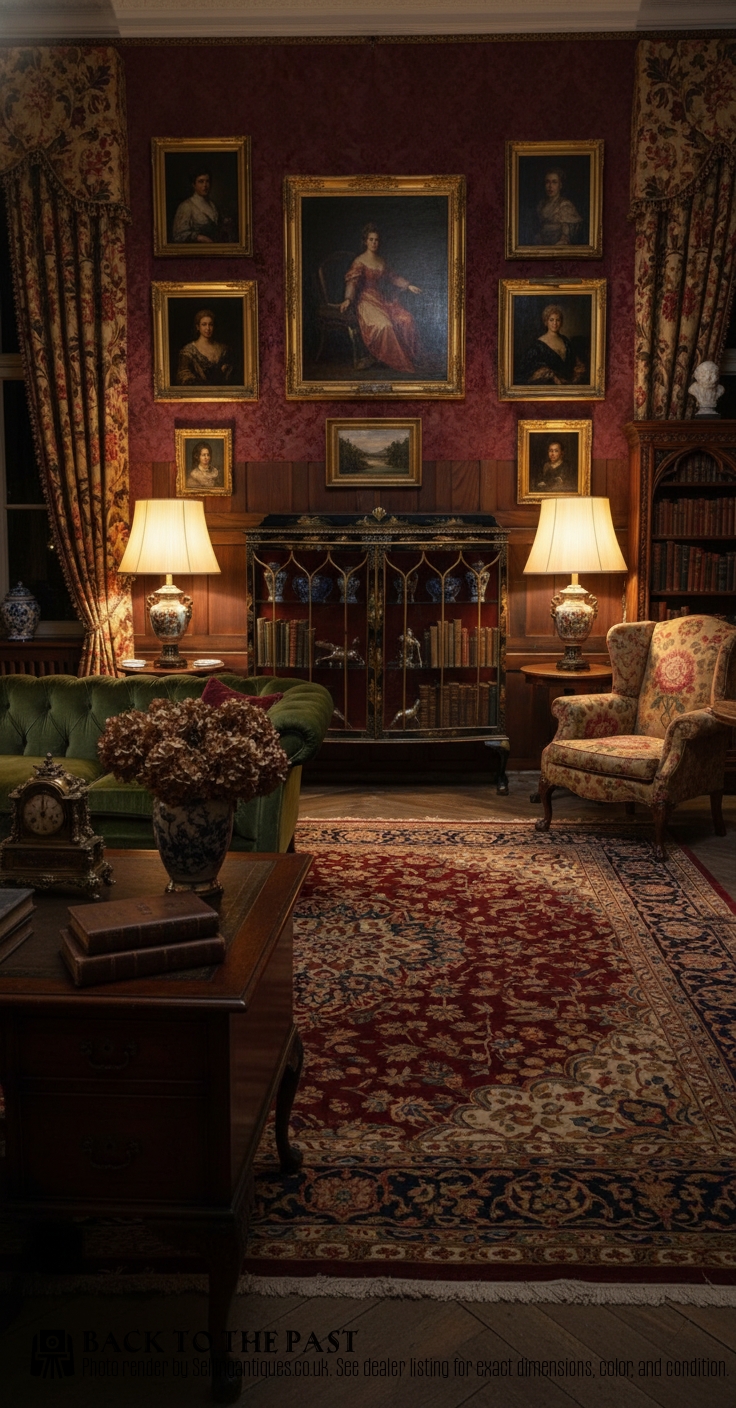
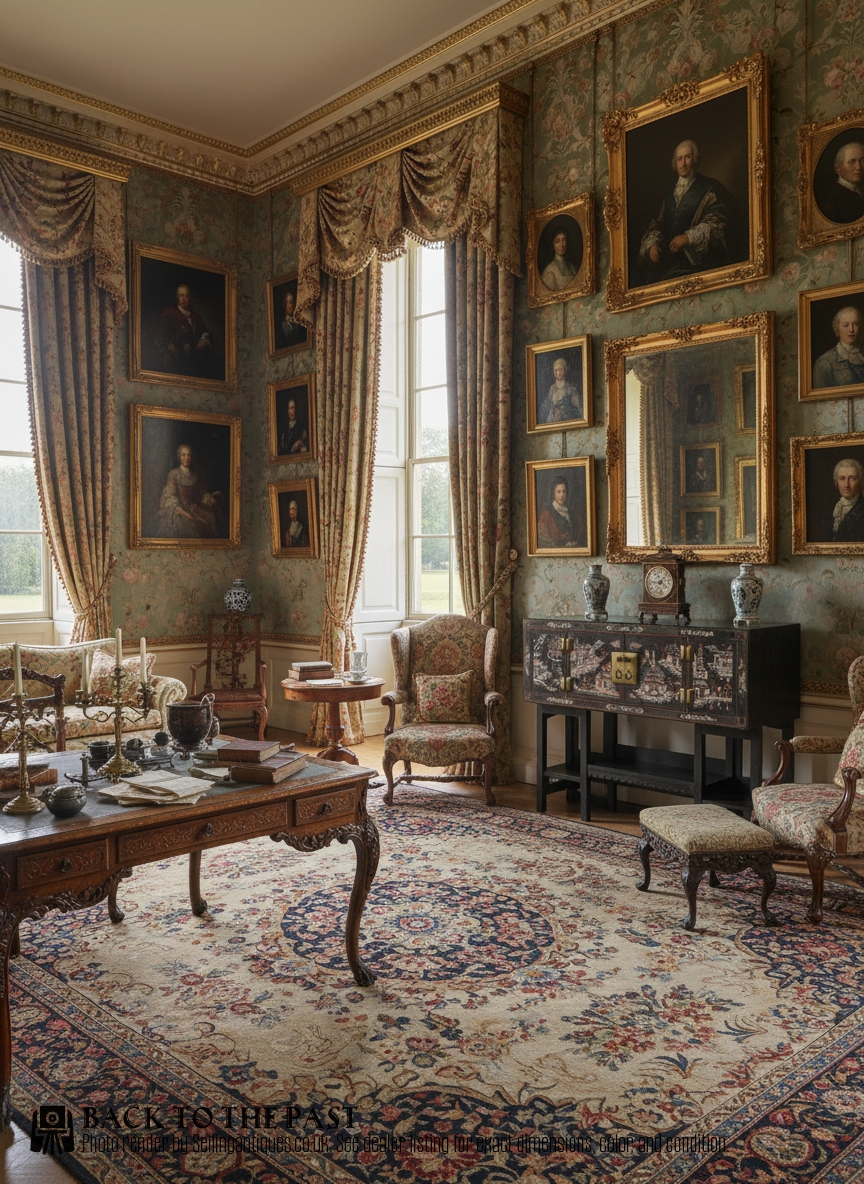
Styling an Edwardian chinoiserie cabinet involves placing it where the reflective lacquer and gold details catch natural light. Because the surface decoration is intricate, surrounding walls benefit from neutral tones that allow the painted scenes to stand out.
Inside display sections, ceramics or glassware look effective against dark lacquer backgrounds. The piece functions well as a focal point in a living room, hallway or study.
How do I identify Edwardian chinoiserie furniture?
Identification relies on examining construction methods, wood types like mahogany and timber, and the specific style of decoration. Edwardian pieces often blend traditional cabinet forms with revivalist lacquer techniques.
Look for period hardware, such as brass handles and hinges, alongside the characteristic hand-painted motifs. Comparing the lacquer finish and joinery helps distinguish early twentieth century manufacture from later reproductions.
Were these cabinets used for display?
Many examples on this page are specifically built as display cabinets featuring glass panels in the doors. They were designed to showcase decorative objects, porcelain and silver while protecting them from dust.
Other variations, such as side cabinets and bureau bookcases, balance enclosed storage with surface display areas. The inclusion of glass and stands reflects a dual purpose of utility and visual ornamentation.