



Edwardian Cast Iron Bed
These heavy metal frames built for the bedroom offer robust construction and distinct period charm.
Edwardian Cast Iron Bed
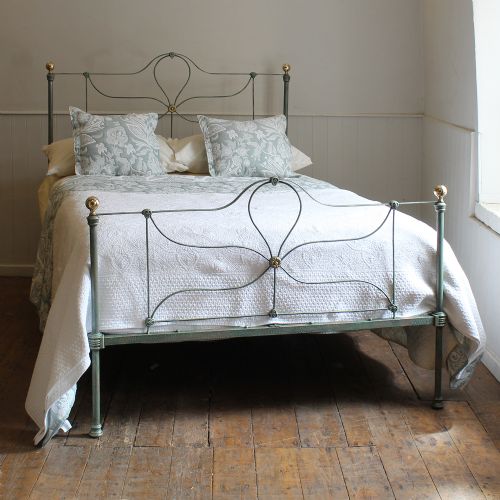
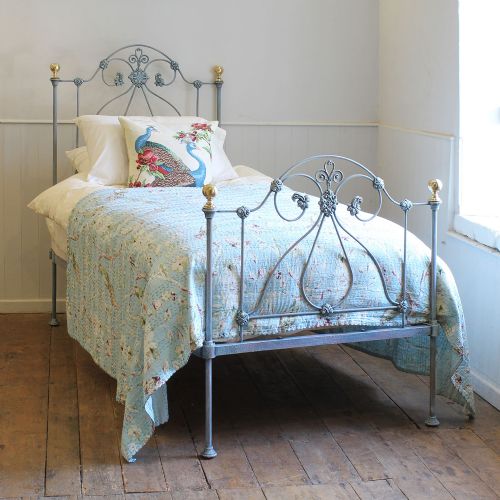
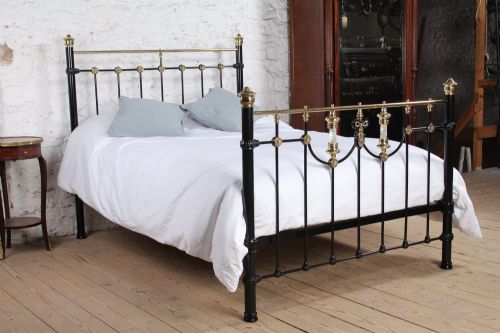
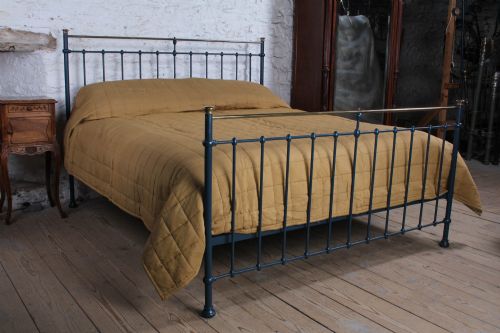
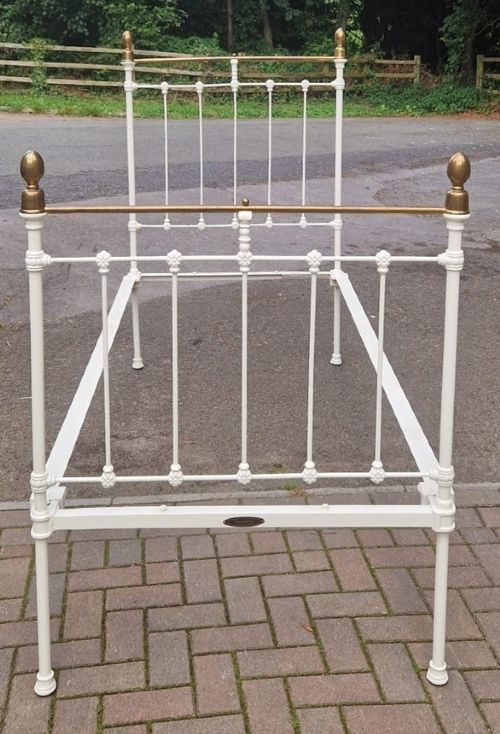
An edwardian cast iron bed combines sturdy metal framing with decorative headboards and footboards, often incorporating brass or nickel plating. You will frequently encounter double and king sizes, alongside single versions designed for smaller rooms or guest spaces.
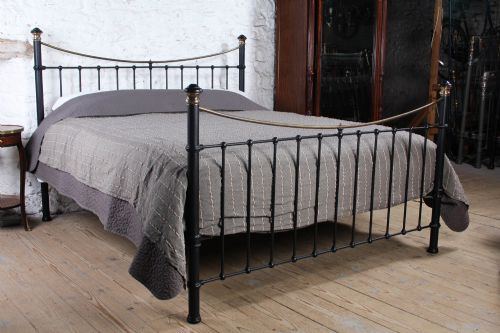
While many pieces date from the edwardian era and surrounding decades, the listings also include items from the victorian period and the nineteenth century. Common configurations range from traditional dip-rail designs to Irish no-end frames.
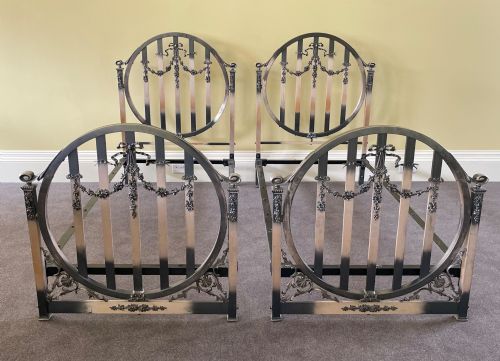
The material palette extends beyond basic cast iron to include wrought iron, steel, and occasional brass components. Certain examples feature mother of pearl inlay or hand-forged elements that elevate the standard bedstead into a decorative centrepiece.
How they were made
Makers utilised cast iron for the main structural components and decorative mouldings, pouring molten metal into sand moulds to create ornate patterns. This process allowed workshops to produce repetitive, detailed ornamentation efficiently.
Wrought iron and steel provided additional reinforcement for frames, whilst brass and nickel plating added contrasting metallic finishes to finials and rails. Some pieces incorporated applied details such as mother of pearl to enrich the overall appearance.
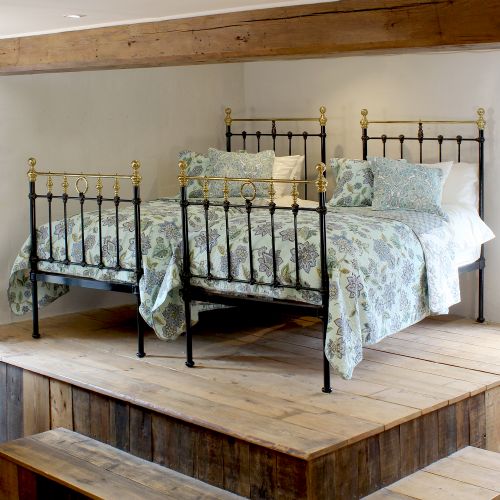
Some single beds come with an American style and can be joined together when company stays.
What varies in quality
The refinement of the casting work and the intricacy of the decorative details distinguish standard frames from more elaborate examples. Finer pieces display crisp moulding lines on the iron and substantial brass embellishments rather than thin applied plating.
Structural integrity depends on the original gauge of the metal and the preservation of the joints and side rails. Original surfaces, whether japanned or painted, retain more character than poorly stripped or aggressively restored metalwork.
Carters Of London·Winfield·Maple And Co
The Edwardian Cast Iron Bed Glossary
- Dip rail
- A headboard or footboard top rail that curves downwards in the centre. This shape softens the rigid vertical lines typical of heavy metal bed frames.
- Japanned
- A style of hard, black or dark lacquer finish applied to metal surfaces. It mimics traditional Asian lacquerwork and provides a durable protective coating.
- Nickel plating
- A thin protective layer of nickel applied over iron or steel to prevent corrosion and produce a bright, silver-coloured metallic sheen.
- Bedstead
- A framework supporting a mattress and spring system, distinguishing the complete bed structure from the mattress itself.
Edwardian Cast Iron Bed: Frequently Asked Questions
How do I clean a cast iron bed?
Dust the frame regularly with a dry cloth to prevent grime accumulation on the decorative mouldings and joints. Avoid harsh chemical cleaners that might strip original painted or japanned finishes.
For stubborn marks, use a mild soapy solution on a damp cloth, drying the metal immediately afterwards to prevent rust formation. Take extra care around brass components and nickel plating.
Will modern mattresses fit these beds?
Many antique frames accommodate standard mattress dimensions, though older Irish and Victorian sizes can vary slightly from contemporary sizing standards. Measure the interior length and width of the side rails carefully before purchasing.
Slatted wooden bases or modern metal support frames can often be placed inside the antique side rails to hold a standard mattress securely. Check whether your chosen bedstead requires a custom mattress or base.
How do I assemble an iron bed?
These beds typically rely on heavy-duty wedge joints or side rail bolts that slot together without requiring complex tools. Two people make assembly easier, as the cast iron components are exceptionally heavy and require careful handling.
Ensure the side rails lock firmly into the headboard and footboard brackets to square the frame properly. Lubricating threaded connections with a light oil can help older metal parts fit together smoothly.
Are these beds sturdy for daily use?
Solid cast iron and wrought iron construction provides exceptional durability and stability for everyday sleeping arrangements. The heavy metal framing resists the wobbling common in lighter modern bed frames.
Periodic checks of the joint connections ensure the frame remains rigid over years of use. The substantial weight of the materials guarantees long-term structural reliability.