



Edwardian Carved Oval Mirror
An edwardian carved oval mirror brings light and decorative framing to a room, combining period proportion with the subtle texture of carved wood and gesso.
Edwardian Carved Oval Mirror
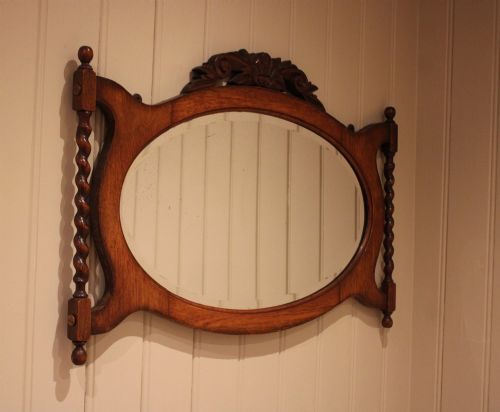
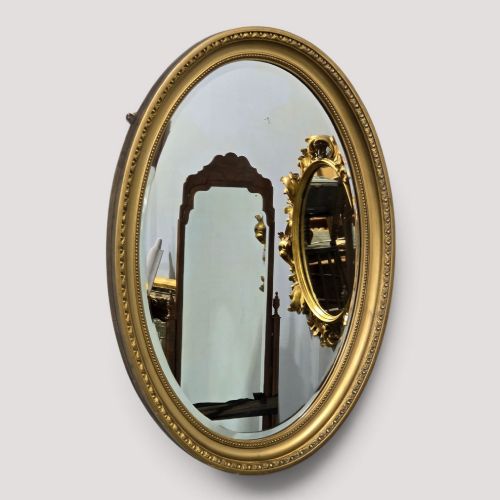
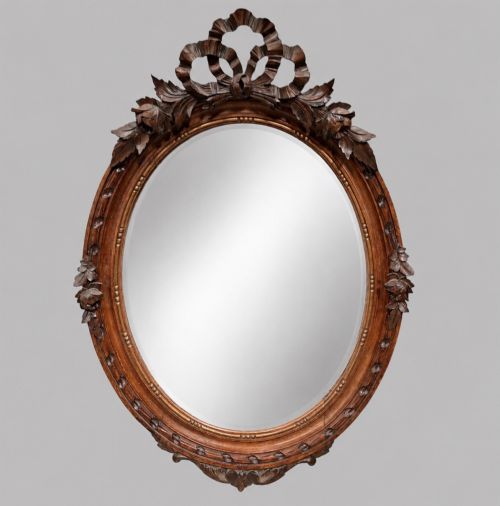
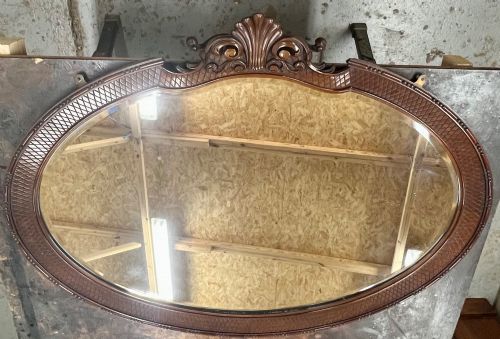
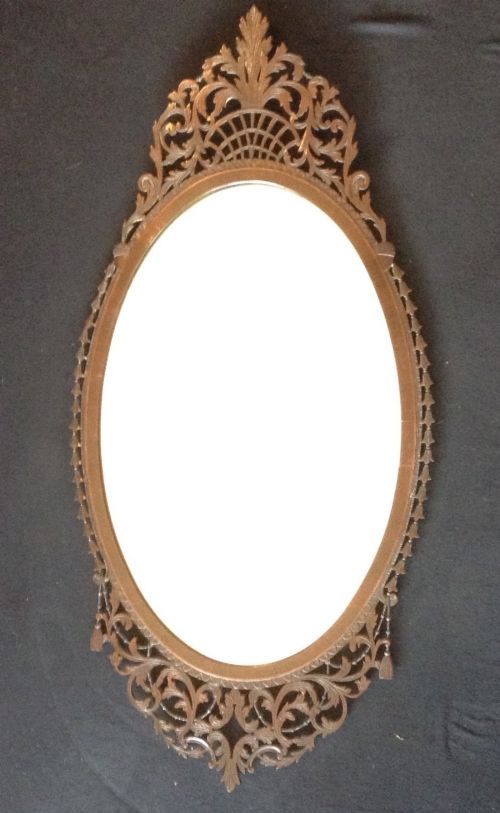
An edwardian carved oval mirror groups together wall hanging pieces, overmantels and dressing table swing mirrors produced around the early twentieth century. The selections available here draw heavily from Edwardian production alongside related Victorian and revival styles that share the distinctive curved profile.
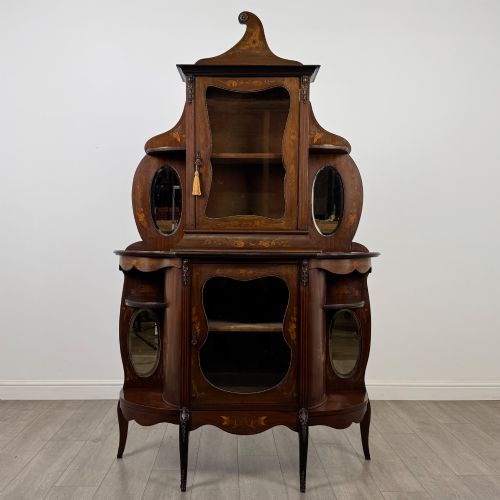
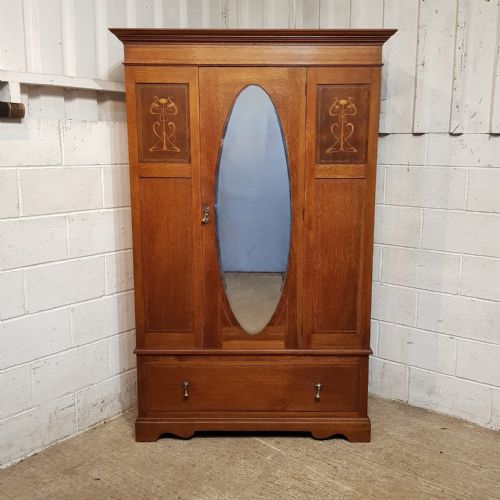
Makers and craftsmen of the period shaped these frames in oak, mahogany, beech, and giltwood, often applying detailed floral or classical ornamentation. While wall mirrors dominate the selection, related forms such as mirrorback sideboards and wardrobes appear alongside the core mirrors.
How they were made
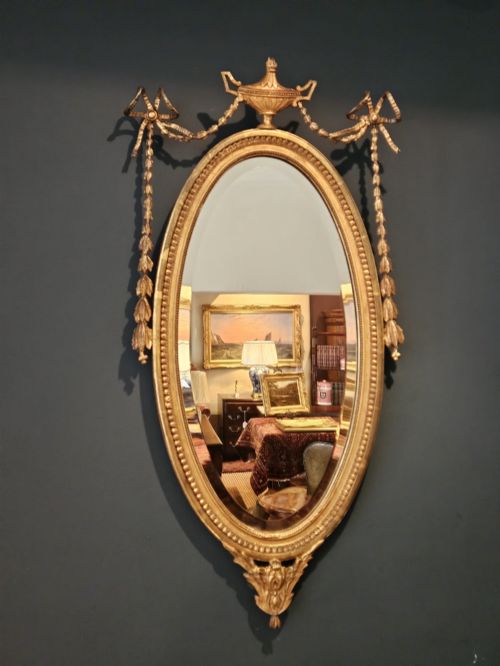
Frames rely on timbers such as solid oak and mahogany, joined with traditional corner construction and paired with moulded gesso to build up intricate relief patterns. Gilding techniques applied gold leaf over gesso grounds, while other pieces showcase the natural grain of polished hardwoods.
Glass plates vary from modern bevelled replacements to original mercury plates that show characteristic ageing and soft reflection. Carved details range from simple rope twists and floral motifs to elaborate Adam revival swags and crests.
Edwardian Carved Oval Mirror Retail Price Guide 2026
Typical asking prices for edwardian carved oval mirror among the pieces listed under this phrase on Sellingantiques today, from the lower quarter to the upper quarter. They describe what is for sale here now, not the wider market.
A solitary carved eagle keeps permanent watch from the crest of an antique mahogany frame.
What varies in quality
Quality rests upon the crispness of the hand-carved detail and the integrity of the original gilt or wood finish. Superior examples display deep, sharp moulding and well-proportioned frames that retain their original glass plates without excessive deterioration.
Lesser items show soft, moulded composition ornaments in place of hand carving or heavy over-gilding that obscures the original underlying work. The preservation of the backing boards and structural joints further separates standard utility pieces from finer decorative works.
The Edwardian Carved Oval Mirror Glossary
- Giltwood
- Wood that has been coated with gold leaf or a metallic substitute. This finish is characteristic of many formal wall mirrors from the period.
- Gesso
- A plaster-like mixture applied to wooden frames as a smooth base for gilding or to be moulded into relief decoration. It allows for intricate floral and classical patterns.
- Mercury plate
- An older type of mirror glass backed with a tin-mercury amalgam. It produces a softer reflection and often develops characteristic dark speckling over time.
- Overmantel mirror
- A large mirror designed to hang specifically above a fireplace mantelpiece. These pieces often feature extended horizontal or vertical proportions.
- Girandole
- A decorative wall mirror fitted with one or more candle sconces attached to the frame. The candle arms reflect additional light into the room.
Edwardian Carved Oval Mirror: Frequently Asked Questions
How do I hang a heavy wooden mirror safely?
Heavy wall mirrors require secure fixings screwed directly into structural wall studs or masonry using appropriate wall plugs and brackets.
Weight should be distributed evenly across a wire or heavy-duty D-rings attached firmly to the wooden frame rather than relying on decorative trim.
Are original mercury glass plates fragile?
Original mercury glass is stable within its frame but requires gentle handling during transport and cleaning to prevent damage to the delicate backing.
Avoid chemical glass cleaners that can seep behind the edges and degrade the historical silvering.
What is the difference between Adam revival and Edwardian styles?
Adam revival pieces draw on eighteenth-century neoclassical symmetry, featuring urns, swags, and husks rendered in gesso and giltwood.
Edwardian pieces often blend these classical motifs with lighter domestic woods and simpler proportions suited for smaller homes.