




Edwardian Carved Oak Settle
An Edwardian carved oak settle brings solid timber craftsmanship and historical revivals into a hallway, offering practical seating alongside built-in storage.
Edwardian Carved Oak Settle
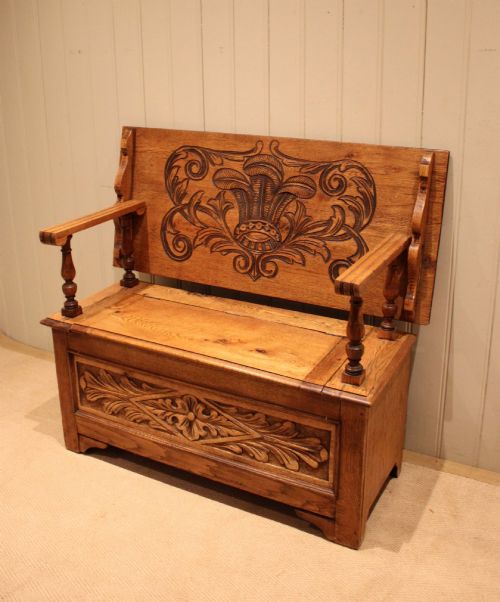
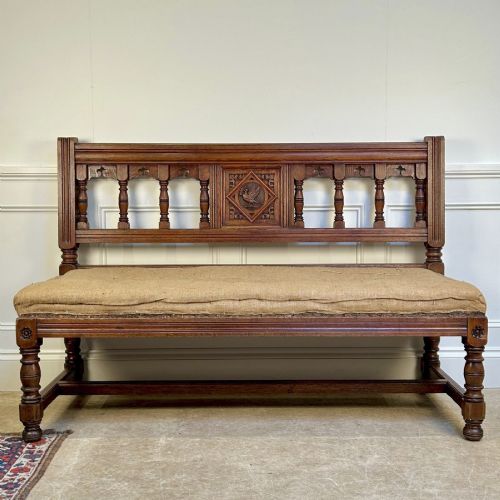
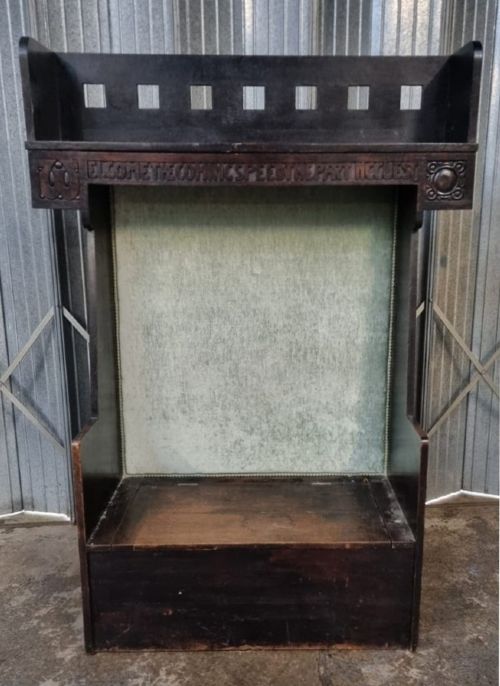
An edwardian carved oak settle is a substantial piece of hallway seating, commonly found in solid oak with carved decorative panels reflecting historical design movements. Buyers searching this phrase encounter forms that double as storage boxes, including monks benches and hall seats with lift-up lids.
The pieces on this page span the Edwardian era, the nineteenth century, and early decades of the twentieth century, incorporating styles such as Arts and Crafts, Jacobean Revival, and Gothic Revival. Hall benches and settlers appear alongside occasional table top variations and salon suites.
Most examples rely on sturdy oak timbers, occasionally paired with brass mounts, metal inlay, iron, fabric, or hessian upholstery. These heavy wooden seats were traditionally positioned in entrance halls to provide a place for removing coats and boots.
Quality and Distinction
The distinction between standard production items and finer pieces lies in the depth and crispness of the wood carving, alongside the selection of timber grain. Pieces associated with notable workshops demonstrate superior joinery and more refined proportions in their structural design.
Makers such as Gillows, James Shoolbred and Co, and Wylie Lockhead introduced elevated craftsmanship and distinctive stylistic details that separate their work from utilitarian country furniture.
Some settles double as tables when the back folds down, proving your hallway furniture can multitask.
Gillows·Shapland and Petter·Wylie Lockhead·James Shoolbred and Co
The Edwardian Carved Oak Settle Glossary
- Settle
- A wooden bench with a high back, solid arms, and frequently a box base for storage beneath the seat. This form protected sitters from draughts in historical hallways.
- Monks Bench
- A convertible piece of furniture featuring a hinged back that folds down flat to transform the seat into a table. It combines two functions within a compact footprint.
- Jacobean Revival
- A nineteenth and early twentieth century style copying the heavy turned legs, geometric moulding, and strapwork carving of seventeenth century English furniture.
- Arts and Crafts
- A design movement valuing honest construction, visible joinery, and simplified motifs inspired by medieval craftsmanship rather than mass production.
Edwardian Carved Oak Settle: Frequently Asked Questions
Where were settles placed?
These wooden benches traditionally stood in entrance halls, boot rooms, and large corridors of period homes.
Their high backs helped block cold draughts from front doors while providing a convenient place to sit.
How do I use a box settle?
The hinged seat lifts up to reveal a deep storage compartment originally intended for blankets, boots, and winter accessories.
This concealed space keeps modern hallways tidy while maintaining the traditional appearance of the furniture.
What is a monks bench?
A monks bench is a versatile seating form featuring a high panelled back that folds forward onto the arms to form a table top.
This dual-purpose design allowed smaller rooms to serve multiple functions without cluttering the floor space.
How do I date an oak settle?
Dating relies on examining the timber grain, construction joints, and the specific decorative style carved into the panels.
Revival pieces often mix seventeenth century motifs with the cleaner lines and hardware typical of the nineteen hundreds.