



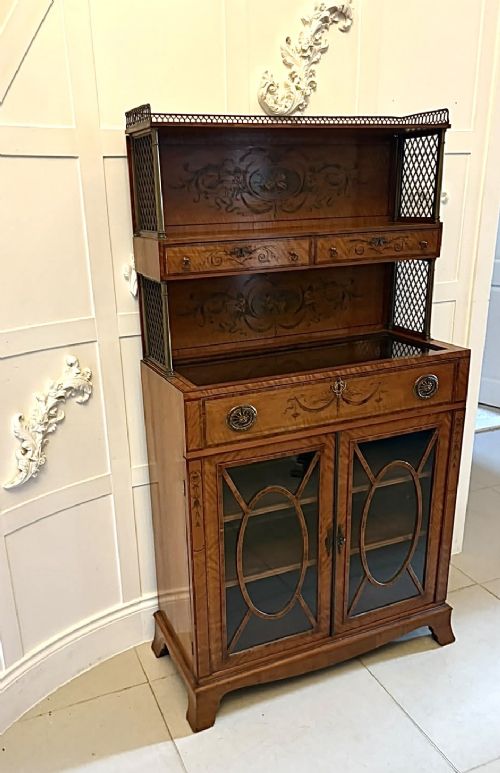
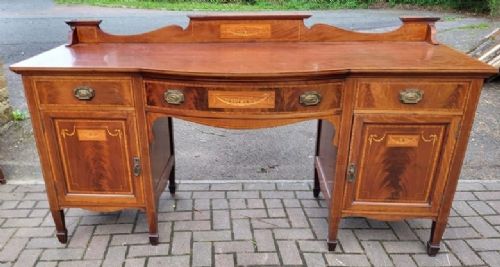
Edwardian Cabinet with Inlay
These pieces combine the lighter domestic forms of the early twentieth century with precise contrasting bands and stringing.
Edwardian Cabinet with Inlay
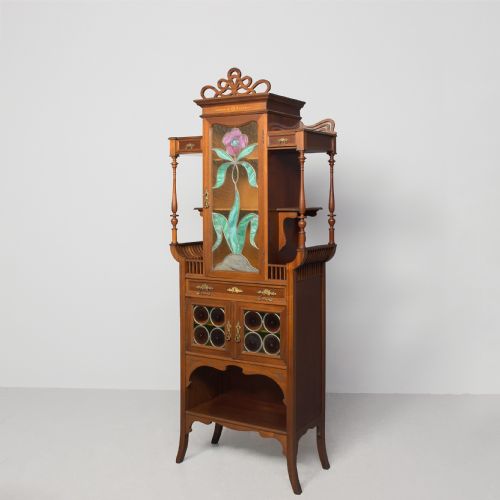
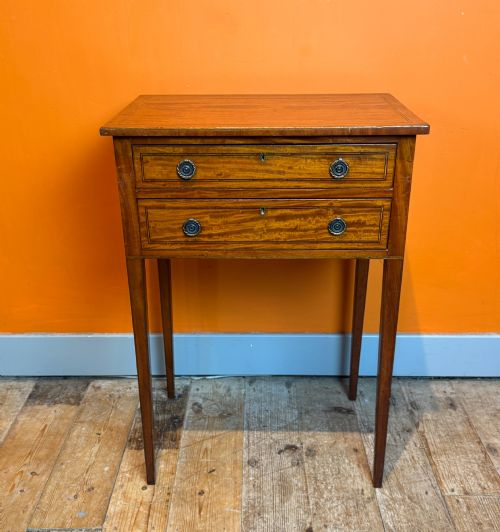
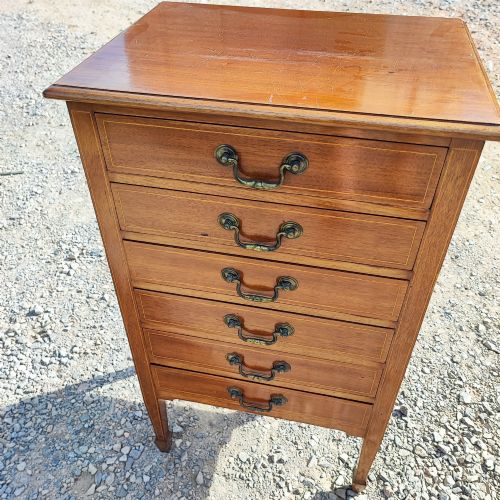
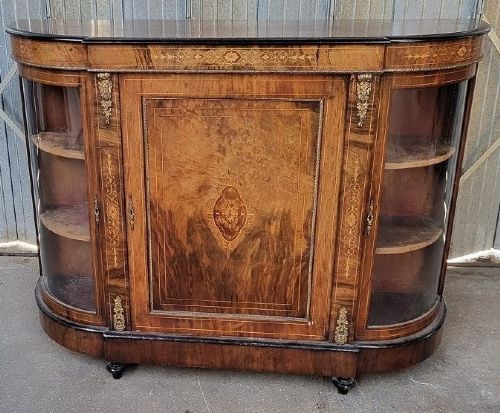
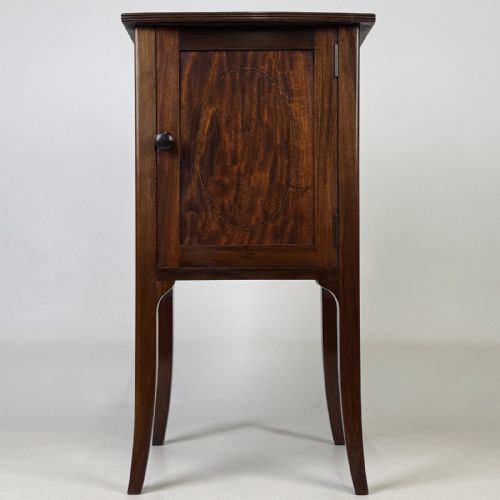
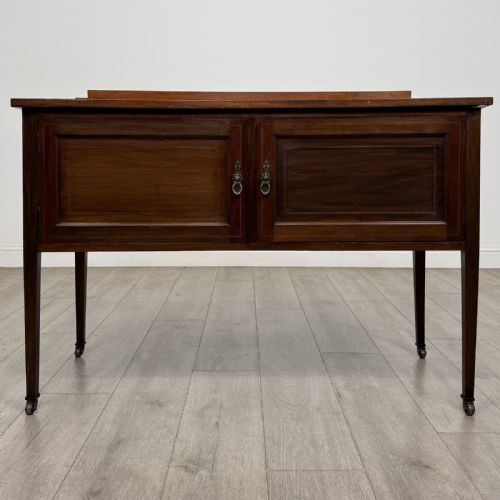
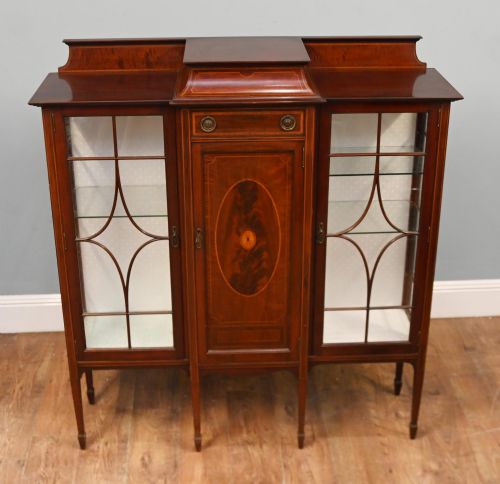
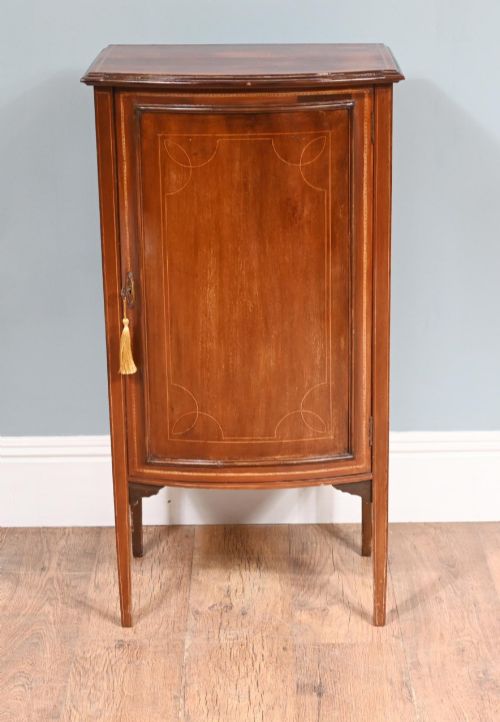
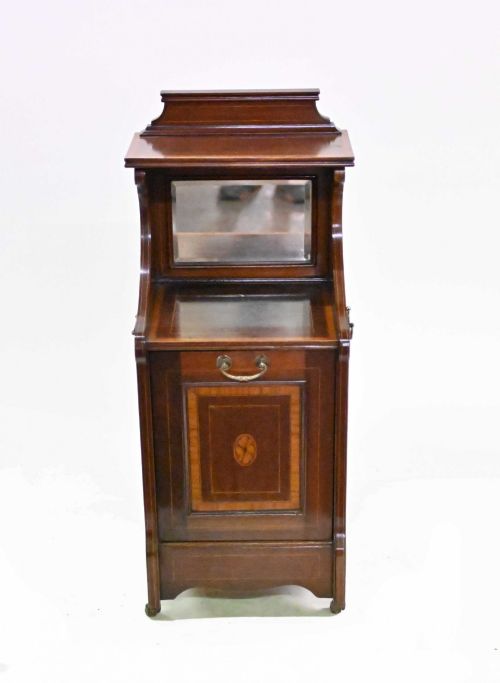
An edwardian cabinet with inlay is a domestic storage piece or display unit originating primarily from the turn of the twentieth century. Buyers seeking this phrase encounter slender display cabinets, bookcases, and side cabinets built during the Edwardian period and the late Victorian era.
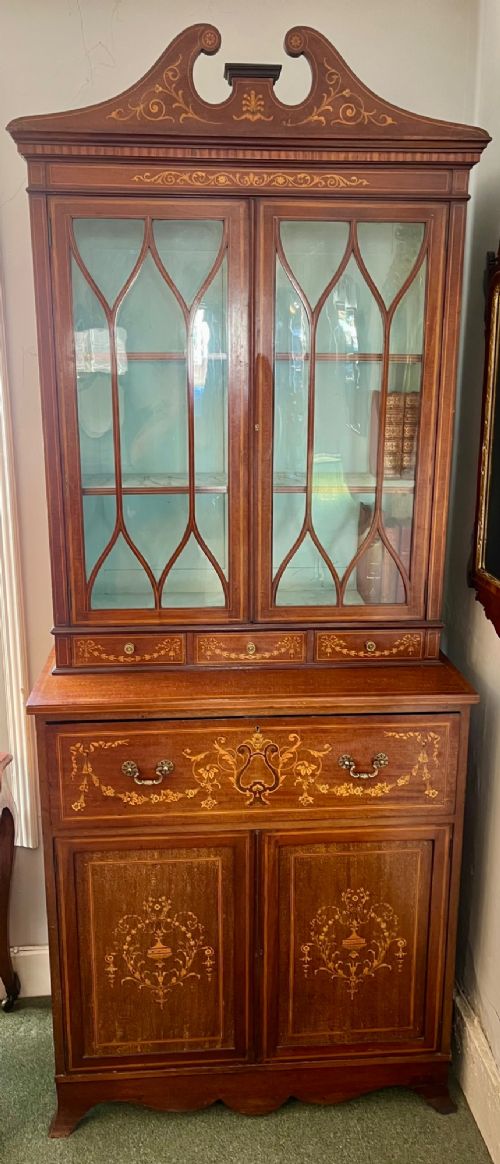
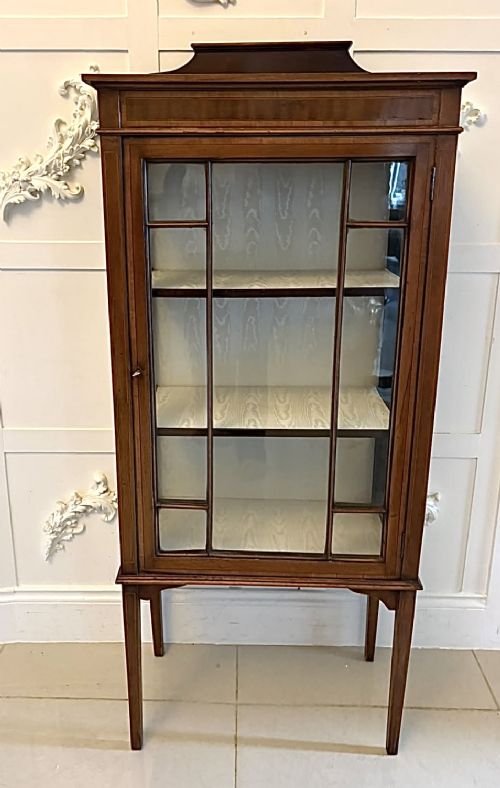
The most common form on this page is the mahogany display cabinet, often featuring glazed doors and contrasting satinwood or boxwood stringing. Pieces range from small corner cabinets and bedside cupboards to large bureau bookcases and wardrobes.
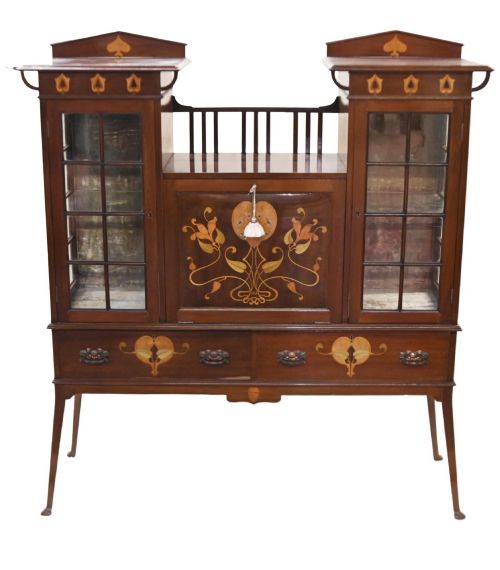
Makers and workshops of the era drew heavily on earlier design idioms, producing items in the Sheraton Revival style alongside occasional Arts and Crafts and Secessionist works. The overarching emphasis remains on domestic refinement, polished timber surfaces, and controlled decorative banding.
How they were made
Cabinet makers relied on solid mahogany, rosewood, and oak for foundational carcasses and frames, frequently applying fine veneers to large flat surfaces. Satinwood and boxwood provided the pale contrasting timber necessary for intricate lines of stringing and floral motifs.
Glazing typically involved individual wooden glazing bars, such as astragal mouldings, holding panes of glass within cabinet doors. Brass handles, hinges, and occasional castors completed the functional hardware of these domestic pieces.
Edwardian Cabinet with Inlay Retail Price Guide 2026
Typical asking prices for edwardian cabinet with inlay among the pieces listed under this phrase on Sellingantiques today, from the lower quarter to the upper quarter. They describe what is for sale here now, not the wider market.
Listings feature mahogany, satinwood, and oak across Edwardian and Victorian periods.
What varies in quality
The degree of refinement in the timber preparation and the crispness of the contrasting inlay separate ordinary utility items from finer workshop output. Well-executed pieces display tightly fitted joints, carefully selected grain patterns, and hand-painted panels or delicate marquetry rather than stamped substitutes.
Proportion and glazing detail also dictate the standing of a piece, with slender astragal bars and balanced bow fronts commanding greater visual harmony. Maker attribution, such as work bearing stamps from established firms, signals superior workshop standards.
maples & co·Shapland and Petter·Maple & Co
The Edwardian Cabinet with Inlay Glossary
- Astragal
- A moulding profile used to divide glass panes within a cabinet door. These narrow wooden bars create a grid pattern across the glazing.
- Satinwood
- A pale, lustrous timber native to India and Ceylon. It serves as a contrasting veneer for inlay and stringing on darker woods.
- Stringing
- Thin lines of contrasting timber inlaid into shallow channels on furniture surfaces. This linear detail defines borders and panels.
- Sheraton Revival
- A late nineteenth and early twentieth century design style emulating the neoclassical furniture of Thomas Sheraton. It favours light proportions and symmetrical inlay.
- Marquetry
- The art of applying pieces of veneer to a structure to form decorative patterns and pictures. It differs from simple linear stringing by creating pictorial motifs.
Edwardian Cabinet with Inlay: Frequently Asked Questions
What rooms suit an edwardian cabinet with inlay?
These compact display units and side cabinets fit comfortably into living rooms, dining spaces, and studies. Their glazed doors and reflective mirror backs help brighten smaller domestic interiors.
Taller pieces like bureau bookcases and wardrobes provide practical storage while maintaining a light visual presence due to their polished timber and delicate banding.
How do I care for inlaid timber furniture?
Keep wooden cabinets away from direct sunlight and sudden temperature shifts to protect the delicate veneers and boxwood stringing from drying out. Regular dusting with a soft, dry cloth maintains the polished finish.
Avoid liquid polishes and silicone sprays, opting instead for traditional beeswax applied sparingly when the timber appears dry.
How do I distinguish Edwardian from Victorian cabinets?
Edwardian pieces generally exhibit lighter proportions, paler secondary timbers, and a preference for neoclassical revival styles. Their inlay tends to be finer and more restrained compared to earlier Victorian work.
Victorian cabinets often utilise heavier burr walnut or darker rosewood, frequently accompanied by more robust carving and denser marquetry panels.