


Edwardian Brass Casket
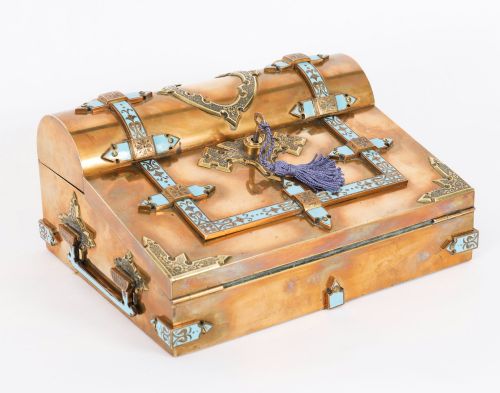
An edwardian brass casket brings together heavy metalwork and timber, offering a sturdy yet decorative vessel for keepsakes.
Edwardian Brass Casket
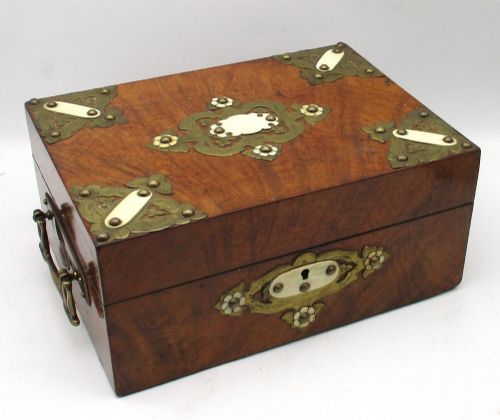
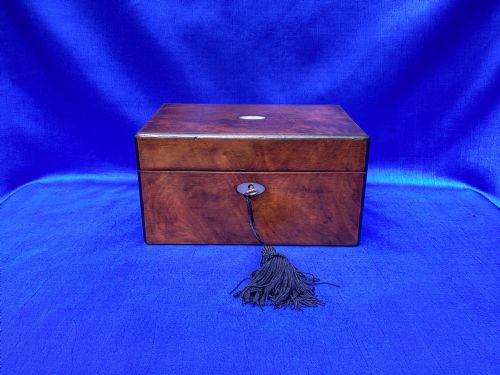
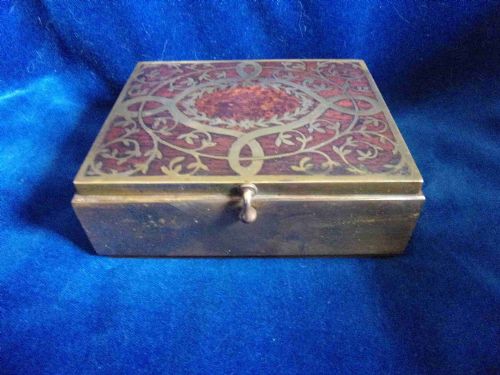
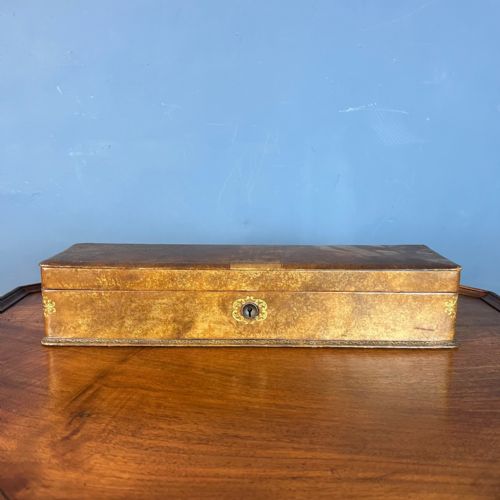
When you search for an edwardian brass casket, you encounter a selection of small storage containers that often combine metal mounts with wooden bodies. The pieces found here span the late nineteenth century into the Edwardian era, taking forms such as jewellery boxes, stationery cases, and desk accessories.
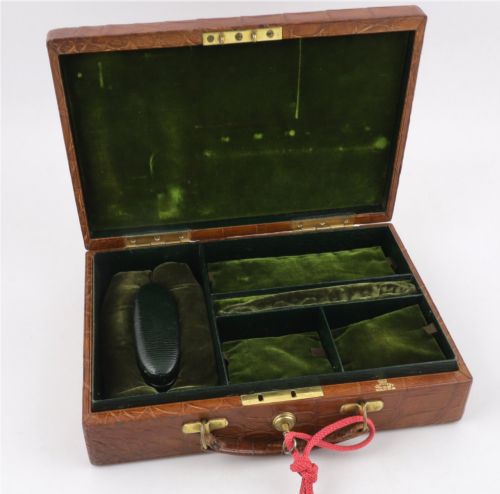
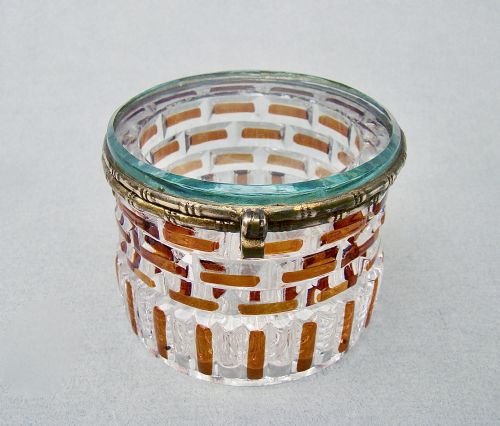
While the search term specifies brass, the material evidence reveals that many examples pair this metal with timbers like oak, walnut, and coromandel, alongside leather, glass, and velvet linings. These boxes served practical purposes in period homes, functioning as secure receptacles for correspondence, trinkets, and personal valuables.
Assessing the range
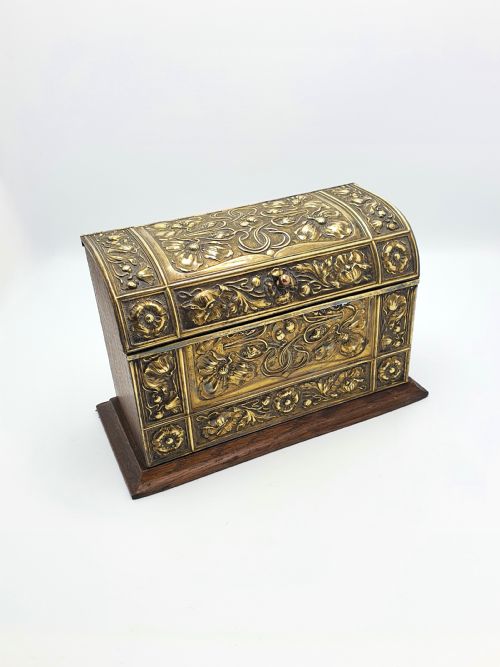
Quality in these caskets rests on the integration of materials and the complexity of the decorative style applied to the surface. Pieces featuring hand-worked repoussé details or specialised inlays stand apart from simpler utilitarian boxes.
The execution of corner mounts, the weight of the brass components, and the choice of secondary woods such as coromandel or burr walnut distinguish the finer examples within the selection.
Several boxes double as secret safe books, offering a clever place to hide correspondence among genuine library volumes.
J C Vickery·Erhard and Sohne·Princess Helena Victoria
The Edwardian Brass Casket Glossary
- Repoussé
- A metalworking technique where a design is hammered into relief from the reverse side. This method appears on copper and brass decorative boxes from the turn of the century.
- Coromandel
- A dense, heavy timber imported from Asia, characterised by dark brown colouring with contrasting stripes. It frequently forms the body of high-status Victorian and Edwardian vanity and stationery caskets.
- Jugendstil
- The continental European manifestation of the Art Nouveau movement, prominent around nineteen hundred. Pieces in this style often feature stylised natural motifs.
- Bevelled glass
- Glass panes with angled edges, commonly set into the doors or lids of vitrines and display jewellery boxes. This treatment catches the light and adds depth to the object.
- Stationery box
- A desktop container designed to hold writing paper, envelopes, and correspondence implements. These often include tiered wooden interiors.
Edwardian Brass Casket: Frequently Asked Questions
What were brass caskets used for originally?
These caskets served as desktop or dressing table receptacles for valuable personal items, letters, and small accessories. Owners kept them in studies, bedrooms, and drawing rooms to organise daily essentials.
Interior compartments and velvet linings protected delicate contents such as jewellery, writing instruments, and pocket watches from damage.
How do I distinguish Edwardian pieces from Victorian ones?
Edwardian items often reflect lighter decorative approaches, including Arts and Crafts or early Art Nouveau influences, dating from around nineteen hundred onwards. Victorian pieces tend to utilise heavier timber framing, such as oak and coromandel, with robust brass binding.
Examining the stylistic vocabulary, such as repoussé copper work versus heavy cast brass mounts, helps clarify the period of manufacture.
Are these boxes lined with original materials?
Many surviving caskets retain their period silk, velvet, or paper linings, which show signs of age consistent with their functional history. The presence of fitted trays and original fabric enhances the integrity of the piece.
Different object types, from sewing boxes to decanter cases, required specific interior configurations to secure their contents.
How should I care for brass and wood caskets?
Maintenance involves gentle dusting of the exterior timber and careful cleaning of the metal components without abrasive polishes. Preserving the patina on both the brass and the underlying wood maintains the historical character of the object.
Keeping the caskets away from direct heat sources prevents the wooden bodies and interior velvet from drying out or degrading.