




Art Nouveau Floral Box
An art nouveau floral box brings sweeping organic lines and delicate petal motifs straight into your room, holding small treasures with distinct turn-of-the-century flair.
Art Nouveau Floral Box
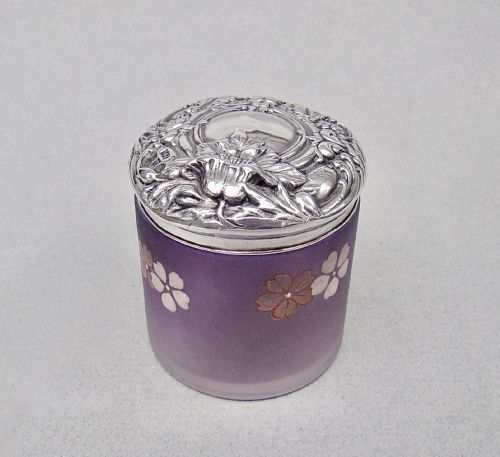
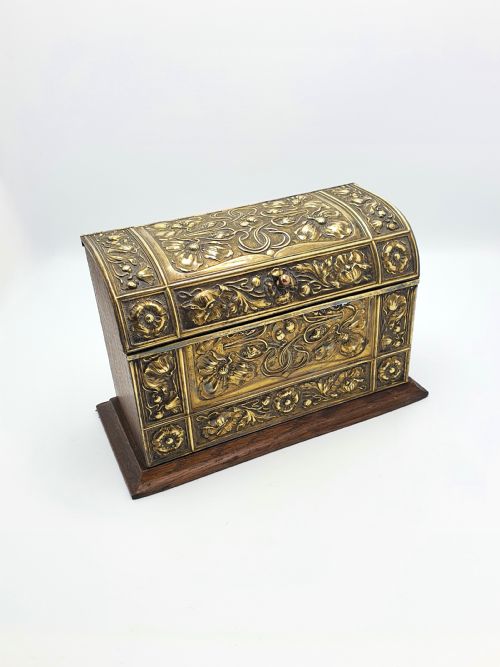
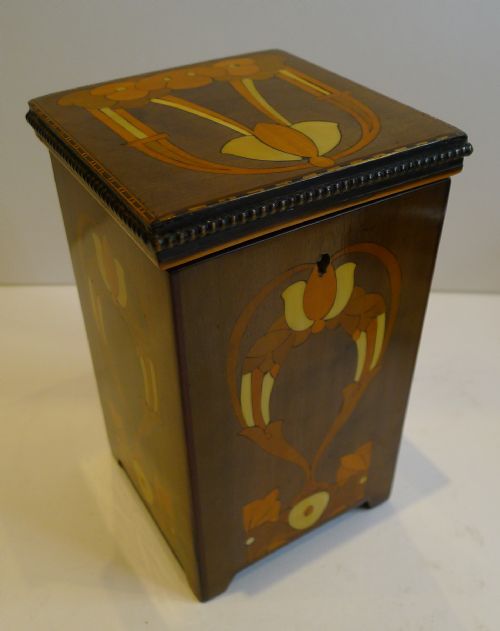
An art nouveau floral box captures the botanical fascination of the early twentieth century, taking the form of lidded canisters, dressing table jars, and compact caskets. These pieces translate natural plant stems and blossoms into flowing, asymmetrical metalwork or crisp glass mouldings.
You will most commonly meet items originating from the Edwardian era up to the nineteen-tens, reflecting the peak of organic design. Whether rendered in precious sterling silver or warm bronze, each vessel serves as a functional centrepiece for a dressing table or desk.
The decorative vocabulary relies heavily on stylised flowers and curling leaves, often framing a smooth central panel or enclosing a frosted glass body. These boxes range from modest trinket holders to substantial document cases designed to safeguard personal correspondence.
Materials and construction methods
Craftsmen utilised sterling silver, bronze, and glass to achieve the tactile contrasts characteristic of the period, often pairing gleaming polished metal with textured frosted surfaces. Enamel accents occasionally supplied vibrant colour to petal details, fusing glass powder directly to a metal base.
Cast metal techniques allowed workshops to shape sinuous, whip-like plant stems that twine organically around the container body. Wood such as mahogany provided sturdy carcases for larger boxes, whilst textile elements like cotton fabrics appeared in related furnishings from the same design movement.
Someone once preserved a complete Edwardian dressing table set down to the smallest matching teaspoon, proving that matching floral whimsy could extend from the boudoir straight to the tea tray.
Measures of quality and distinction
The division between standard commercial output and superior craftsmanship rests on the crispness of the chased or cast botanical detailing. Exceptional pieces display high relief where stems and petals appear almost to lift away from the surface, showing deliberate hand-finishing rather than flat, uniform stamping.
Material weight and the integration of components also define the better examples, such as a silver lid fitting snugly onto a thick frosted glass jar without wobble. Maker attribution and clear hallmarks anchor the provenance, elevating pieces produced by notable design houses above anonymous workshop stock.
William Hutton·S Theeman·Josef Margold
The Art Nouveau Floral Box Glossary
- Art Nouveau
- An international style that flourished between eighteen-ninety and the First World War, characterised by sinuous, flowing lines inspired by natural forms. It rejected rigid historical revivals in favour of dynamic plant and floral motifs.
- Sterling Silver
- A silver alloy containing ninety-two point five percent silver by mass and seven point five percent other metals, usually copper. This standard composition provides the durability required for detailed repoussé and chased work on small containers.
- Frosted Glass
- Glass that has been rendered translucent rather than transparent by acid etching or sandblasting. In dressing table jars, this matte finish diffuses light and softens the interior contents.
- Repoussé
- A metalworking technique in which a malleable sheet of silver or bronze is hammered from the reverse side to create a low relief design. Artisans use this method to push out rounded petal and leaf shapes on box lids.
- Austrian Secessionist
- A distinct regional variant of the wider modern movement, originating in Vienna and favouring geometric discipline alongside organic curves. Pieces from this circle often display a starker, more architectural interpretation of floral ornament.
Art Nouveau Floral Box: Frequently Asked Questions
What were art nouveau floral boxes used for?
These containers served primarily as dressing table accessories to hold hairpins, powder, jewellery, or daily trinkets out of sight. Larger variants functioned as document boxes or tea caddies to protect dry leaf blends from moisture.
Their decorative presence mattered just as much as their utility, allowing owners to display fashionable taste in private boudoirs and reception rooms alike.
How do I date an art nouveau floral box?
Examination of official hallmarks on silver components provides the most reliable date, often stamping the exact year of assay and the city of origin. Stylistic cues also help, as tighter geometric influences point toward the later nineteen-tens, whereas whiplash curves suggest the nineteen-hundreds.
Makers' marks stamped into the base or rim connect the piece to specific workshops active during the Edwardian period. Comparing the weight of the metal and the treatment of the glass offers further confirmation of the manufacturing epoch.
How do I care for silver and glass boxes?
Sterling silver components require gentle cleaning with a soft cloth to prevent tarnish accumulation without wearing away delicate raised details. Avoid abrasive polishes that might scratch the surrounding frosted glass or damage enamel inlays.
Glass jars should be washed with lukewarm water and mild soap, ensuring any metal mounts remain dry during the process. Storing these items away from direct sunlight preserves the original tone of both the metal and any fabric linings.
What is the difference between Art Nouveau and Edwardian styles?
Art Nouveau defines a specific artistic movement focused on asymmetrical, organic plant lines and natural fluidity. Edwardian style describes a broader chronological period tied to the reign of King Edward the Seventh, which often incorporated various revival aesthetics alongside modern motifs.
Because the Edwardian era coincided with the height of the modern movement, many objects successfully combine both descriptors by pairing contemporary botanical casting with traditional British silver standards.