




Edwardian Desktop Casket
These edwardian desktop casket examples combine practical desk organisation with the refined craftsmanship of the period.
Edwardian Desktop Casket
An edwardian desktop casket is a container designed to keep correspondence, writing equipment, and valuables tidy on a desk. The examples found here span the Victorian, Edwardian, and early twentieth-century periods, showing the transition in desk accessories over several decades.
Stationery boxes, document boxes, inkstands, and glove boxes form the core of what is available. Buyers will encounter forms ranging from brass-bound oak and burr walnut to papier-mâché and glass.
Origins include English workshops producing campaign-style brass-mounted pieces as well as country house post boxes. These items reflect the domestic and professional writing habits of the nineteenth and early twentieth centuries.
Materials and construction
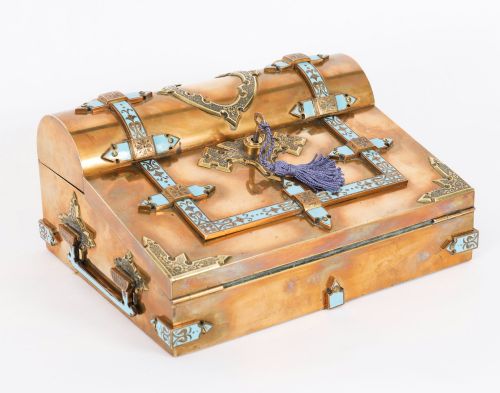
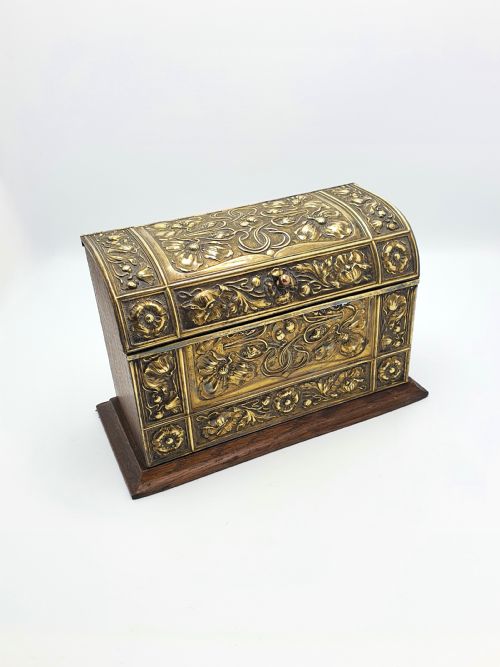
Makers utilised dense timbers such as oak, burr walnut, satinwood, and burr yew to construct the primary bodies of these caskets. Metal mounts in brass and silver plate reinforce corners, lids, and escutcheons, adding structural durability.
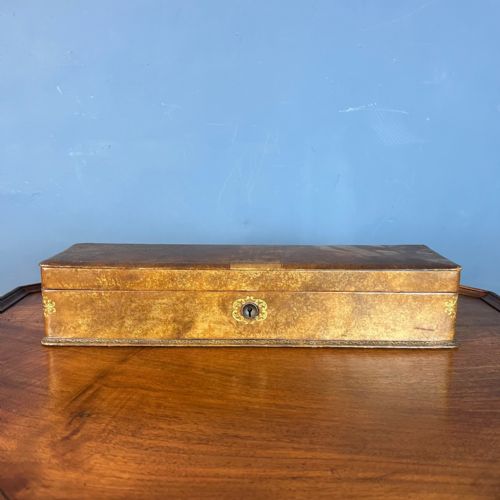
Decorative surfaces incorporate cut glass, mother of pearl inlay, tooled leather, and black lacquer with papier-mâché. Domed lids, bevelled glass panels, and drop-front doors demonstrate the advanced joinery and glass-cutting techniques of the period.
Some desktop boxes secretly double as clocks, ensuring correspondence is managed strictly on schedule.
Distinctions in quality
Quality rests in the selection of timbers, such as figured burr walnut and pollard oak, paired with substantial brass mounts rather than thin plated alternatives. Superior examples display precise mitre joints, well-fitted interiors, and intact glass components.
The integration of functional elements like working locks, clock movements, and fitted stationery dividers separates utilitarian items from higher-status desk boxes.
The Edwardian Desktop Casket Glossary
- Stationery box
- A desk container specifically shaped to hold paper, envelopes, and writing cards upright in internal slots. These boxes often feature sloping or domed lids.
- Escutcheon
- A protective plate surrounding a keyhole, usually made of brass or bone. It prevents the wood around the lock from splitting during use.
- Campaign box
- Portable furniture and accessories made with recessed brass handles and reinforced corners for travel. Originally used by military officers.
- Papier-mâché
- A composite material made from paper pulp or layers of paper bound with glue, then pressed and lacquered. It provides a smooth surface for painting and inlay.
Edwardian Desktop Casket: Frequently Asked Questions
What is an edwardian desktop casket?
An edwardian desktop casket is a lidded box designed to sit on a desk or table to hold letters, writing equipment, or personal valuables.
These pieces reflect the formal correspondence habits of the period, offering dedicated internal compartments for paper and pens.
How were desk boxes used?
Desk boxes served to organise correspondence, store inkwells, and keep private documents secure under lock and key.
They were kept in studies, libraries, and drawing rooms for daily writing tasks.
What materials are common?
Common materials include hardwoods like oak and walnut, alongside decorative finishes such as lacquer, brass, and cut glass.
Many examples feature secondary materials like mother of pearl and tooled leather.
How do I date a desktop box?
Dating relies on stylistic clues, construction methods, and materials associated with periods like the Victorian era or Edwardian decades.
Hardware styles and wood choices often indicate the manufacturing era.