



Antique Desktop Document Box
An antique desktop document box is a practical container designed to hold letters and papers, offering a glimpse into personal administration from past centuries.
Antique Desktop Document Box
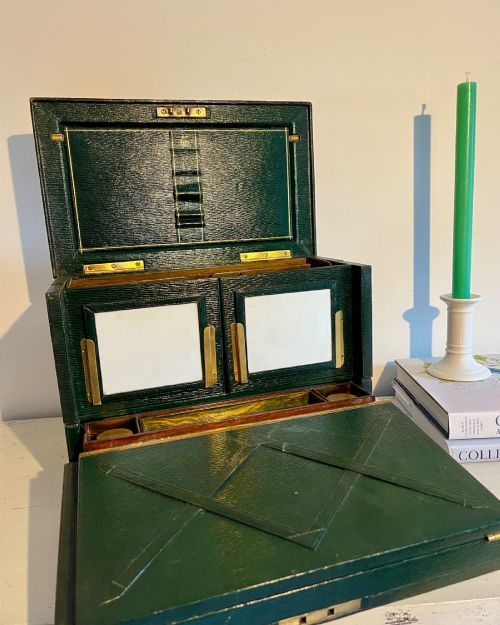
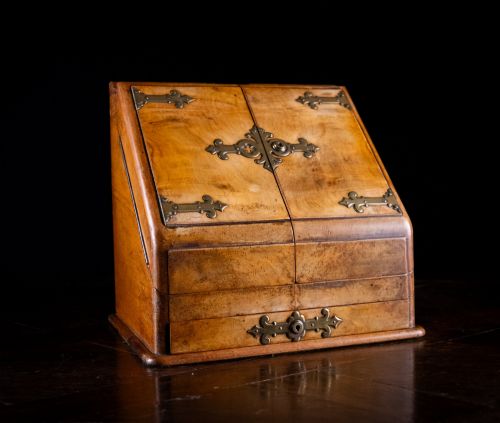
An antique desktop document box serves to organise correspondence, papers, and small valuables upon a writing surface. These pieces include stationery boxes, writing slopes, and table cabinets designed for domestic or professional use.
The selections encountered here span from the 18th century through the Edwardian period, encompassing styles such as Georgian, Regency, and Arts and Crafts. Oak, mahogany, and walnut examples appear frequently alongside pieces finished with leather or brass.
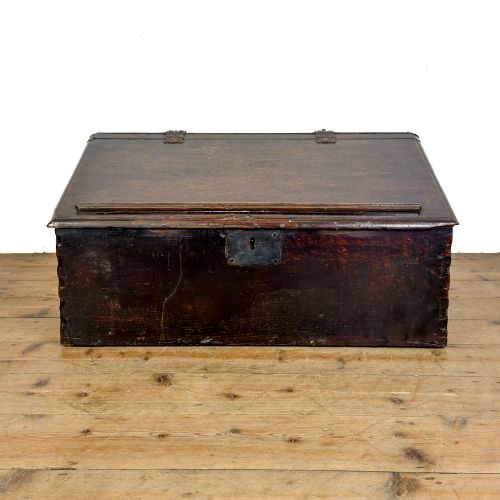
Early variants often take the form of heavy oak bible boxes or chests with hinged lids. Later Victorian and Edwardian iterations develop into sophisticated stationary cabinets with fitted interiors, compartments, and pigeonholes.
How these boxes were constructed
Cabinet makers utilised dense hardwoods such as oak, mahogany, walnut, and elm to build the structural carcase of each box. These timbers were often selected for their grain or figure, providing a durable enclosure for paper goods.
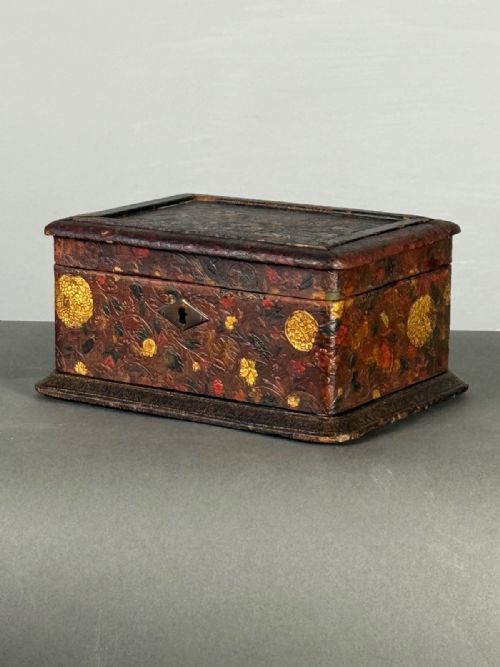
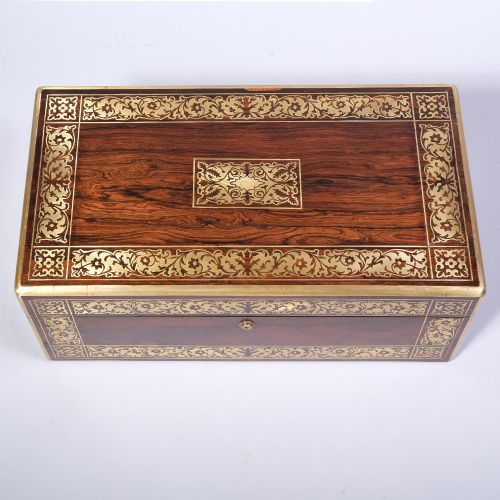
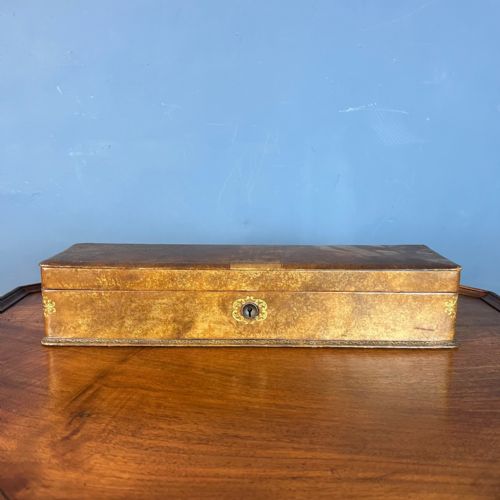
Surface ornamentation involved brass inlay, marquetry, and tooled leather, alongside bone elements on Anglo-Indian pieces. Joinery techniques varied from robust dovetailing on 18th century oak chests to precise veneering on later Victorian walnut cabinets.
Some Victorian stationery boxes feature internal spring mechanisms that pop open letter slots when the main lid is lifted.
What separates the finest examples
Quality rests in the precision of the construction, the integrity of the timber, and the condition of interior fittings such as secret drawers and letter slots. Finer pieces demonstrate careful attention to internal compartmentalisation and hardware integration.
The presence of documented maker marks or specialised mechanisms elevates an item beyond standard utility. Decoration also plays a part, distinguishing plain utilitarian containers from elaborately inlaid or carved specimens.
Susse Freres Paris·Amberg·Houghton & Gunn
The Antique Desktop Document Box Glossary
- Stationery box
- A desk accessory designed specifically to hold writing paper, envelopes, and correspondence upright in tiered slots.
- Writing slope
- A box with an angled hinged lid that opens to reveal a sloping writing surface and storage compartments for ink and pens.
- Bible box
- An early form of desktop box, typically constructed from solid oak, originally intended to store religious texts and household documents.
- Marquetry
- The art of applying pieces of veneer to a structure to form decorative patterns, frequently utilised on fruitwood and walnut surfaces.
- Secret drawer
- A concealed compartment built into a box behind removable panels or false bottoms to secure confidential items.
Antique Desktop Document Box: Frequently Asked Questions
What is an antique desktop document box?
These pieces are portable storage containers built to hold letters, stationery, and writing implements on top of a desk or table. They range from simple oak receptacles to elaborate inlaid walnut cabinets.
Such items reflect the written communication habits of previous generations before the widespread use of modern filing systems.
How were these boxes used historically?
Households and offices utilised them to keep correspondence private, organised, and free from dust. Many contained compartments for inkwells, stamps, and sealing wax.
Certain examples functioned as portable desks, allowing writers to work while travelling or away from a stationary library table.
How do I date an antique document box?
Dating relies on observing the timber species, construction methods, and decorative styles present. 18th century examples frequently feature solid oak with hand-cut dovetails and iron hardware.
Later Victorian and Edwardian boxes often display factory-produced brass mounts, satinwood interiors, and more complex mechanical stationery compartments.
Where should I place one in my home?
These boxes sit well on top of desks, sideboards, or console tables where their timber surfaces can be appreciated. Their internal compartments remain practical for storing modern mail, notebooks, or small desk accessories.
Placing them away from direct heat sources helps protect vulnerable wood veneers, leather inserts, and historical finishes.