



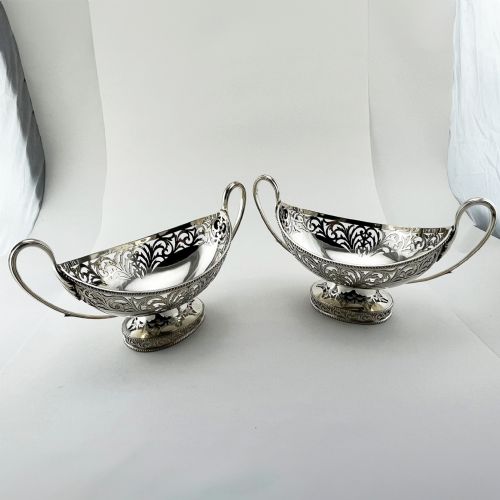
Edwardian Bonbon Dish
An edwardian bonbon dish is a delicate tabletop piece designed for small confections, combining period silverwork and coloured glass liners.
Edwardian Bonbon Dish
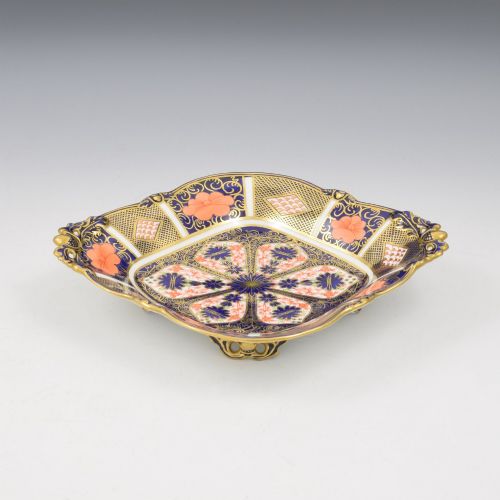
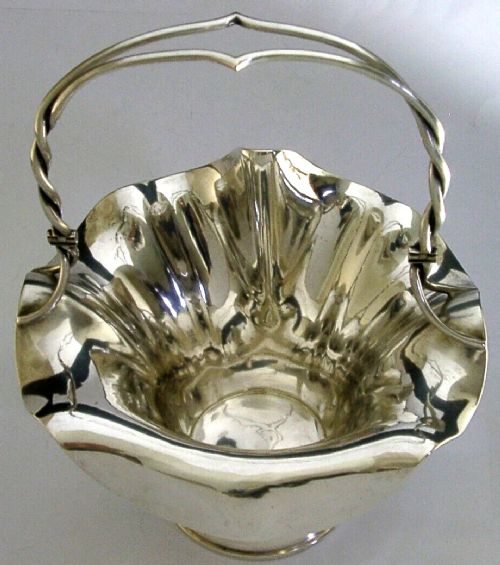
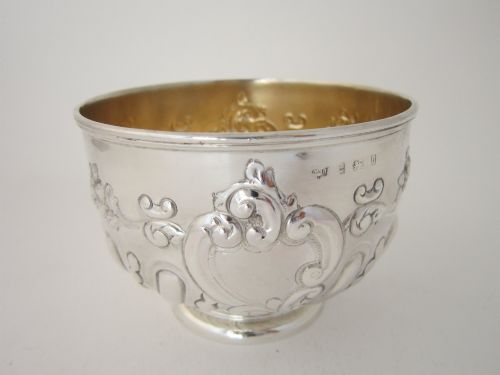
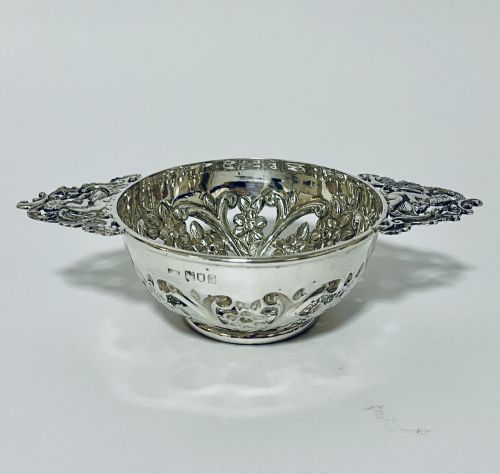
When searching for an edwardian bonbon dish, buyers encounter small open vessels, baskets and pierced footed bowls created to hold sweets or sweetmeats during formal dining. These items emerge frequently from the early twentieth century, carrying the light, decorative sensibilities associated with the period.
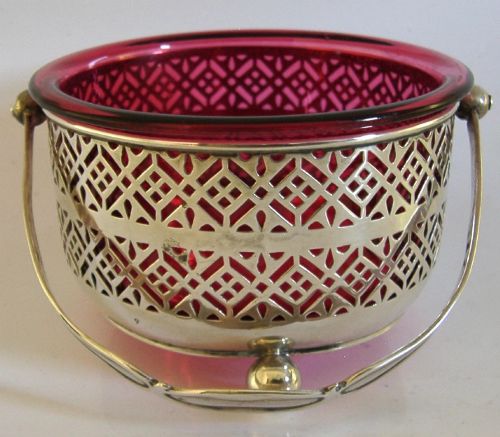
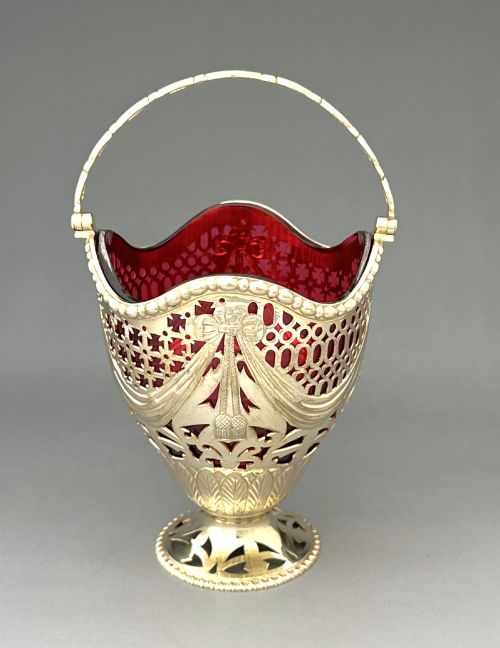
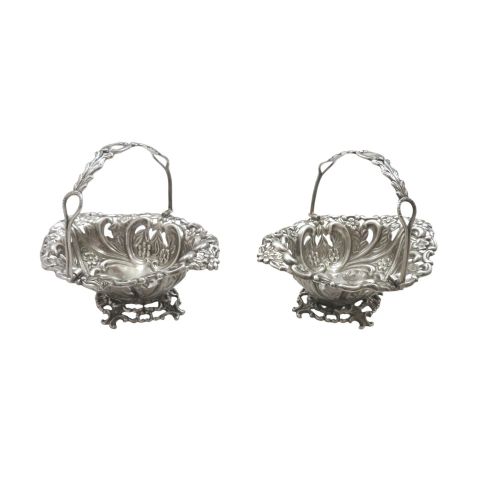
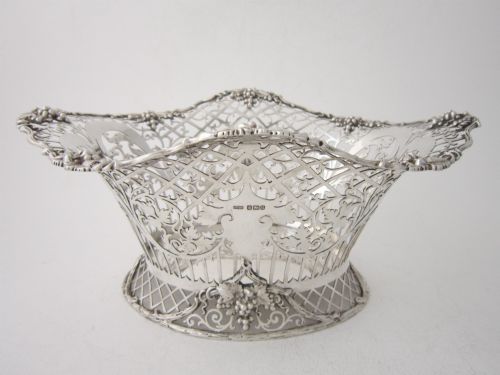
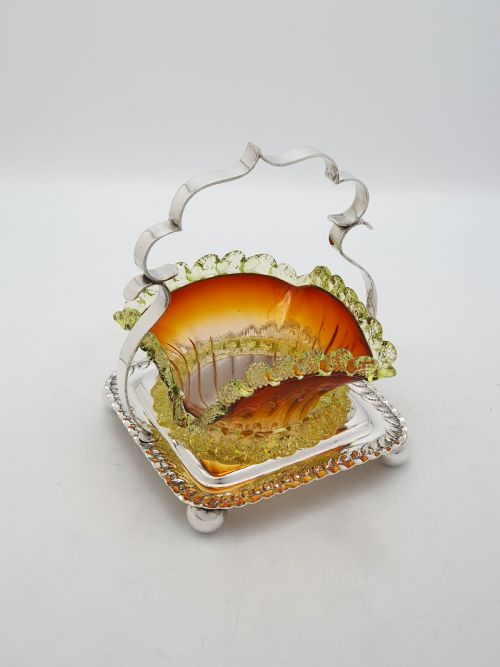
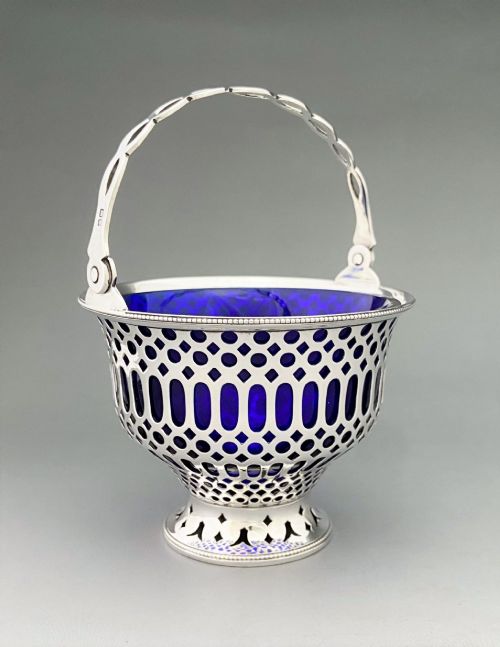
The version most commonly met on this page is a small sterling silver or silver plated basket featuring pierced lattice work, often fitted with a removable glass liner in cranberry, ruby or amber tones. Pierced silver swing handles and pedestal feet distinguish many of the serving dishes found here.
Materials and Craftsmanship
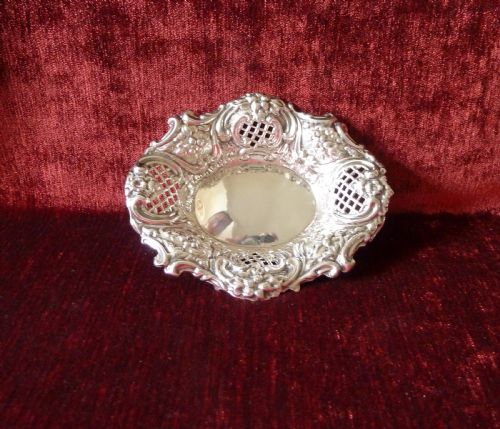
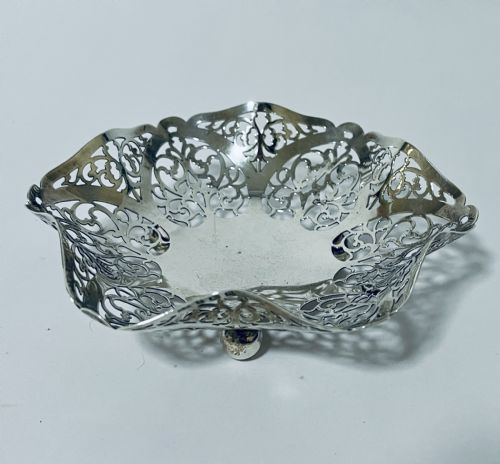
Makers utilised sterling silver and silver plate alongside blown or moulded glass, shaping metals through piercing, casting and repoussé work. Lattice patterns were hand-pierced or punched into solid silver sheets to create lightweight, ornamental walls.
Coloured glass liners, particularly cranberry and vaseline varieties, were blown and fitted into metal frames. Pewter and porcelain also appear, reflecting the diverse material experimentation of silversmiths and potteries active during the Edwardian years.
Gardening trugs transformed into silver sweet dishes bring miniature wheelbarrows and spades to the Edwardian tea table.
Assessing Quality and Distinction
Quality rests upon the crispness of pierced metalwork and the weight of the solid silver or base metal used in the body. Heavy gauge silver retains its structural integrity better over time, resisting distortion around handles and rims.
The integration between metal frames and original glass liners dictates the desirability of a piece. Hand-painted ceramic details or complex silversmithing marks from notable workshops elevate the character of individual dishes.
William Comyns·Henry Matthews·Mappin & Webb·James Dixon & Sons·Goldsmiths & Silversmiths Co
The Edwardian Bonbon Dish Glossary
- Pierced work
- Metalwork featuring openwork patterns cut or punched through the surface to create decorative lattice designs.
- Swing handle
- A movable metal handle attached to the sides of a basket or dish via small pivots.
- Cranberry glass
- Transparent pinkish-red glass coloured by the addition of gold chloride during the melting process.
- Silver gilt
- Silver that has been coated with a thin layer of gold on its interior or exterior surface.
- Sweetmeat
- An old term for small confectioneries, sweetmeats, nuts or dried fruits served from small decorative dishes.
Edwardian Bonbon Dish: Frequently Asked Questions
What were edwardian bonbon dishes used for?
These dishes held bite-sized sweets, sugared almonds and small confections served to guests during afternoon tea or formal dinner parties. They occupied a central place on tables as both functional tableware and decorative ornaments.
Over time, their uses expanded to include holding trinkets, potpourri or calling cards. Their small scale made them versatile accessories for drawing rooms and dressing tables.
How do I identify an Edwardian silver mark?
British silver bears hallmarks stamped directly into the metal, indicating the assay office, standard of purity, and a specific date letter. Finding a lion passant confirms sterling silver standard.
Additional duty marks or maker initials help pinpoint the exact workshop and year of production. Reference books match these letter punches to specific years between 1901 and 1910.
Are glass liners original to the dishes?
Original glass liners fit snugly into the metal frame without excessive movement or rattling. They match the contours of the pierced basket precisely.
Replacement liners often show slight variations in thickness or colour consistency compared to period production standards. Examining the rim and base helps determine if the glass belongs to the metal mount.
How should I clean silver bonbon dishes?
Gentle washing with warm water and mild washing-up liquid removes dust and everyday grime safely. A soft cloth dries the metal without scratching polished surfaces.
Harsh chemical dips strip away patination and damage softer glass inserts or gilt layers. Professional silver polish should be used sparingly and kept away from glass and ceramic components.