
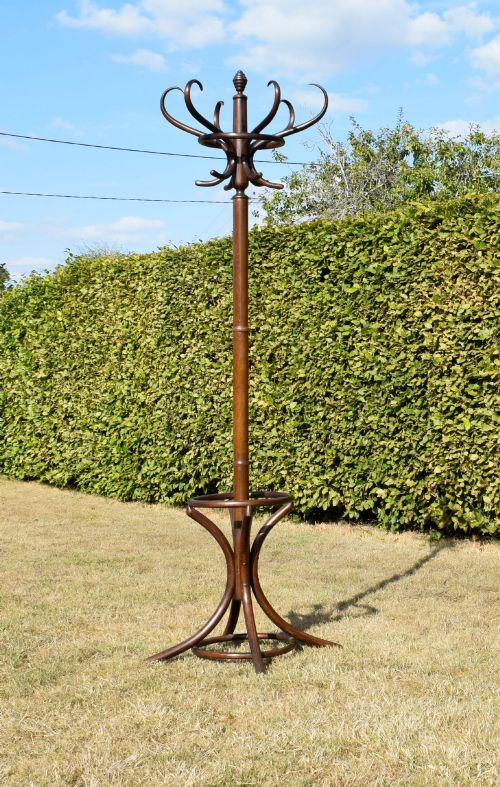
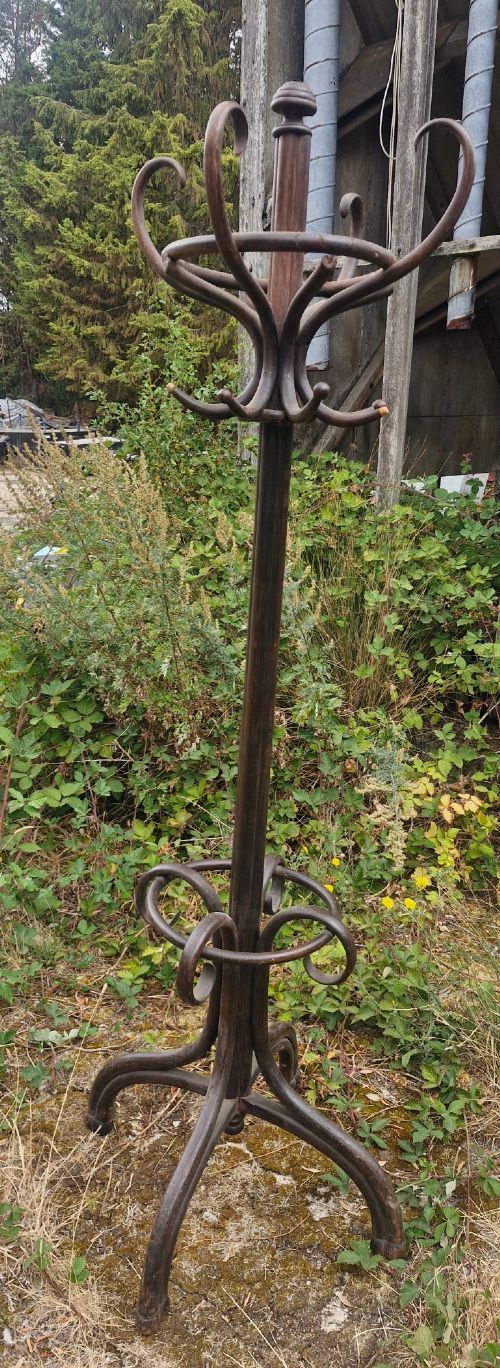
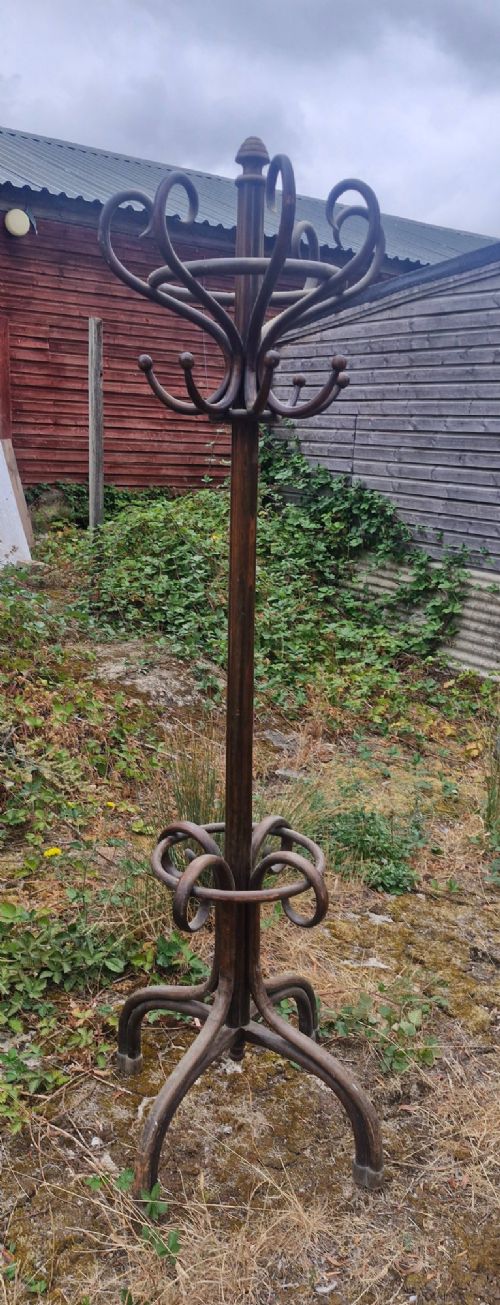
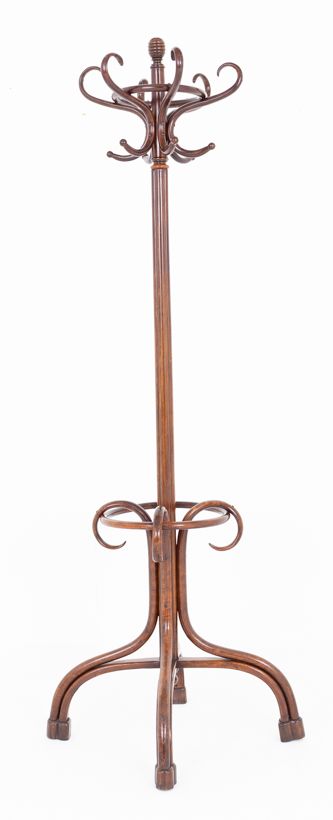
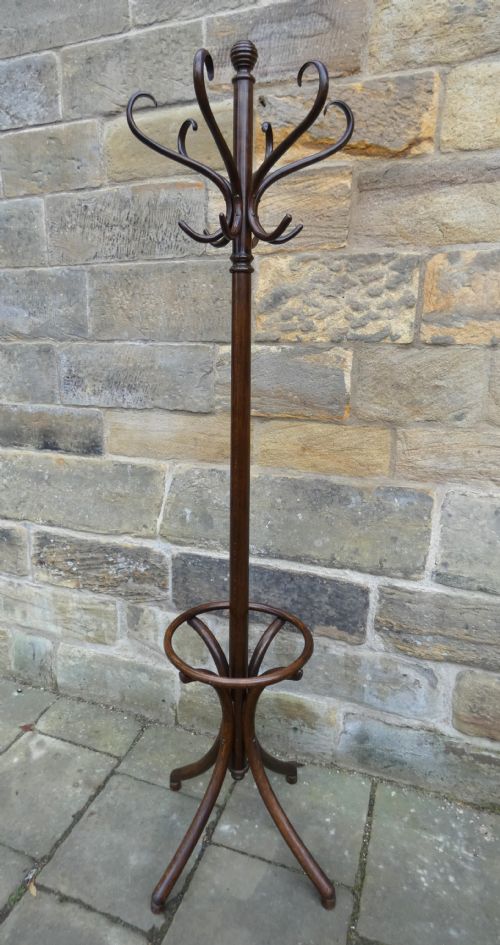
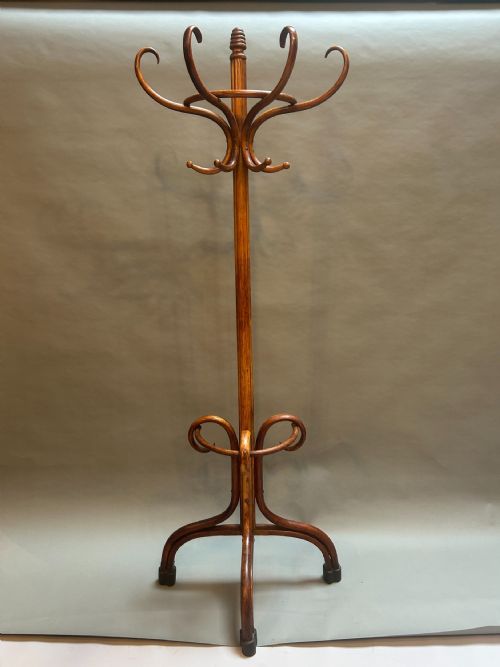
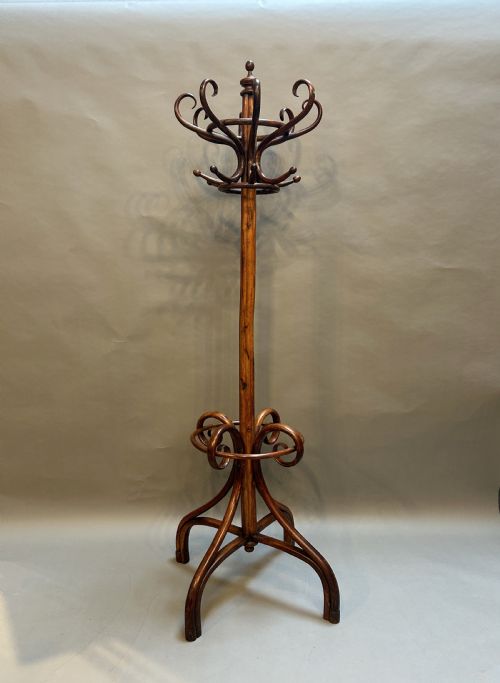
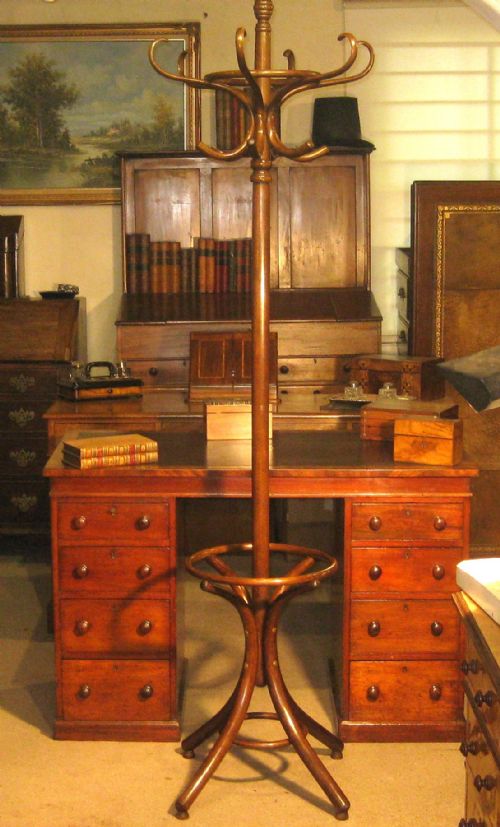
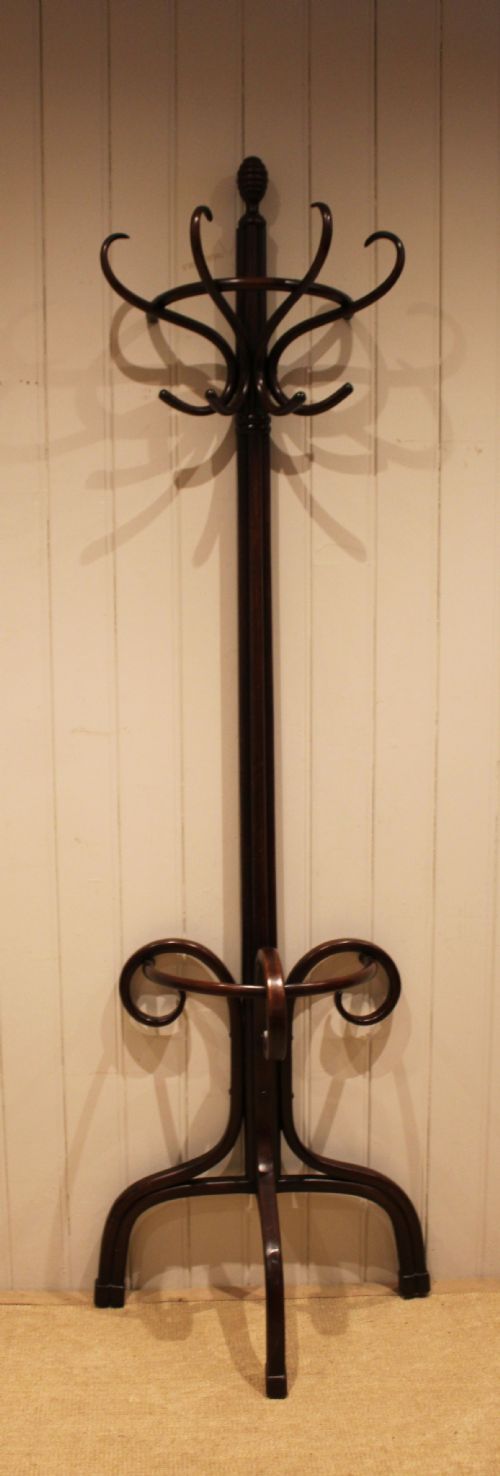


Edwardian Bentwood Hat Stand
An edwardian bentwood hat stand brings light, sculptural timber framing and practical hanging space to any hallway.
Edwardian Bentwood Hat Stand
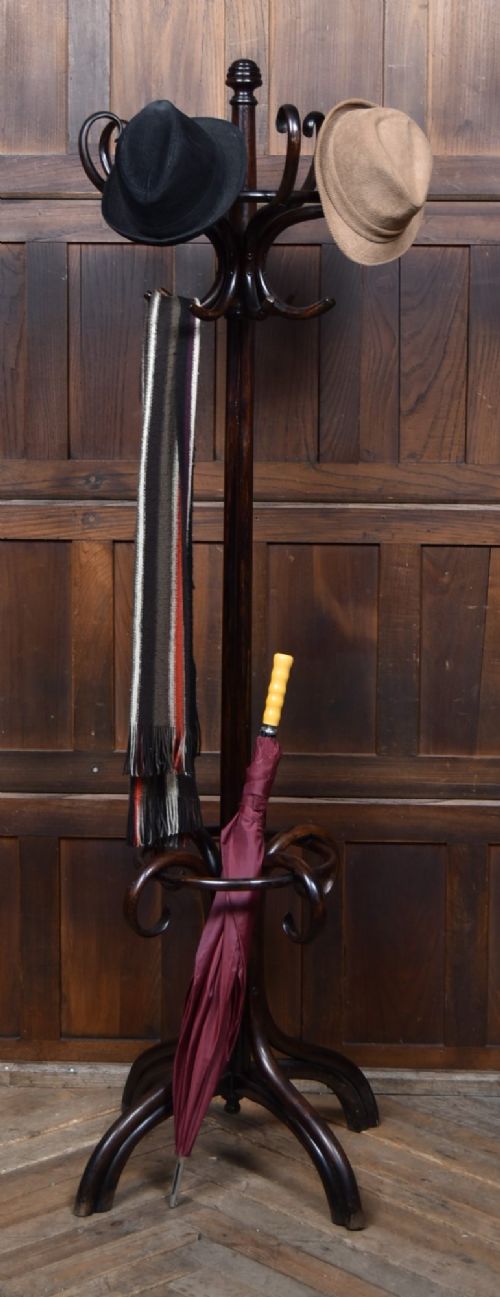
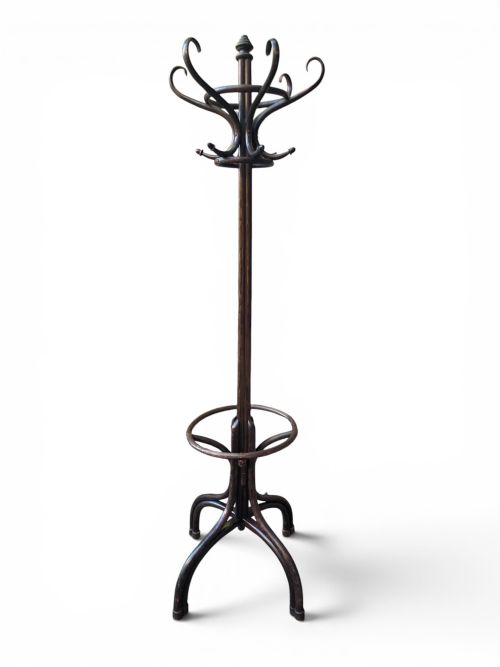
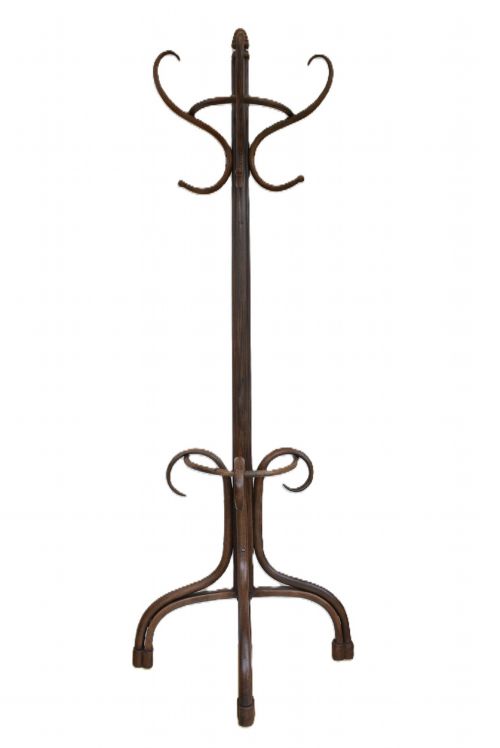
An edwardian bentwood hat stand combines upward-reaching uprights with curved upper rails designed for hats and coats. Most examples date from the Edwardian era and the early twentieth century, spanning the decades from nineteen hundred through nineteen thirty.
Buyers encounter circular floor-standing models alongside space-saving demi-lune or half-round versions that sit flush against a hallway wall. Many designs incorporate lower umbrella and stick rings or integrated drip pans alongside the upper hooks.
What Varies In Quality
Design complexity separates standard umbrella stands from heavy quality revolving hall stands fitted with double tops. Superior pieces display smooth, uninterrupted curvature in the steam-bent wooden arches without grain splitting or surface warping.
Makers marks stamped into the timber distinguish standard workshop production from documented pieces attributed to Thonet or Fischel.
Listings feature beech and steam-bent wood across pieces dated from nineteen hundred to nineteen thirty, including Edwardian and Victorian styles.
Thonet·Fischel
The Edwardian Bentwood Hat Stand Glossary
- Bentwood
- Wood softened by steam and bent into curved structural forms. This technique creates the light, resilient frames characteristic of late Victorian and Edwardian hall furniture.
- Demi Lune
- Half-moon shape designed to stand flat against a hallway wall. These half-round stands suit narrower corridors where a full circular base takes up too much floor space.
- Hall Tree
- An alternative term for a multi-functional hall stand. These items combine coat hooks, hat racks, and umbrella rings in a single vertical unit.
- Ebonised
- Timber finished with a dark stain to resemble ebony. This treatment gives the beech frame a formal, glossy black appearance.
- Revolving
- A top tier that rotates on a central axis to provide easy access to hanging items. This mechanism allows users to reach coats without lifting garments off neighbouring hooks.
Edwardian Bentwood Hat Stand: Frequently Asked Questions
How do I place an edwardian bentwood hat stand in a small hallway?
Choose a demi-lune or half-round model that sits flat against the wall. This shape keeps walkways clear while offering full height storage.
Position the stand near the main entrance so hats and coats hang within easy reach of the door.
Can these stands hold heavy winter coats?
Sturdy examples handle heavy outerwear easily, especially models featuring double top rails and metal reinforcement collars. Distribute heavier coats evenly around the hooks to keep the upright stem balanced.
Avoid overloading one side of a revolving top to prevent strain on the central pivot mechanism.
How do I identify a thonet piece?
Look for manufacturer stamps or paper labels pressed into the wooden framework or underside of the base. Thonet items typically display crisp steam-bent curves and balanced proportions dating from the early twentieth century.
Unsigned pieces often reflect the same Austrian bentwood techniques under the description of Thonet style.
What maintenance do steamed beech stands need?
Keep the wood conditioned with a light application of beeswax or furniture polish to protect the stained finish. Avoid placing the stand in damp areas or directly beside heat sources that might dry out the timber.
Check the central screws and joints periodically to ensure the upright frame remains rigid.