
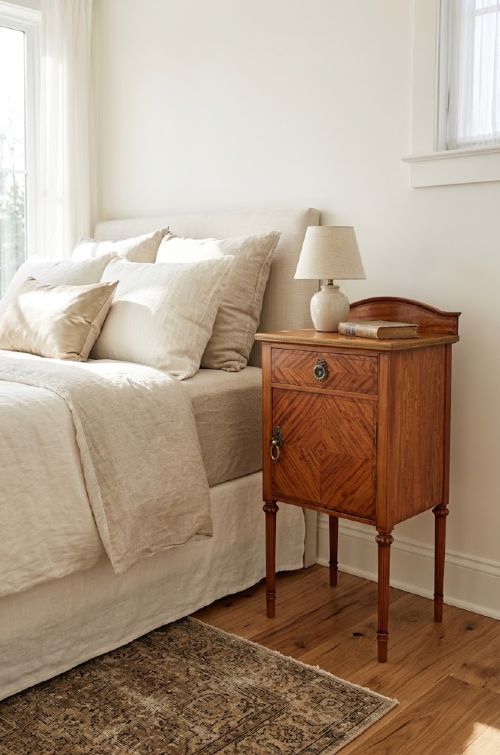

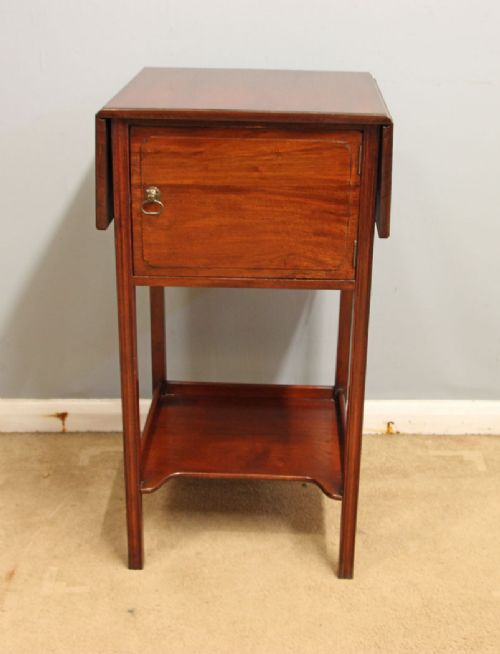
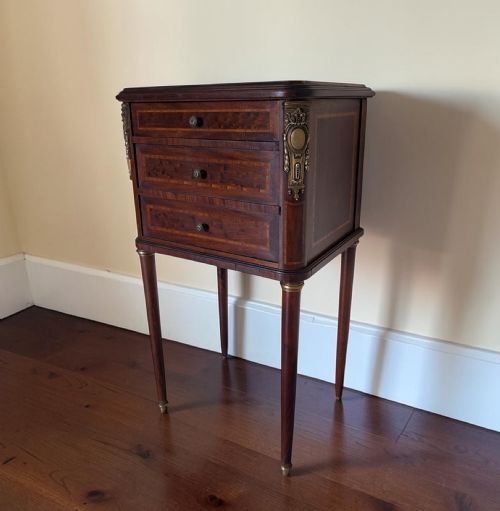
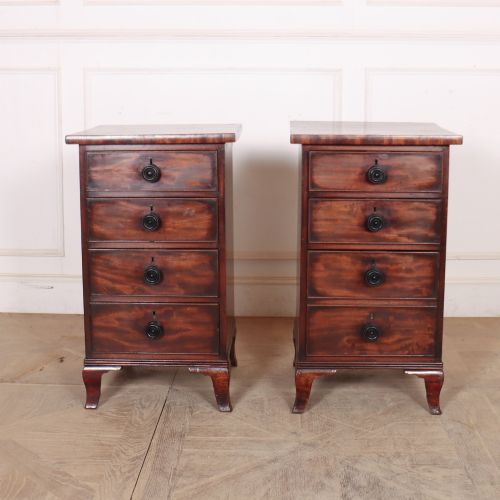
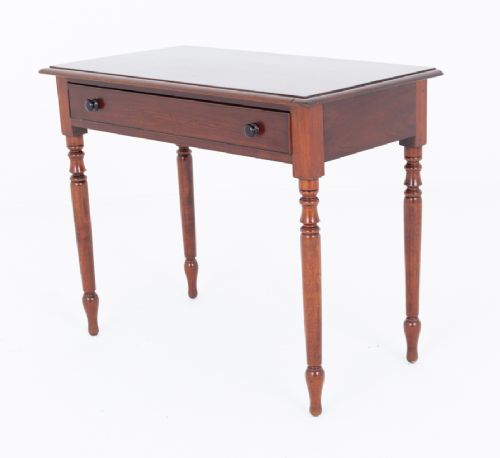
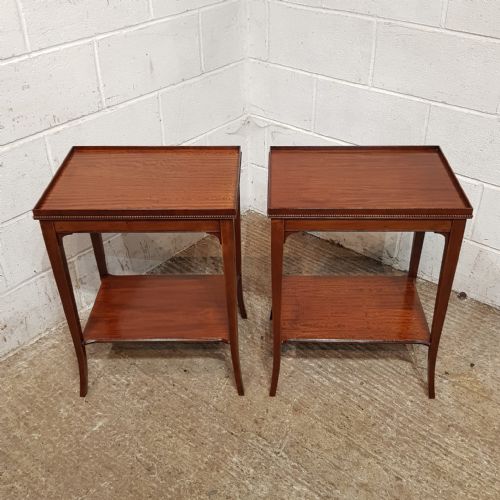
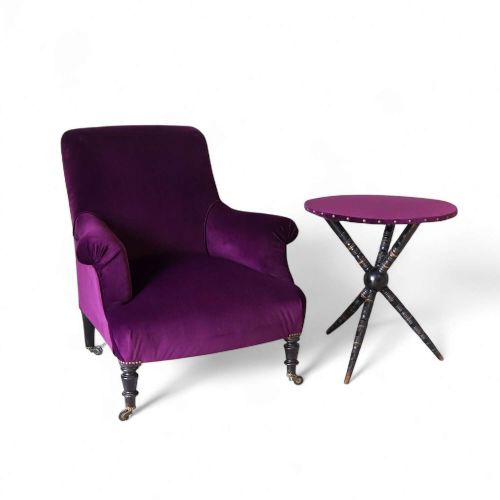
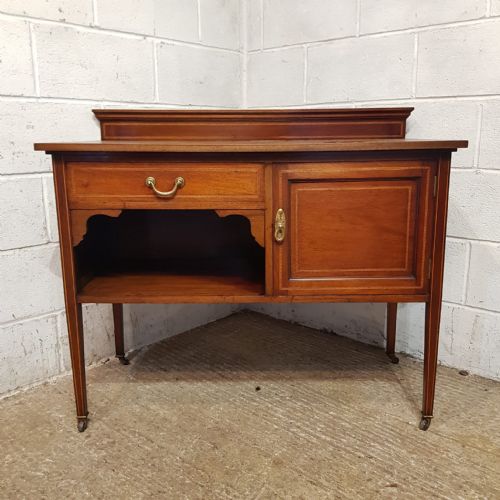



Edwardian Bedroom Side Table
An edwardian bedroom side table brings compact surface space and tidy storage to a traditional chamber.
Edwardian Bedroom Side Table
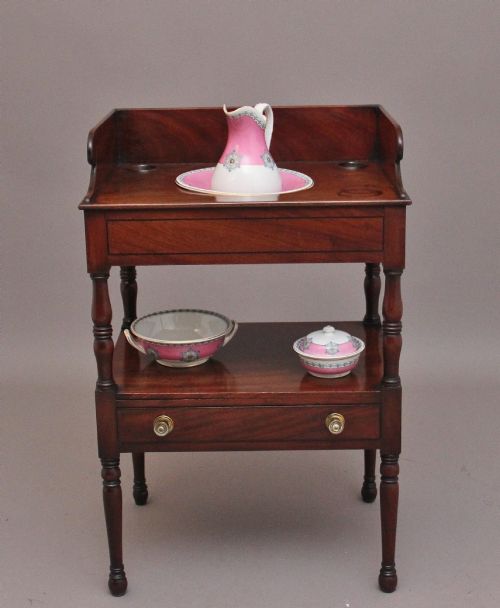
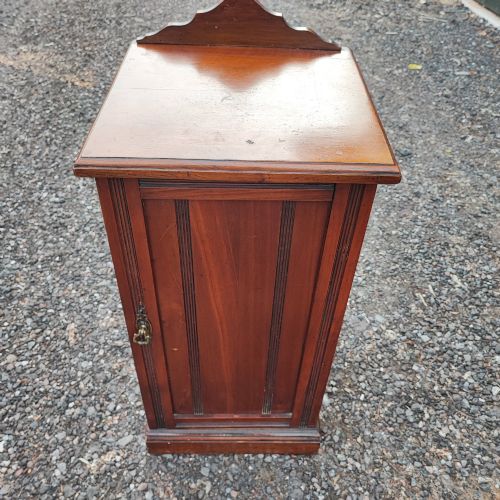
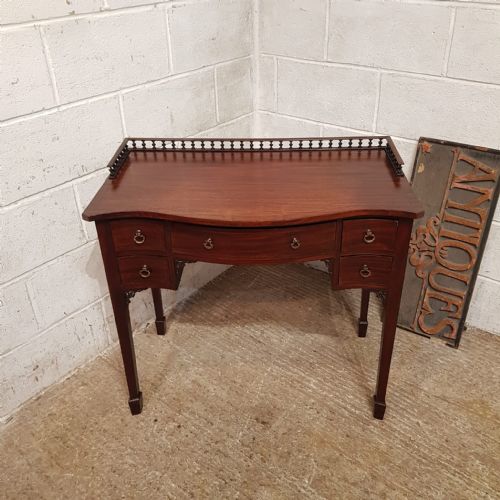
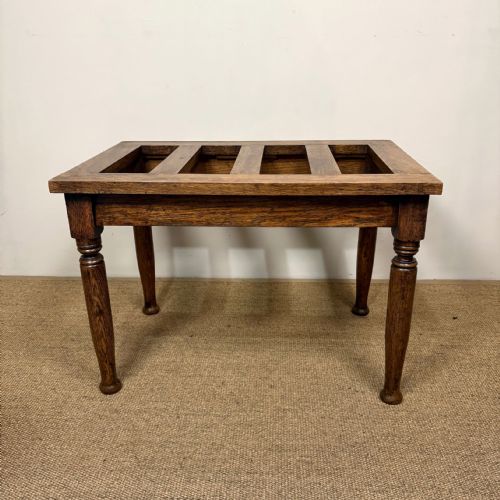
An edwardian bedroom side table encompasses practical bedside cabinets, nightstands, washstands, and small occasional pieces designed for the sleeping quarters. These items originate predominantly from the Edwardian period and the early twentieth century, alongside related Victorian and nineteenth-century examples.
The most common formats found here are enclosed bedside cupboards with single doors, open lamp tables, and marble-topped washstands fitted with storage. Makers of the time adapted these forms to suit smaller domestic spaces while maintaining traditional utility.
Pieces frequently reflect classic revival aesthetics, including Georgian style, Sheraton Revival, and French Louis XVI influences, applied to compact household furniture.
Materials and Construction
Cabinetmakers relied heavily on mahogany and satinwood for framing and veneering, often pairing them with contrasting inlay work. Walnut, pine, and exotic hardwoods also appear frequently across the selection.
Functional surfaces frequently incorporate white or tinted marble tops on washstands and lamp tables to resist moisture and wear. Brass hardware, ceramic components, and occasional metal fittings complete the structural detailing of the period.
Listings span several decades, featuring solid walnut, pine, and mahogany alongside marble and ceramic components from the Victorian and Edwardian eras.
Markers of Quality
Superior examples demonstrate refined timber selection, such as figured mahogany or closely matched satinwood veneers, paired with crisp marquetry or inlay. Joinery details, including hand-cut dovetails on drawer boxes and sturdy internal framing, distinguish better workshops.
The integration of secondary materials like genuine marble tops, original brass handles, and intact ceramic liners elevates a piece above standard utilitarian production.
The Edwardian Bedroom Side Table Glossary
- Washstand
- A dedicated piece of chamber furniture built to hold a basin and jug. Many surviving examples feature marble tops and tiled splashbacks.
- Marquetry
- The art of applying decorative veneer pieces in geometric or pictorial patterns onto a solid wooden core. This technique often defines finer Sheraton Revival surfaces.
- Serpentine front
- A curved furniture front featuring a convex central section flanked by concave curves. It requires advanced woodworking skill to execute cleanly.
- Pot cupboard
- An alternative term for a bedside cabinet historically used to house a chamber pot. They frequently include a small internal shelf.
Edwardian Bedroom Side Table: Frequently Asked Questions
Where should I place an edwardian bedroom side table?
These pieces fit naturally beside a bed as a functional surface for lamps and books. They also serve well as small lamp tables in sitting rooms or studies.
Their compact dimensions allow them to occupy narrow corners or awkward spaces where standard furniture fails to fit.
How do I care for a marble top washstand?
Wipe marble surfaces regularly with a soft, damp cloth and neutral soap to prevent staining from liquids. Avoid acidic cleaners that can etch the polished stone.
Apply a specialist stone wax periodically to maintain the sheen and protect against moisture absorption.
Can I use an antique washstand as a modern basin unit?
Historic washstands were designed for portable china basins and jugs rather than modern plumbing. Adapting them for contemporary taps requires professional carpentry and careful sealing against water damage.
Many owners prefer to retain the original timber and marble surfaces intact without cutting plumbing access.