
Edwardian Armoire Wardrobe
When a room calls for presence and order, an edwardian armoire wardrobe delivers timber grain and generous hanging space.
Edwardian Armoire Wardrobe
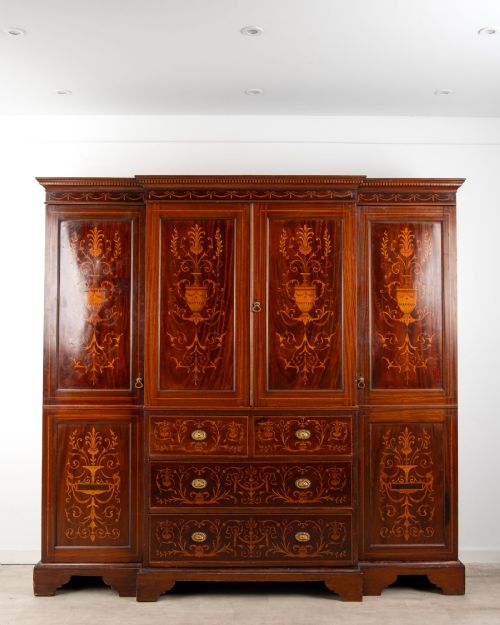
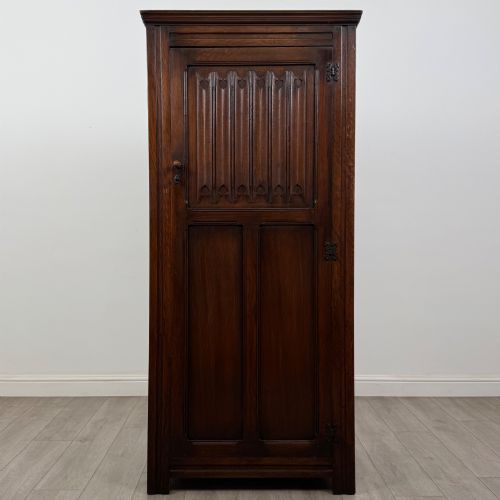
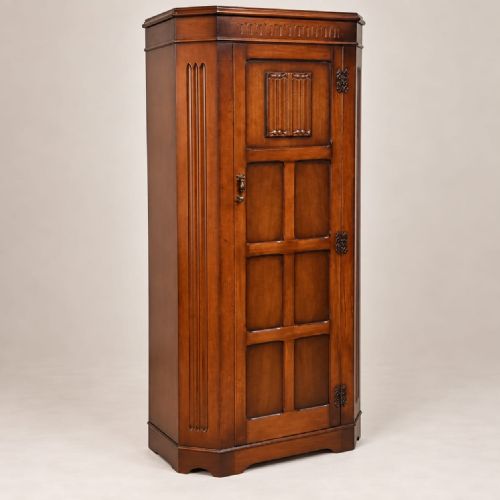
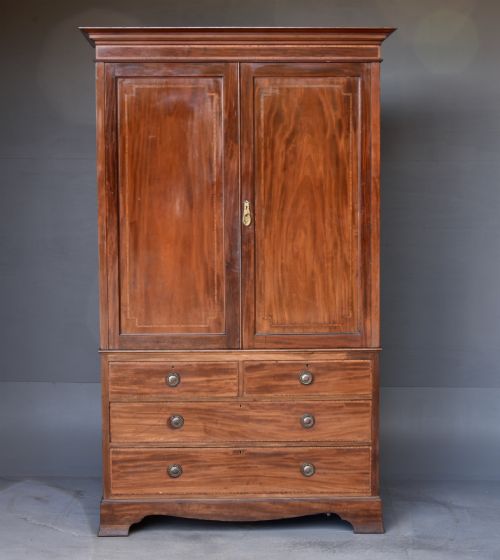
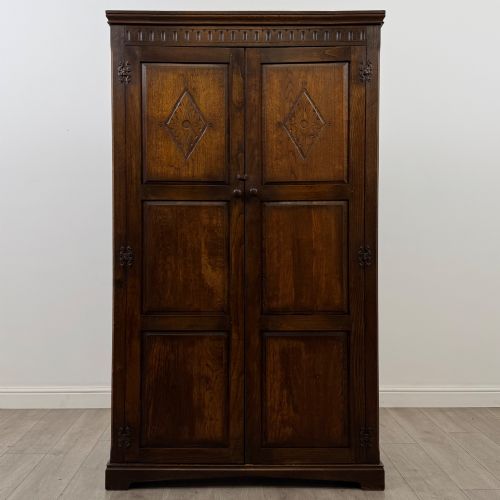
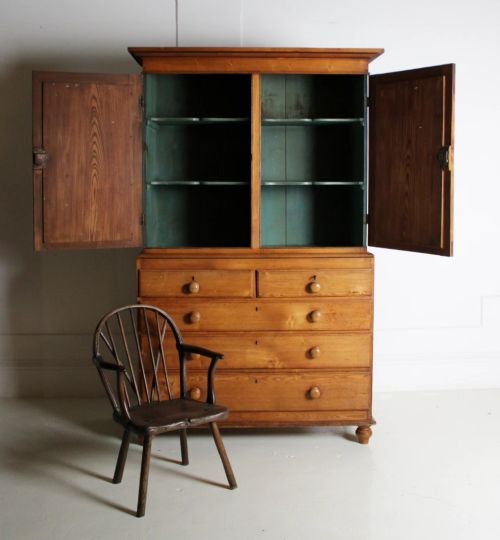
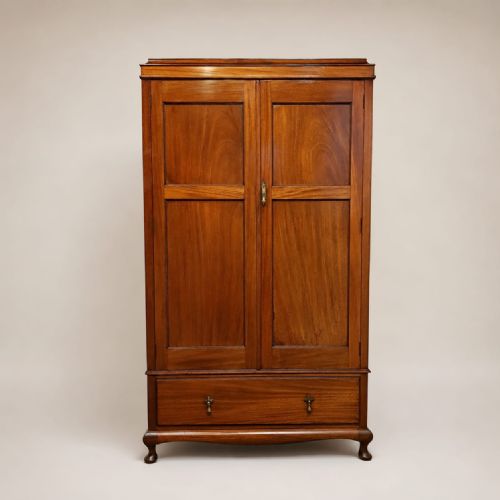
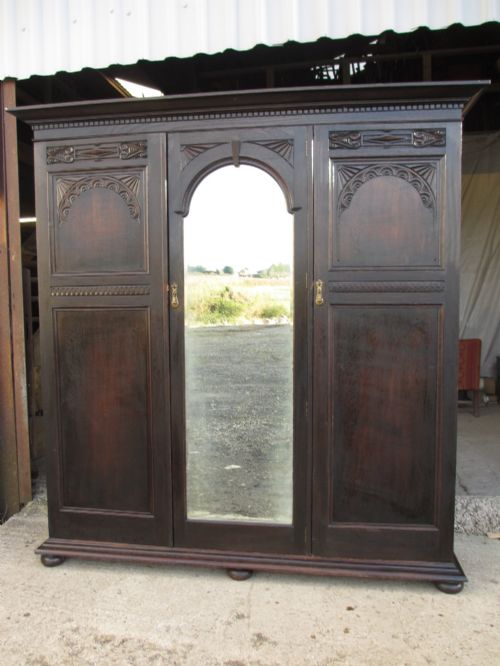
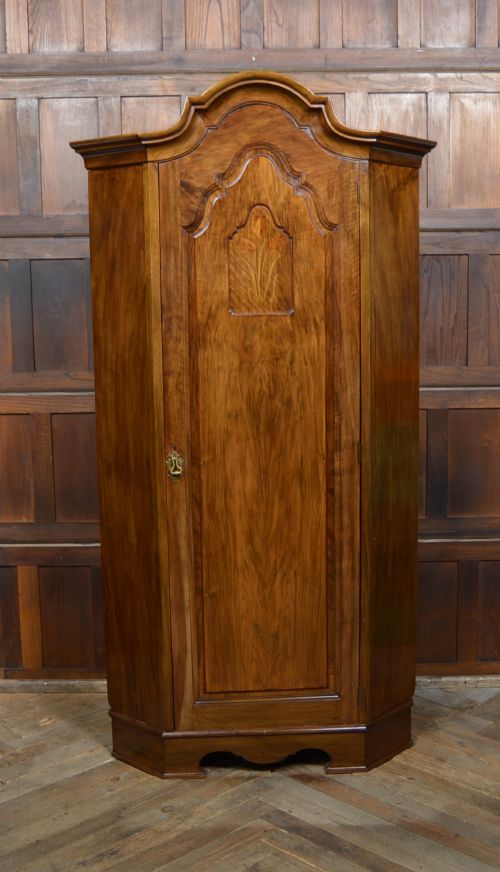
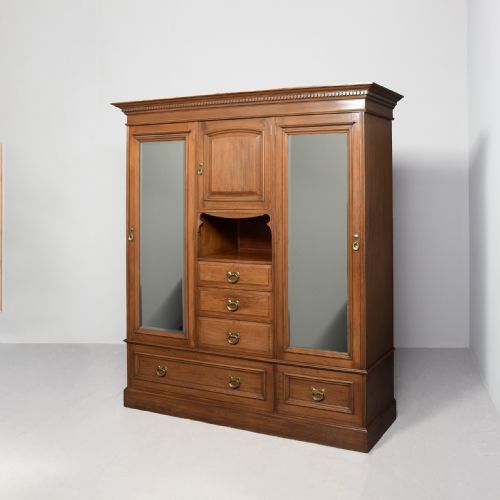
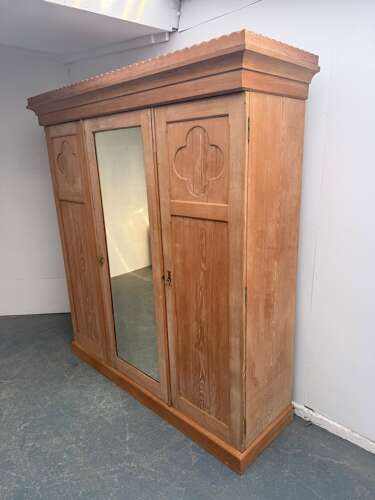
An edwardian armoire wardrobe spans tall timber storage cabinets built around the turn of the twentieth century, bridging late Victorian mass and lighter early-century revival styles. Pieces range from single door hall cupboards to triple section breakfront giants and fitted compactums.
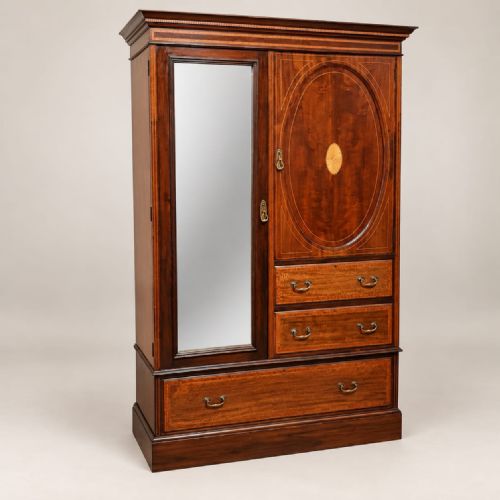
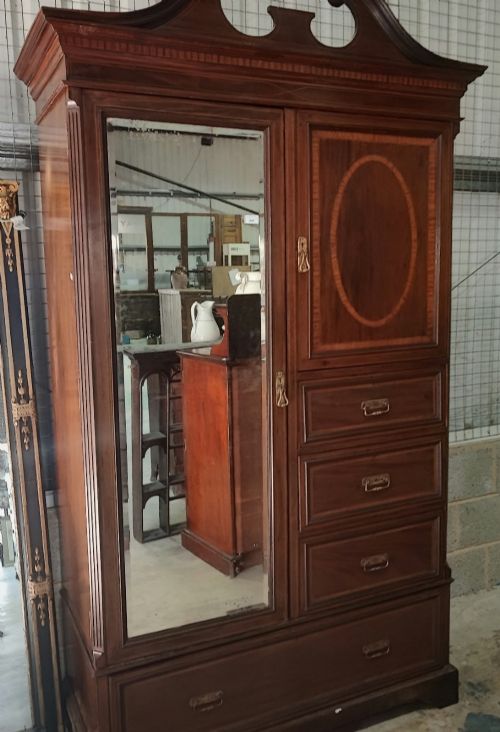
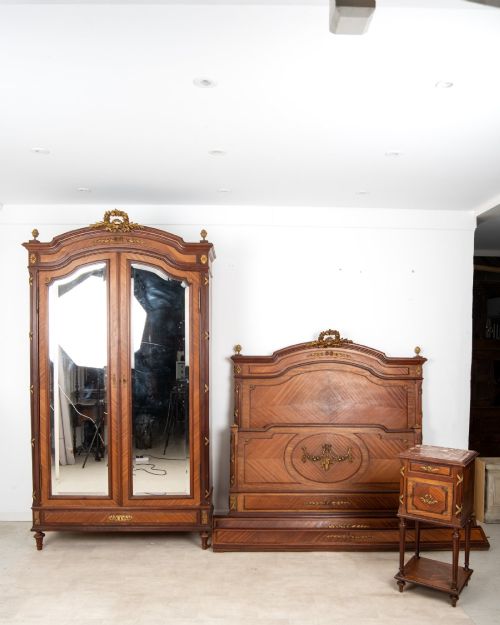
Makers of the period utilised substantial timbers like mahogany, oak, and walnut, often shaping them with decorative cornices, mirrored doors, and panelled sides. Buyers frequently encounter combination pieces that integrate linen presses, drawers, and hanging space within a single architectural frame.
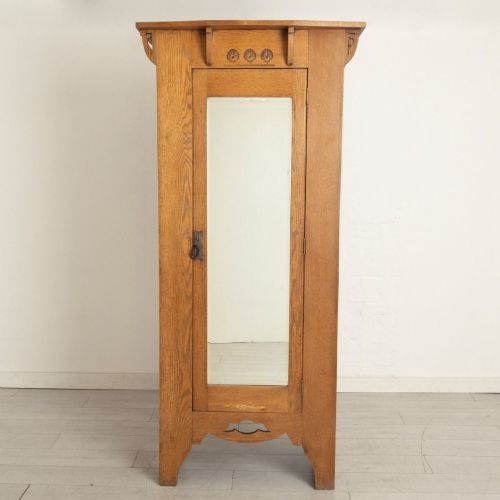
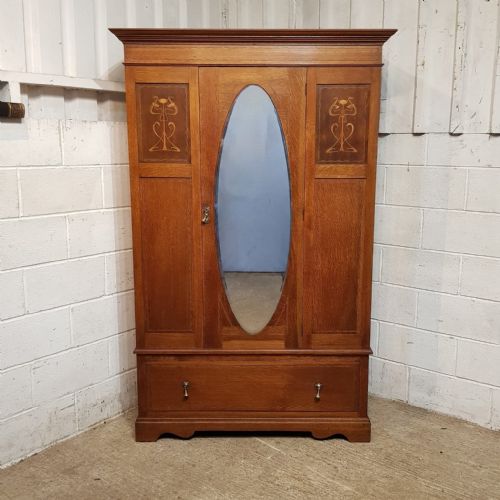
Stylistic influences vary across the selection, drawing on Sheraton and Chippendale revivals alongside clean-lined Arts and Crafts interpretations and flowing Art Nouveau curves. Smaller child sizes and corner robes also appear, reflecting the diverse domestic architecture of the era.
Materials and Construction
Cabinet makers built these large carcasses using solid woods like oak and pine for internal structure, applying figured veneers of mahogany, walnut, and satinwood to external surfaces. Construction frequently involved knockdown frames held by internal bolts, allowing these massive wardrobes to be transported and assembled in upstairs bedrooms.
Surface ornament relied on contrasting stringing, hand-carved panels, and painted botanical or Chinoiserie details set into the wood. Bevelled glass mirrors were commonly fitted into central or side doors, supported by heavy brass hanging rails and operable cast iron hardware.
Children's wardrobes appear in miniature proportions, preserving tiny hanging rails for diminutive garments of the Edwardian nursery.
Craft and Proportion
The architectural balance of a piece dictates its standing, separating well-proportioned breakfronts from heavier, uninspired constructions. Cabinetmakers who matched veneer grains across multiple doors achieved a visual rhythm absent in simpler pieces.
Internal joinery and secondary timbers reveal the maker's hand, distinguishing standard commercial output from workshop-produced designs stamped by known retailers. Intricate hand-carving, original bevelled mirror glass, and intact internal sliding trays elevate certain examples above utility storage.
Maples & Co·Edwards and Roberts·Heals·Harris Lebus·Shapland and Petter
The Edwardian Armoire Wardrobe Glossary
- Compactum
- A fitted multi-section wardrobe combining hanging space, linen drawers, and shelves in one unit. This layout maximises bedroom storage without requiring separate chests of drawers.
- Breakfront
- A piece with a central section projecting forward from the flanking wings. This architectural arrangement creates depth and shadow across large cabinet facades.
- Stringing
- Thin inlaid lines of contrasting timber used to outline panels and drawers. Cabinetmakers employed this technique to add linear definition to plain mahogany or walnut surfaces.
- Cornice
- The decorative moulded projection running along the top of the wardrobe. It crowns the structure and conceals the upper joinery.
- Linen Press
- A tall cupboard featuring sliding linen trays in the upper section above clothes drawers below. They evolved from earlier blanket chests to protect household textiles.
Edwardian Armoire Wardrobe: Frequently Asked Questions
How do I dismantle an edwardian wardrobe?
Many large wardrobes from this era utilise knockdown construction held together by internal bolts and slot-in joints. You will need a spanner to release the cornice, base, and sides from the back panel.
Mark each panel as you remove it so the internal timber grain and joints align correctly during reassembly in a new room.
Will a triple wardrobe fit upstairs?
Triple wardrobes and large compactums are substantial items that rarely travel up staircases in one piece. Their knockdown design was specifically engineered for domestic delivery.
Check whether your chosen piece separates into distinct flanking sections and a central tower before attempting transit through narrow hallways.
How do I maintain wood veneers?
Polished mahogany and walnut surfaces require minimal intervention beyond regular dusting with a soft, dry cloth. Avoid placing timber near direct heat sources to prevent veneer lifting.
Feed the dry wood periodically with a traditional wax to maintain the depth and sheen of the original polish without sealing the pores.
What is the difference between an armoire and a wardrobe?
Armoire is a continental term historically applied to large moveable cupboards, while wardrobe is the traditional English designation for clothes storage. In modern collecting, the words are often used interchangeably.
French models frequently display lighter fruitwoods and faux bamboo frames, whereas British examples lean towards heavy oak and mahogany.