

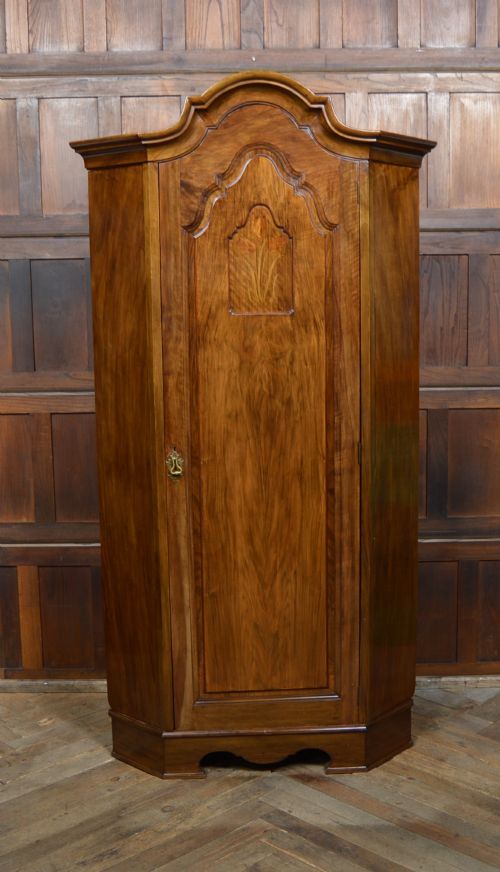
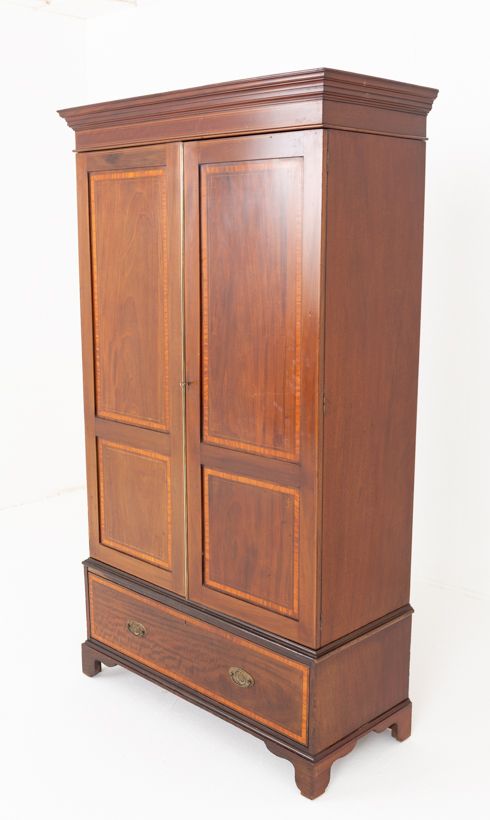


Edwardian Inlaid Wood Armoire
These edwardian inlaid wood armoire pieces offer generous hanging space and fine decorative details, bringing period elegance directly to a bedroom.
Edwardian Inlaid Wood Armoire
Most examples hail from the Edwardian era and the Victorian period, frequently displaying Sheraton Revival influences or classical symmetry. Forms range from single door wardrobes to expansive breakfront and triple door configurations equipped with mirrors and fitted interiors.
Materials and Construction
Cabinet makers utilised dense hardwoods including mahogany, walnut, and rosewood as the primary carcase structures. Contrasting satinwood inlay and delicate marquetry panels were then applied to decorate the exterior surfaces with floral or geometric motifs.
Brass hardware such as handles, hinges, and lock escutplements completed the construction of these large storage pieces. Glass panels were frequently fitted into the doors to create full-length mirrors for dressing.
Edwardian Inlaid Wood Armoire Retail Price Guide 2026
Typical asking prices for edwardian inlaid wood armoire among the pieces listed under this phrase on Sellingantiques today, from the lower quarter to the upper quarter. They describe what is for sale here now, not the wider market.
Some wardrobes hide entire bedroom suites within their timber frames.
Assessing Quality and Craftsmanship
Finer examples distinguish themselves through the complexity of their marquetry and the precision of their satinwood inlay work. The depth of the timber grain and the crispness of any carved detailing elevate a piece above standard workshop production.
Makers such as Maples and Co and Edwards and Roberts demonstrate superior joinery and thoughtful interior planning in their larger compactum wardrobes. The integration of matching bedside cabinets or multi-section carcasses further defines the upper tier of the range.
Wylie Lochhead of Glasgow·Edwards and Roberts·Maples and Co
The Edwardian Inlaid Wood Armoire Glossary
- Armoire
- A large freestanding cupboard or wardrobe used primarily for hanging clothes. These pieces often feature multiple doors and internal drawers.
- Marquetry
- The art of applying small pieces of veneer to a structure to form decorative patterns and pictures. Craftsmen select various wood tones to create contrast.
- Satinwood
- A pale, durable hardwood prized for its luminous sheen and smooth texture. It is frequently employed for contrasting inlay work on darker timbers.
- Sheraton Revival
- A late nineteenth-century design movement inspired by the neoclassical furniture of George Sheraton. It relies on restrained classical motifs and symmetrical proportions.
Edwardian Inlaid Wood Armoire: Frequently Asked Questions
What is an edwardian inlaid wood armoire?
An edwardian inlaid wood armoire is a large wardrobe produced around the turn of the twentieth century, constructed from hardwoods and decorated with contrasting wood veneers. These pieces provide substantial hanging space and internal shelving.
Such furniture reflects the refined tastes of the period, often incorporating mirrored doors and decorative brass fittings to enhance domestic interiors.
How do I care for my armoire?
Maintain the polished timber surfaces by dusting regularly with a soft, dry cloth and avoiding direct sunlight. Keep the wardrobe away from sudden temperature fluctuations to protect the delicate wood veneers.
Apply a quality beeswax polish occasionally to nourish the hardwood and preserve the natural lustre of the satinwood inlay.
How do I distinguish Edwardian from Victorian pieces?
Edwardian wardrobes tend to feature lighter timbers, simpler lines, and brighter satinwood inlay work influenced by Sheraton Revival styles. Victorian examples often utilise heavier woods like rosewood and mahogany with darker finishes and denser carvings.
Examining the internal construction and brass hardware can also help determine the specific manufacturing decade.
Where should I place a large armoire?
Position your wardrobe against a solid bedroom wall away from radiators and damp exterior surfaces to protect the antique timber. Ensure there is adequate floor space for doors to swing open fully without obstruction.
Because these pieces are often heavy and sometimes modular, plan the placement carefully before attempting to assemble or position them.