
Antique Bedroom Clothes Press
An antique bedroom clothes press is a substantial storage piece designed to house garments and linens, offering period craftsmanship for modern interiors.
Antique Bedroom Clothes Press
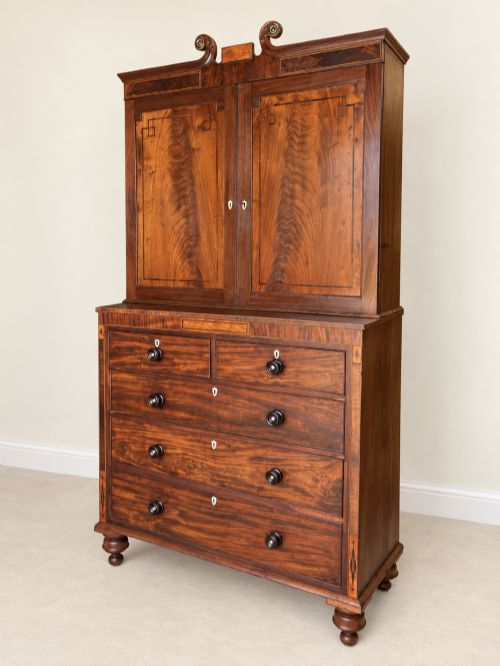
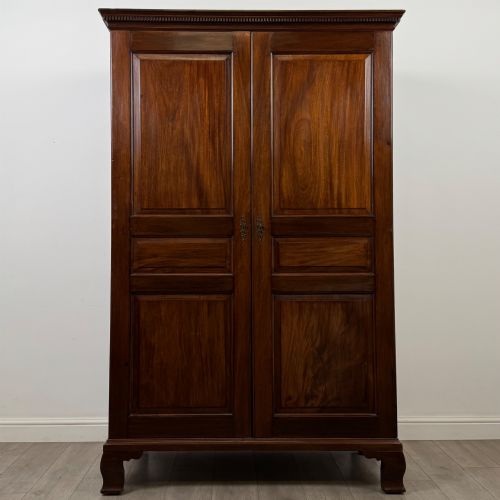
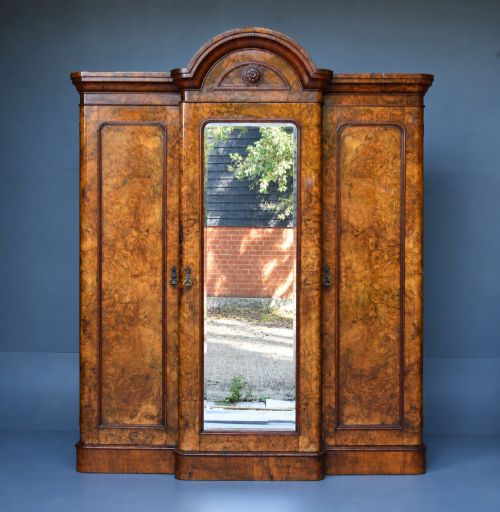
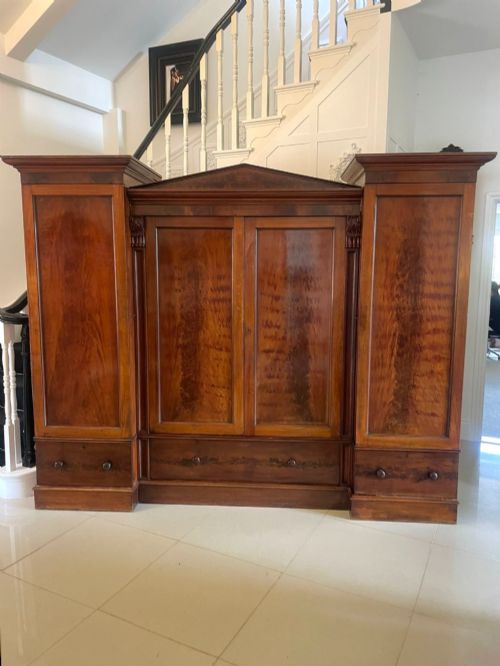
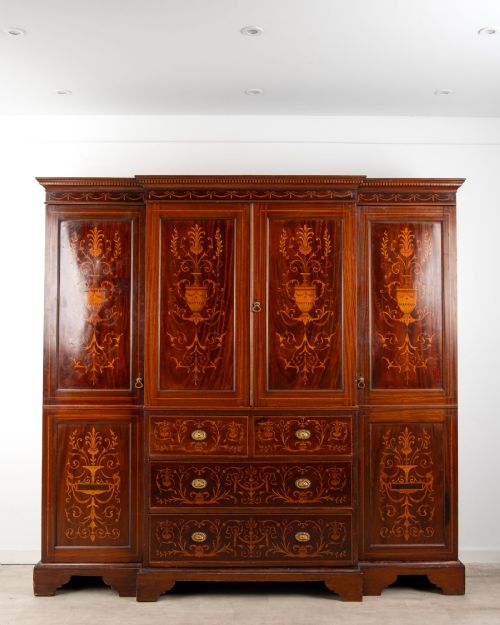
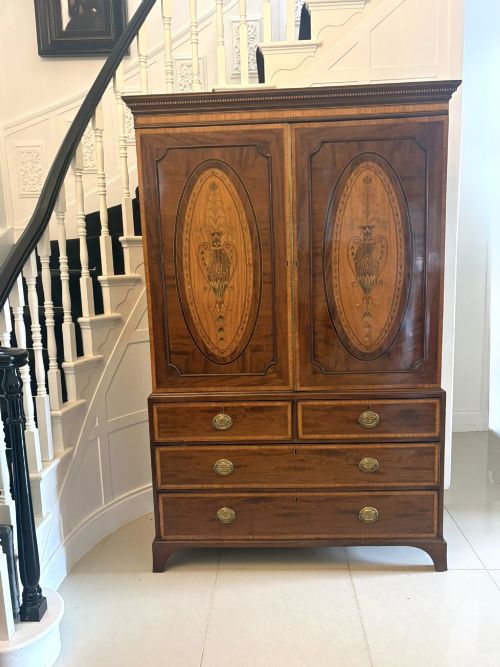
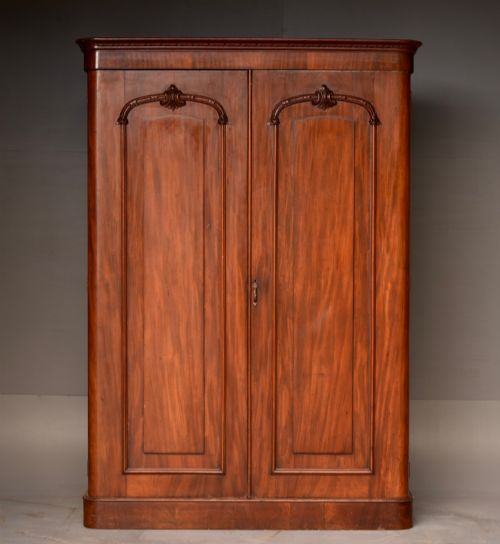
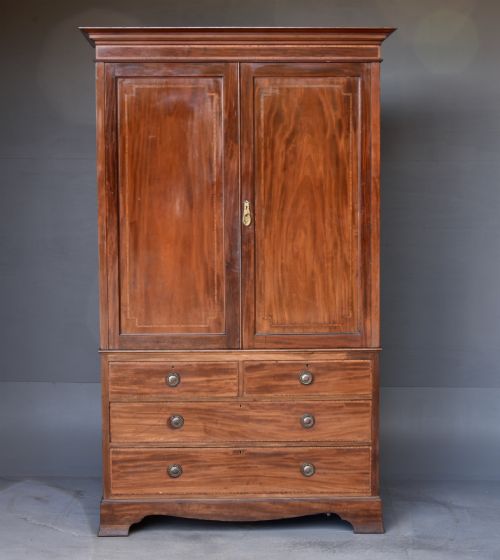
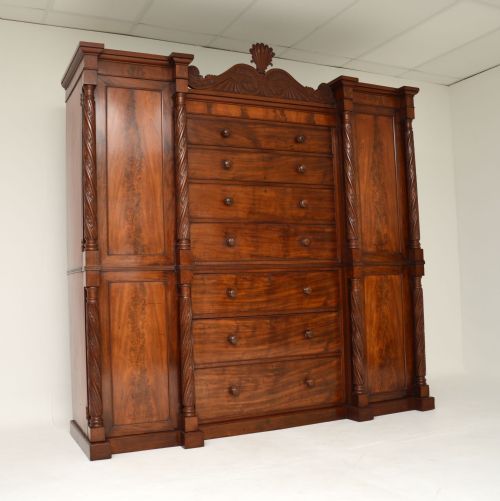
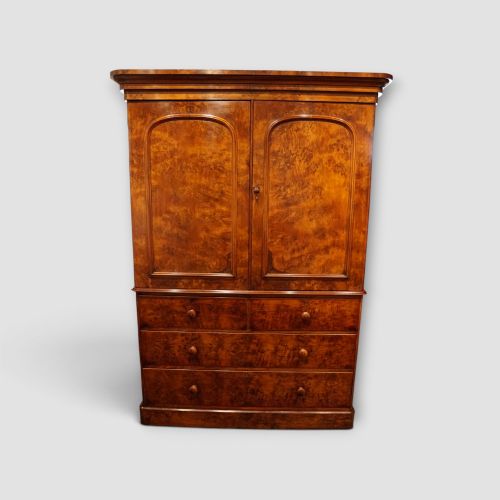
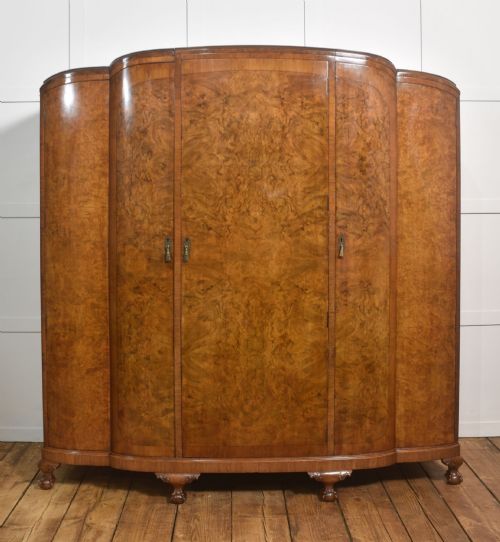
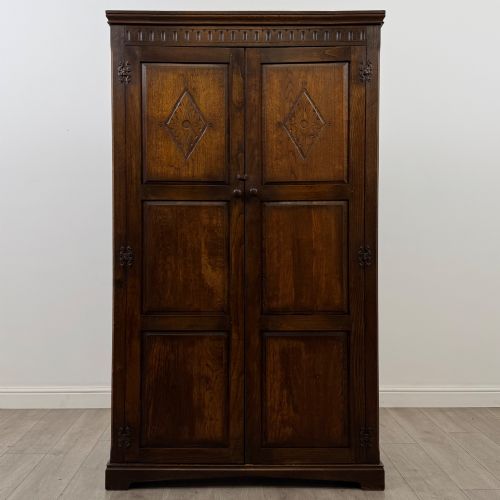
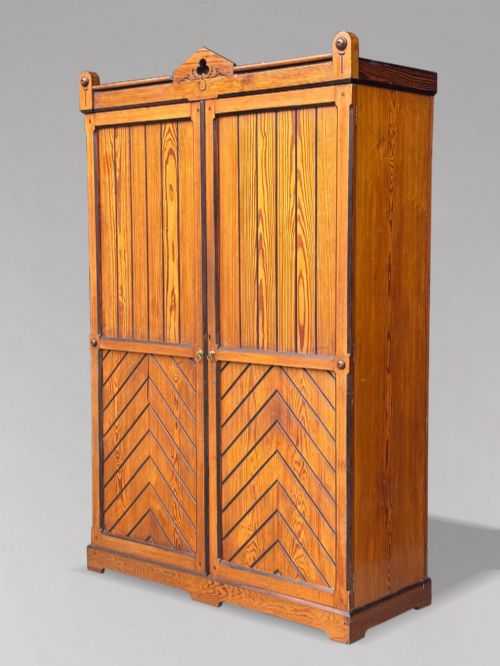
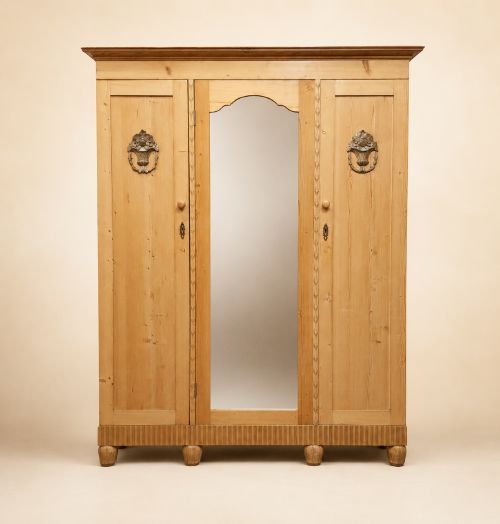
An antique bedroom clothes press spans grand Georgian linen presses with sliding trays above drawer bases to expansive Victorian and Edwardian wardrobes and compactums. Buyers exploring this category encounter varied scales, from simple double doors to large breakfront triple configurations.
The selection ranges through the nineteenth and early twentieth centuries, capturing shifts in domestic storage from dedicated linen storage to multi-compartment clothes hanging spaces. Pieces emerge from distinct stylistic eras including Georgian, Victorian, Edwardian, and Arts and Crafts.
Materials and construction
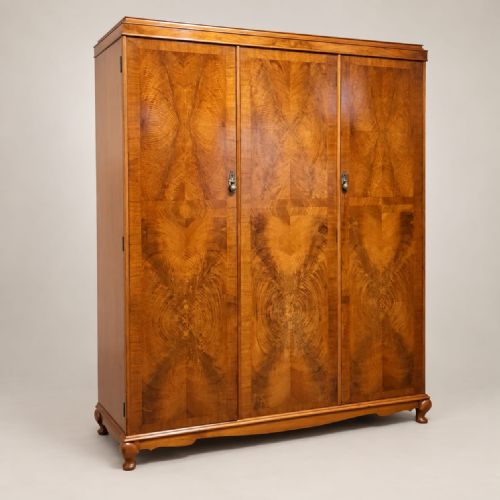
Cabinetmakers utilised dense timbers such as mahogany, walnut, burr walnut, and oak alongside lighter secondary woods like pine and ash. Decorative impact often relied on figured veneers and subtle satinwood inlay work.
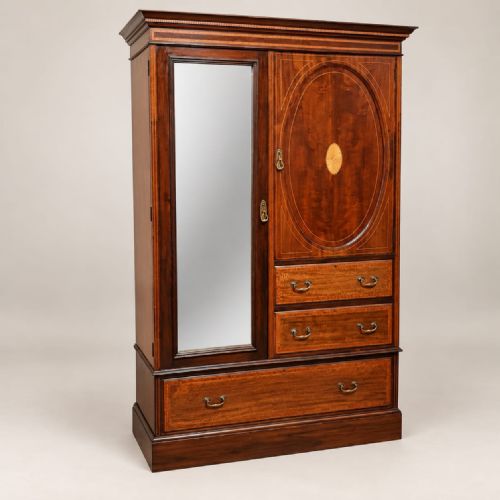
Many larger examples were constructed with knockdown capabilities using internal bolts or pegged joints to allow transportation through domestic doorways. Original brass hardware, bevelled glass mirrors, and panelled doors complete the structural execution.
Several large wardrobes arrive complete with knockdown bolts, proving that flat-pack convenience predates modern furniture stores by centuries.
Evaluating distinction
Superior examples display balanced proportions, particularly in breakfront or triple configurations where timber selection remains consistent across all visible surfaces. Finely figured burr walnut or carefully matched mahogany veneers elevate the visual impact of a piece.
Internal configuration also separates standard utility pieces from exceptional items, with original sliding trays, untouched drawer linings, and integrated compartment divisions adding considerable merit. The retention of original brass handles and working locks further indicates higher provenance.
Maples and Co
The Antique Bedroom Clothes Press Glossary
- Compactum
- A multi-compartment wardrobe combining hanging space, linen slides, and multiple drawers within a single carcass. This efficient layout gained popularity during the Victorian and Edwardian eras for optimal bedroom storage.
- Linen Press
- A tall storage cabinet featuring sliding trays or shelves in the upper section for folded textiles, paired with a chest of drawers below. Georgian and nineteenth-century examples often use panelled doors to conceal the internal trays.
- Breakfront
- A cabinet design where the central section projects forward from the flanking wings. This architectural arrangement creates depth and visual rhythm on large wardrobes.
- Scumble
- A decorative paint technique used to simulate wood grain on softer timbers like pine. It provides an aged, rustic appearance characteristic of nineteenth-century vernacular pieces.
- Satinwood
- A lustrous, fine-grained timber with a golden yellow sheen, frequently employed for stringing and floral inlay on mahogany furniture. It creates sharp contrast against darker cabinet woods.
Antique Bedroom Clothes Press: Frequently Asked Questions
What is a clothes press?
A clothes press is a tall furniture piece traditionally used for storing folded garments, textiles, and linens before hanging wardrobes became standard.
These pieces typically combine upper sliding trays with lower drawer storage, evolving over time to incorporate full-length hanging space.
Will a large wardrobe dismantle for delivery?
Many period triple and double wardrobes were engineered to separate into modular sections, cornices, bases, and side panels to facilitate movement.
Knockdown construction is particularly common in nineteenth-century pine and large mahogany carcasses designed for domestic placement.
How do I date an antique wardrobe?
Dating relies on identifying stylistic markers, construction methods, and timber choices associated with specific reigns and periods from the Georgian era through to Art Deco.
Secondary woods, backboard construction, and handle styles provide reliable clues to the exact decade of manufacture.
How do I care for antique wood furniture?
Maintenance involves keeping pieces away from direct heat sources and fluctuating humidity to prevent timber movement and veneer lifting.
Applying natural wax periodically helps nourish polished surfaces without building up synthetic residues.