
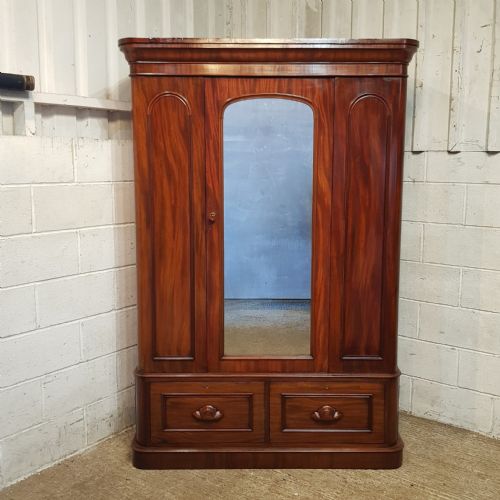
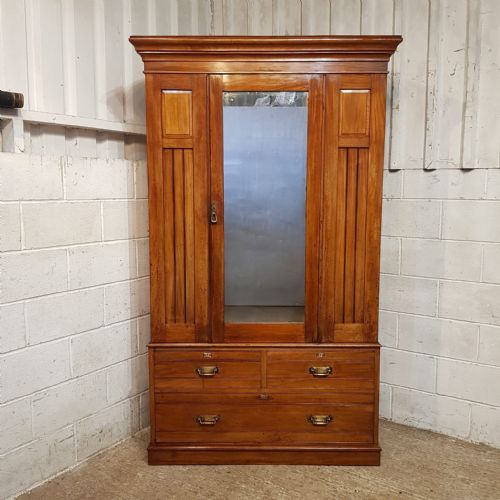
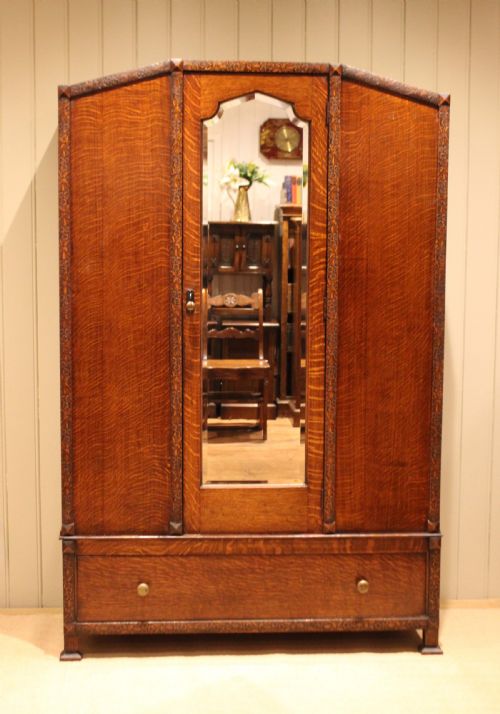
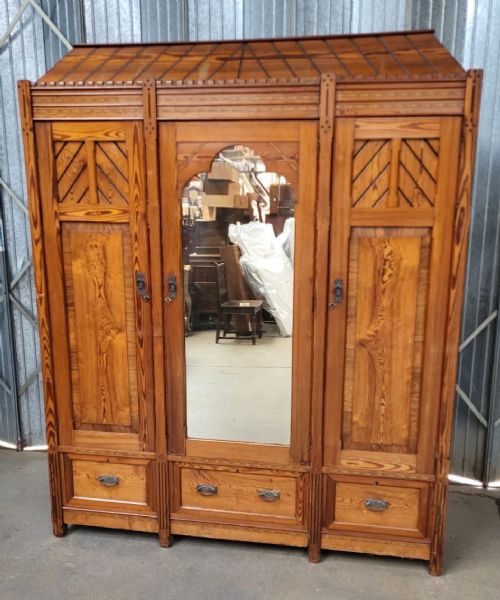
Edwardian Mirrored Clothes Press
An Edwardian mirrored clothes press offers generous hanging space and full-length glass panels, combining practical bedroom storage with period decorative presence.
Edwardian Mirrored Clothes Press
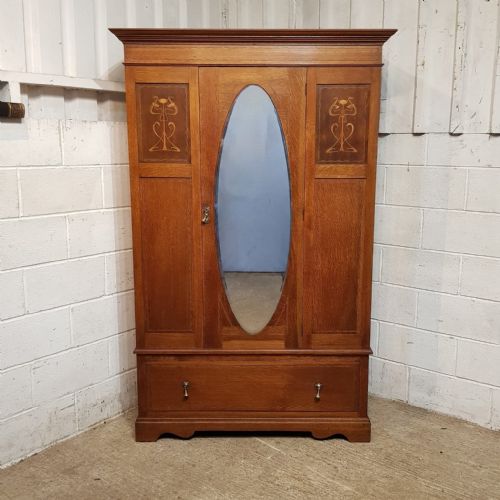
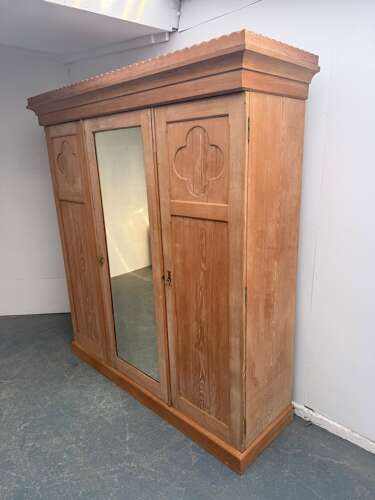
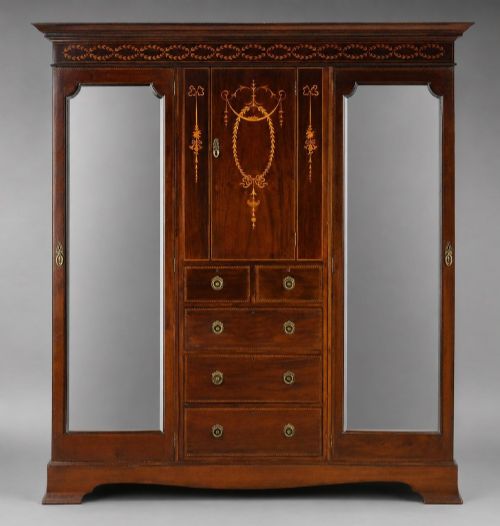
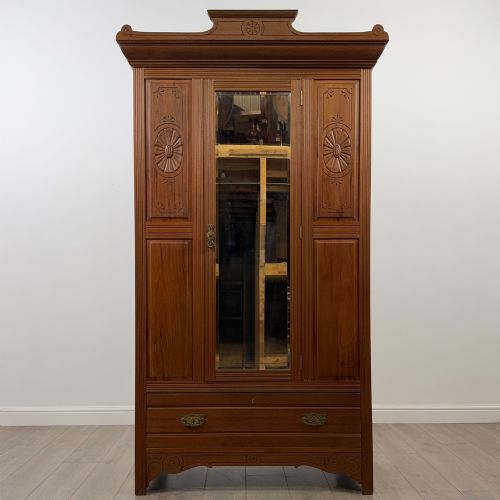
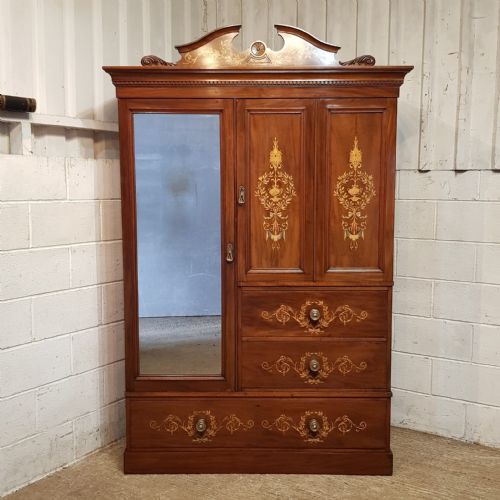
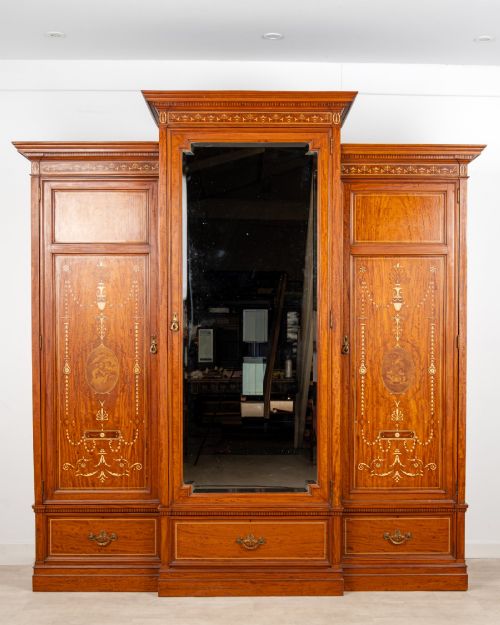
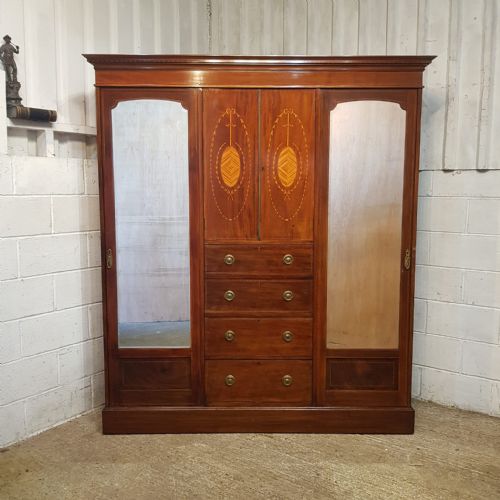
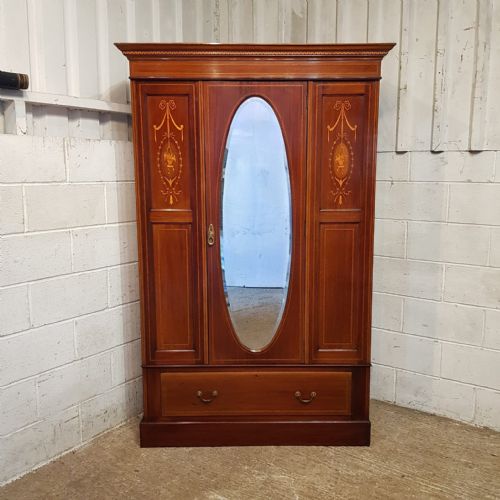
An Edwardian mirrored clothes press is a substantial bedroom storage piece designed to hold garments while reflecting light into the room through integrated glass doors. Buyers searching for this phrase typically find large timber wardrobes, triple-section armoires, and compactum designs originating primarily from the Edwardian and Victorian eras.
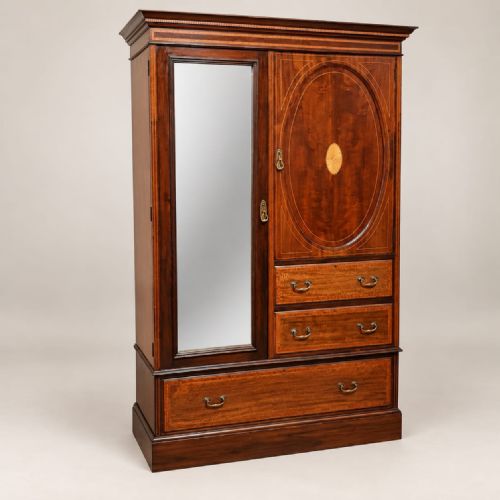
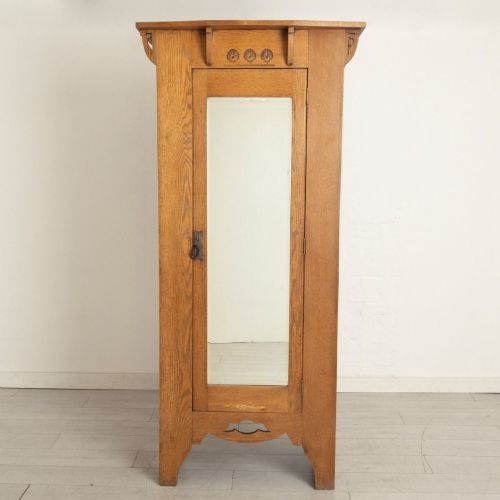
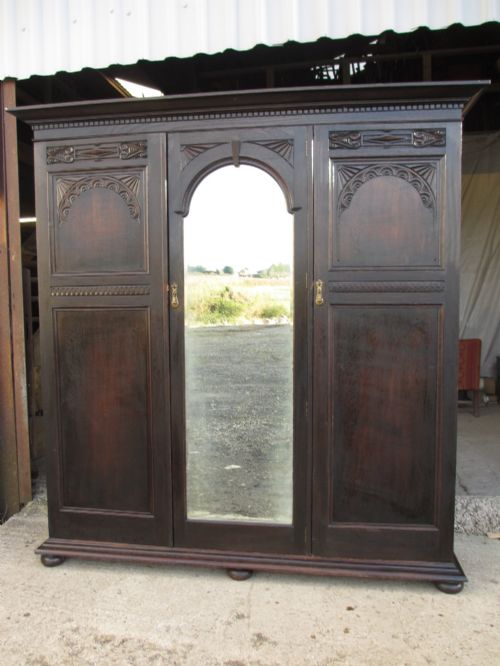
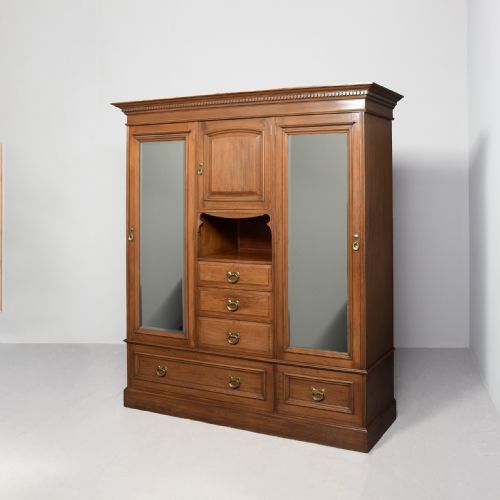
The pieces appearing here span single, double, and triple door formats constructed in woods such as mahogany, satinwood, oak, and walnut. Many incorporate bevelled mirror glass within the door panels alongside period stylistic influences ranging from Arts and Crafts to Art Nouveau.
How they were made
Cabinet makers utilised solid and veneered timbers including mahogany, walnut, oak, ash, and satinwood, often applying decorative inlay work to the principal surfaces. Carved details, painted accents, and wax finishes provide the tactile surface texture characteristic of the period.
Functional hardware relied on brass fittings to secure heavy timber doors and internal hanging compartments, whilst mirrored glass was inset securely into panelled frames to withstand daily domestic use.
Certain gentlemens compactum wardrobes arrive with hidden tie rails and velvet-lined collar boxes intact.
What varies in quality
The distinction between standard utility pieces and finer examples rests on the selection of timbers, such as straight-grained walnut or figured satinwood, and the precision of inlaid decorative motifs. Elaborate carved mouldings and balanced triple-section proportions indicate higher workshop standards.
Structural integrity depends upon the original thickness of the timber and the retention of matching brass hardware, which together determine how solidly a large wardrobe stands and functions.
Lamb of Manchester·Maple & Co·Wylie Lochhead of Glasgow
The Edwardian Mirrored Clothes Press Glossary
- Compactum
- A multi-section wardrobe combining hanging space with internal drawers, shelves, and compartments. This configuration maximises storage capacity within a single footprint.
- Inlay
- A technique where pieces of contrasting wood or shell are fitted into depressions within the primary surface to create decorative patterns. It adds visual depth to mahogany and satinwood panels.
- Breakfront
- A piece of furniture featuring a central section that projects forward from the flanking wings. This architectural form breaks up the flat facade of large wardrobes.
- Armoire
- A large standing cupboard providing vertical wardrobe storage. The term is often applied interchangeably with large timber clothes presses.
Edwardian Mirrored Clothes Press: Frequently Asked Questions
How do I dismantle a large wardrobe?
Most large wardrobes separate into modular sections including a cornice, a plinth, and individual side and door modules. This modular construction allowed historic makers to transport bulky furniture up staircases.
Marking the position of each component during disassembly ensures correct alignment when reassembling the piece in a new room.
What is a compactum wardrobe?
A compactum integrates hanging rails with internal drawers, sliding trays, and partitioned shelves inside a single multi-door carcass. This layout provides comprehensive storage for various types of clothing.
These pieces typically appear in larger double or triple widths to accommodate the internal compartmentalisation.
How do I care for antique mirror glass?
Clean mirror glass gently using a soft cloth and mild cleaning solution, avoiding excessive moisture near the wooden frame margins. Preventing dampness protects the silvered backing behind the glass from oxidation.
Check the mirror retaining clips periodically to ensure the glass remains secure within the door panel.
Are these wardrobes suitable for modern hangers?
Internal hanging depths in older wardrobes can sometimes accommodate modern coat hangers depending on the orientation of the rail. Many period pieces utilise front-to-back hanging pegs or traditional hooks rather than modern lateral rails.
Measuring the internal depth before purchase confirms whether standard hangers fit comfortably inside the compartment.