

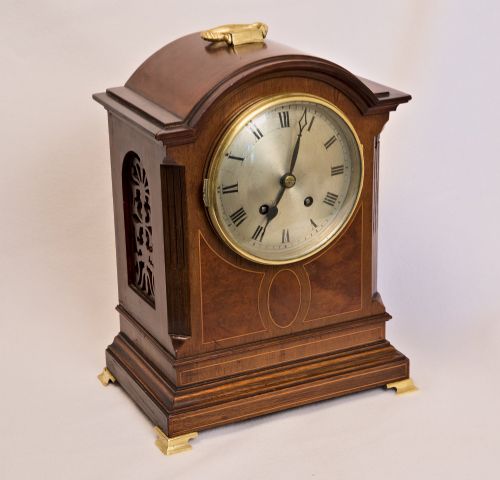


Edwardian Arched Clock
An edwardian arched clock brings architectural grace to a room, offering mechanical precision housed in finely figured wood.

Edwardian Arched Clock
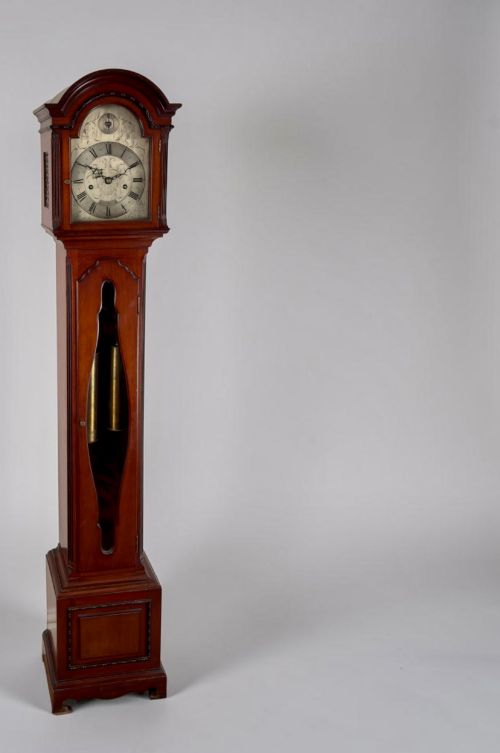
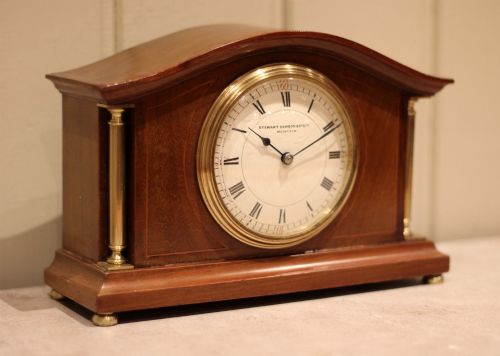
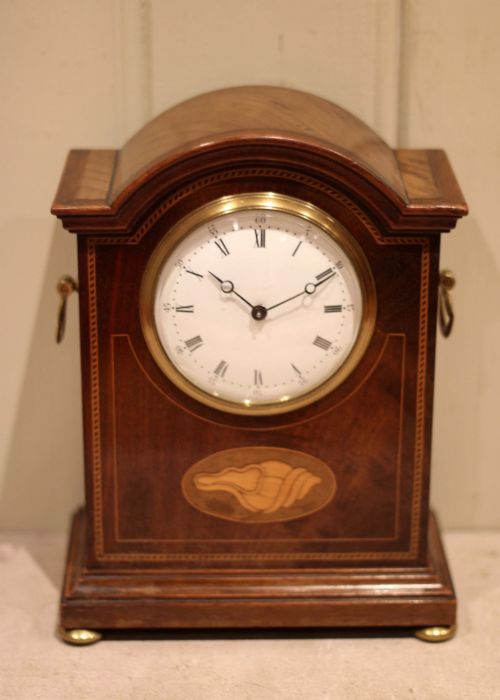
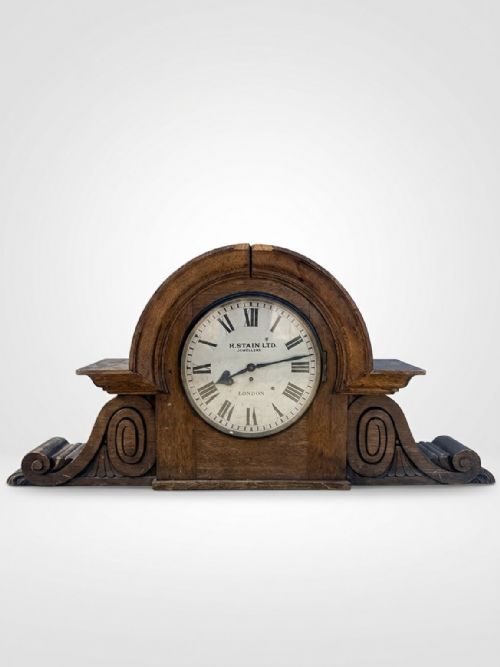
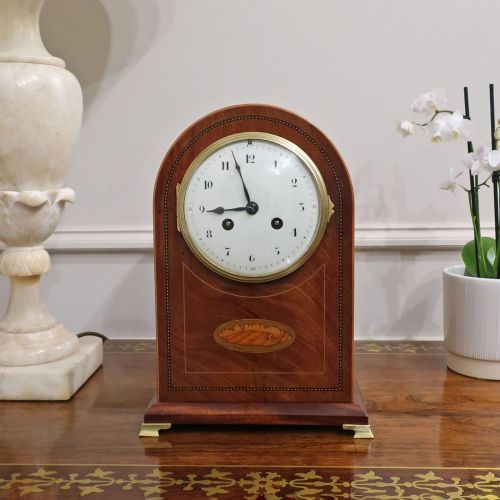
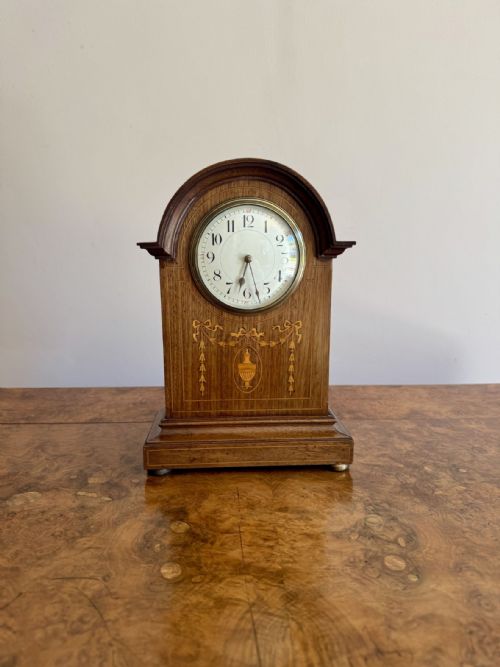
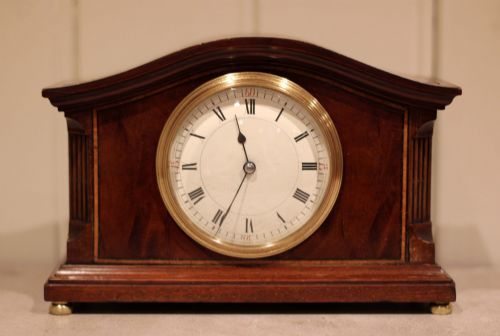
An edwardian arched clock is typically encountered as a mahogany or oak mantel clock, often featuring delicate inlay work following the curved top profile. These pieces range from compact timepieces to larger striking models produced during the early twentieth century.
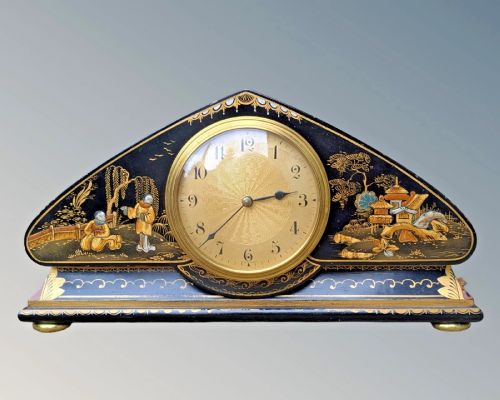
The selection includes tall variants such as grandmother clocks and longcase pieces alongside smaller desk and boudoir clocks, though the mantel clock with an architectural arch remains the most common form on this page.
How they were made
Cases utilise solid and veneered timbers including mahogany, oak, walnut, and satinwood, frequently decorated with contrasting stringing and floral inlays. Brass dials, bezels, and mounts complement the timber frames, protecting enamel chapter rings and delicate hands beneath glass covers.
Internal movements range from simple spring-driven timepieces to complex quarter-chiming and ting-tang mechanisms housed in architectural bracket or longcase structures.
Listings feature mahogany, oak, and walnut timbers, with movements ranging from basic timepieces to complex quarter-chiming mechanisms.
What varies in quality
The standard of an edwardian arched clock depends heavily on the crispness of the cabinetwork and the sophistication of its movement. Finer examples display carefully selected wood grains, precise marquetry, and robust mechanical engineering by established makers rather than mass-produced generic assemblies.
Gillett & Johnston·Winterhalder & Hofmeier·Junghans·Dent of London·Camerer Cuss & Co
The Edwardian Arched Clock Glossary
- Timepiece
- A clock that tells the time without striking or chiming. These movements are simpler than those with train complications.
- Ting-tang
- A two-hammer striking system that sounds on two bells or gongs at the quarters and hours. This movement produces a distinct double note.
- Fusee
- A conical pulley used in better quality clocks to equalise the pull of the mainspring as it winds down. It ensures even timekeeping throughout the power reserve.
- Inlay
- Pieces of contrasting wood or metal fitted into the surface of the primary timber to form decorative patterns. Common motifs include fan designs and floral sprays.
Edwardian Arched Clock: Frequently Asked Questions
How do I wind an edwardian arched clock?
Most spring-driven models require a key inserted into the dial holes to tension the mainsprings gently until resistance is felt. Care must be taken not to overwind the mechanism.
Clocks with chime or strike trains typically have separate arbors for the time and sound functions, each requiring attention to maintain full operation.
Where should I place a mantel clock?
These clocks perform best on stable, level surfaces away from direct sunlight, dampness, and extreme temperature fluctuations. A sturdy mantelpiece or sideboard provides adequate support.
Placing the clock on a level surface ensures the pendulum or balance wheel beats evenly, which is essential for accurate timekeeping.
How do I tell an Edwardian clock from a Victorian one?
Edwardian pieces often feature lighter wood tones, more restrained inlay work, and influences from Georgian revival styles. Victorian examples tend to be heavier in proportion and darker in timber.
Design motifs also shift, with Edwardian items frequently displaying delicate floral marquetry or satinwood banding rather than heavy Gothic carving.
What is a bracket clock?
A bracket clock is a portable spring-driven clock originally designed to sit on a wall bracket or a table. Over time, the term came to describe architectural wooden mantel clocks with flat or pad tops.
These pieces often house higher-grade movements with chiming capabilities and sturdy brass carrying handles on top.