


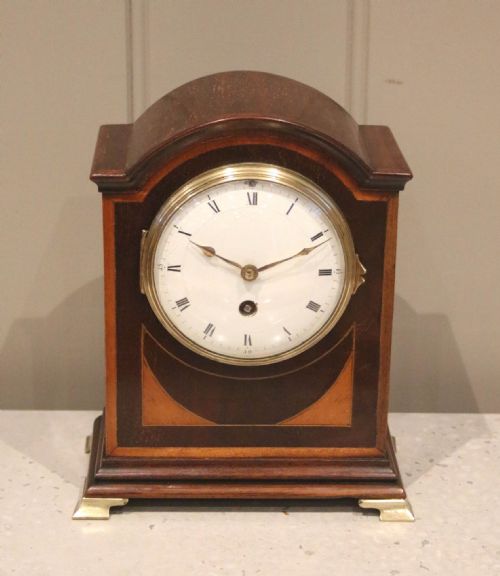


Wood Casing Mantel Clock
A wood casing mantel clock brings precision mechanics together with rich timber cabinetry to anchor a room.

Wood Casing Mantel Clock
A wood casing mantel clock combines timekeeping with cabinetry, originating in periods from the Regency era through to the twentieth century. These pieces sit on bracket feet or flat bases, designed to display time on shelves, desks, and mantelpieces.
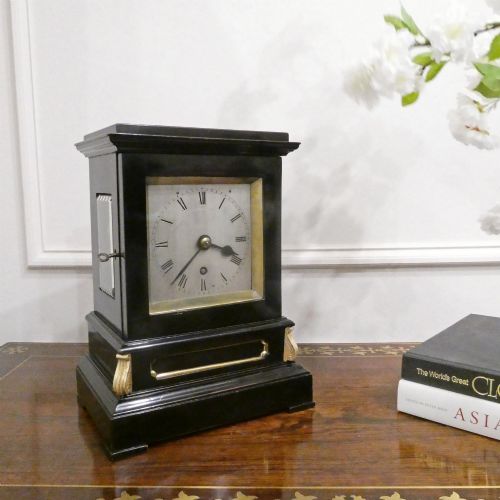
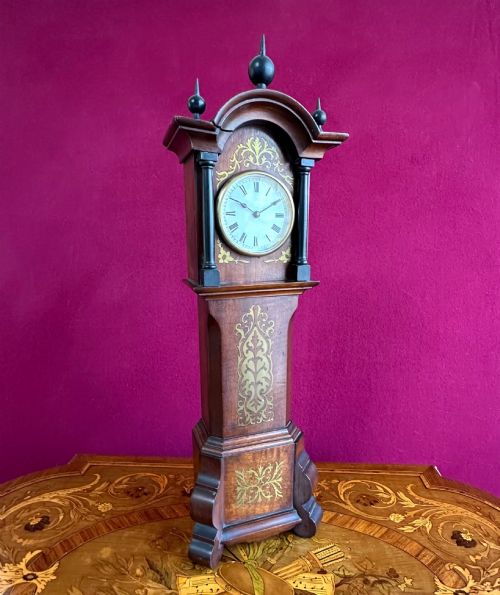
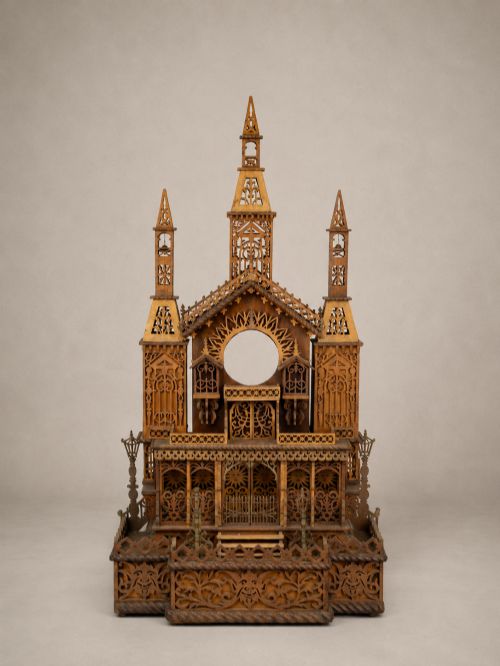
The materials span mahogany, rosewood, ebonised wood, fruitwood, and walnut, frequently detailed with brass fittings, glass panels, and enamel dials. Forms range from balloon cases and architectural fretwork to traditional library and bracket clocks.
The examples found here cross styles such as Victorian, Edwardian, Gothic Revival, and Empire, reflecting both English and continental European cabinet-making traditions. Buyers encounter everything from small timepieces to bell-striking fusee mechanisms housed in robust wooden enclosures.
Materials and construction
Cabinet makers utilised dense hardwoods such as mahogany and rosewood, often applying ebonisation or satinwood inlay to create visual contrast on the exterior case. Grain patterns were selected carefully to give the wooden surfaces depth and character.
Movements relied on brass for plates, wheels, and fusee cones, while glass protected delicate enamel dials and pendulum assemblies. Joinery methods included precise corner joints, bracket supports, and fitted rear doors to secure the clockwork inside the timber shell.
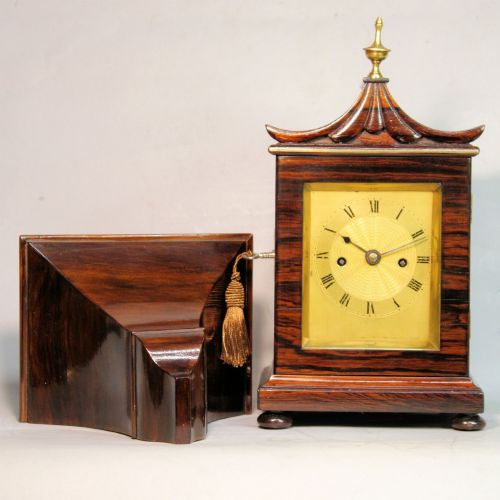
Some miniature bracket clocks include optional wall brackets, letting an indecisive timekeeper change their mind between shelf and wall.
Markers of quality
The distinction between tiers rests on the execution of the woodwork and the complexity of the internal mechanism, such as a single chain fusee versus a standard spring-driven movement. Finer pieces feature crisp fretwork, inlaid brass stringing, and well-proportioned architectural mouldings.
Attention to detail extends to the dial and hands, where hand-painted enamel and cast brass bezels indicate superior workshop standards. Original matching components and signed movements elevate the standing of a piece within its period.
Walker·Paul Garnier·Joseph Jump·Pennington of Camberwell·John Taylor·Walker and Hall·Baldwin of Loughborough·Fatton Eleve de Breguet
The Wood Casing Mantel Clock Glossary
- Fusee
- A conical pulley connected to the mainspring by a chain or cord, designed to equalise the torque as the spring unwinds and improve timekeeping accuracy. This mechanism is characteristic of better-quality English clocks.
- Ebonised
- Wood treated with a dark finish to imitate ebony, a technique popular in nineteenth-century cabinet making. It provides a stark, formal contrast against brass dials and mounts.
- Bracket clock
- A portable clock originally designed to sit on a wall bracket or a table, typically featuring a brass handle on top. Many later examples retained the name despite being used primarily on mantelpieces.
- Verge escapement
- An early type of escapement mechanism that controls the release of the gear train using a crown wheel and a pivoting rod with pallets. It is commonly found in eighteenth-century pieces.
- Enamel dial
- A metal face coated with fused glass powder and fired to create a smooth, white background for painted numerals. These dials require careful handling to prevent chipping.
Wood Casing Mantel Clock: Frequently Asked Questions
Where should I place a wood casing clock?
Position the clock on a stable, level surface away from direct sunlight, central heating vents, and damp areas. Temperature fluctuations can affect both the wood casing and the metal movement.
Ensure the surface does not experience vibrations from footsteps or heavy doors, which can disrupt the pendulum beat and cause the clock to stop.
What is the difference between a library clock and a bracket clock?
Library clocks generally feature clean, rectangular wooden cases with glass side panels designed to show the movement, whereas traditional bracket clocks often have bell-tops and carrying handles.
Both styles originated as portable timepieces for domestic rooms, though their exterior silhouettes reflect different cabinet-making fashions across the nineteenth century.
How do I identify the period of a wooden clock case?
Examine the timber species, inlay style, and structural hardware, such as the use of mahogany in Georgian pieces or ebonised details in Victorian examples. Brass feet, dial surrounds, and lock plates also offer chronological clues.
Signatures or maker marks engraved on the backplate or dial provide the most reliable indication of the date and workshop origin.